



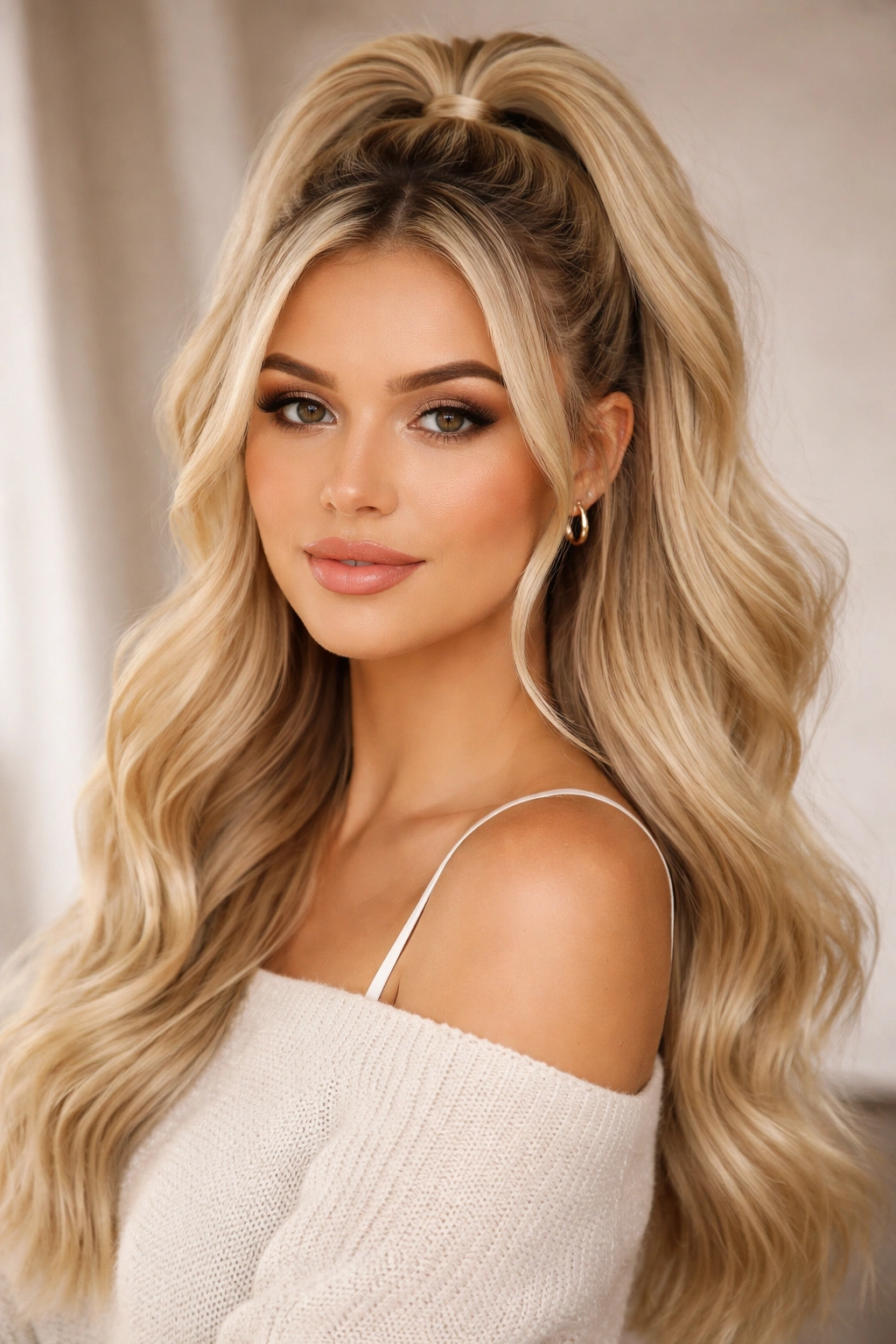
Looking for a hairstyle that strikes the perfect balance between casual and put-together? Half up half down styles have become the go-to choice for anyone who wants to look polished without the commitment of a full updo. When you combine this versatile approach with blonde hair and quick weave extensions, you’ve got access to an incredible range of textured, voluminous looks that can go from beachy brunch to night-out ready in minutes.
The beauty of half up half down styles lies in their flexibility. They work whether you’re dealing with fine, delicate blonde strands or thicker, textured hair. Quick weave extensions add instant density and length without the installation time of traditional sew-in methods, making them ideal for anyone who wants salon-quality results with everyday practicality. Blonde hair, in particular, shows off dimension and movement beautifully when styled this way — the highlights and lowlights catch light differently at each layer, creating natural-looking depth that full styles sometimes miss.
What makes these styles “quick” is the efficiency of the installation process combined with how fast they come down and can be restyled. You’re not spending hours at the salon or struggling through complicated techniques at home. Instead, you’re working with a method that clips or bonds in quickly, sits right at your crown or slightly lower, and gives you endless styling possibilities. Whether you prefer sleek and sophisticated, tousled and romantic, or edgy and modern, there’s a half up half down weave style that fits your aesthetic.
1. The Sleek Blonde Ponytail with Woven Bounce
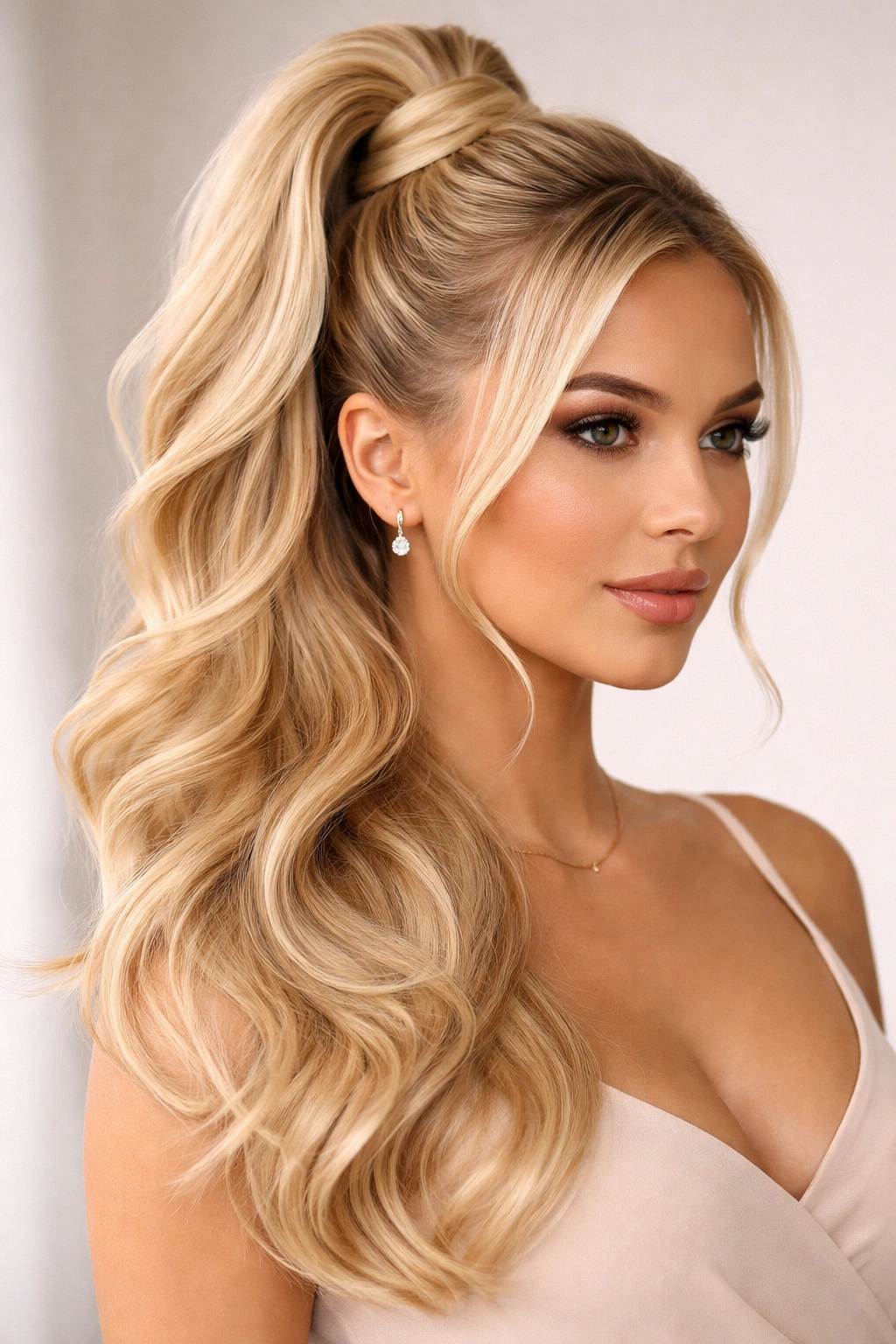
A sleek half up half down with a structured ponytail base is the foundation style every blonde should master. This look works because it combines the polish of a pulled-back aesthetic with the softness of released hair, creating visual interest without looking overdone. The key is using blonde quick weave hair that matches your natural tone exactly — mismatched shades break the illusion and cheapen the overall look.
How to Create This Look
Start with hair that’s blow-dried straight or flat-ironed smooth. Section out your half-up portion horizontally from temple to temple, following an imaginary line that sits just above your ears. Clip the lower section away so it’s not in your way. Take your quick weave hair and begin attaching it at the roots using either a glue-based method or clip-in extensions, working from the center of your head outward toward each side.
Once your extensions are secured, gather your half-up section into a ponytail at the crown, mixing your natural hair with the weave hair. Use a fine-tooth comb to smooth any flyaways and apply a smoothing serum or lightweight gel to create a polished finish. The tension should be firm but not so tight that you’ll get a headache — you want sophistication, not scalp pain.
What Makes It Work for Blonde Hair
Blonde hair shows every imperfection and every stray piece, so the sleekness of this style actually works in your favor. Slicked-back blonde hair looks intentional and modern, especially when you’ve added weave extensions that create dimension. The contrast between the smooth, controlled crown section and the flowing length below gives the style movement without messiness.
Pro tip: Use a dry shampoo or texture spray on your half-down section before styling — this prevents the weight of the weave from pulling your natural blonde hair flat and lifeless-looking. The texture gives your blonde more grip and makes the overall style look fuller, even though you’ve pulled half of it up.
Key Details to Remember
- Match your weave tone to your natural blonde roots, not your highlighted ends
- Apply heat protectant before any hot styling on both your natural hair and the extensions
- Use a flexible hold hairspray rather than a heavy-duty one; sleek styles need movement or they look stiff
2. Textured Half-Up with Blonde Waves and Face-Framing Pieces
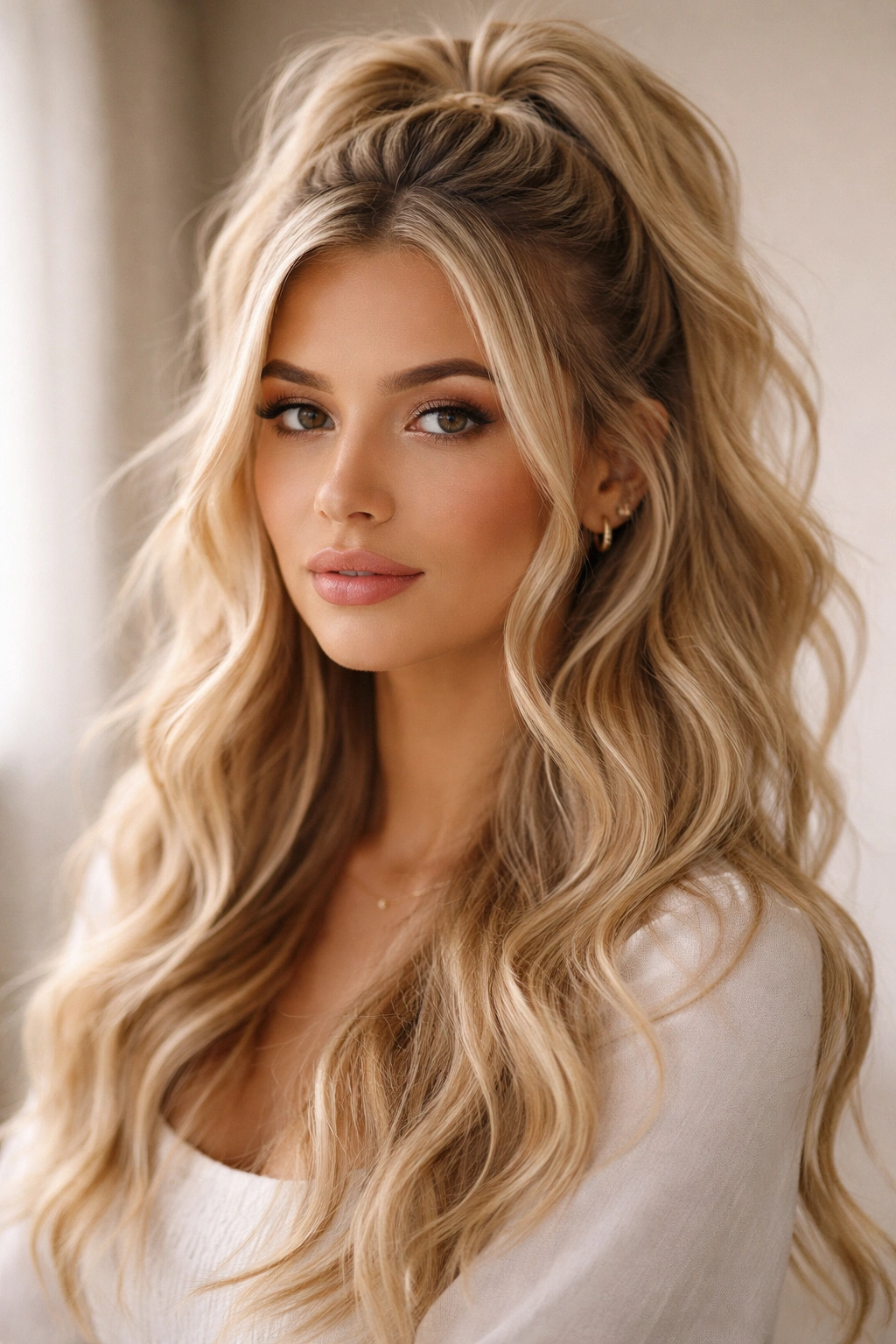
This style embraces movement and romantic softness while still keeping hair off your face. It’s the perfect option when you want blonde that looks effortlessly beautiful rather than meticulously styled. The face-framing pieces are crucial — they soften the overall look and draw attention to your features rather than just the styling.
Building Texture Into Your Weave Selection
Choose a wavy or curly quick weave texture rather than straight hair. Many brands offer blonde quick weave specifically in loose wave or body wave patterns that complement natural blonde beautifully. These textures catch light better than straight hair and create an illusion of depth and dimension that sleek styles sometimes lack. The wave also hides minor imperfections in how your extensions are installed.
Section your hair into your top half-up portion and your bottom half-down portion. Take roughly one-inch pieces of hair at each temple and let them fall loose — these are your face-framers. Attach your quick weave extensions using the remaining top section, creating a secure base at the crown. The face-framing pieces should rest just in front of your ears, creating a soft border around your face.
Styling the Waves and Movement
Use a curling iron or wand on the released bottom section to enhance or add waves. If your weave already has a wave pattern, you’re mainly just refreshing that texture rather than creating it from scratch. Work in sections, curling away from your face for a flattering frame. Pin or twist sections loosely while they cool to set the wave pattern. Once cool, release and finger-comb through gently — you want textured waves, not ringlets.
For your pulled-up section, take a few pieces from the top and wrap them around the base of your ponytail to hide the elastic. This creates a polished, intentional look rather than a visible hair tie situation. It’s a small detail that makes a huge difference in the overall sophistication of the style.
Why Blondes Should Choose This Approach
Blonde hair benefits enormously from texture and movement. Sleek styles can sometimes make blonde look one-dimensional, but adding waves and face-framing pieces creates visual complexity that mimics natural beautiful blonde hair. The lighter your blonde, the more important texture becomes — it’s what creates depth and prevents your hair from looking flat or washed-out.
Worth knowing: Wavy blonde weave extensions tend to hold their texture longer than straight ones, meaning you can refresh this style over 2-3 days without it falling flat. A light spray of texture spray or dry shampoo on day two gives you back that lived-in wave pattern.
3. Twisted Crown Half-Up with Blonde Length
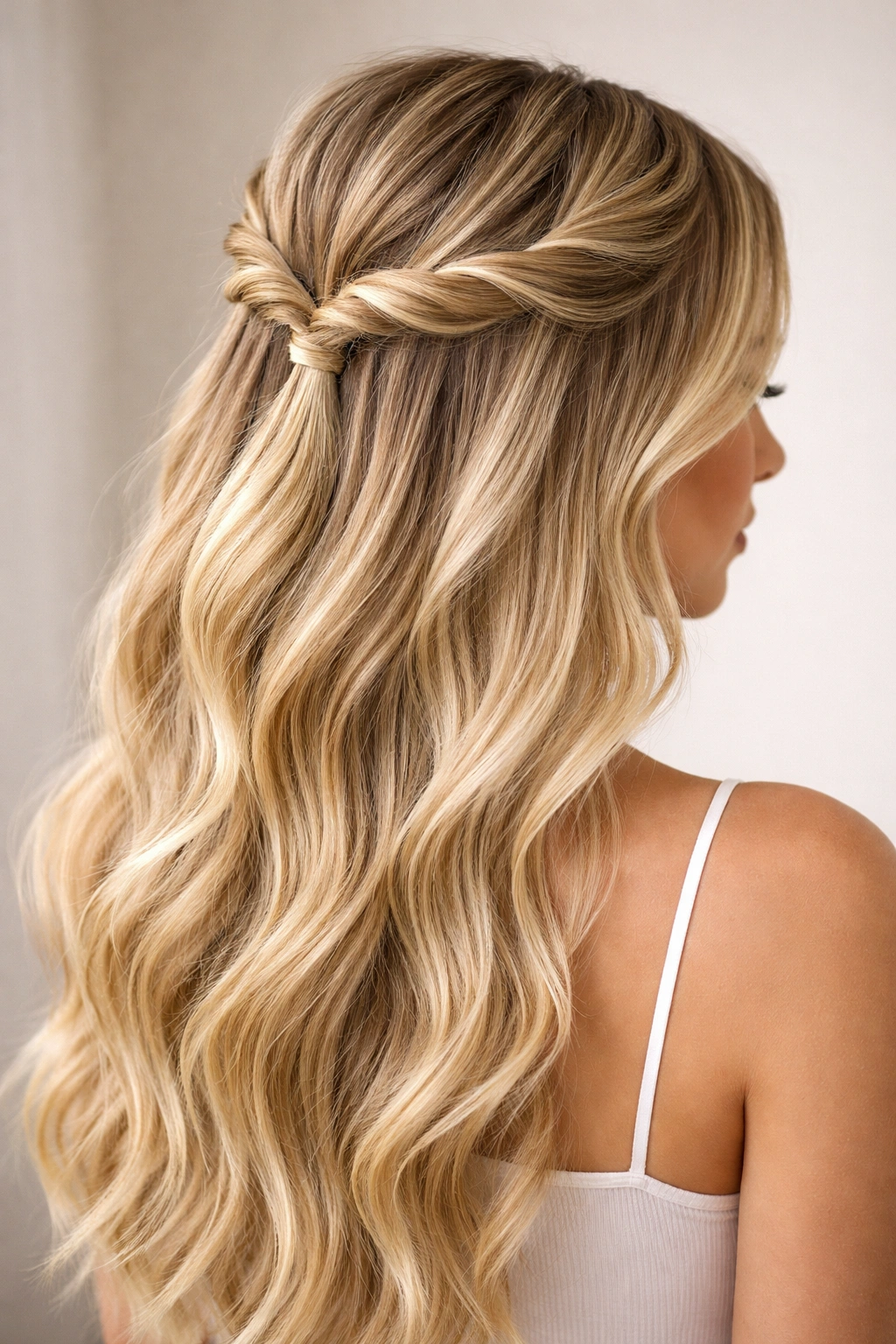
A twisted crown combines the polished appeal of a pulled-back style with the ease of something you can do in under five minutes. This style works beautifully with blonde because the twists create linear visual interest that keeps the eye moving, preventing your hair from looking flat or one-note. It’s also incredibly forgiving if your blonde has darker roots — the twists draw attention upward and outward rather than highlighting the demarcation line.
The Technical Approach to Crown Twists
Start with slightly textured hair — this could be second-day hair with natural texture, or you can add texture with a texturizing spray before styling. Section your hair into your half-up and half-down portions. From one temple, take a roughly one-inch section and begin twisting it as you move toward the center back of your head. You’re not twisting tightly or precisely; instead, aim for loose, relaxed spirals that look intentional but not overly controlled.
Once you reach the center, pick up a new section from the opposite temple and repeat, twisting toward the center. The two twists should meet at roughly the same point at the back of your crown. Secure both twists together using bobby pins that match your blonde tone, nestling them underneath so they’re completely hidden. If there are any loose pieces or wispy edges, use a flexible-hold hairspray to gently smooth them without creating crunch.
Adding Dimension with Your Weave Selection
Use a quick weave in the same blonde shade as your natural hair for a seamless blend. If you want the crown twist to show more dimension, choose a weave with subtle highlights or lowlights — this makes the twisted pattern more visually interesting because light plays off the different tones. The dimension makes the twists read as more intricate and intentional, even if you’ve kept them loose and simple.
Attach your weave before you create your twists if possible, or incorporate it as you twist if you prefer. Either method works — it’s mostly about what feels more comfortable for your styling process. The weave should be secured enough to support the weight of your released hair below without sliding or slipping.
Making It Work for Long-Term Wear
This style holds up beautifully throughout a full day because twists naturally tighten slightly as the day goes on, actually making the style more secure rather than looser. If you’re planning to wear this style for work or an event, you can spray the crown twist section lightly with a flexible-hold hairspray to ensure it stays in place, but it’s usually not necessary.
Quick maintenance tip: If you sleep in this style, you might want to lightly re-twist the crown section in the morning to refresh it. The twists don’t unravel completely overnight, but they can look slightly disheveled if you’ve slept on them. A quick 30-second re-twist brings them right back to perfect.
4. The Blonde Bubble Ponytail Half-Up Statement Style
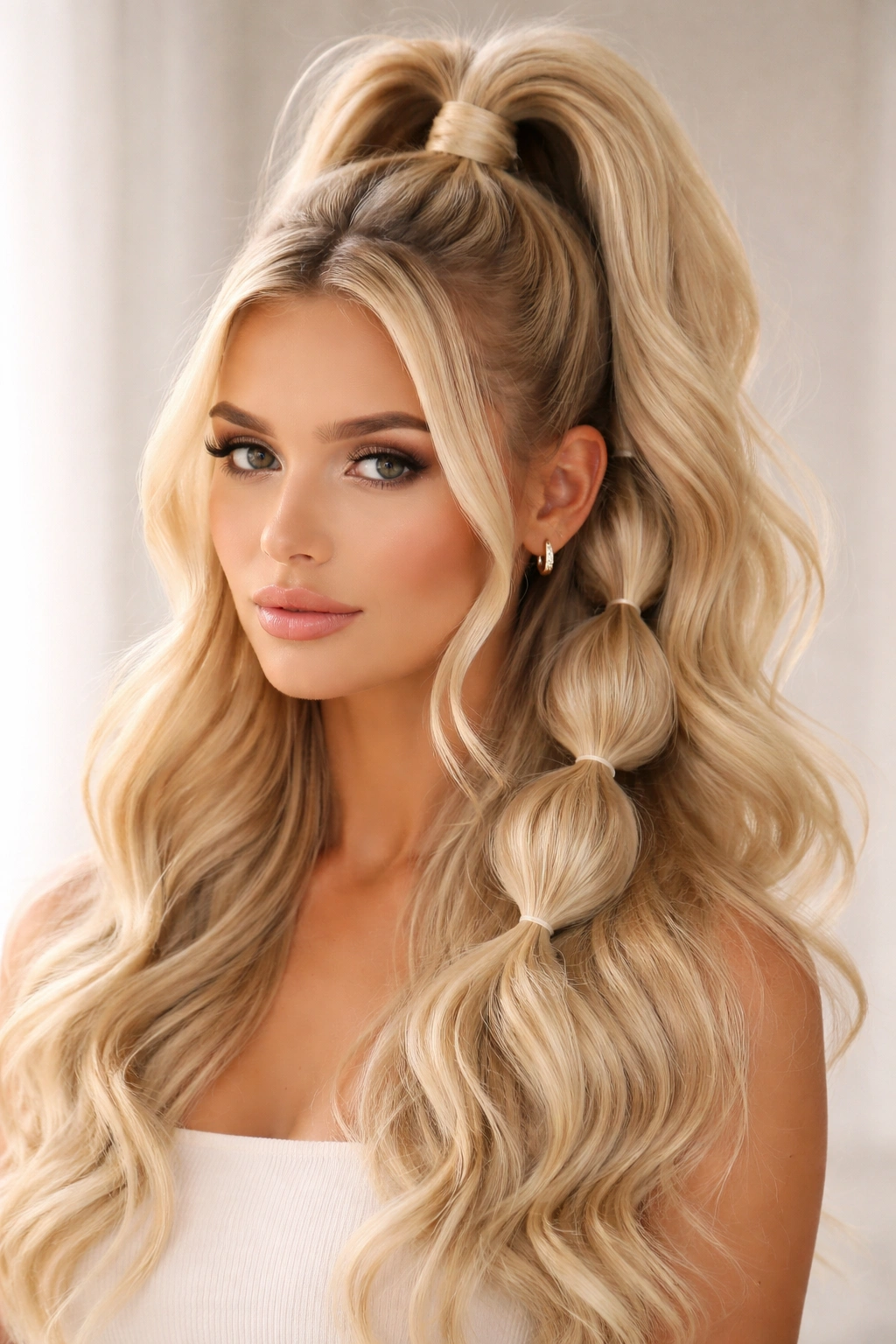
Bubble ponytails have made a major comeback, and they’re incredibly flattering on blonde hair. This style involves creating segmented sections within your ponytail, separated by decorative hair ties or sectioning, which creates visual dimension and a playful, modern look. When done as a half-up style, you get the fun factor of a bubble ponytail without the commitment of pulling all your hair back.
Creating Your Bubble Sections
After securing your half-up ponytail at the crown, divide it into three to four even sections. Use clear or gold-toned elastics to separate each bubble section. The elastics should sit roughly two to three inches apart, depending on the length of your released hair. Each elastic creates a visual “bubble” above it, which you should gently tease outward for volume using your fingers. Don’t over-tease — you want controlled volume, not a matted mess.
The released bottom section of hair (your half-down portion) should be styled with waves or curls to complement the structured sections above. This contrast between the controlled, segmented ponytail and the flowing, textured bottom half creates the visual magic of this style. Your weave extensions should be selected in a texture that works with waves or curls, so they blend seamlessly with however you’re styling the released portion.
Why This Works for Blonde
Blonde hair’s natural light-reflecting qualities make bubble ponytails look exceptionally clean and structured. Each bubble reads clearly because of how light plays off your hair. The elastics, particularly if you choose clear ones, create interesting visual breaks that add sophistication. If you use metallic elastics, they catch light and add sparkle, making the style feel special and intentional even if you’re wearing it casually.
The bubble ponytail also works beautifully with blonde’s tendency toward showing texture and dimension. Where a solid, compact ponytail might make darker hair look fuller, a bubble ponytail on blonde adds visual interest without needing extra thickness.
Styling Your Bottom Half with Intention
Your half-down section should be wavy or curly to balance the controlled structure of the bubbles above. Use a curling iron to create loose waves that flow from your crown downward, or use a salt spray and dry curling method for a more effortless, undone texture. The waves should be loose enough that they don’t fight against the visual weight of your bubble ponytail — you’re creating balance, not competing sections.
Styling secret: If you want extra volume in your bubble sections, lightly backcomb the hair inside each bubble before you secure the elastic above it. This creates a fuller, rounder bubble that’s much more visually interesting. Lightly smooth the outer layer with a fine-tooth comb so it looks intentional rather than matted.
5. Half-Up Blonde with Braided Details and Woven Accents
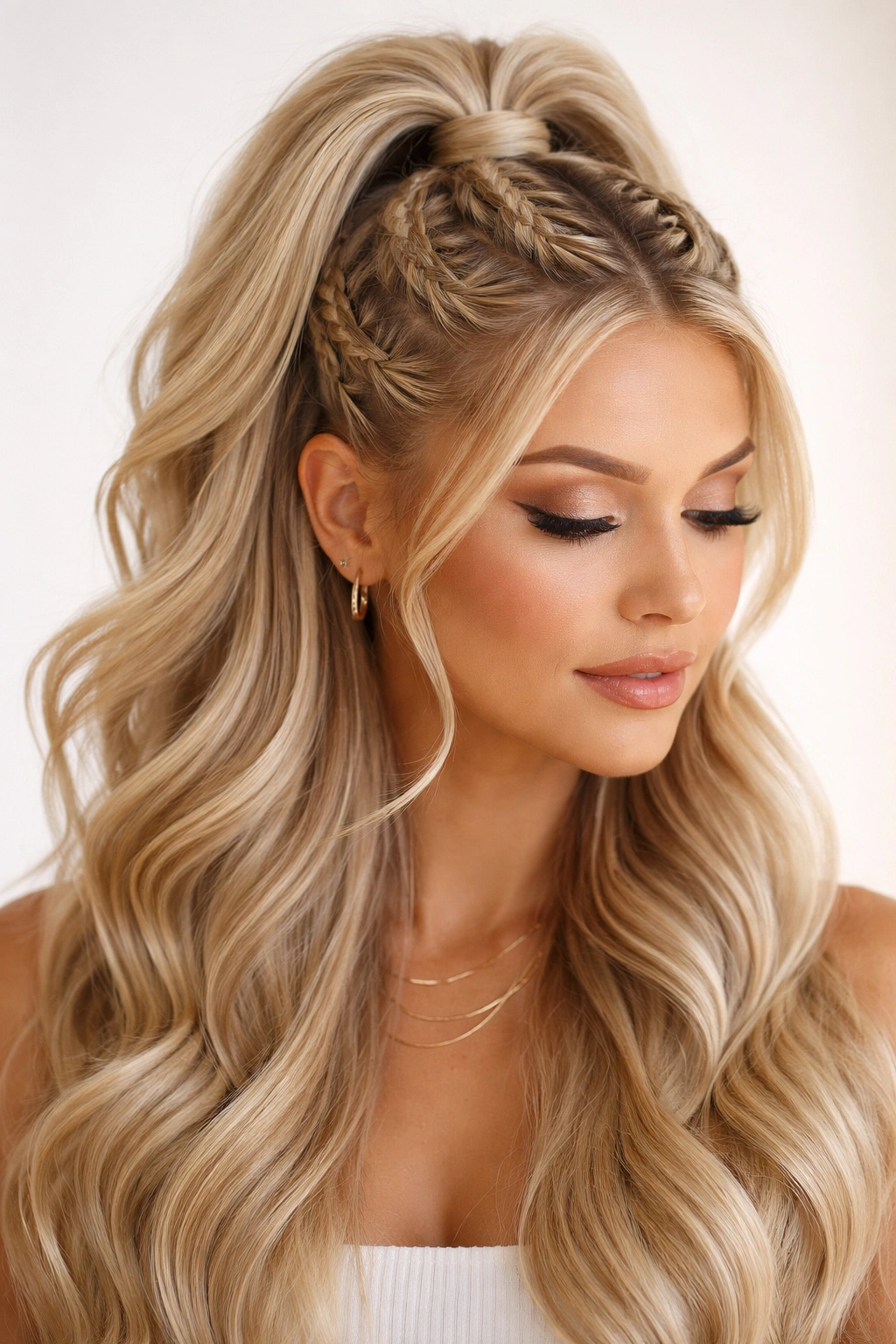
Incorporating braids into your half-up style adds texture, sophistication, and visual interest that elevates it beyond basic styling. Whether you choose Dutch braids, French braids, or even thin halo braids, the woven pattern creates a focal point that draws the eye upward and makes your blonde look intentional and expertly styled. This is the style you wear when you want people to know you put thought into how you look.
Selecting Your Braid Style and Placement
A classic approach is to create two thin Dutch braids that begin at your temples and meet at the back of your crown where they’ll be secured with a hair tie or clip. These braids should be just thick enough that they’re visually interesting without looking cartoonish — aim for about one inch wide at the base. As you braid, gradually incorporate sections of your quick weave hair, which adds volume and creates a blended, seamless look.
Alternatively, create one thicker center braid beginning at your hairline and moving straight back toward your crown. This single-braid approach is cleaner and more minimalist, and it works particularly well with blonde because the braided pattern shows up clearly against the light. The key is maintaining consistent tension throughout the braid so it looks polished rather than haphazard.
Making Braids Work with Quick Weave Extensions
Your quick weave should be pre-placed and secured before you start braiding, or you can incorporate it as you braid — both approaches work. The advantage of pre-placing it is that you can see exactly how your blonde natural hair and the weave blend together, and you can adjust placement if needed. The advantage of incorporating it as you braid is that you create a more unified, cohesive look where the weave is clearly part of the overall design rather than a separate element.
Choose a blonde weave with slight texture or wave — straight weave can look too uniform and plastic when braided, while textured weave blends more naturally with typical blonde hair’s movement and dimension.
Styling the Bottom Half to Complement Your Braids
Since you’ve already created visual interest at the top with braids, your bottom half should be relatively simple. Loose waves or a straight style both work beautifully. The braids will be the star of this look, so don’t compete with the top section by overdoing the bottom. A simple wave or a sleek straight style lets your braids shine while keeping the overall look balanced.
Pro tip: After you’ve finished braiding and securing everything, gently pull at the edges of each braid to make them slightly wider and fluffier. This technique is called pancaking, and it makes braids look fuller and more intricate. Don’t overdo it, though — you want braids that look intentional and structured, not loose and unraveled.
6. The Sleek Blonde Half-Up with a Statement Clip or Claw
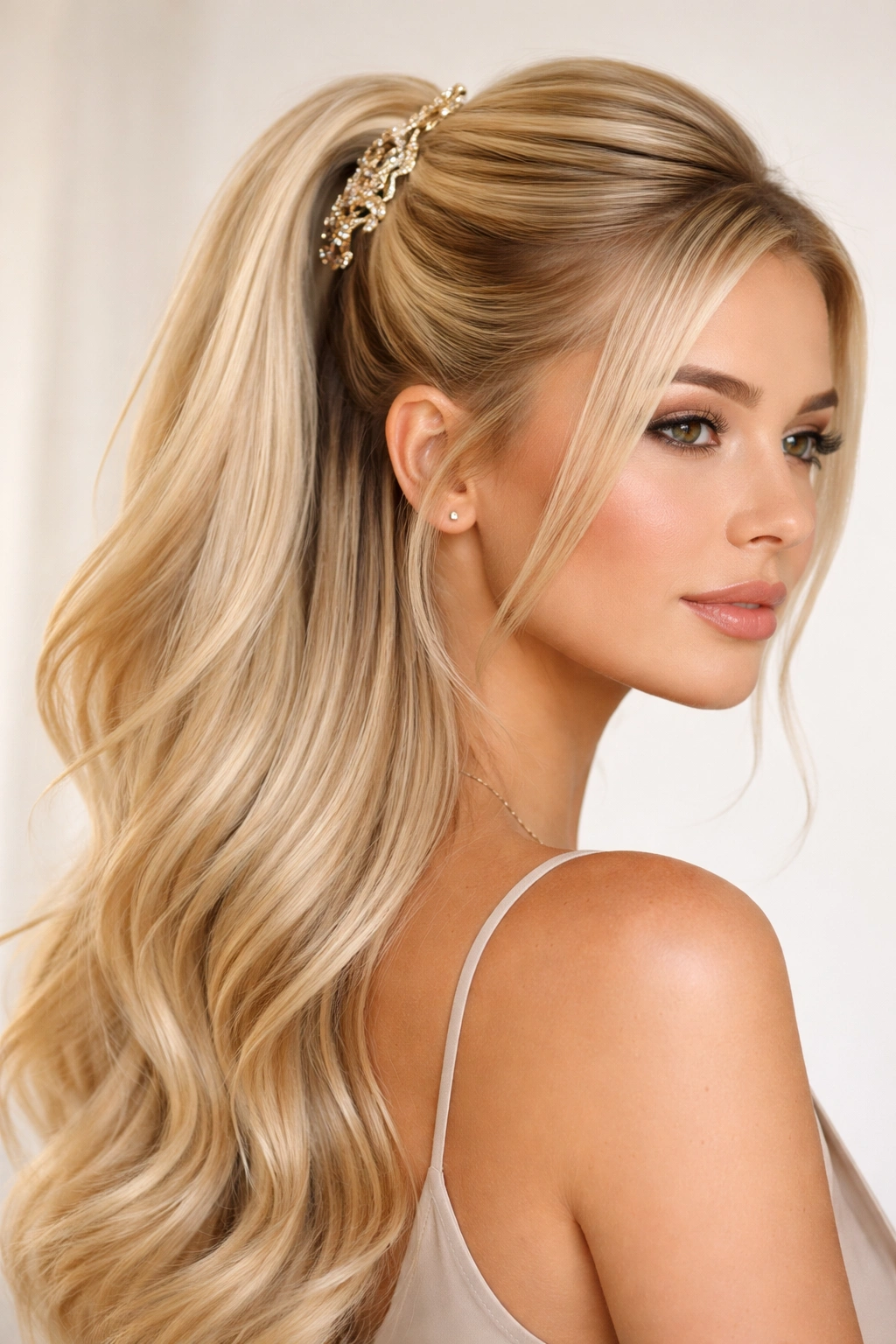
Sometimes the simplest styles make the biggest impact. A perfectly sleek half-up ponytail held with a statement clip or decorative claw is effortless to create but looks incredibly polished, especially on blonde hair. This style has made a major comeback in recent years because it’s so easy to do and so flattering on nearly everyone. The clip or claw becomes a jewelry piece for your hair, adding interest without requiring you to do anything complicated.
Creating the Sleek Foundation
Blow-dry your hair smooth or use a flat iron to create a sleek, polished base. Separate your half-up section using a horizontal parting that runs from temple to temple. Smooth this top section back toward your crown using a fine-tooth comb and a light smoothing serum or gel — you want zero flyaways or texture. Gather it into a low ponytail position at the crown, then secure it temporarily with a thin elastic that matches your hair color.
Once it’s secured and smooth, remove the thin elastic and replace it with your statement clip or claw. This creates a cleaner, more intentional look than leaving the elastic in place. The clip or claw becomes the focal point of the style, so choose one that complements your coloring. Gold clips tend to look stunning on cooler-toned blondes, while silver or rose gold works beautifully on warmer-toned blondes.
Why This Minimalist Approach Works for Blonde
Blonde hair can sometimes look washed out or one-dimensional when it lacks texture, but adding a statement clip transforms it into a deliberate style choice rather than just flat hair. The clip adds visual weight and interest at a point where it frames your face, drawing attention upward. It also catches light and creates dimension, which makes your whole look feel more intentional and put-together.
For those with very fine or delicate blonde hair, this style is perfect because it doesn’t require teasing or heavy styling products. You’re working with the natural qualities of your hair rather than fighting against them, which means less damage and more longevity for your blonde.
Choosing Your Statement Clip
Look for clips that have substantial presence without being so heavy that they’ll slip out of your hair. Tortoiseshell clips work beautifully with blonde and add warmth. Metallic clips in gold, silver, or rose gold offer a more modern aesthetic. Decorative claws with embedded stones or geometric designs work wonderfully if you’re dressing up. The clip should complement your style and the occasion — a delicate clip works for work or casual wear, while a bolder statement clip works for events or dates.
Styling note: If your blonde hair is particularly slippery or fine, use a small rubber band or elastic beneath your clip to provide extra grip. The clip will sit on top and hide the elastic completely, giving you security without sacrificing aesthetics.
7. Half-Up Blonde with a Messy Bun and Undone Texture
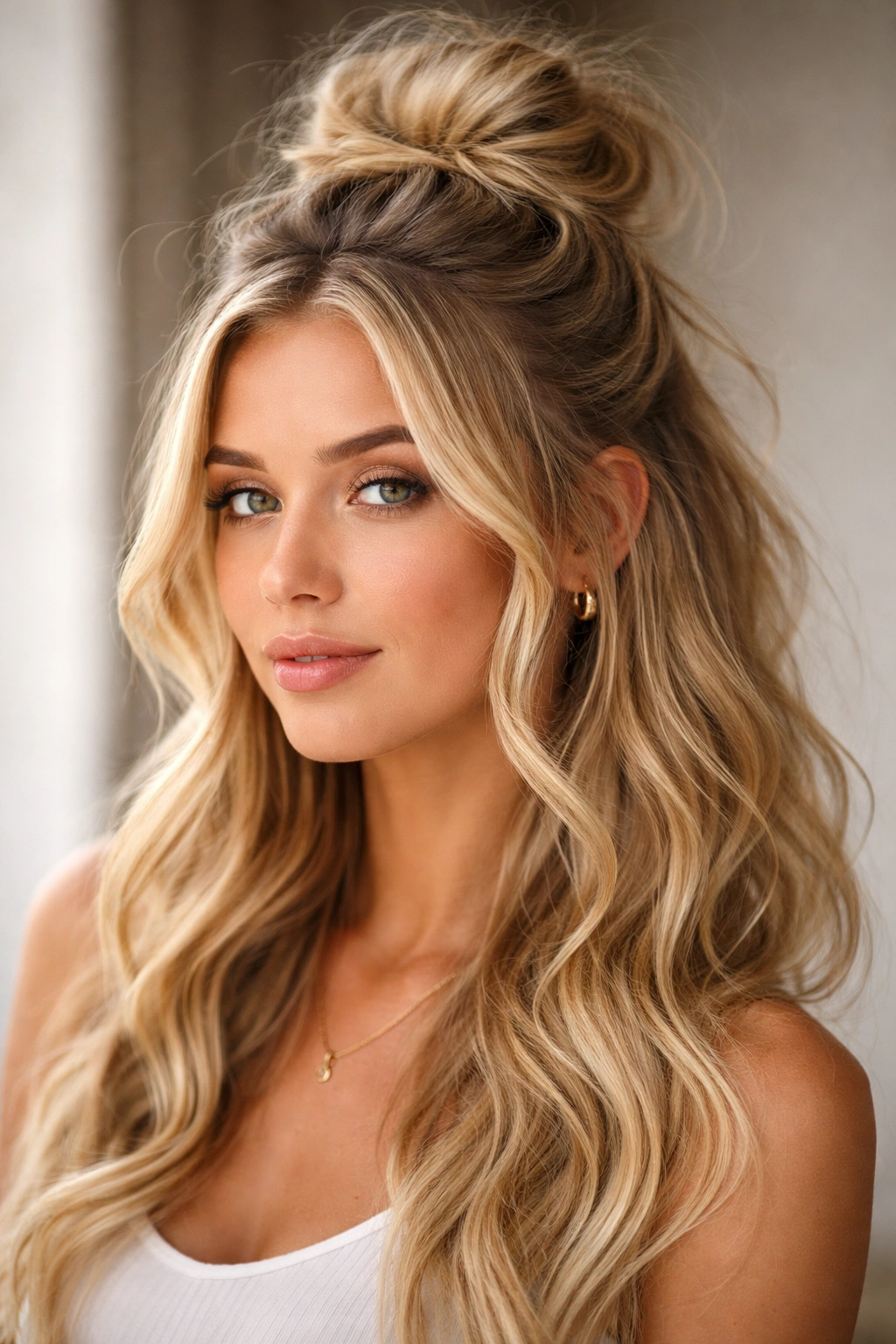
This style embraces the beauty of imperfection and works wonderfully for blonde hair that has natural dimension and movement. A messy bun held at the crown with loose pieces framing your face and a textured bottom half is the definition of effortless elegance. It’s the style you’d wear when you want to look like you just rolled out of bed but somehow look perfectly put together.
Creating the Controlled Mess
The trick to a good messy bun is that it’s actually carefully constructed to look undone. Start with textured hair — day-old hair is perfect, or you can add texture with a salt spray or dry shampoo before styling. Section your half-up portion and gather it loosely toward your crown. Don’t smooth it or make it neat; instead, let it have texture and movement. Secure it with an elastic, then gently pull and tease sections of the bun to make it fuller and fluffier.
Take a few loose pieces from around your face and leave them down — these frame your face and create the effortless aesthetic. These pieces should be relatively straight or gently wavy, not as textured as your bun. They should fall just in front of your ears and possibly brush against your jawline, creating softness and movement around your face.
Incorporating Your Weave into the Messy Aesthetic
Choose a quick weave that has natural texture or wave — this helps your bun look organically messy rather than like you just didn’t try. Attach your weave before creating your bun, making sure it’s secure enough to hold the weight of your textured, undone styling. The weave should blend seamlessly with your natural blonde, so match it closely in tone.
The bottom half of your hair, which you’re leaving down, should be wavy or curled. Use a curling iron to create loose waves, or use a braiding method (wet braid, sleep, then release) to create natural-looking texture. These waves should be soft and romantic, not tight curls. They should move freely and look like they could fall however they want.
Why Blondes Excel with This Undone Look
Blonde hair’s natural reflective properties make messy styles look sophisticated rather than sloppy. Light plays off textured blonde in ways that create visual interest and depth, making an undone style look intentionally styled. Where darker hair might look neglected in a truly messy style, blonde hair looks thoughtfully textured and movable.
The contrast between your controlled-but-messy bun and your wavy bottom half creates visual interest without looking overdone. It’s a style that works for casual days, date nights, and even some professional settings depending on how you accessorize it.
Real talk: This style actually gets better as the day goes on. Gravity settles your bun slightly, your curls loosen out, and everything becomes more naturally textured and beautiful. By evening, you might even prefer how it looks compared to when you first styled it.
8. The Blonde Half-Up with Thin Face-Framing Braids and Waves
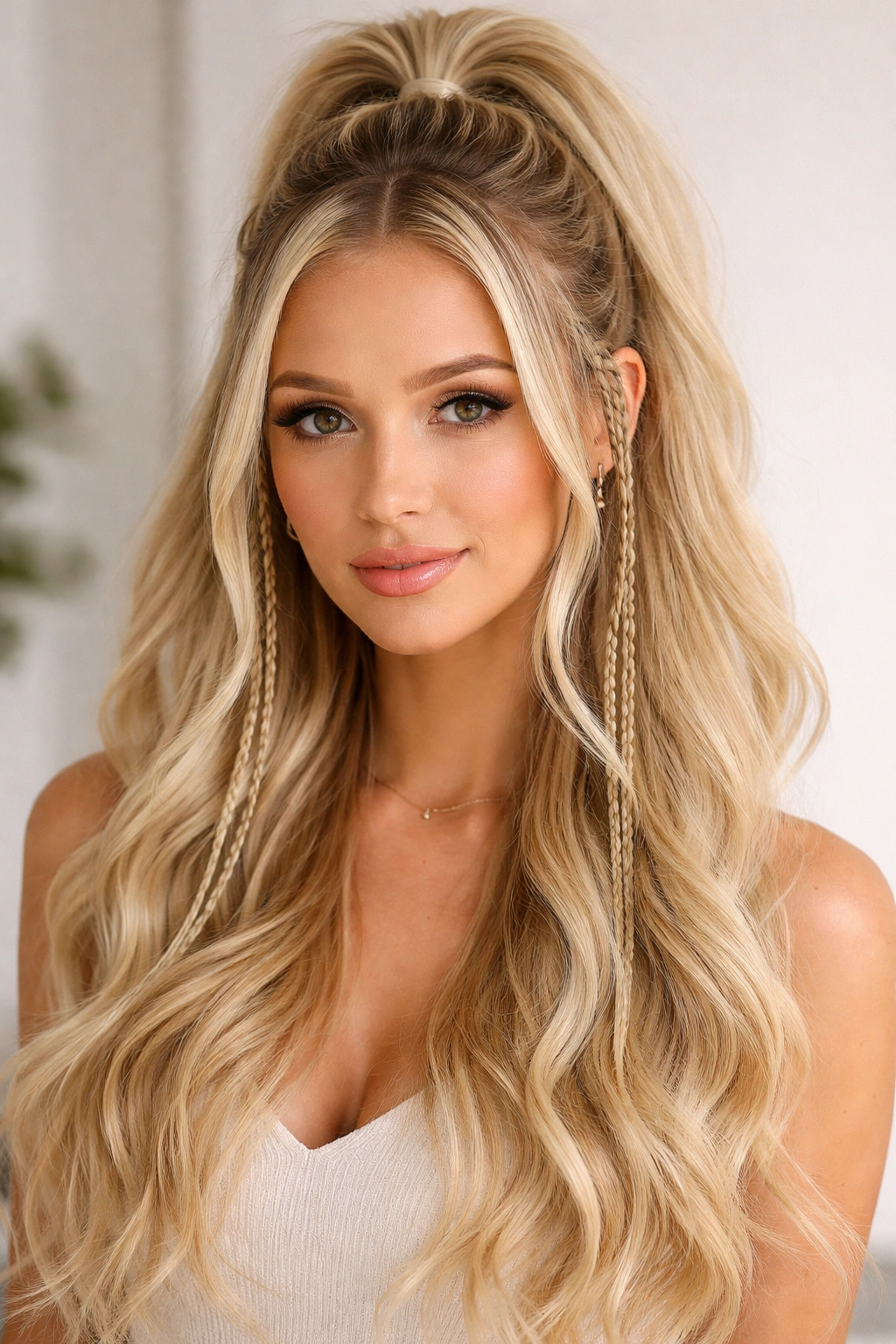
Combining thin braids with waves creates a romantic, intricate look that’s surprisingly simple to execute. Thin braids (we’re talking pinky-width or thinner) frame your face while a half-up ponytail sits at your crown, and your bottom section flows in soft waves. This style works beautifully on blonde because the braids create texture interest while the waves add movement and dimension.
Mapping Out Your Braids
Start with your hair slightly textured — this gives your braids something to grip and makes them hold better throughout the day. From each temple, take a thin section roughly the width of your pinky finger. Begin braiding toward the center back of your head, braiding loosely so the braids don’t look too tight or severe. These braids should reach approximately the center back of your scalp, where they’ll be incorporated into your half-up ponytail.
The beauty of thin face-framing braids is that they don’t require precision. They’re meant to look effortless and organic, not perfectly uniform. Small imperfections actually add to the overall romantic aesthetic. As you braid, slightly pancake each braid (gently pull at the edges) to make it fuller and fluffier.
Securing Everything at the Crown
Once both thin braids have reached the center back of your scalp, gather your entire half-up section (including the braids) into a ponytail at your crown. Secure it with an elastic that matches your hair color. You can add your quick weave extensions either before braiding (if you pre-place them) or by incorporating them as you gather your half-up section. The weave adds volume and fullness to your ponytail, making it look substantially thicker than your natural hair alone.
If you want extra polish, take a small section from your ponytail and wrap it around the base of the elastic, securing it with a bobby pin underneath. This creates a finished, intentional look that hides your elastic completely.
Styling Your Bottom Half
Your bottom half should be wavy to complement the braids above. Use a curling iron to create loose waves throughout, working in sections from your scalp downward. The waves should start at mid-length and become more pronounced toward your ends. These waves should be soft and flowing, not tight curls. Let them cool (pinning them loosely while cooling helps them last longer), then release and finger-comb through gently.
The overall effect should be romantic and intricate at the top (thanks to your braids and ponytail) and soft and flowing at the bottom (thanks to your waves). This combination creates a look that’s more interesting than a simple half-up but easier to achieve than many elaborate styles.
Styling secret: A light texture spray or sea salt spray applied to your bottom half before curling actually makes your waves hold better and look more natural. The spray adds grip so the waves don’t fall completely straight by midday.
9. Half-Up Blonde with Twisted Sections and Volume
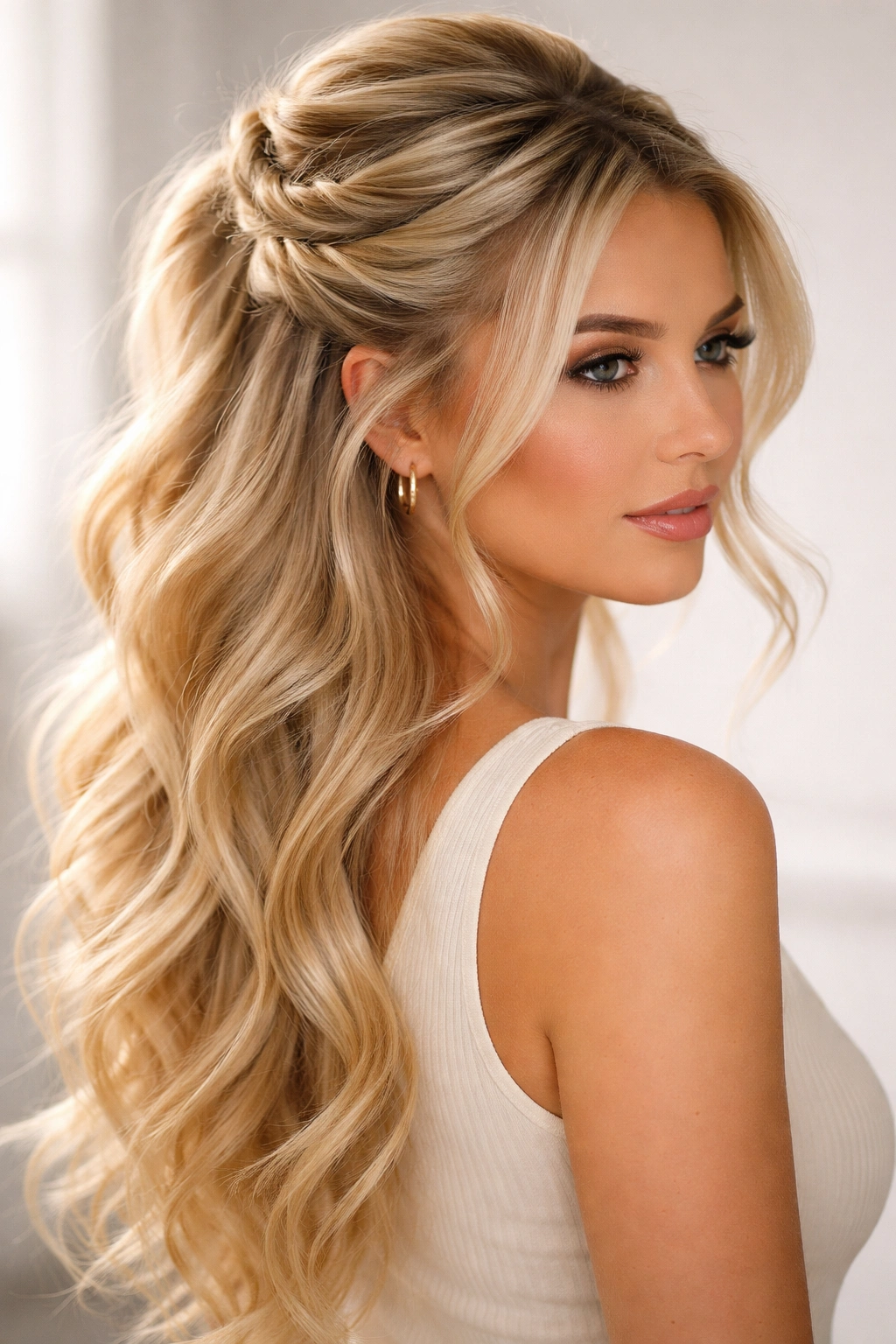
This style combines the ease of twisting with the visual impact of an intentionally voluminous half-up. Rather than creating one simple twisted crown, you’re twisting multiple thin sections from around your head and gathering them together, creating a complex-looking style that’s surprisingly simple to execute. For blonde hair, the dimension of multiple twists catches light beautifully, creating depth and visual interest.
Creating Your Twisted Sections
Start with hair that has some texture or wave — straight, slick hair doesn’t show the detail of twists as well. Begin with a thin section at one temple and twist loosely toward the back of your head. Before you reach your crown, pick up another thin section just below that first twist and begin twisting it as well. Repeat this process 3-4 times from each side, creating multiple parallel twisted sections that all move toward the back of your head.
Each twist should be loose and relaxed, roughly the thickness of a pencil or slightly thicker. You’re not aiming for tight, perfect twists; instead, aim for romantic, somewhat undone twists that look effortless. Slightly pancake each twist as you go to make it fuller and fluffier. Your blonde will naturally show the texture of the twists beautifully without requiring extra work.
Gathering and Securing Your Twisted Sections
Once you’ve created all your twists on both sides, gather them together at the back of your crown along with your natural hair from that section. Secure everything into a ponytail using an elastic that matches your hair color. The multiple twists create a base that looks complex and intentional, but you’ve only twisted your hair — you haven’t done anything intricate or time-consuming.
Your quick weave should be incorporated either as you create your twists (by twisting it along with your natural hair) or by pre-placing it and incorporating it as you gather your half-up section. Either method works beautifully. The weave adds volume to your final ponytail, making it look fuller and more substantial.
Styling Your Bottom Half for Balance
Since your top section already has significant texture and visual interest from the multiple twists, your bottom half should be relatively simple. Straight or lightly wavy works beautifully. You could also add a bit of curl if you want extra dimension, but keep it understated so your twisted crown remains the focal point. The flowing, simpler bottom half balances the textured, complex top section.
Pro tip: If any of your twisted sections start to come loose during the day, you can quickly re-twist them in just a few seconds. Keep a small elastic or bobby pin in your pocket or bag for quick on-the-go fixes.
10. The Sleek Blonde Half-Up with a Low Ponytail Placement
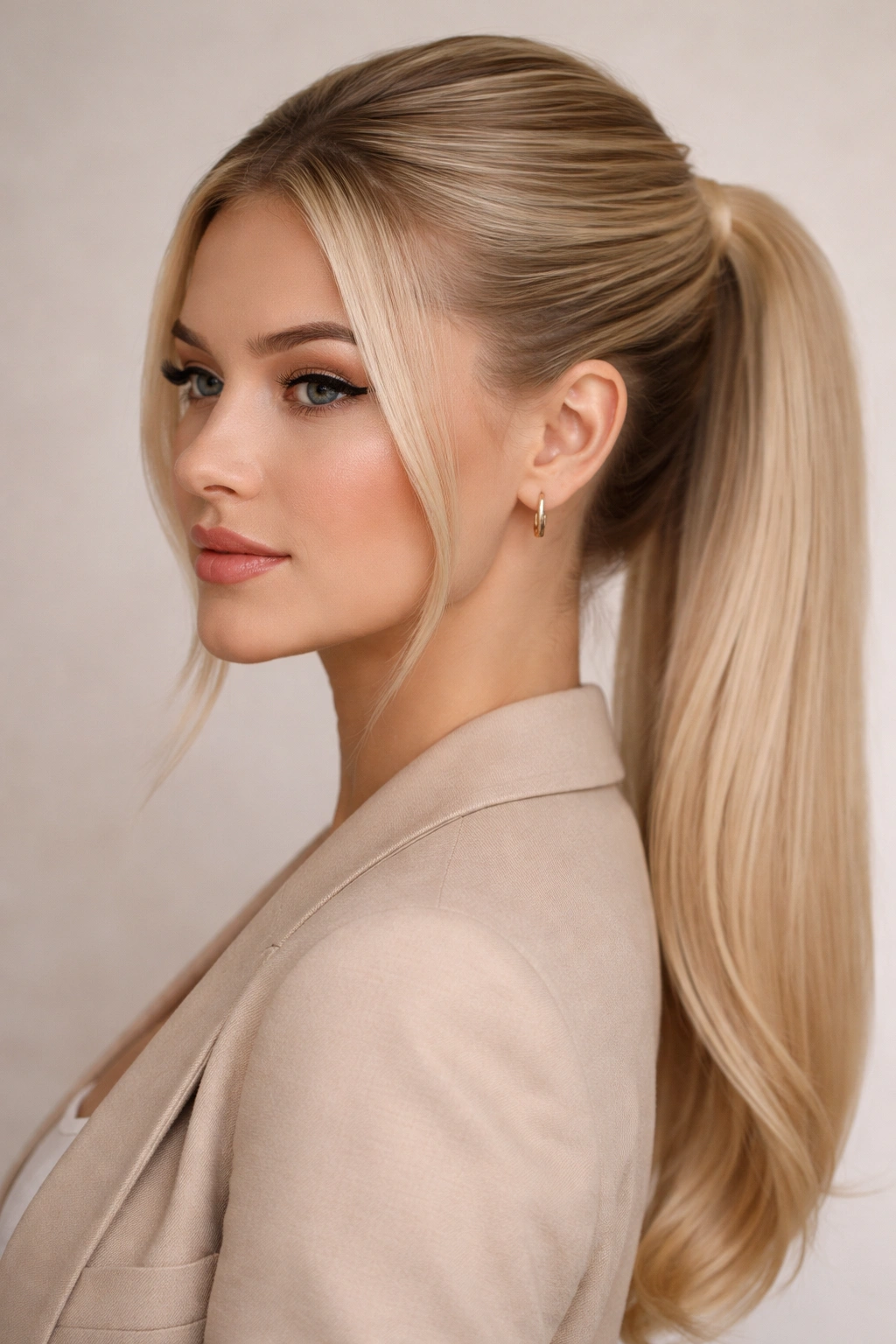
Sometimes the placement of your ponytail changes the entire vibe of a style. Instead of a traditional crown ponytail, this style places your half-up ponytail lower — roughly at the nape of your neck rather than at your crown. This creates an entirely different aesthetic that’s less playful and more sophisticated, making it perfect for professional settings or formal events.
Understanding Placement and Proportion
A low placement changes everything about how your style reads. It’s still technically a half-up style because roughly half your hair is pulled back, but the lower placement makes it feel more understated and elegant. This works particularly well on blonde because the swept-back effect shows off your face and your hair’s dimension beautifully. The lower placement also works well for people with longer faces or higher foreheads, as it balances facial proportions.
Section your hair into your half-up portion using a parting that sits slightly lower than your ears. This parting should be horizontal, running from just above your ear on one side to just above your ear on the other side. Clip the lower section away and work with your upper section.
Creating Sleekness Without Severity
Smooth your upper section back toward your lower crown using a fine-tooth comb and a light smoothing serum. You want a polished, sleek finish that doesn’t look severe or pulled too tight. Avoid heavy products that make your hair look wet or sticky; instead, use lightweight serums and flexible-hold sprays that keep flyaways down without creating shine or crunchiness.
Gather your smoothed section into a low ponytail at roughly the position where your crown meets your neck. Secure it with an elastic that matches your hair color. For extra polish, wrap a thin section from your ponytail around the elastic to hide it completely. This small detail elevates the entire look and makes it feel intentionally finished rather than casually pulled back.
Incorporating Your Weave and Creating Dimension
Your quick weave should be attached before you create your ponytail, positioned in your upper section. Match your weave tone to your natural blonde for a seamless blend. The weave adds volume and fullness to your final ponytail, making it look substantial and healthy. If your weave has subtle dimension (highlights or lowlights within the blonde), it will create visual depth in your ponytail that makes the style look more interesting.
Your released bottom half should flow smoothly from your lower ponytail. It can be straight for a modern, polished look, or it can have subtle waves for a more romantic vibe. Both work beautifully with this placement. The key is making sure your bottom half flows naturally from your ponytail without looking separated or disconnected.
Styling note: This placement works beautifully for people with very fine or delicate blonde hair because the lower ponytail doesn’t require you to tease or backcomb your crown, reducing potential damage and making the style easy to take down.
11. Half-Up Blonde with Decorative Pins and Scattered Texture
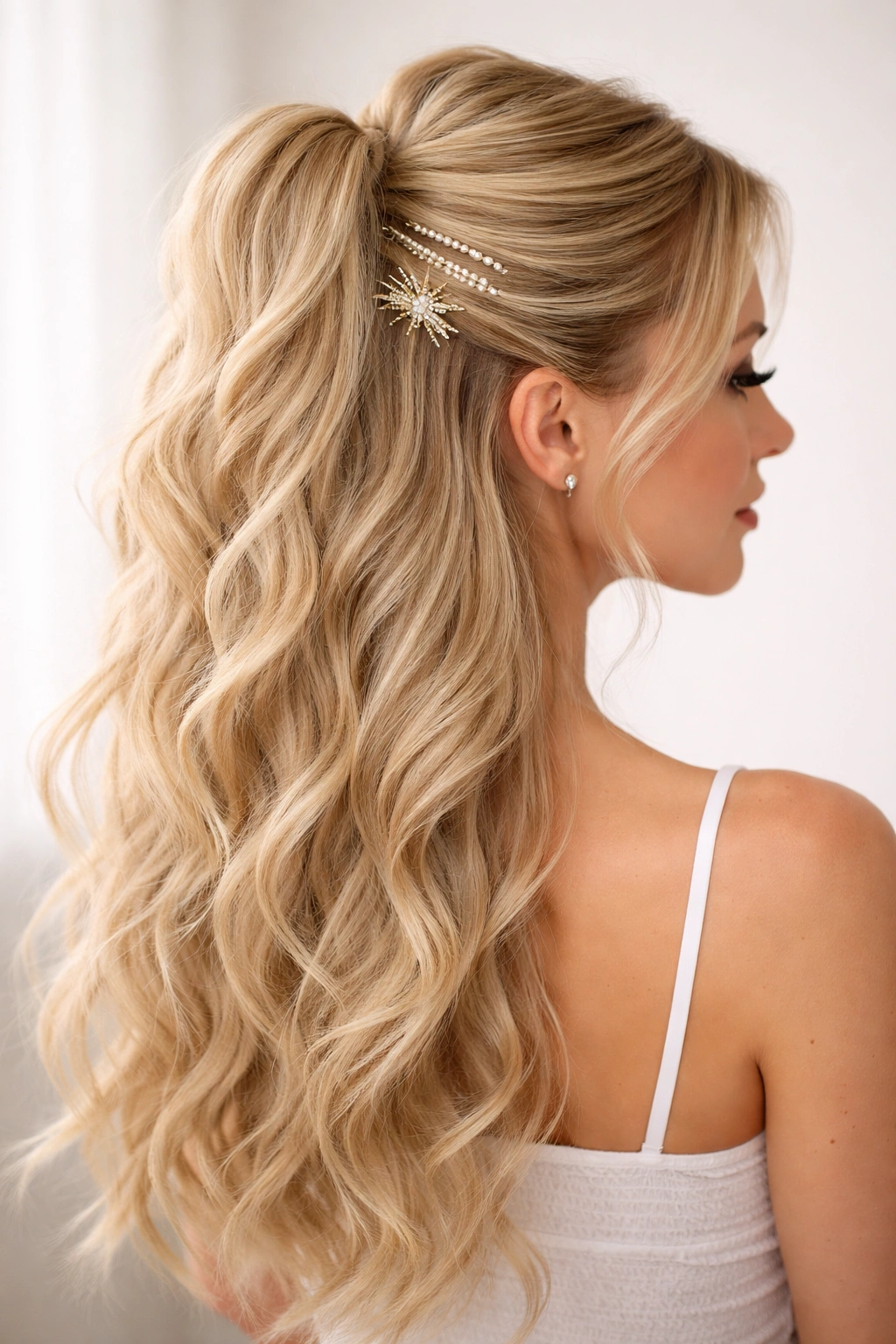
This style embraces ornamental hair accessories to create visual interest and dimension. Rather than creating one structured bun or ponytail, you’re creating a half-up style with slightly scattered, textured sections held in place with decorative bobby pins or small clips. It’s the style you wear when you want to look like you spent time on your hair but in a fashion-forward, intentional way rather than a painstakingly precise way.
Creating Your Textured Base
Start with textured hair — your waves or curls should be pre-styled using a curling iron, braiding method, or styling spray. Don’t smooth these waves down; instead, let them have movement and dimension. Section your hair into your half-up and half-down portions using a standard horizontal parting. Gather your upper section loosely, but rather than creating one tight ponytail, create a slightly undone, textured gathering.
Use decorative bobby pins or small metal clips to secure your half-up section, rather than using an elastic. This approach lets you customize exactly how tight or loose your half-up is, and it creates visual interest through the placement of your accessories. Use multiple pins (3-4 minimum) rather than just one, placing them throughout your gathered section so they’re visible and intentional.
Selecting Your Decorative Hardware
Your pins or clips should be intentional and visible — this isn’t about hiding them but about making them part of the style. Gold bobby pins work beautifully on warmer-toned blonde hair and add warmth to your overall look. Silver or rose gold pins work beautifully on cooler-toned blonde. Decorative clips with geometric designs, pearls, or embellishments add fashion-forward interest. You could even use multiple clips of different sizes for an eclectic, artistic vibe.
The hardware you choose should complement your blonde tone and the overall aesthetic you’re going for. For a casual day-to-day look, simple metallic pins work beautifully. For an event or date, more elaborate decorative clips make a statement.
Styling Your Released Section and Positioning Your Weave
Your bottom half should be wavy or curly to complement the textured top section. Use a curling iron to create waves throughout, or use a braiding method for more natural-looking waves. These waves should be soft and flowing, moving freely throughout your bottom half.
Your quick weave should be incorporated into your gathered upper section, either by pre-placing it or by including it as you gather your texture. The weave adds volume and fullness, making your half-up section look more substantial. Choose a weave that has texture or wave to blend with your textured top section — straight weave would look disconnected from the overall vibe.
Styling secret: Try using two colors of bobby pins (gold and silver, or two different gold tones) placed throughout your gathered section for a subtle artistic vibe. This creates visual interest and texture without looking chaotic.
12. The Blonde Half-Up with a Woven Through Bun
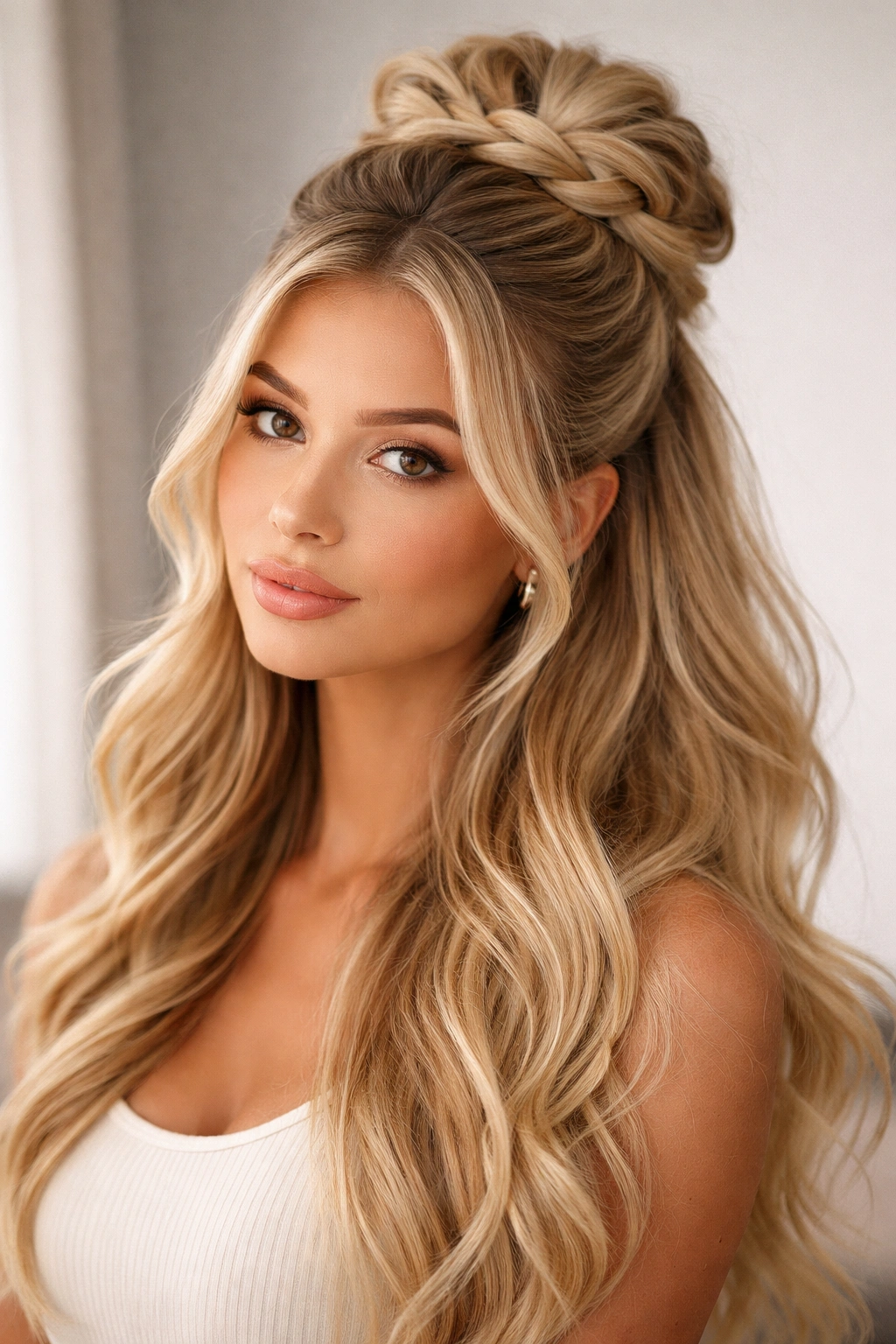
This final style combines a perfectly wrapped bun with a woven-through effect that makes it look more intricate and interesting than a standard bun. Rather than creating a traditional twisted or gathered bun, you’re creating a bun with sections of hair woven through it, creating visual complexity and elegance. This style works beautifully on blonde because the woven sections catch light differently, creating dimension and depth.
Creating Your Base Bun
Section your hair into your half-up and half-down portions using a standard horizontal parting. Gather your upper section into a ponytail at your crown and secure it with an elastic. Rather than twisting this ponytail to create a spiral bun, gather it into a loose knot or bun shape. Don’t wrap it tightly or make it perfectly compact; instead, create a somewhat loose, organic bun that has space and dimension.
Secure your bun with bobby pins that match your hair color, tucking them underneath so they’re hidden. Your bun should feel secure but not painfully tight. There should be some intentional looseness to it that creates an undone, romantic aesthetic.
Creating Your Woven-Through Effect
This is where the style becomes visually interesting. Take thin sections from your released bottom half and gently weave them through your bun. You’re not creating new braids; instead, you’re taking existing strands and weaving them through the existing bun structure. This adds visual interest and creates a unified look between your half-up and half-down sections.
Start with one thin section from one side of your bottom half and weave it through your bun from bottom to top. Secure the end of that section with a bobby pin underneath the bun. Repeat with a thin section from the opposite side, weaving it through the bun in the opposite direction. You could add a third woven section from the center if you want additional visual interest.
Making the Look Work with Blonde
Blonde hair’s light-reflecting qualities make woven-through effects look exceptionally elegant and intentional. The light catches each woven section differently, creating visual dimension and depth. Where darker hair might make a woven-through effect look complex or chaotic, blonde hair makes it look sophisticated and carefully designed.
Your quick weave should be pre-placed in your upper section before you create your bun, and your bottom half can be your natural blonde with or without weave. The contrast between your woven sections and your bun creates visual interest that makes the style feel more complex than it actually is.
Worth knowing: Woven-through effects tend to hold well throughout the day because the woven sections naturally tighten and secure themselves as you move. This is actually one of the most secure half-up styles you can create, even though it looks delicate and intricate.
Final Thoughts
Half-up half-down styles with blonde hair and quick weave extensions offer incredible versatility for every occasion, hair type, and personal style. Whether you prefer sleek and polished, romantic and textured, or artistic and undone, there’s a style in this collection that speaks to you. The beauty of quick weaves is their ease of installation and removal, making them perfect for anyone who wants salon-quality volume and dimension without the commitment of traditional extensions.
The key to pulling off any of these styles beautifully is choosing a quick weave that matches your blonde tone as closely as possible and thinking about how texture, movement, and placement work together to create your overall look. Sleek styles benefit from perfectly matched, straight weave. Romantic styles benefit from wavy or curly weave. Textured styles benefit from weave with built-in dimension that mimics natural blonde depth.
Remember that the “quick” in quick weave isn’t just about installation time — it’s also about how fast you can style, unstyle, and restyle these looks. They work for busy mornings when you need to look put-together quickly, but they also work for evening when you want to take your style down and start fresh. Invest in quality blonde weave that feels soft and moves naturally, take time to blend it seamlessly with your own hair, and you’ll have a signature look that works for nearly every situation life throws at you.
