



When you’re already blessed with long hair, ponytail extensions might sound counterintuitive—but here’s the truth: they’re not about adding length you don’t have. They’re about adding volume, texture, color dimension, and effortless styling options that transform your everyday ponytail from flat and basic into something salon-worthy in seconds. Whether you’re looking to create an Instagram-worthy statement ponytail without committing to permanent changes, or you simply want to protect your natural hair from daily styling stress, ponytail extensions are a game-changing investment. The best part? Unlike full-head extensions, these are low-commitment, non-damaging, and incredibly versatile. Long-haired people often overlook them thinking their length is “enough,” but once you experience how a quality ponytail extension can completely elevate your look, you’ll wonder why you didn’t try it sooner.
1. Clip-in Ponytail Extensions
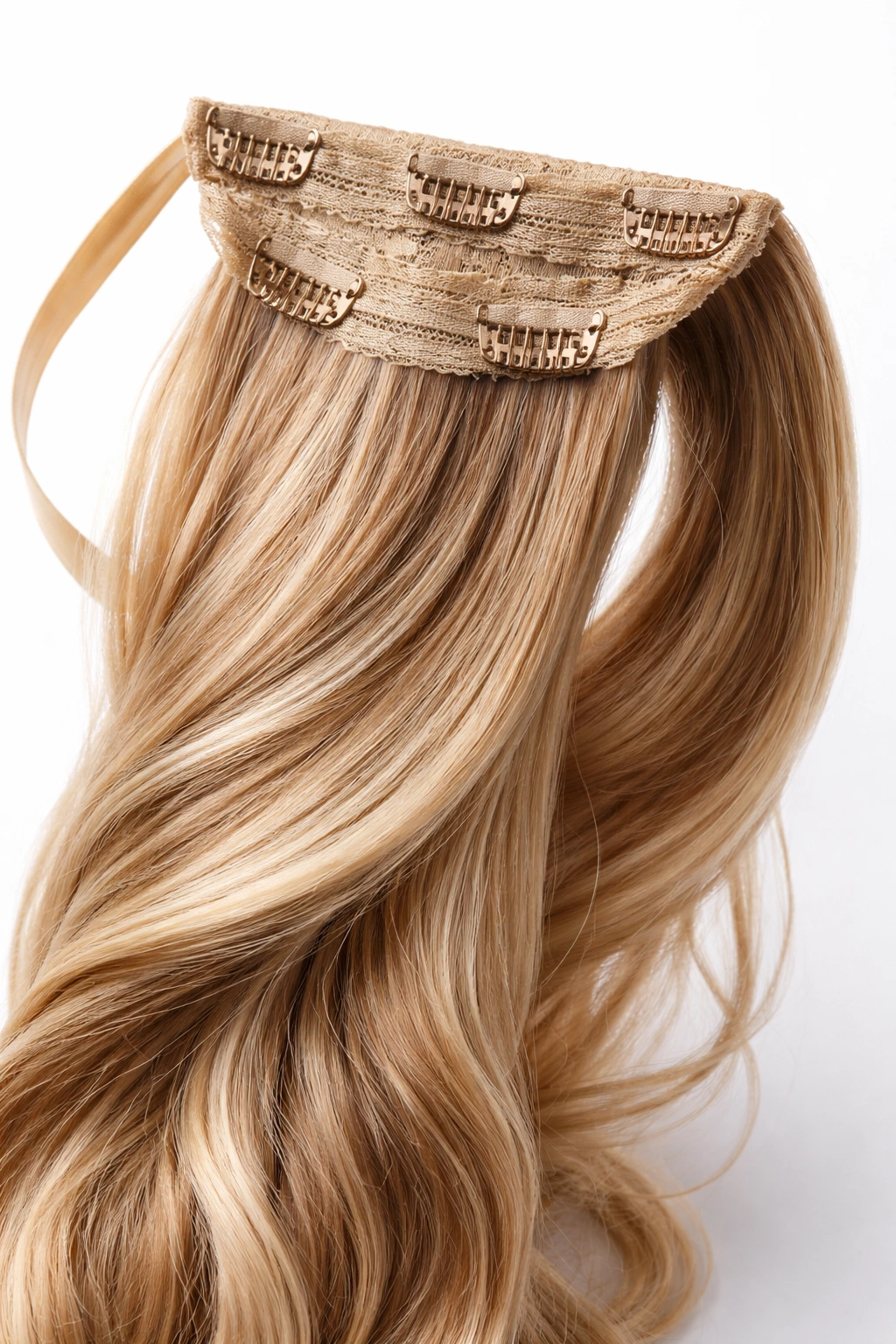
Clip-in ponytail extensions are the quickest way to upgrade your look—literally. These extensions use small, secure clips (usually 2-4) that attach directly to a base near your hair’s roots, positioned where you’d normally tie your ponytail. The whole process takes about 30 seconds. You simply gather your hair into the position where you want the extension base to sit, smooth it out, and clip the extension firmly in place. No adhesive, no heat, no commitment. The best part is the versatility: you can change styles throughout the day, swap extensions between outfits, and instantly adjust volume and length without any commitment.
Why They’re a Game-Changer for Long Hair
Clip-in extensions are perfect for long hair because they work with your existing length rather than fighting it. You get the instant volume and fullness that even the thickest natural hair sometimes lacks, plus they’re completely removable in seconds. They’re ideal if you want a statement ponytail for date night but prefer your natural hair for everyday wear. No permanent changes, no damage, and you can use the same extension for months if you care for it properly.
What to Look For
- Clip strength and count: Look for at least 3-4 secure clips to prevent slipping, especially if you have fine or slippery hair. Metal clips hold better than plastic ones
- Base width: The wider the ponytail base, the more it blends with your gathered hair and the more secure the hold. Narrow bases can shift if your hair is thick
- Hair weight and density: Heavier extensions require more secure clips. Lightweight options are better for fine hair
- Synthetic vs. human hair: Human hair feels more natural and blends seamlessly but costs more; synthetic is budget-friendly and lower maintenance
- Length options: Choose extensions that match or slightly exceed your desired ponytail length. Most come in 16-20 inch options
2. Tape-in Ponytail Extensions
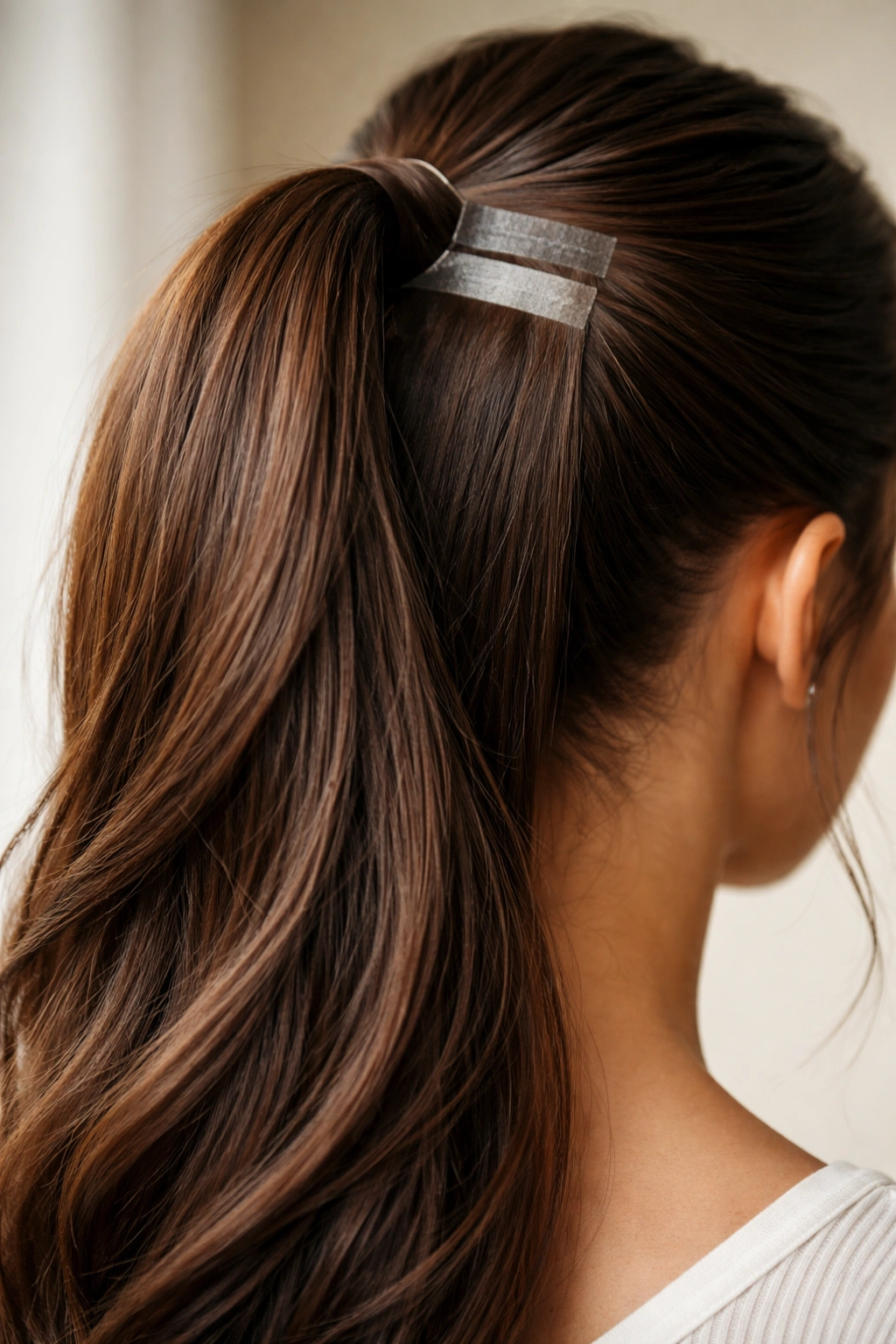
Tape-in ponytail extensions use hypoallergenic, waterproof adhesive tape to bond directly to a thin base that sits at the crown area. The extension attaches via this small, flat base rather than traditional clips—creating an incredibly sleek, seamless look. They’re semi-permanent, typically lasting 4-8 weeks before needing reapplication. The adhesive is strong enough that you can actually put your ponytail up or down repeatedly without the extension slipping, which clip-ins sometimes do with thick or very long hair.
What Makes Them Different from Clip-ins
Tape-in extensions feel more integrated into your natural hairline because there’s no visible clip base or mechanism. They stay in place through swimming, exercise, and humidity without any worry of shifting. The trade-off is that they require professional application and removal—you can’t just pop them in yourself. However, once applied, you have complete freedom with styling for weeks without thinking about the extension moving.
Key Characteristics to Know
- Semi-permanent application: Once applied by a professional, they stay put for 4-8 weeks regardless of activity level
- Blend quality: The tape base is so thin it blends invisibly into your hair, even in high ponytails that show the crown area
- Damage risk: Improper removal can break hair, so professional application and removal are essential. Professional salons typically charge $20-40 per reapplication
- Daily styling freedom: You can wash, style, blow-dry, and restyle repeatedly without worrying about the extension shifting
- Human hair essential: These work best with human hair because the tape bond needs weight and natural oils to maintain adhesion
- Cost factor: Higher upfront cost due to professional application, but lasts longer than clip-ins so cost-per-wear is comparable
3. Drawstring Ponytail Extensions
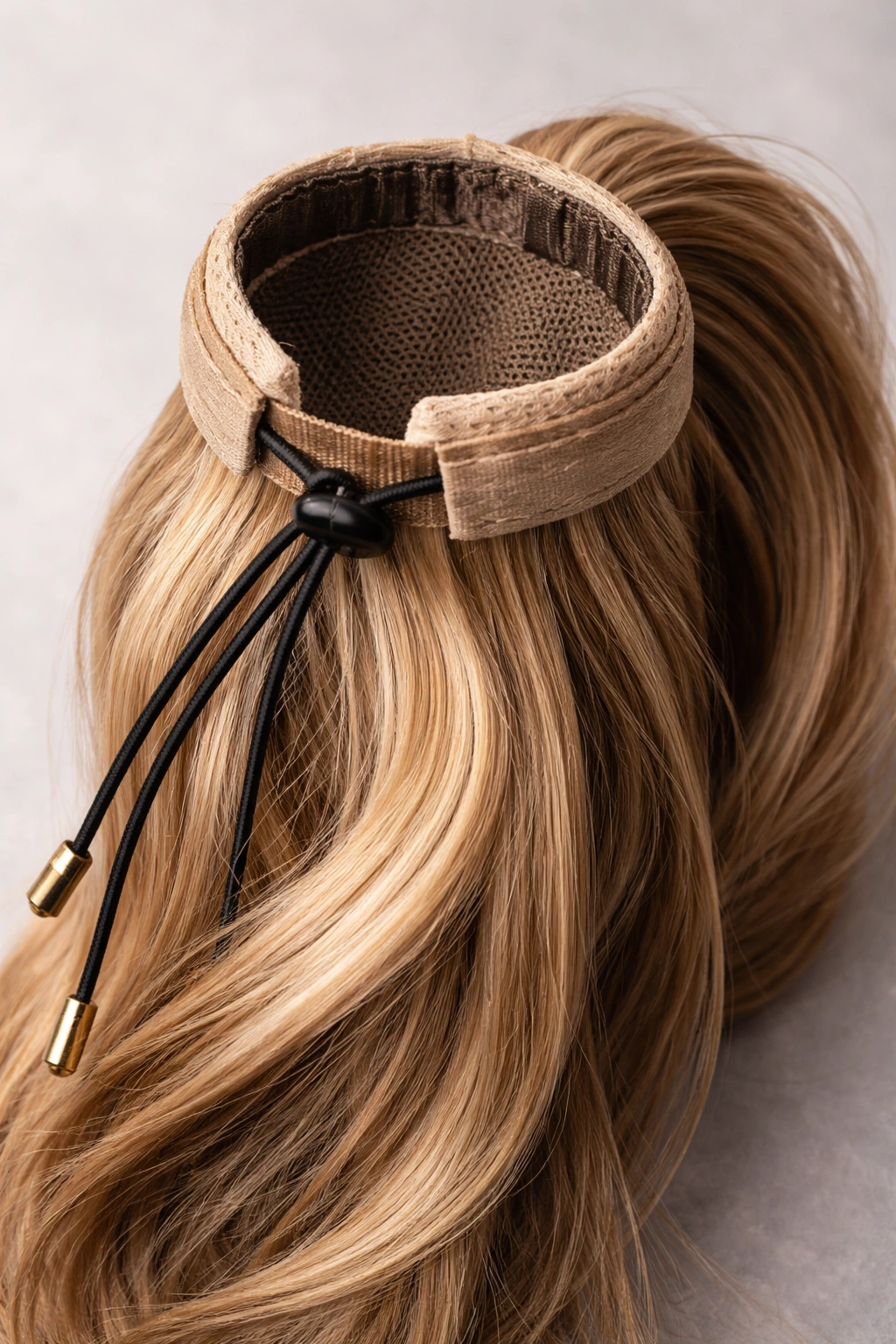
Drawstring ponytail extensions, sometimes called wrap-around or elastic-based extensions, use an adjustable drawstring or elastic loop that pulls through your natural ponytail like you’re threading a belt through your hair. You gather your natural hair into a ponytail, then wrap the extension base around it and pull the drawstring tight to secure it. The mechanism is so simple that even people new to extensions can apply it in under a minute with zero tools. The extension sits right on top of your natural ponytail, creating seamless volume.
Why They Work So Well for Long Hair
With long hair, you already have the length—what you often lack is dense volume. Drawstring extensions add bulk and thickness without requiring clips or adhesive. They sit naturally on top of your gathered hair, so they actually look like they’re part of your ponytail rather than attached to your scalp. This makes them perfect for styles where the ponytail base is visible, like high ponytails or sleek styles.
What to Consider Before Buying
- Elastic quality: Premium elastic should have grip without pinching; cheap elastic loses elasticity after a few uses
- Base design: The loop or drawstring should distribute weight evenly around your ponytail so it doesn’t create a visible lump or weight imbalance
- Weight for your hair type: If you have fine hair, a very heavy extension can actually pull your ponytail down. Medium-weight options are safer
- Styling versatility: These work best for classic, sleek, or casual ponytails. They’re not ideal for super-voluminous half-up styles where the base shows
- Easy maintenance: Simply remove by loosening the drawstring—no professional help needed, making this the lowest-commitment option
- Durability: Quality drawstring extensions can last 6-12 months with care, making them one of the most economical long-term options
4. Halo Ponytail Extensions
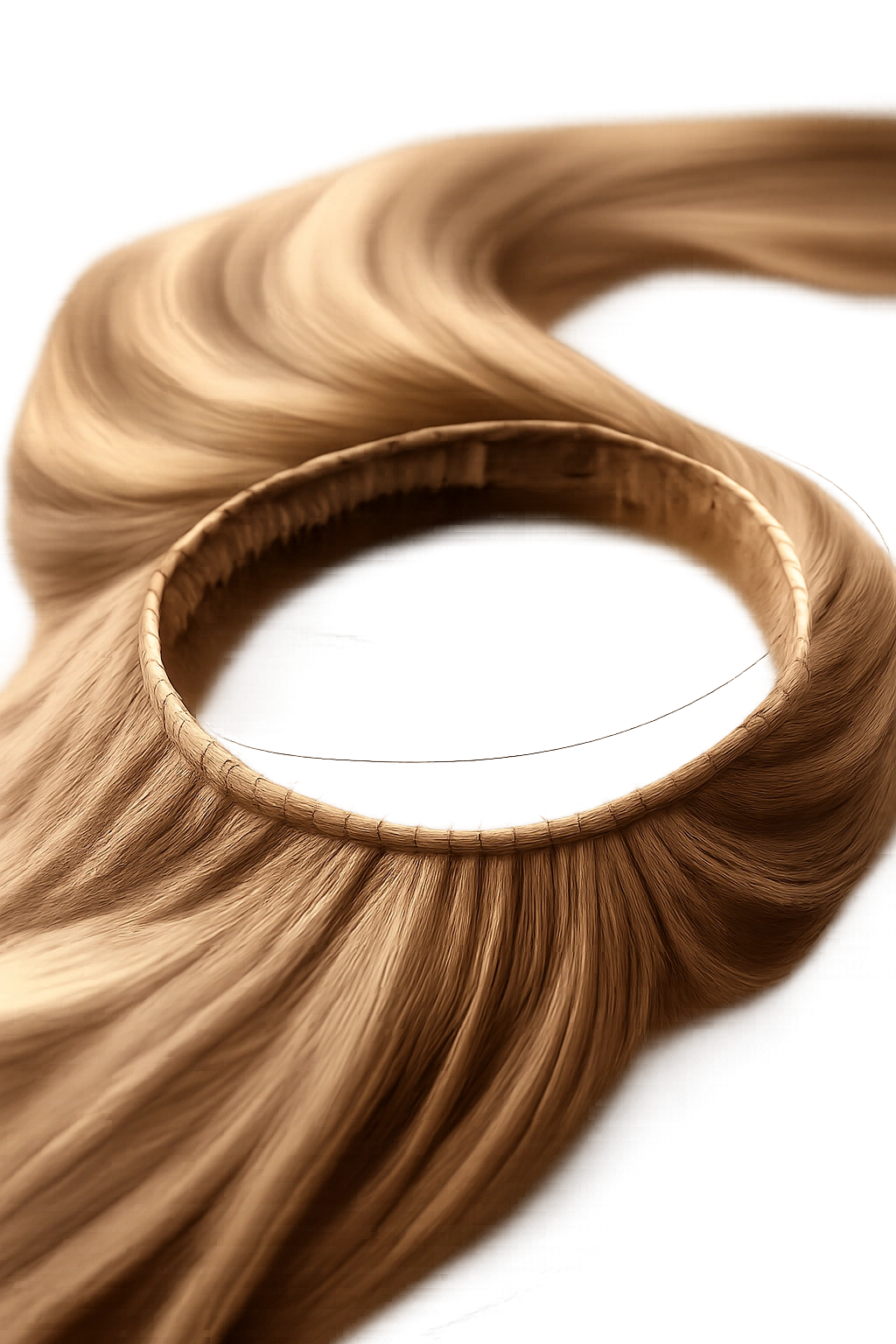
Halo ponytail extensions are uniquely designed with a transparent nylon band that wraps around your head like an invisible halo, with hair attached to the underside. Rather than clipping into your scalp or sitting on top of your natural ponytail, the halo band itself becomes part of the style. You thread the band around your head, gather your natural hair above or below it into a ponytail, and the two create a blended, voluminous result that looks like impossibly thick natural hair.
The Beauty of the Halo Design
The halo concept distributes weight evenly across your entire head rather than concentrating it at one clip point or on top of your ponytail. This makes them exceptionally comfortable for all-day wear, even for 8-12 hours. They’re also completely customizable: you can wear your natural hair down with the extension as a halo frame, gather just your natural hair into a ponytail with the halo underneath, or blend them together for maximum volume. The versatility rivals even clip-in options.
Essential Features to Understand
- Band material: Look for lightweight nylon or plastic bands, not heavy synthetic. The band should be nearly invisible once hair is in place
- Thread-through ease: The best halos have a smooth, frictionless threading experience that doesn’t tug or snag your hair
- Weight distribution: Because weight spreads across the entire head, these work beautifully for thick, long hair without causing neck strain
- Hair attachment method: Hair should be sewn securely to the band, not just glued. Check for secure stitching before buying
- Adjustment mechanism: Some halos have adjustable bands (with tiny hooks or clips) so you can customize the fit. Others are one-size-fits-most
- Real-world comfort: Most users report being able to forget they’re wearing a halo after 10 minutes—it’s that comfortable
- Styling options: These shine in half-up styles, bohemian waves, and sleek pulled-back looks. They’re less ideal for ultra-voluminous high ponytails where the band itself needs to hide
5. Synthetic Ponytail Extensions
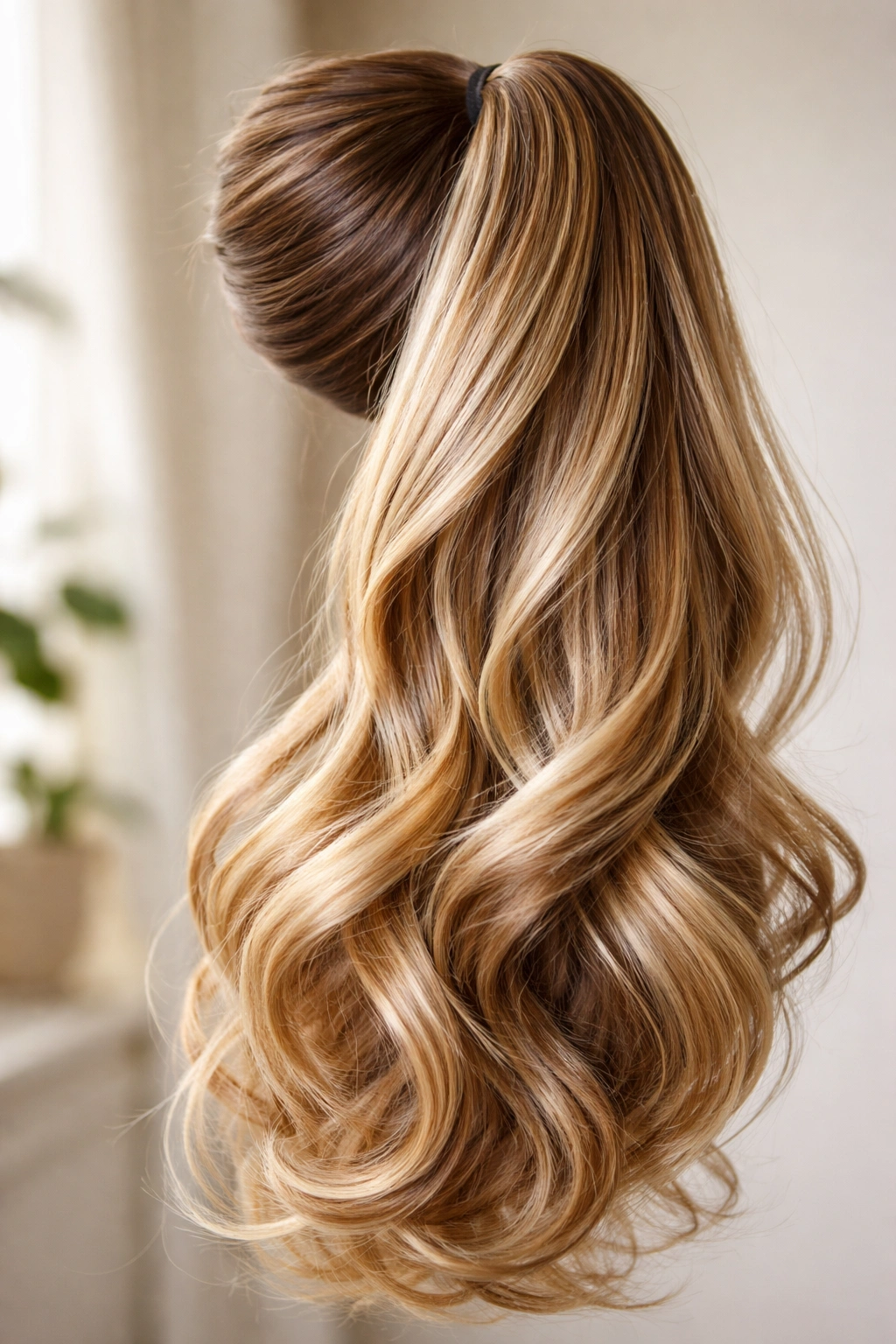
Synthetic ponytail extensions are made from high-quality plastic fibers engineered to mimic human hair texture. Modern synthetic hair is incredibly realistic—sometimes indistinguishable from human hair at a glance. These extensions offer significant advantages: they hold their style permanently (a curl in synthetic hair stays curled even after washing), require virtually no styling effort, and cost a fraction of human hair. The trade-off is they can’t be heat-styled, don’t blend as naturally with all hair types, and can sometimes feel slightly plastic-like in texture up close.
Why They’re Great for Long Hair
If you have long hair and want instant, no-maintenance styling, synthetic extensions deliver. You never need to curl, straighten, or style them—they come perfectly textured and stay that way. They’re particularly valuable if you want a colored or ombré ponytail without committing to coloring your entire head. The colors in synthetic extensions are vibrant and consistent, and they’re available in virtually every shade and pattern you can imagine. Plus, they’re durable: a quality synthetic extension can last 6-12 months of regular wear.
Critical Points About Synthetic Options
- Heat styling impossible: Never apply heat to synthetic extensions; it melts the fibers permanently. This means you can’t customize the curl or straightness
- Pre-styled options: This limitation is actually a feature—choose the texture you want and it stays that way indefinitely
- Shine level: Some synthetic hair has unnatural shine; premium brands have dull, matte shine matching natural hair. Check product photos carefully
- Color variety: Available in countless colors, balayage effects, and ombré patterns that would be expensive or damaging to create in real hair
- Tangling risk: Synthetic hair is more prone to tangling than human hair, especially in longer lengths. Daily brushing from bottom to top is essential
- Water compatibility: Can’t be wet-styled like human hair. Straightening wet synthetic hair is pointless; it reverts to its original texture as it dries
- Longevity: 6-12 months typical lifespan with care, shorter if worn daily. Still more economical per wear than human hair options
6. Human Hair Ponytail Extensions
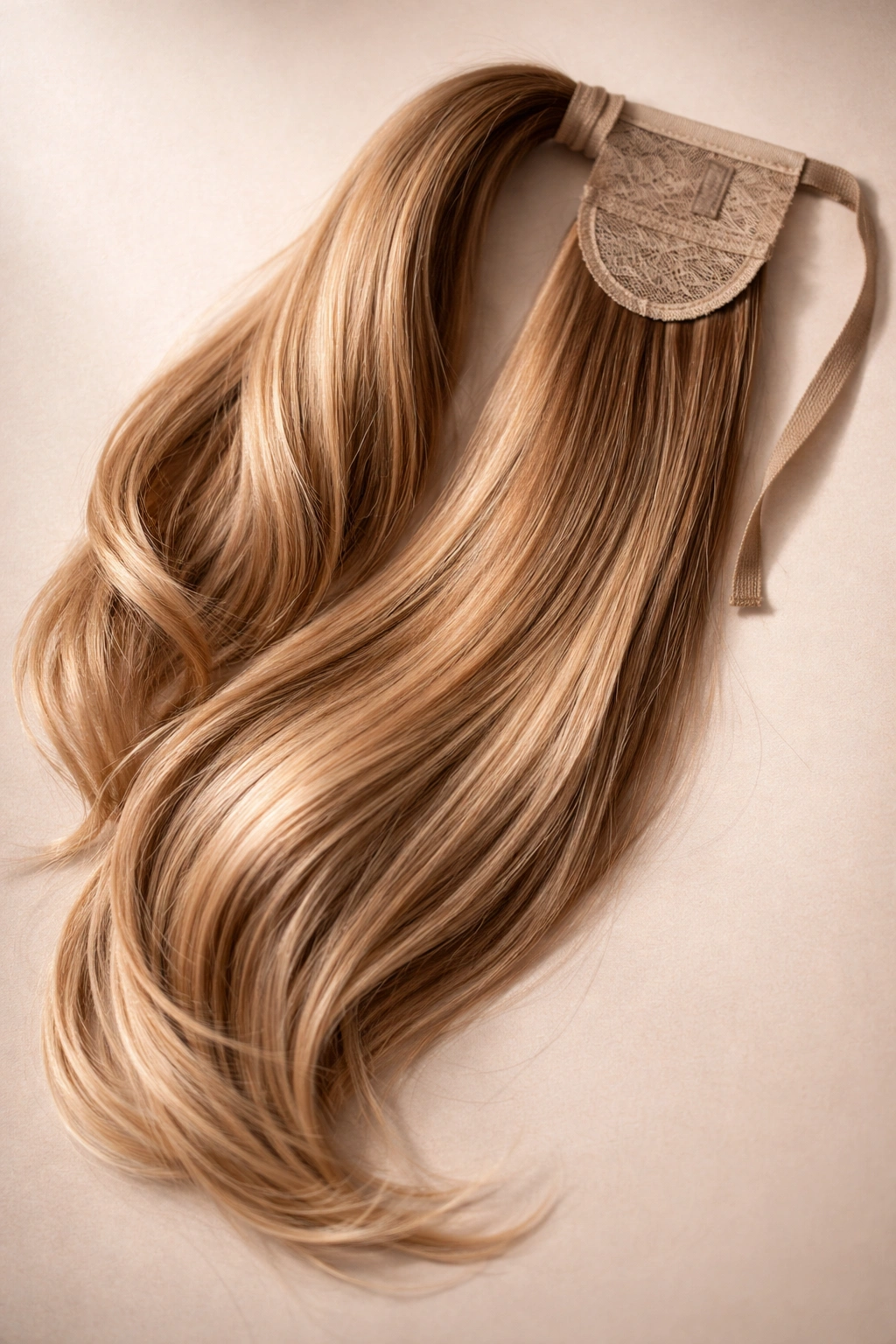
Human hair ponytail extensions are made from actual human hair—typically from donors in India, Brazil, or Southeast Asia. These extensions look identical to natural hair because they are natural hair. They blend seamlessly with any hair type, can be heat-styled, colored, and treated exactly like your own hair. They look the most natural, feel the most natural, and offer unlimited styling versatility. The premium price reflects the investment in genuine human hair and the longer lifespan.
Why the Premium Cost Is Worth It
With long hair, you likely already care about hair quality and aesthetics—human hair extensions align with that. They blend invisibly with your natural hair because they are hair with the same structure, cuticle alignment, and behavior. You can dye them, perm them, blow-dry them, and flat-iron them without limitations. If your natural hair is long, thick, and healthy-looking, human hair extensions will match that quality perfectly. They’re especially valuable if you want flexibility to change your style frequently.
Everything to Know About Human Hair Quality
- Grade and sourcing: Remy hair (cuticles all aligned in the same direction) is highest quality and most expensive. Virgin hair (never colored or chemically treated) commands premium prices and performs best
- Origin matters: Indian hair tends to be straighter; Brazilian hair often has a natural wave; Southeast Asian hair varies widely. Know the origin so you choose what matches your natural texture
- Hair weight: Choose weight appropriate for your natural hair density. Fine hair with heavy extensions looks unbalanced; thick hair can handle denser extensions
- Longevity: With proper care, human hair extensions can last 12-24 months. This longer lifespan offsets the higher upfront cost
- Maintenance requirements: Must be washed gently with sulfate-free products, deep conditioned regularly, and protected from harsh heat. More demanding than synthetic but rewarding
- Styling versatility: Can be straightened, curled, colored, and restyled infinitely. This is the main advantage over synthetic
- Blend quality: Looks completely natural with all hair colors and textures. Even with very dark or very light hair, human hair extensions are invisible
- Investment mindset: Think of quality human hair extensions as a luxury item, similar to a designer handbag. The price is high, but you’ll use it constantly and it holds value
7. Curly Ponytail Extensions
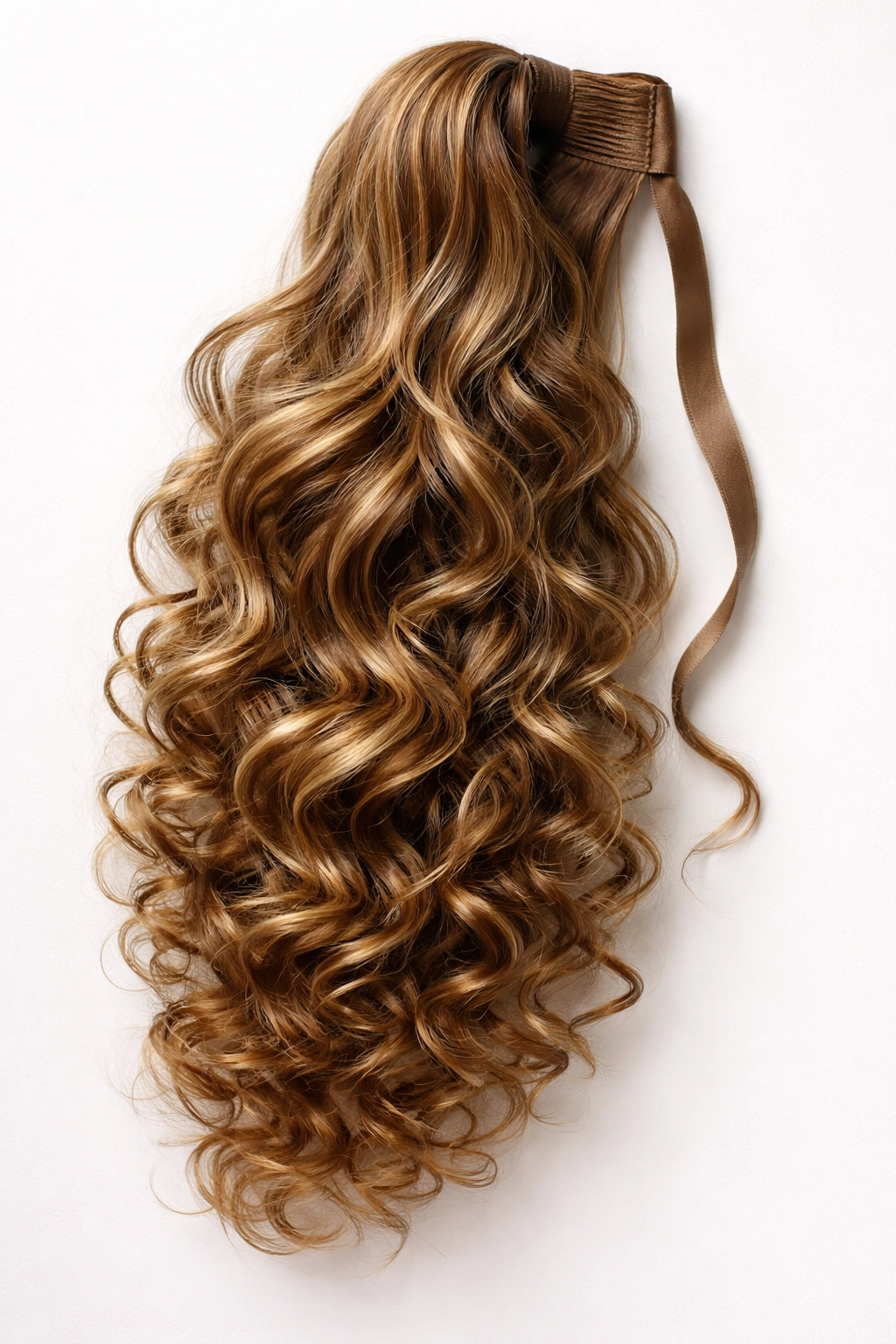
Curly ponytail extensions come with pre-formed curls, waves, or coils—ranging from loose Hollywood waves to tight ringlets to voluminous curly texture. These extensions eliminate the need to curl your ponytail yourself and maintain consistent texture throughout the day. They’re particularly popular for adding shape and dimension to straight long hair, and for anyone who wants effortless texture without daily heat styling. Curly extensions come in both human hair and synthetic versions, each with different benefits.
Why They Transform Long Straight Hair
If your natural hair is very long and straight, a curly ponytail extension instantly adds personality and movement. The curls frame your face, add visual interest, and make your ponytail look fuller and more voluminous than straight hair of the same length. They’re ideal for special occasions, date nights, or anytime you want an elevated look without committing to a perm or daily curling routine. The weight of curls also sits differently on the head than straight hair, creating a distinct visual impact.
What to Know Before Choosing Curls
- Curl pattern consistency: Check product photos carefully. The curls should be even throughout the length, not loose at the top and tight at the bottom
- Curl drop over time: Human hair curls may relax slightly with washing and styling. Synthetic curls stay permanently set but can’t be restyled
- Volume perception: Curly extensions create maximum volume; they’re excellent for adding thickness but make fine hair look unbalanced if the extension is too heavy
- Styling compatibility: Curly ponytails look best with casual, bohemian, or glam styles. They can look overdone with sleek makeup or minimalist outfits
- Maintenance: Curly human hair extensions must be deep conditioned frequently; curls can become frizzy without proper moisture. Synthetic curls need gentle brushing to avoid tangling
- Wave options: If you prefer subtle waves rather than full curls, look for “wavy” extensions instead of “curly.” This distinction matters for the final look
- Water activation: Human hair curls can be refreshed by lightly misting with water and allowing to air dry. Synthetic curls cannot be restyled
8. Straight Ponytail Extensions
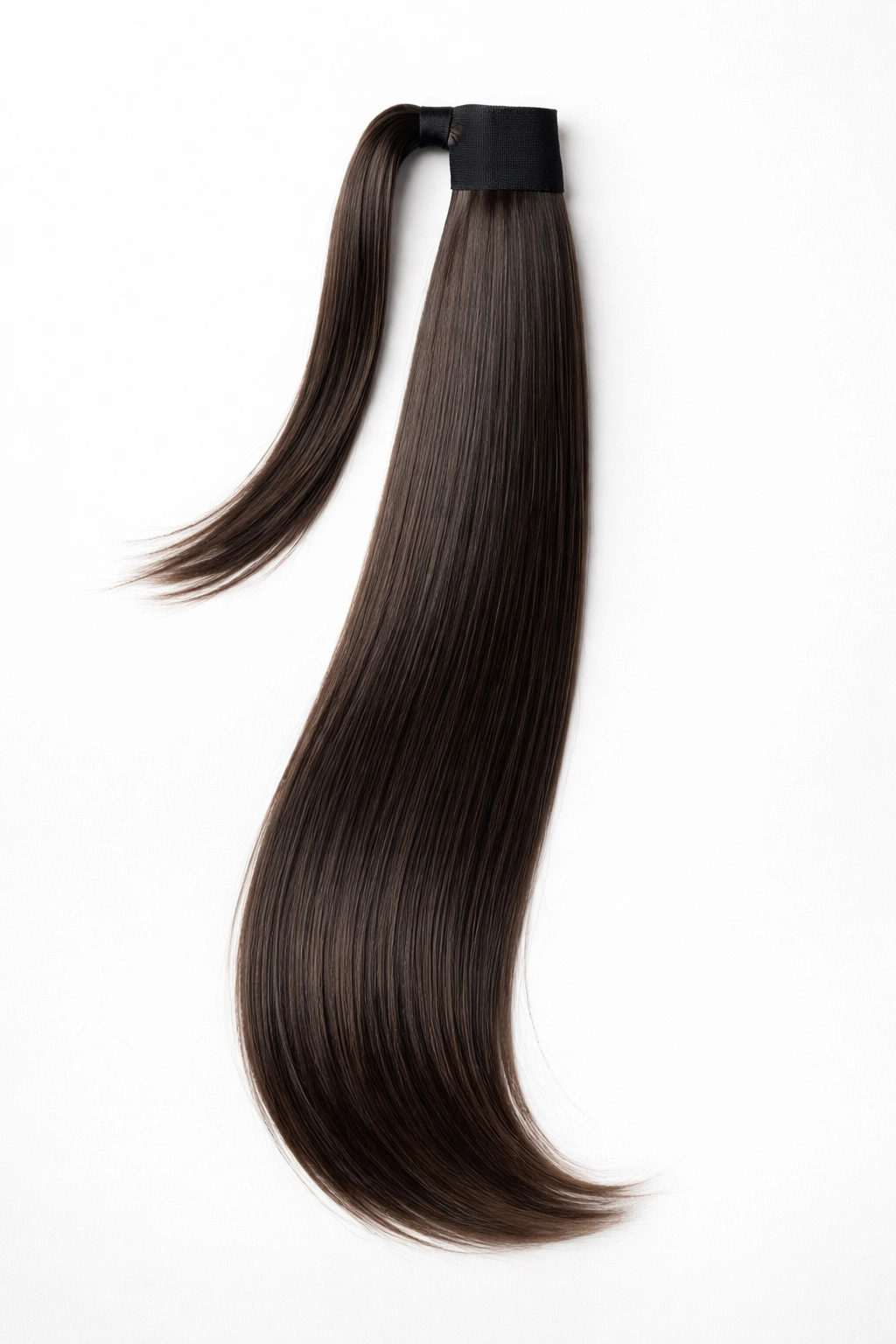
Straight ponytail extensions offer sleek, smooth texture—perfect for achieving that polished, high-shine aesthetic. Available in both human and synthetic, straight extensions are the most versatile type because they work with virtually any hairstyle and any personal style. They create an elegant, minimalist look or can be paired with glamorous makeup and outfits for maximum impact. For long-haired people with naturally straight hair, straight extensions blend invisibly. For those with curly or textured hair, straight extensions create striking contrast.
The Versatility Advantage
Straight extensions are basically a blank canvas. They work equally well for sophisticated business settings, casual everyday wear, or glam evening looks. Unlike curly extensions that dictate a certain aesthetic, straight extensions adapt to however you want to style and present yourself. If you have long hair and want maximum flexibility in your extension styling options, straight is the safest choice. They also tend to be slightly lighter-weight than curly extensions of the same length, which is comfortable for all-day wear.
Choosing Quality Straight Extensions
- Shine level: Look for realistic shine, not overly glossy. High-quality straight extensions should have a subtle sheen like healthy natural hair, not plastic shine
- Smoothness: Run your fingers along product photos or sample swatches. The cuticle should feel smooth, not rough or bumpy. Roughness indicates low-quality hair that will tangle and frizz
- Straightness: Check if the extension is truly straight or if it has a slight wave. Some extensions claim straight but have subtle texture. Know what you’re getting
- Weight distribution: Straight extensions hang differently than curly ones. Thicker straight extensions can feel heavier, which some people find uncomfortable in ponytail format
- Styling potential: Human hair straight extensions can be curled, waved, or textured with heat. Synthetic straight extensions maintain their straight texture permanently
- Maintenance: Straight human hair benefits from shine-enhancing serums and heat protectant sprays. Synthetic straight hair needs moisturizing mist sprays to prevent dryness and frizz
- Color matching: Straight extensions show highlights and color variations more clearly than textured extensions. Ensure color matches your natural hair in varied lighting
9. Colored and Ombré Ponytail Extensions
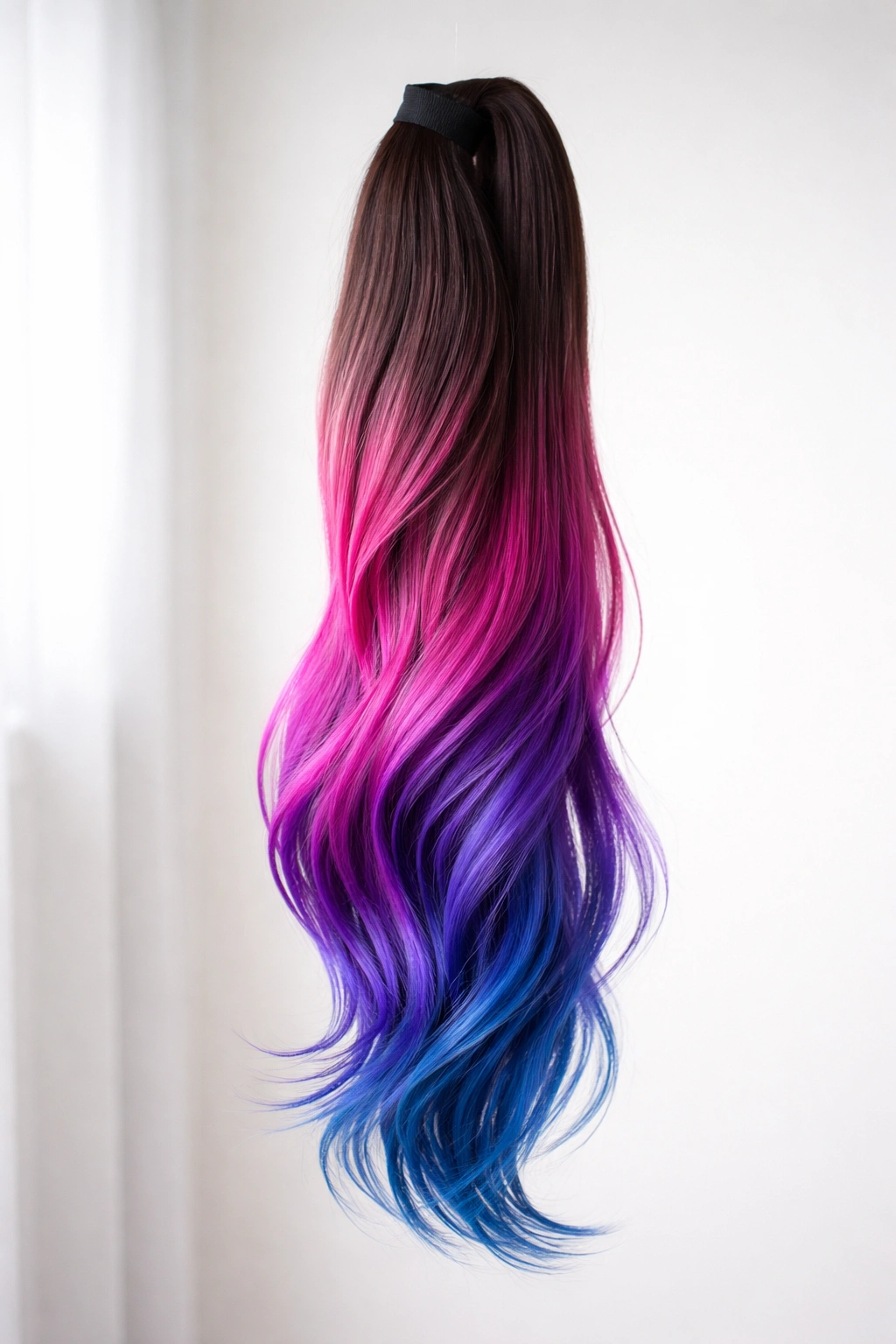
Colored ponytail extensions come pre-dyed in vibrant, fashion-forward shades—from bold burgundy and violet to soft rose gold and platinum. Ombré extensions feature a gradient from one color at the roots to a different color at the tips, creating dimension and depth. These extensions offer the thrill of a completely different hair color without the commitment or damage of dyeing your actual hair. They’re perfect for testing whether you’d like to bleach or dye your real hair permanently, or for adding color dimension that would be expensive or damaging to achieve otherwise.
Why Colored Extensions Are Game-Changing for Long Hair
Long hair makes color changes a major undertaking. Coloring or bleaching long hair damages it significantly, requires frequent maintenance as roots grow out, and costs hundreds of dollars. Colored extensions let you explore vibrant fashion colors (like jewel tones or pastels) that would look extreme in permanent color. You can create balayage or color-blocked effects impossible with your natural long hair. You can also change your extension color seasonally, matching your mood and wardrobe without touching your natural hair.
Critical Details About Colored Options
- Color type: Fashion colors (reds, purples, blues) are temporary and fade over 3-6 months. Natural colors (browns, blondes) last longer. Plan recoloring accordingly
- Ombré quality: Look for gradient extensions where the color transition is smooth and blended, not a harsh line separating two colors
- Human vs. synthetic: Human hair colored extensions can be refreshed with semi-permanent dyes; synthetic colors can’t be altered and fade over time. Choose based on how long you want the color to last
- Fading expectations: All colored extensions fade, especially with shampooing and sun exposure. Burgundy and red fade fastest; blues and purples are moderately stable
- Complementary shades: Choose colors that harmonize with your skin tone, not just what’s trending. Hold swatches against your face in natural light
- Maintenance for longevity: Colored human hair extensions last longer when washed in cool water with sulfate-free color-safe shampoo. UV protection sprays slow fading
- Styling consideration: Bold colored extensions look best with confident styling—sleek high ponytails, glossy waves, or defined curls. They’re less effective in messy or undone styles where the color doesn’t show clearly
- Seasonal appeal: Some people rotate colored extensions seasonally. Winter might mean jewel tones; summer might mean rose gold or platinum
10. Thick and Voluminous Ponytail Extensions
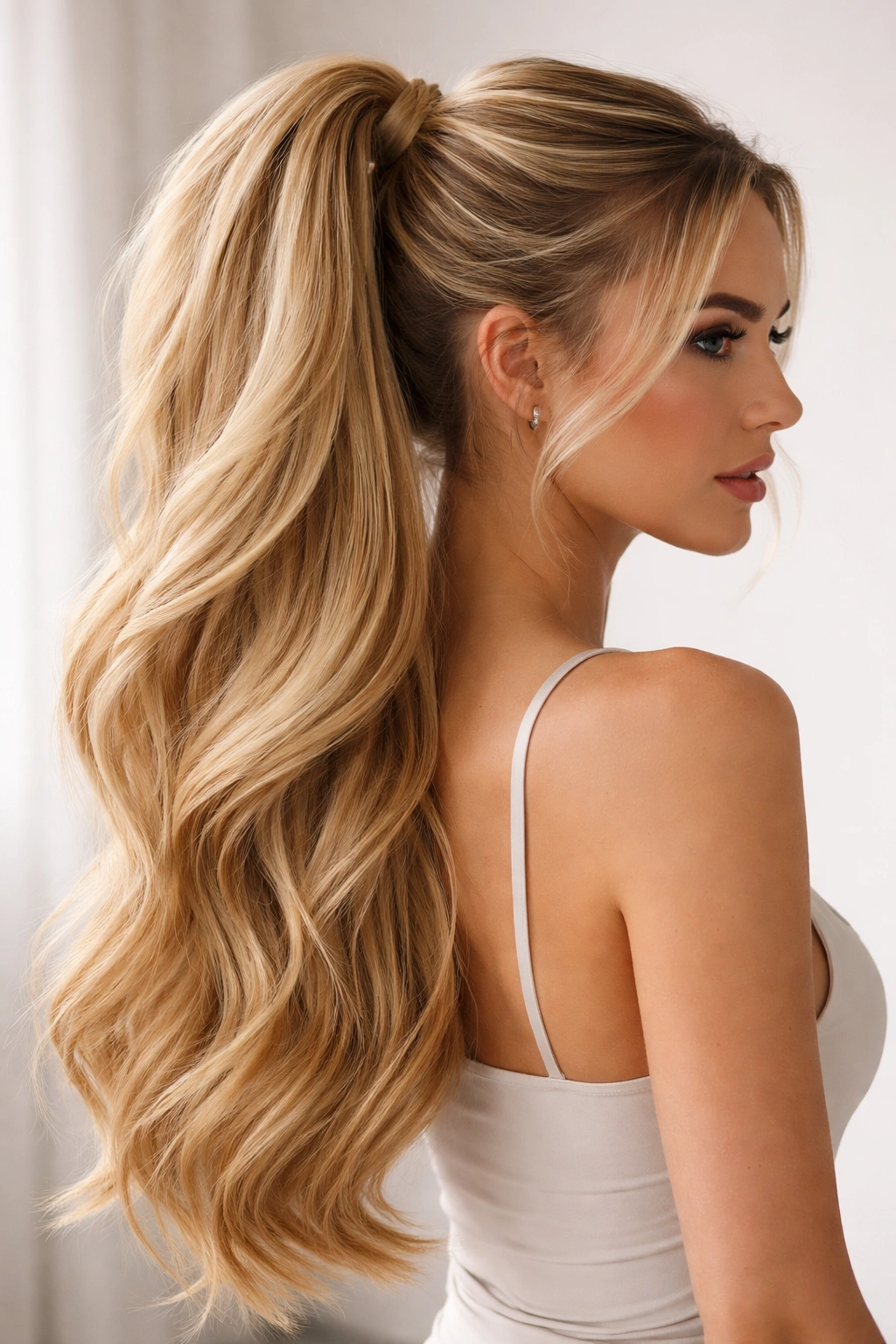
Thick ponytail extensions are specifically designed with maximum density—more individual hair fibers per square inch than standard extensions. These extensions create an abundance of volume, perfect for anyone who wants that full, luxurious ponytail look without actually having extremely thick natural hair. They’re particularly popular for special occasions, photography, or anyone who simply prefers the statement of a thick, voluminous ponytail over a sleeker look.
The Psychology of Voluminous Extensions
Thicker ponytails feel more luxurious, photograph better (camera loves volume), and make a stronger visual statement than sleek, thin ponytails. If you have long but fine or thin hair, a voluminous extension instantly transforms your hair from delicate to dramatic. The weight of a thick extension also feels substantial and satisfying to hold and style. It’s the ponytail equivalent of upgrading from subtle makeup to full glam makeup—everything feels intentional and elevated.
What to Know About Thickness Levels
- Weight correlation: Thicker extensions are heavier. For long-haired people, this matters—a very heavy extension worn all day can eventually cause neck strain. Test the weight before committing
- Density measurement: Extensions list density as a percentage (sometimes 80%, 100%, 120%, 140%+). Higher percentages mean thicker. 100% is considered full density; 120%+ is noticeably thick
- Appropriate for your hair: If your natural hair is fine, matching it to a 140% density extension can look unnatural—the extension hair will be thicker than your natural hair. Choose density close to your natural thickness plus one step up
- Styling impact: Thicker extensions stay in place better in active styles. They’re ideal for high, tight ponytails. They can look bulky in loose, casual styles
- Maintenance: Thicker extensions require more conditioner and deeper conditioning treatments to stay healthy. The extra density means more hair fibers to care for
- Budget: Thicker extensions cost more because they contain more hair. The price difference is significant between 100% and 140% density
- Event suitability: Perfect for weddings, galas, photography, or any occasion where you want statement volume. Less ideal for everyday office wear where subtlety is preferred
11. Messy and Textured Ponytail Extensions
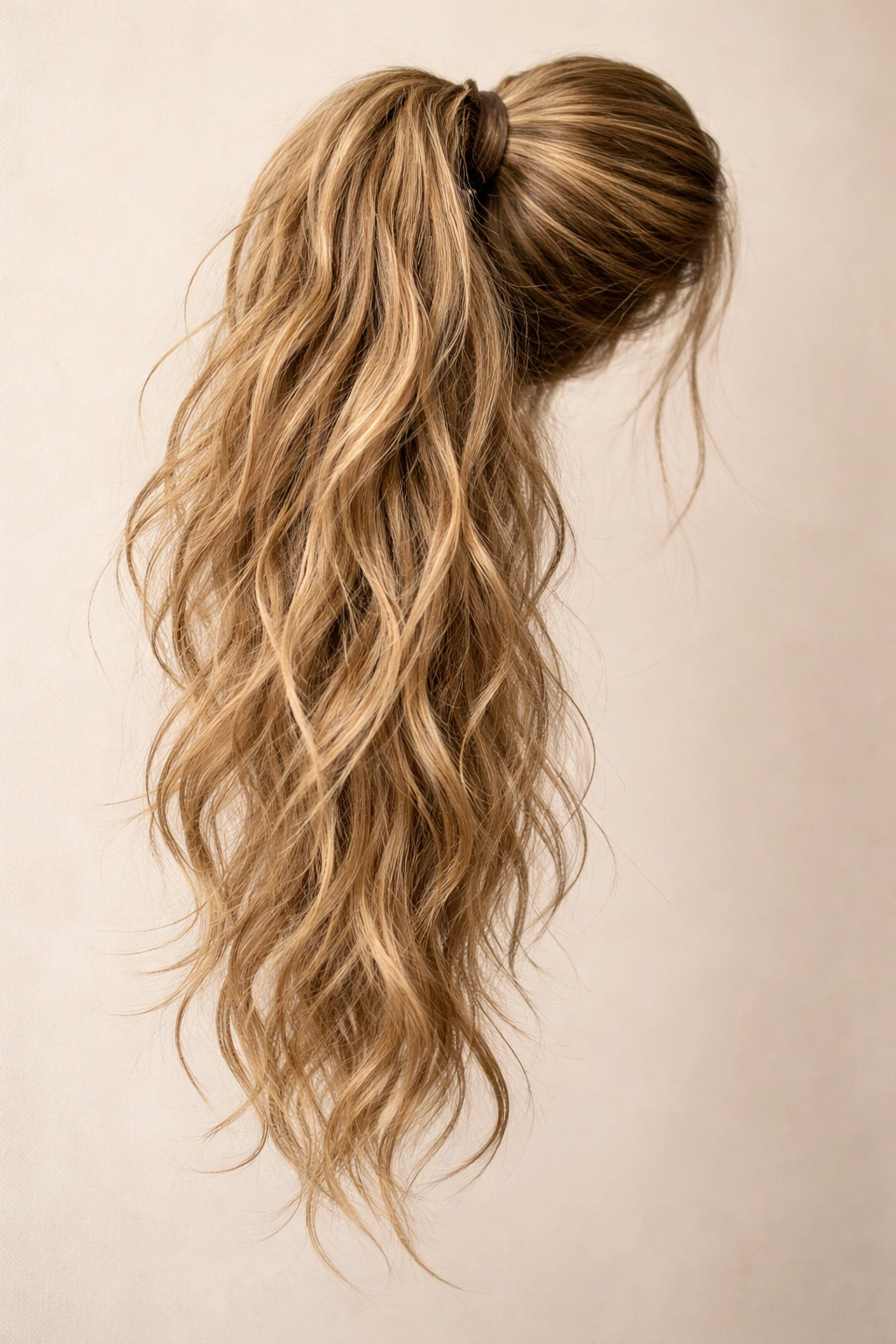
Messy and textured ponytail extensions come pre-styled with a deliberately undone, lived-in texture—slight waves, piece-y waves, or loose, tousled waves. Rather than sleek straight or defined curls, these extensions embrace imperfection and movement. They’re ideal for creating a casual, effortless, “I woke up like this” aesthetic without actually styling anything. These extensions cut down on styling time dramatically because the texture is already built in.
Why Textured Extensions Are the Effortless Choice
If you love the look of beachy waves, undone texture, or that cool-girl casual aesthetic but hate spending 20 minutes styling every day, textured extensions are the answer. They’re perfect for long hair because they add movement and interest without looking overdone or trying-too-hard. They work for both casual everyday wear and elevated weekend looks depending on what you pair them with. The texture hides minor imperfections and tangling better than perfectly straight extensions, making them more forgiving.
Understanding Texture Options
- Wave types: Loose waves create a relaxed, beachy look; piece-y waves add edge and movement; tousled waves look more undone and intentionally messy
- Styling compatible: Most textured extensions are human hair (synthetic texture stays fixed). Human hair textured extensions can be straightened, curled tighter, or restyled to suit your mood
- No-heat option: You can wear textured extensions as-is without any styling, making them ideal for low-maintenance preferences or people who don’t like heat-styling
- Refreshing texture: Textured human hair can be refreshed with a light mist of water and scrunched, bringing the texture back if it relaxes from wear
- Casual versatility: Works for jeans and tees, casual ponytails, beach days, and music festivals. Less ideal if you need polished, sleek looks frequently
- Maintenance: Textured extensions need light brushing and careful handling to preserve the wave pattern. Over-brushing relaxes the texture
- Length advantage: Texture makes extensions appear fuller and longer than the same length in straight hair. The waves create visual expansion
- Style pairing: Textured extensions look best with relaxed makeup, casual clothing, and bohemian styling. They pair beautifully with denim and leather
12. Claw Clip Ponytail Extensions
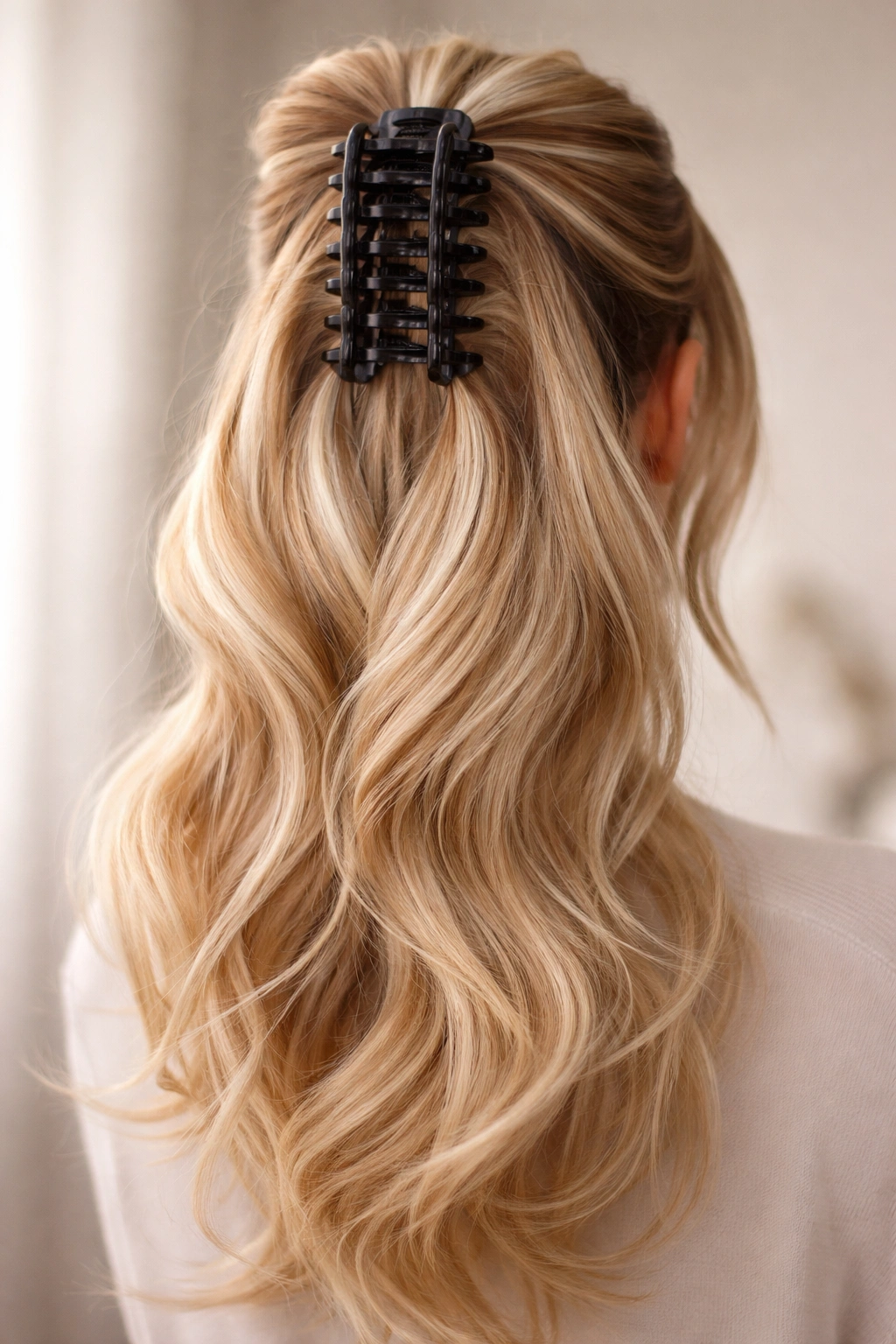
Claw clip ponytail extensions use a strong, secure claw grip mechanism instead of traditional clips—similar to the jaw-shaped clips used for sectioning hair. The claw grips your gathered hair firmly and holds the extension stable with minimal risk of slipping. These extensions have become trendy because the claw mechanism is incredibly secure, comfortable all-day wear, and works beautifully with the aesthetic of claw-clip hairstyles which are widely popular.
The Advantage of Claw Mechanics
Claw clip ponytail extensions provide superior hold compared to slide-in clips, especially for thick or slippery hair. The grip is firm and reliable without needing multiple clip points. Because claw clips have become a mainstream hairstyle trend, these extensions look intentional and stylish rather than like you’re wearing an obvious hairpiece. They’re particularly popular among younger people and anyone who embraces the claw-clip aesthetic in their styling.
Essential Information About Claw Extensions
- Claw quality matters: Premium claw clips have smooth, gentle gripping teeth that don’t pinch scalp; cheap claws have sharp, uncomfortable teeth. Feel the mechanism before buying
- Strength testing: The claw should grip securely enough that you can move your head quickly without the extension shifting. Test with a friend’s feedback
- Hair thickness compatibility: Claw clips work best with medium to thick hair. Fine hair can slip out if the claw isn’t perfectly positioned
- Positioning: The claw sits at the crown area where you position your ponytail. Getting the placement right is crucial—too high and it won’t grip properly; too low and it shows
- All-day comfort: Once positioned correctly, claw clip extensions are some of the most comfortable options for all-day wear. The pressure is distributed and doesn’t concentrate on one area
- Styling flexibility: These work beautifully for high ponytails, sleek styles, and casual ponytails. They’re less effective in very voluminous styles where the claw base might show
- Ease of use: Simple to put in and take out—no more complex than a regular claw clip. Perfect for beginners or anyone who wants minimal learning curve
- Aesthetic value: If you love the claw-clip hairstyle trend, these extensions look intentional and fashionable. They feel current and stylish rather than like a secret extension
- Durability: Claw mechanisms can weaken over time with repeated opening and closing. Quality claws last longer, but eventually the grip may loosen after 6-12 months of regular use
Final Thoughts
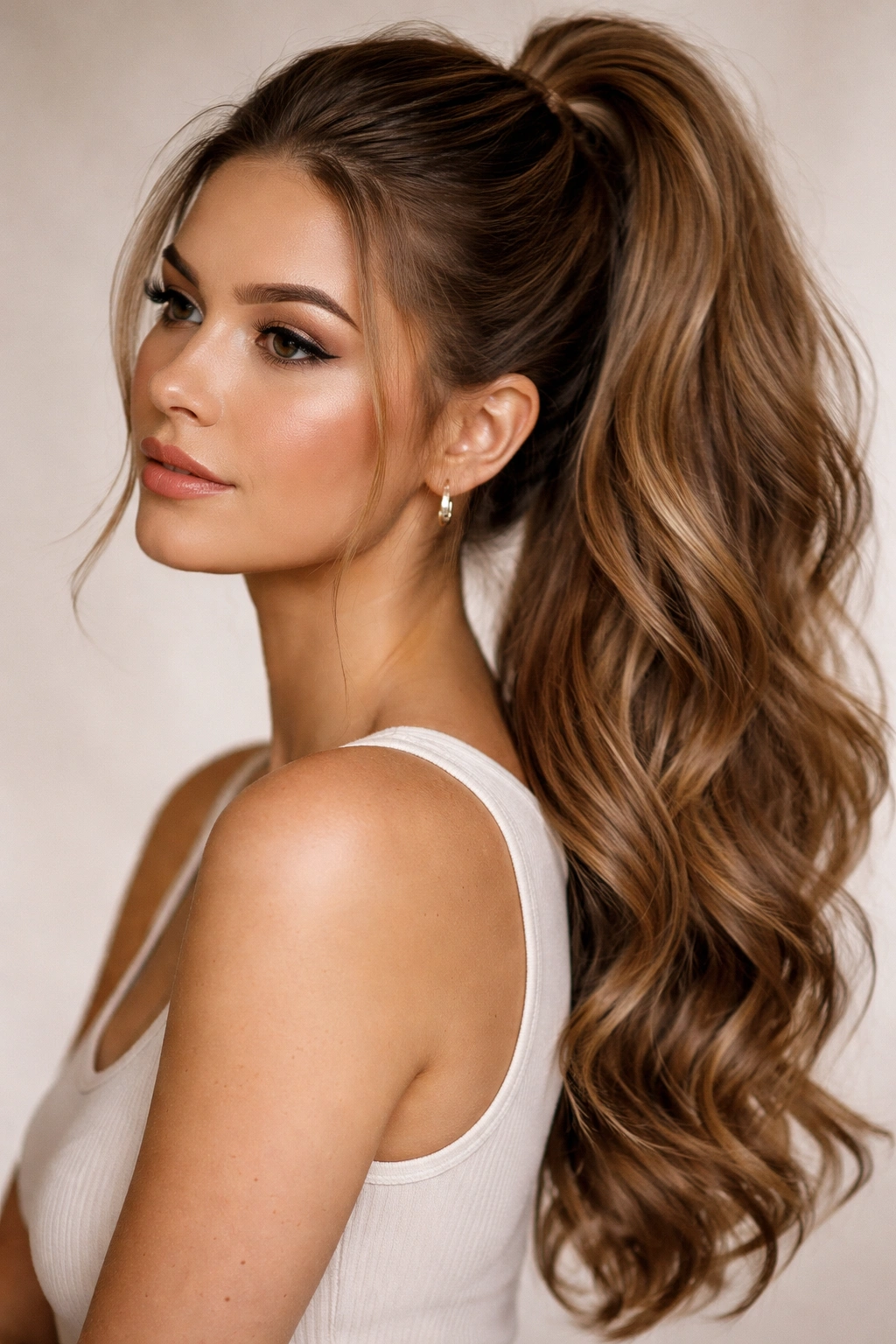
The right ponytail extension transforms more than just your hair—it shifts how you feel about getting ready in the morning. Whether you choose clip-ins for their simplicity, human hair for their versatility, or colored options for their impact, you’re investing in a tool that gives your long hair unlimited styling possibilities. The best extension isn’t the most expensive one or the trendiest option; it’s the one that matches your lifestyle, your hair type, and your styling preferences.
Start by identifying what you actually need: Are you looking for effortless daily volume? A style-change without commitment? A specific color or texture? The answers to these questions point you toward your ideal extension type. Once you’ve chosen, invest in quality—a premium clip-in or human hair extension costs more upfront but lasts months longer and looks infinitely better than budget alternatives. Take time learning to apply and style your extension; most people don’t maximize their extensions simply because they haven’t figured out how to use them confidently. Within a few weeks, applying your ponytail extension will become as automatic as putting on jewelry, and you’ll wonder how you ever lived without it.
