



Cornrows have remained a timeless protective styling choice for decades, and they’re experiencing a well-deserved resurgence among women over 40 who want a hairstyle that’s both sophisticated and practical. The beauty of cornrows lies in their versatility—they work with virtually any hair texture, they can last for weeks with minimal daily maintenance, and they offer genuine protection to your natural hair. But here’s what most styling guides miss: not every cornrow design flatters every face shape equally, and what works beautifully on a younger face may not be the best choice as your face, skin, and style priorities shift over time.
If you have a round face—characterized by fuller cheeks, a rounded jawline, and approximately equal proportions between the width of your face and its length—cornrow styling becomes an intentional design choice that can actually reshape how your face appears. The right cornrow style creates the illusion of length, adds definition to the jawline, creates visual interest that draws the eye upward, and balances facial proportions in deeply flattering ways. A round face is beautiful, but strategic styling choices can add dimension and sophistication that photographs well, feels confident, and works with your mature aesthetic rather than against it.
The challenge many women over 40 face is that cornrow inspiration online tends to skew toward younger faces, tighter and more rigid designs, or styles that emphasize width rather than the elongation and definition that round faces actually need. This guide exists specifically to change that. These 12 cornrow styles have been selected and explained with round face shapes and mature style priorities as the core consideration. Each style works with your face shape rather than against it, and each one looks polished, intentional, and completely age-appropriate—because mature elegance is about making choices that feel authentic to who you are now.
1. Classic Straight-Back Cornrows for Clean Definition
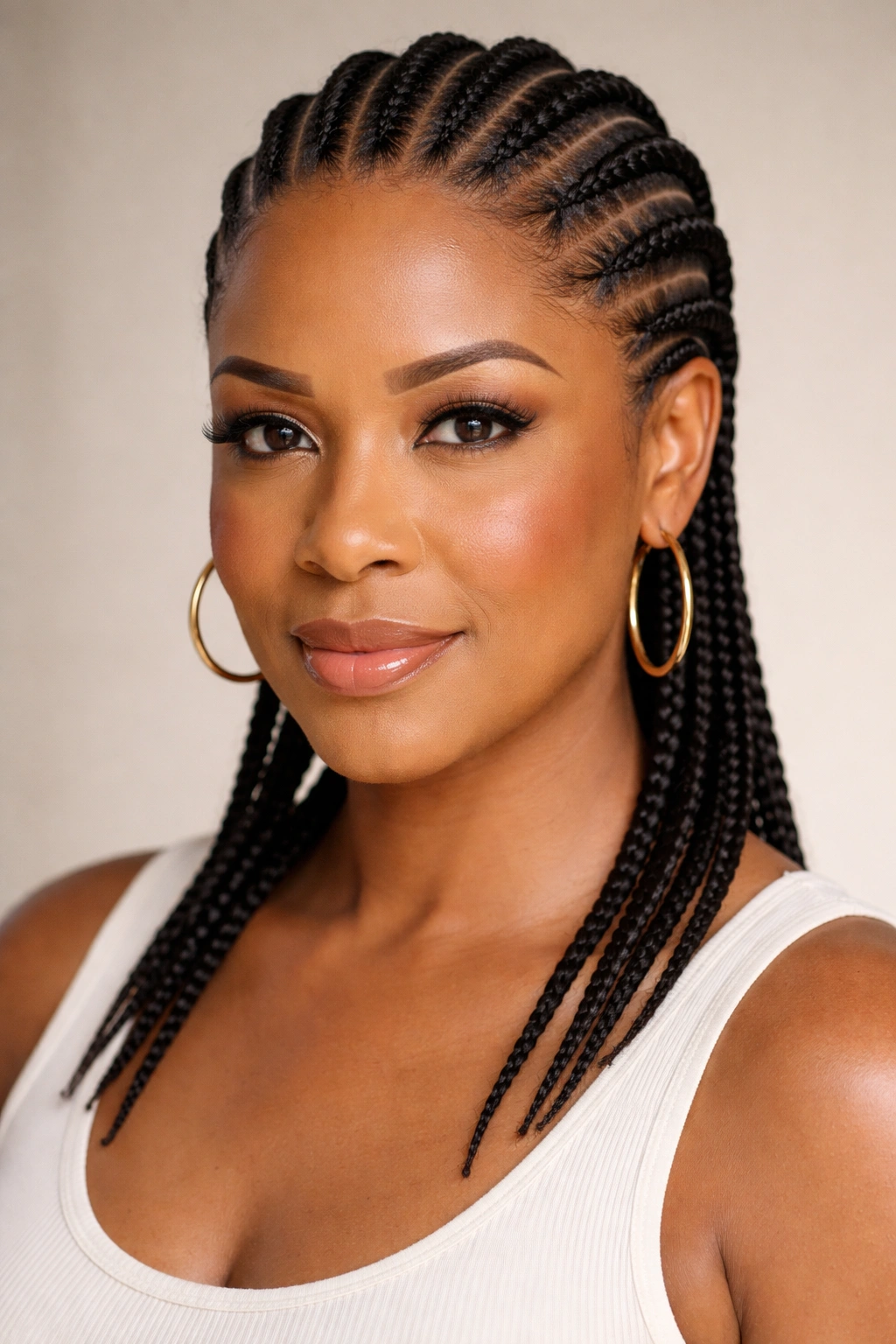
Straight-back cornrows—braids that run directly from the front hairline straight to the nape of your neck—are the foundation style for a reason. They’re clean, they’re elegant, and when executed well, they create a subtle visual lengthening effect that works beautifully for round faces. The key is that the unbroken lines of the braids naturally draw the eye vertically, which counteracts the horizontal width of a round face. This isn’t subtle—it’s genuinely one of the most flattering placements you can choose.
Why This Style Works for Round Faces
The vertical emphasis of straight-back cornrows is specifically what round faces need. Instead of highlighting the width at your cheeks and jawline, the braids create strong directional lines that pull focus upward toward your forehead and outward toward your crown. For women over 40, this style also has a polished, almost architectural quality—it looks intentional and considered, not casual or youthful in a way that might feel mismatched with your mature features. The streamlined design frames your face cleanly without adding bulk or width at the sides.
How to Style It Best
Start the cornrows about half an inch back from your hairline—not right at the hairline itself, which can sometimes look too severe on a mature face, but close enough that you’re getting that clean, pulled-back effect. You can wear straight-back cornrows in numerous end styles: swept into a low bun, finished with textured ends, twisted into spirals, or left to hang loose depending on your preference and lifestyle. Add a silk wrap or scarf during sleep to maintain the braids’ integrity for as long as possible. The style typically lasts 4 to 6 weeks depending on your hair growth rate and how carefully you care for it.
Pro Tip
For a slightly softer version that’s more forgiving on mature skin, create your cornrows slightly thicker than you normally would—this can be subtly more flattering because thicker braids create bolder lines that read as intentional and modern rather than trying to achieve hair-thin precision. Thicker cornrows also require less frequent touching up as they grow out.
2. Twisted Crown Cornrows for Lifted Volume
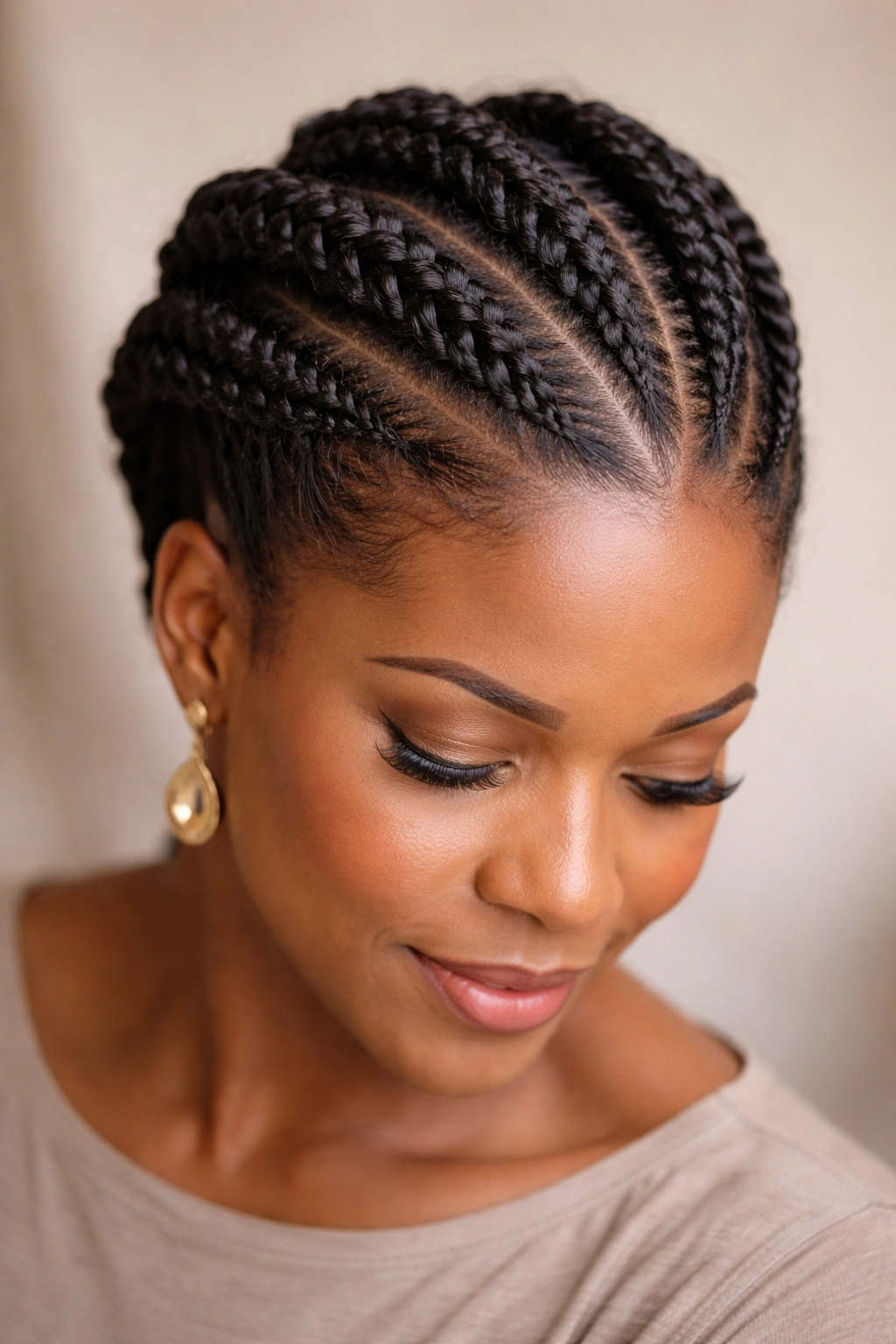
This style takes the classic cornrow concept and adds visual drama where you need it most: at the crown. Two to four cornrows spiral around the crown of your head, creating a lifted, voluminous effect that adds height and draws attention upward and away from a round jawline. This is an underrated choice for women over 40 because it creates the illusion of face-thinning height without requiring you to change your actual hair volume or invest in extensions.
Why Crown Placement Matters
A round face needs visual height to create balance and definition. When you concentrate styling interest at the crown—through lifted braids, twisted sections, or bundled details—you’re literally training the eye to look upward first. This changes how your entire face appears in the mirror and in photos. The crown area becomes the focal point rather than the fullness of your cheeks, and that shift in visual emphasis is genuinely transformative. This style also works whether your hair is thick and full or thinner and more delicate—the design compensates for whatever your natural volume is.
Construction Details
Start your braids further back on your scalp, near the crown or just slightly behind your hairline, and let them spiral or twist around the crown area toward the back of your head. You can finish these crown braids by tucking them into a bun, weaving them together into a wrapped crown effect, or letting them hang loose in the back. The key is that the movement and volume happen at the crown specifically, not distributed evenly across your entire head. This concentration of styling interest is what creates the lifting effect that round faces benefit from.
What Makes It Work
The visual heaviness moves from your face to the top of your head, which automatically makes your face appear narrower and longer in proportion. Pair this style with a clear, well-defined part (either a center part or a deep side part—more on this later) and you’re creating multiple slimming lines that work together. For women over 40, this style also has an intentional, fashion-forward quality that reads as “I know what suits me” rather than “I’m trying to look younger.”
3. Angled Cornrows Framing the Face
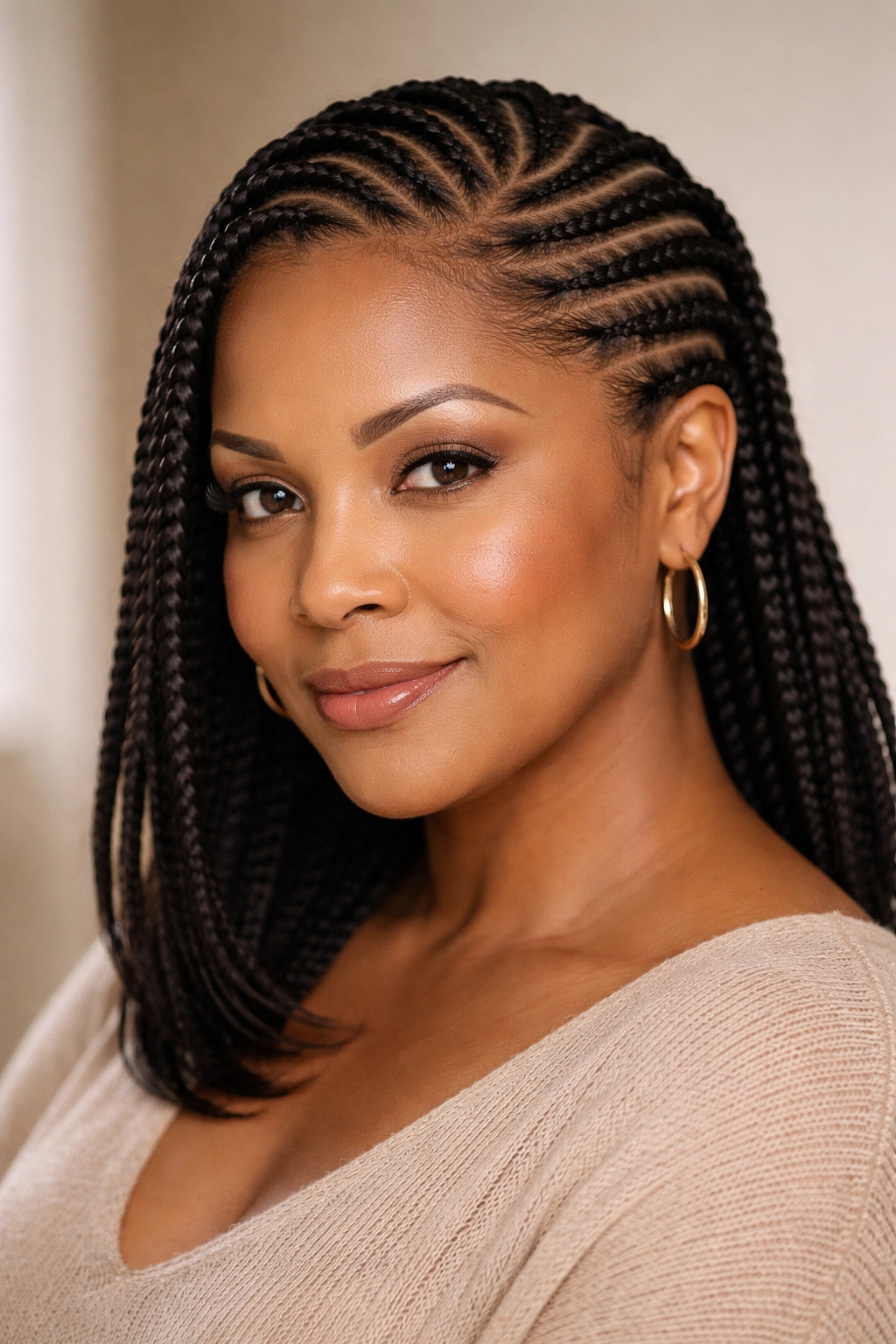
Instead of braiding straight back from your hairline, angle your cornrows diagonally—one set angles from your hairline toward the back of your head at a slight diagonal, while another set angles the opposite direction. These angled braids naturally frame your face and create dimension that breaks up the roundness. The diagonal lines are inherently slimming because diagonal lines are more dynamic and interesting than horizontal ones, and they interrupt the width of your cheeks visually.
The Geometry of Face-Flattering Lines
Facial geometry matters more than most people realize. Angled lines are more flattering than horizontal or even vertical lines when you’re trying to create visual dimension and definition on a round face. These diagonals create a subtle chevron or arrow effect that points the eye downward toward your neck and jawline, which creates the illusion of more facial definition. The braids themselves become a design element that’s doing sculptural work on your face shape, not just sitting neutrally on your head.
Styling Options for Angled Placement
You can angle cornrows at various degrees depending on how dramatic you want the effect to be. Subtle angles (maybe 20-30 degrees from vertical) create a softer, more understated effect. Steeper angles (45+ degrees) create more visual drama and are particularly striking if you have thicker, fuller hair. You can angle just a few braids on each side of your face, or do an entire head of angled braids depending on your preference. The finish can be streamlined into a bun, left loose in the back, or even twisted into spiral ends for extra texture.
Who This Suits Best
This style is particularly flattering for women over 40 who want something with visual energy and intention without looking overly trendy. The angles suggest movement and sophistication, and they work beautifully with mature facial features because they’re adding complexity to your styling—not trying to make you look younger, but rather making you look more intentional and considered in your aesthetic choices. It’s a subtle but powerful choice.
4. Cornrows with a Center Part for Visual Elongation
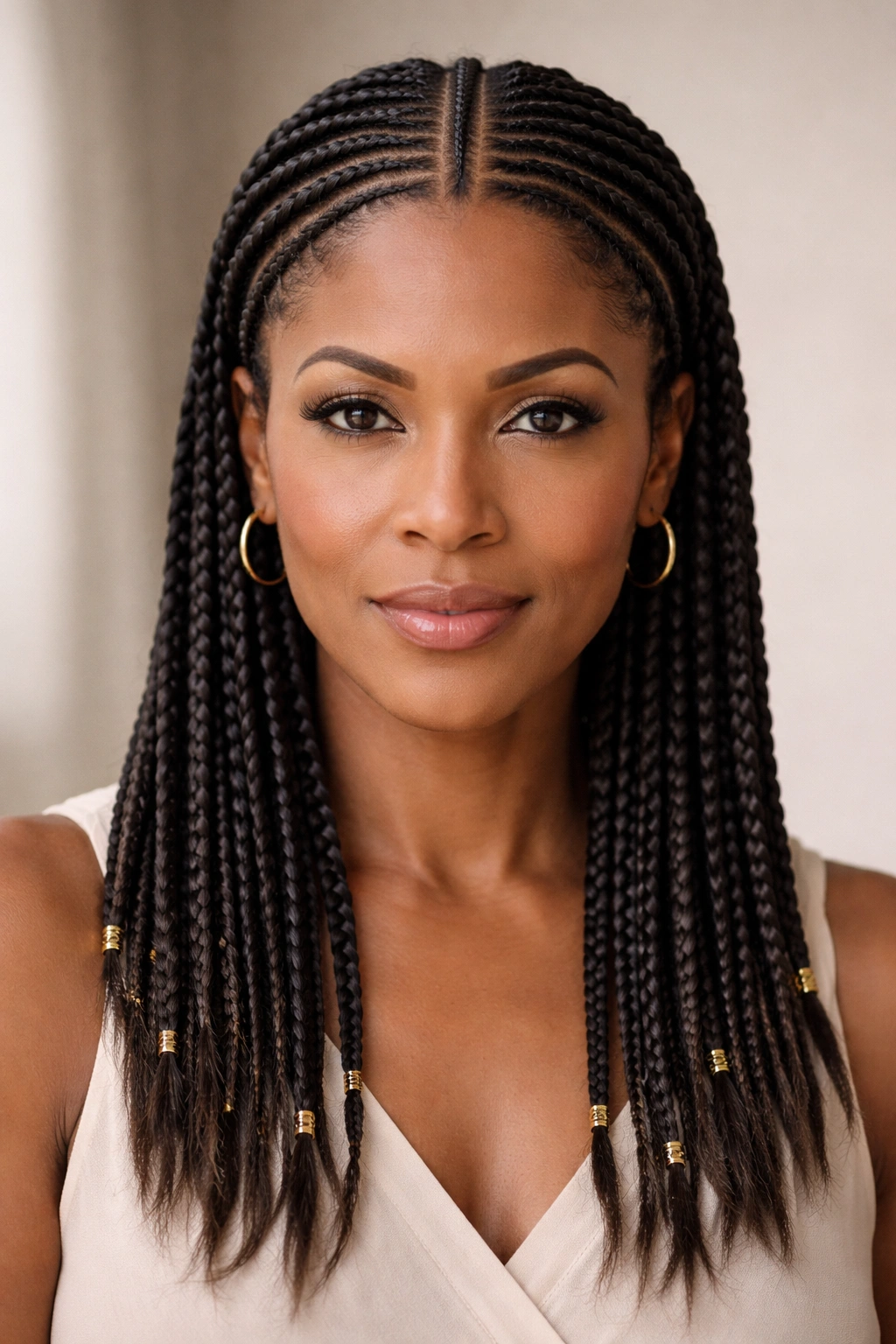
A clean, well-defined center part creates a vertical line down the middle of your face that naturally elongates and slims a round face shape. When you combine a center part with cornrows—particularly if the braids follow the line of the part or branch out from it symmetrically—you’re creating a strong vertical emphasis that is deeply flattering. This might be the single most flattering part placement for round faces, and it works beautifully with cornrow styling because the braids amplify the effect of the part.
How the Center Part Reshapes Your Face
A center part divides your face into two equal halves and draws the eye vertically down the middle of your face rather than across its width. This is optical illusion at its most basic but most effective level. Your face will literally appear narrower and longer simply because the eye is traveling vertically rather than horizontally. For women over 40, a center part also reads as sophisticated and intentional—it’s a choice that says you understand what works for your face and you’re styling with purpose.
Cornrow Placement with a Center Part
You can create your cornrows to follow the center part line directly, starting braids on either side of your part and running them back symmetrically. Alternatively, you can create a center part and then add cornrows in various patterns—some following the part, some branching off at angles. The important thing is that the center part itself is sharp and visible, making the vertical line prominent. A blurry or vague part line defeats the purpose. Use a rattail comb to create a clean, defined part line before you start braiding.
Finish Options
With a center-parted cornrow style, you have flexibility in how you finish the braids. You can sweep both sides back into a unified bun at the nape of your neck, create two separate low ponytails (one on each side of the part), or leave the braids loose and flowing down your back. Each option has a different vibe—the unified bun is clean and polished, while two ponytails are slightly more playful and creative. All of them maintain the vertical emphasis that the center part creates.
5. Side-Swept Cornrow Design for Asymmetrical Balance
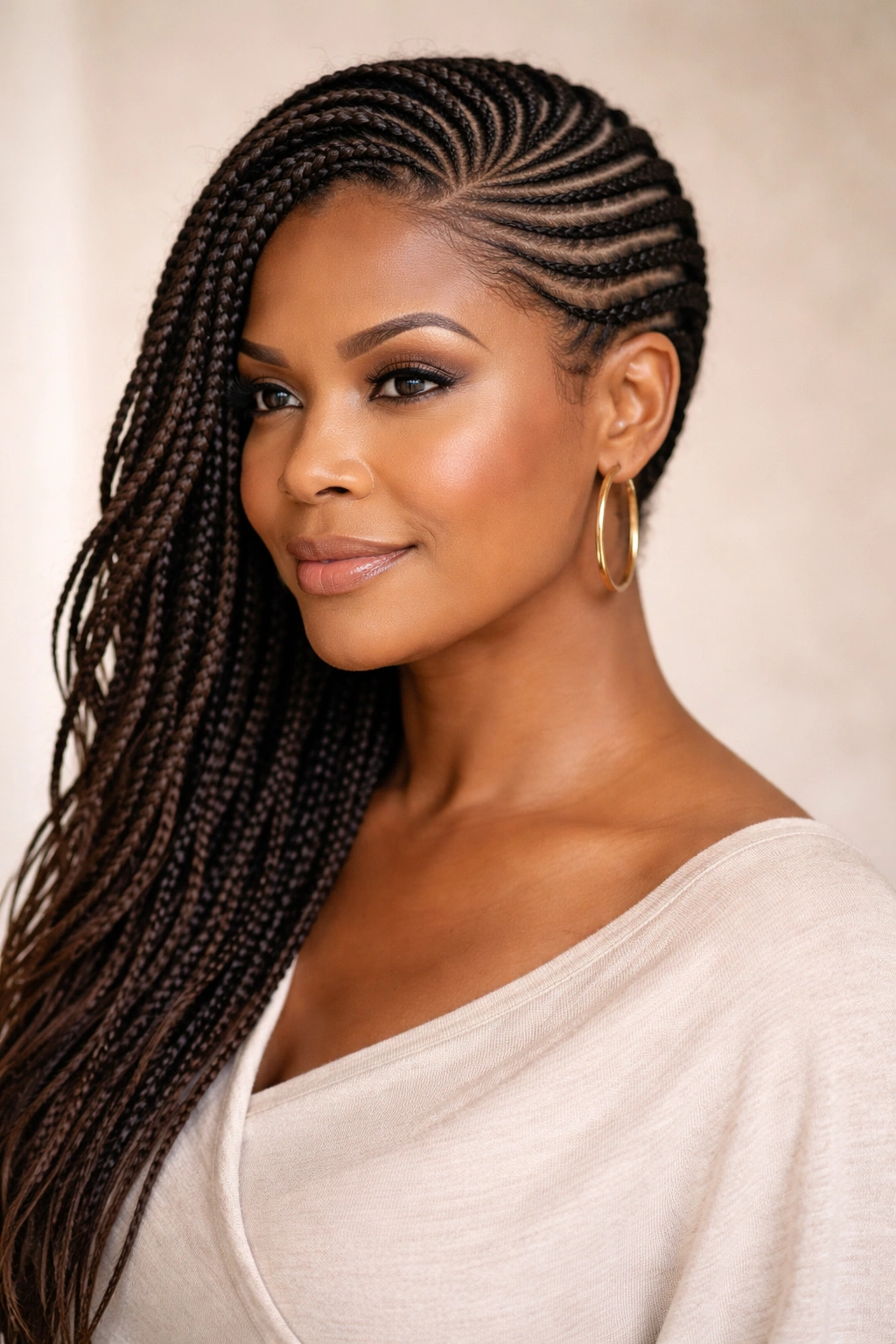
A deep side part with cornrows swept predominantly to one side creates asymmetry that’s inherently more interesting and flattering than symmetry on a round face. Instead of drawing attention to the roundness by framing it symmetrically, a side-swept design creates visual movement and breaks up the width. The braids flow from a deep part on one side toward the back, creating an asymmetrical silhouette that’s more dynamic and modern-looking.
Why Asymmetry Works
Round faces benefit from asymmetry because symmetry can sometimes emphasize the very roundness you’re trying to de-emphasize. When you create a deep side part and sweep your cornrows to one side, you’re creating an imbalanced visual weight that feels intentional and fashion-forward. One side of your face is slightly more visible and exposed, while the other side has more braids and visual interest—this asymmetrical distribution draws the eye across your face in a more interesting way than a centered, symmetrical style would.
Creating the Deep Side Part
A deep side part should start at the edge of your hairline and sweep dramatically toward the opposite side of your head. The deeper the part, the more dramatic the asymmetrical effect. For women over 40, a deep side part also softens facial features because it allows more hair to frame one side of your face while the other side is more exposed. This creates natural shadowing and dimension that is genuinely flattering on mature skin.
Braiding Patterns for Side-Swept Styles
You can create cornrows that all flow in the same direction following your side part, or you can mix directional braids for more visual complexity. Some braids might flow toward the back of your head, while others angle around the side. The key is that the overall weight and visual emphasis is on one side, creating that dynamic asymmetrical effect. Finish with a low side bun, a twisted wrap, or loose braids falling over one shoulder for an intentional, polished look.
Maintenance and Longevity
Side-swept styles tend to hold their shape beautifully because the asymmetrical design is maintained by the underlying braids. The side you’re sweeping toward will show growth first as your hair grows out, so you might want to plan for a refreshing appointment around the 4 to 5-week mark, or embrace the slightly softer look of growing-out braids if that suits your aesthetic.
6. Cornrows with Textured Updo for Mature Sophistication
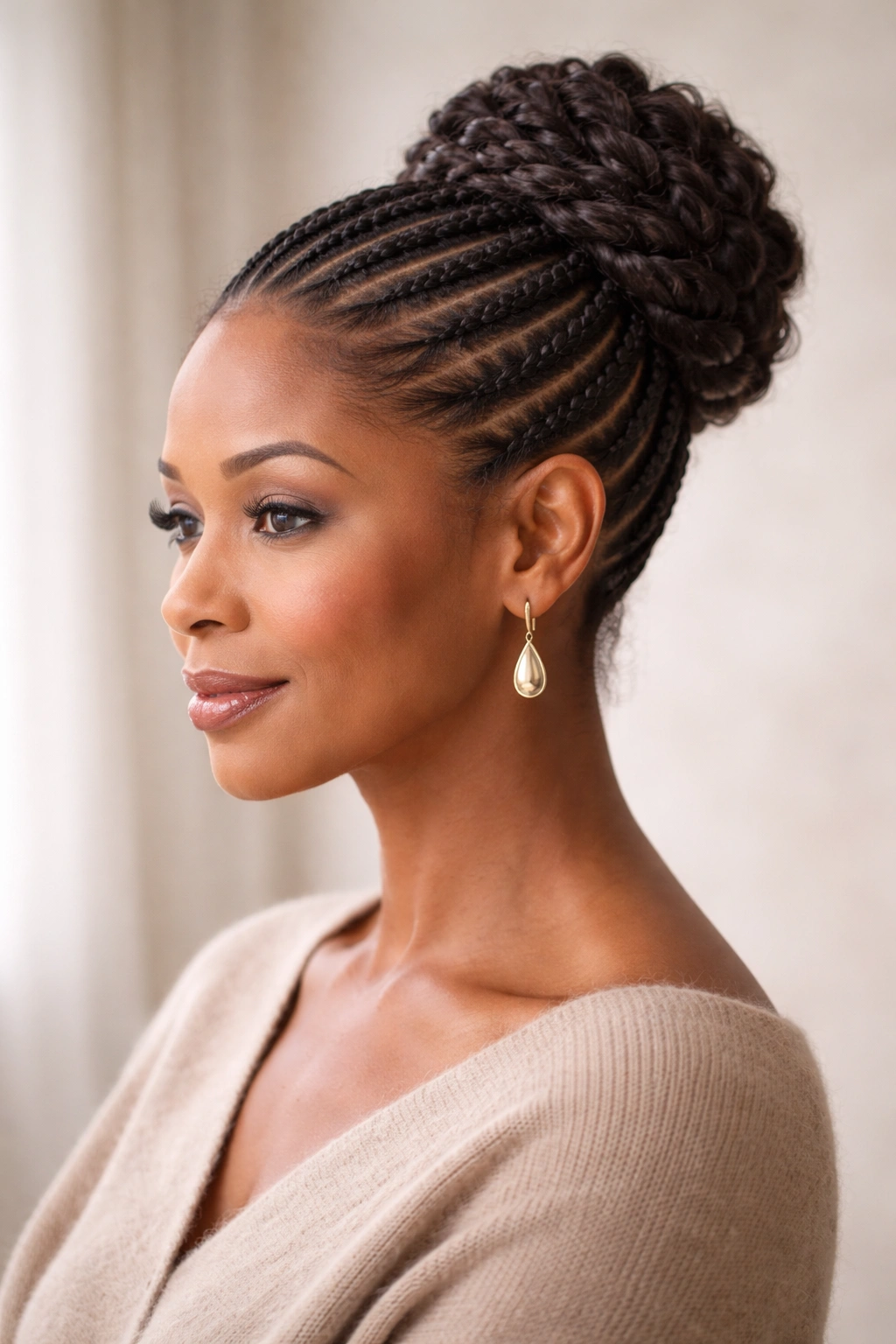
This style combines cornrows—whether straight back, angled, or side-swept—with a textured updo rather than a simple bun. The braids create structure and line, while the gathered, twisted, or coiled updo adds texture and dimension. This approach is particularly sophisticated for women over 40 because it reads as intentional and polished without being trendy or trying too hard. The combination of braided precision and textured volume feels mature and elegant.
Building the Structured Updo
Start with cornrows in any of the placements mentioned above—straight back, angled, or following a part line. As you reach the nape of your neck, gather the ends of your braids and begin twisting, coiling, or weaving them together into a textured knot or bun. You can incorporate loose waves or curls if you have them, wrap additional sections of hair around the base, or use decorative pins or clips to add visual interest. The texture is what makes this different from a simple sleek bun—you’re creating visual depth and dimension.
Texture Options
If your hair texture is naturally textured or wavy, you can enhance those natural patterns in your updo by loosening some of the braids slightly as you approach the nape. If you have straighter hair, you can create texture through coiling, twisting, or weaving braids around each other in visible, intentional ways. Adding accessories—decorative pins, metal cuffs, or wrapped thread in contrasting colors—can amplify the sophistication and intentionality of the style.
Why This Works for Round Faces
By gathering your braids into a textured updo, you’re pulling the visual weight upward and away from your face while maintaining the face-framing benefits of the cornrows themselves. The braids create the slimming lines, while the textured updo adds the dimension and sophistication that makes the entire look feel intentional and age-appropriate. This combination says you’ve put thought into your styling, and that confidence reads beautifully on mature women.
Longevity and Care
This style typically lasts 4 to 6 weeks, with the updo portion becoming slightly softer and looser over time. You can refresh it periodically by re-twisting or re-wrapping the updo section while leaving the cornrows intact. This makes it practical for long-term wear without needing to fully re-do the style.
7. Layered Short Cornrows for Modern Movement
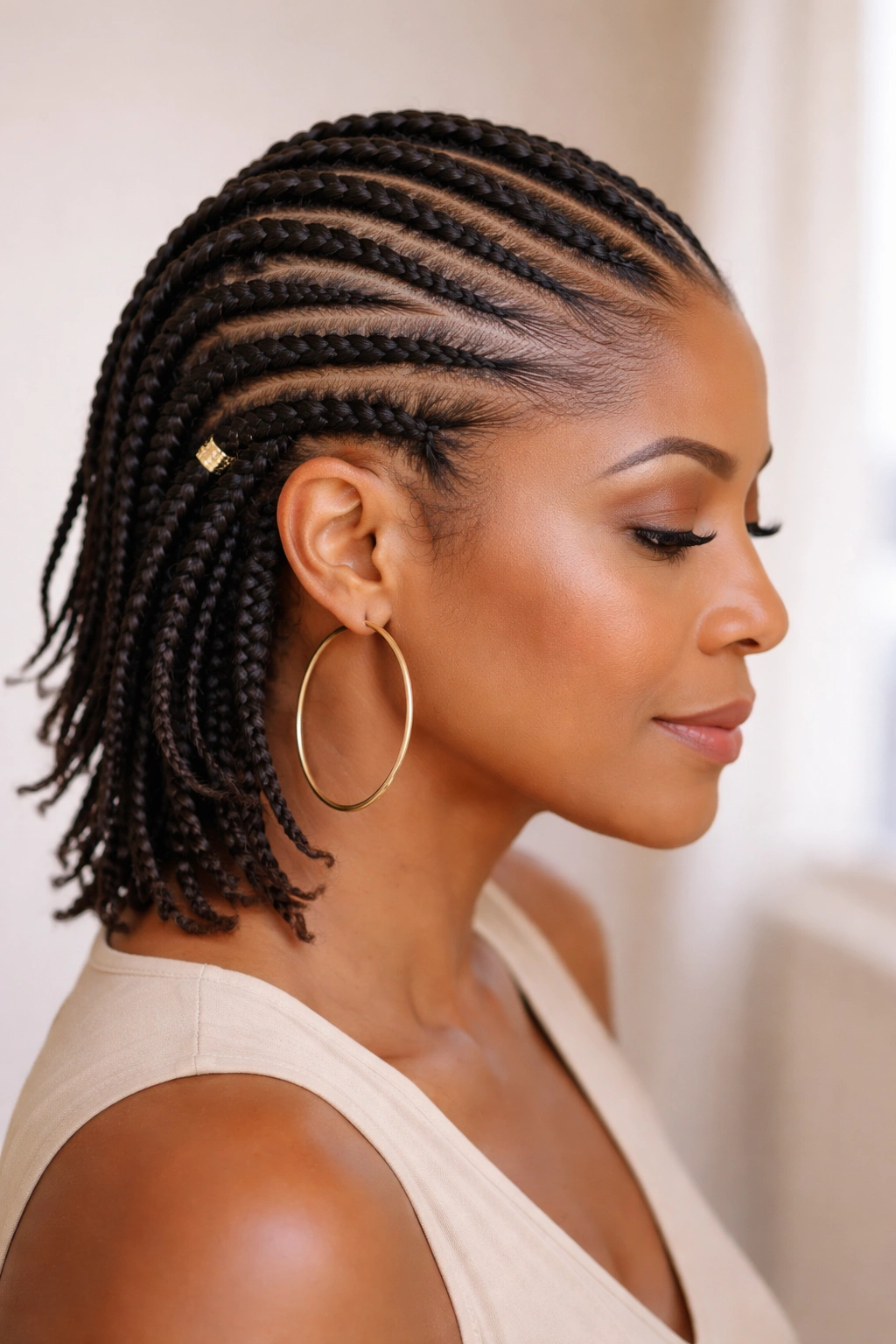
Instead of one uniform length of cornrows running all the way down your back, try layered cornrows that end at different lengths. Some braids finish at shoulder length, others at mid-back, and maybe a few longer ones create visual layers. This creates movement, dimension, and a modern aesthetic that feels current without being trendy. For women over 40, layered cornrows offer visual interest and a contemporary feel that can make a mature face look more vibrant and engaged with current style.
The Design Concept
Layered cornrows follow the same logic as layered haircuts—different lengths create visual movement and prevent the style from feeling flat or heavy. The braids at different lengths also create a cascading effect that is inherently more interesting and dynamic than uniform-length braids. When you move, the layers move differently, creating organic motion and life in your style.
How to Achieve Layered Length
The easiest way to create layers is to use your natural hair length to varying degrees. If you’re protective styling without extensions, you might naturally have some shorter sections at your nape and longer sections elsewhere—embrace that variation. Alternatively, if you’re using extensions, you can intentionally attach them to different braids at different lengths, creating a designed layered effect. You can also style the shorter layers into braids that end earlier, while longer braids extend further down.
Styling the Layered Look
Layered cornrows look stunning worn loose and flowing, or partially gathered with the shorter layers framing your face and longer braids pulled back. You can also incorporate your layers into an updo, leaving the shortest braids loose around your face for a softer, more romantic look. The layers themselves become a design element, not just a functional choice.
Why Layers Suit Mature Styling
For women over 40, uniform-length braids can sometimes feel severe or heavy, particularly if you’re wearing them close to your head with no variation. Layers add visual softness and movement without sacrificing the clean, intentional quality that cornrows provide. The movement and dimension also draw the eye through your styling rather than resting on your face shape, which creates a more flattering overall effect.
8. Cornrows with Face-Framing Sections for Softness
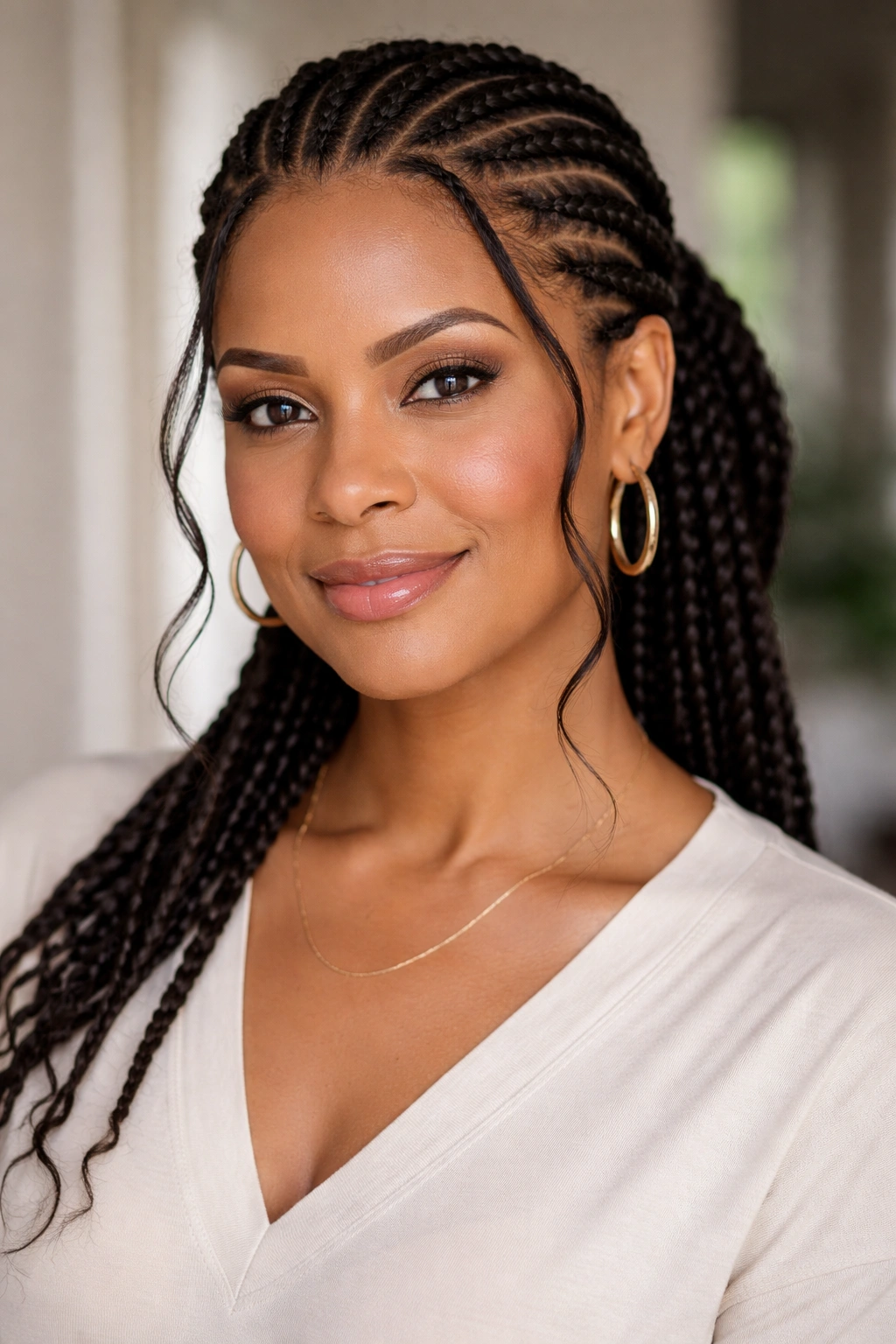
This style combines the clean, slimming effect of cornrows pulled back with intentionally loose, unbraided sections left out to frame your face. Instead of pulling your hair back completely into cornrows, you leave strategic sections around your hairline and temples unbraided. These sections can be worn in loose waves, subtle curls, or just gently styled in a way that frames your features. This approach softens the severity of a fully-braided style while maintaining the structural and slimming benefits of cornrows elsewhere on your head.
Strategic Placement of Face-Framing Sections
The sections you leave out should frame your face naturally. This might mean leaving out a section about two fingers’ width on each side of your face at the temples, or leaving out a small section at your center part if you have one. These framing sections should be visible and intentional—not accidentally loose braids that look unfinished, but deliberately styled elements that are part of the overall design. The braids can start behind your ear, or further back, leaving the front portion of your face exposed and softly framed.
Styling the Framing Sections
Loose waves are the classic choice—you can create these with a curling iron, by braiding the sections loosely and removing the braids for soft texture, or by working with your hair’s natural texture. Alternatively, you can leave the sections completely unbraided but sleek and smooth, twisted into loose spirals, or even finger-combed for a textured, natural look. The key is that these sections should have some intentional styling—they shouldn’t look like you just forgot to braid them.
Why This Matters for Round Faces
Face-framing softens the look while the cornrows still do their job of creating slimming vertical lines and lifting emphasis upward. The combination gives you the benefits of both protection styling and a softer, more approachable aesthetic. For women over 40, this strikes a beautiful balance between intentional, sophisticated styling and approachable warmth. The framing sections are flattering because they create natural shadows and dimension around your face while the cornrows handle the structural, face-lengthening work.
Maintenance Considerations
These styles require a bit more daily styling than fully-braided cornrows because you need to refresh the framing sections regularly—re-curl or re-twist them as needed. However, they last just as long as other cornrow styles (4 to 6 weeks) for the braided portion, and the ability to restyle the framing sections daily allows you to change your look somewhat while maintaining the protective style.
9. Zigzag Pattern Cornrows for Visual Texture
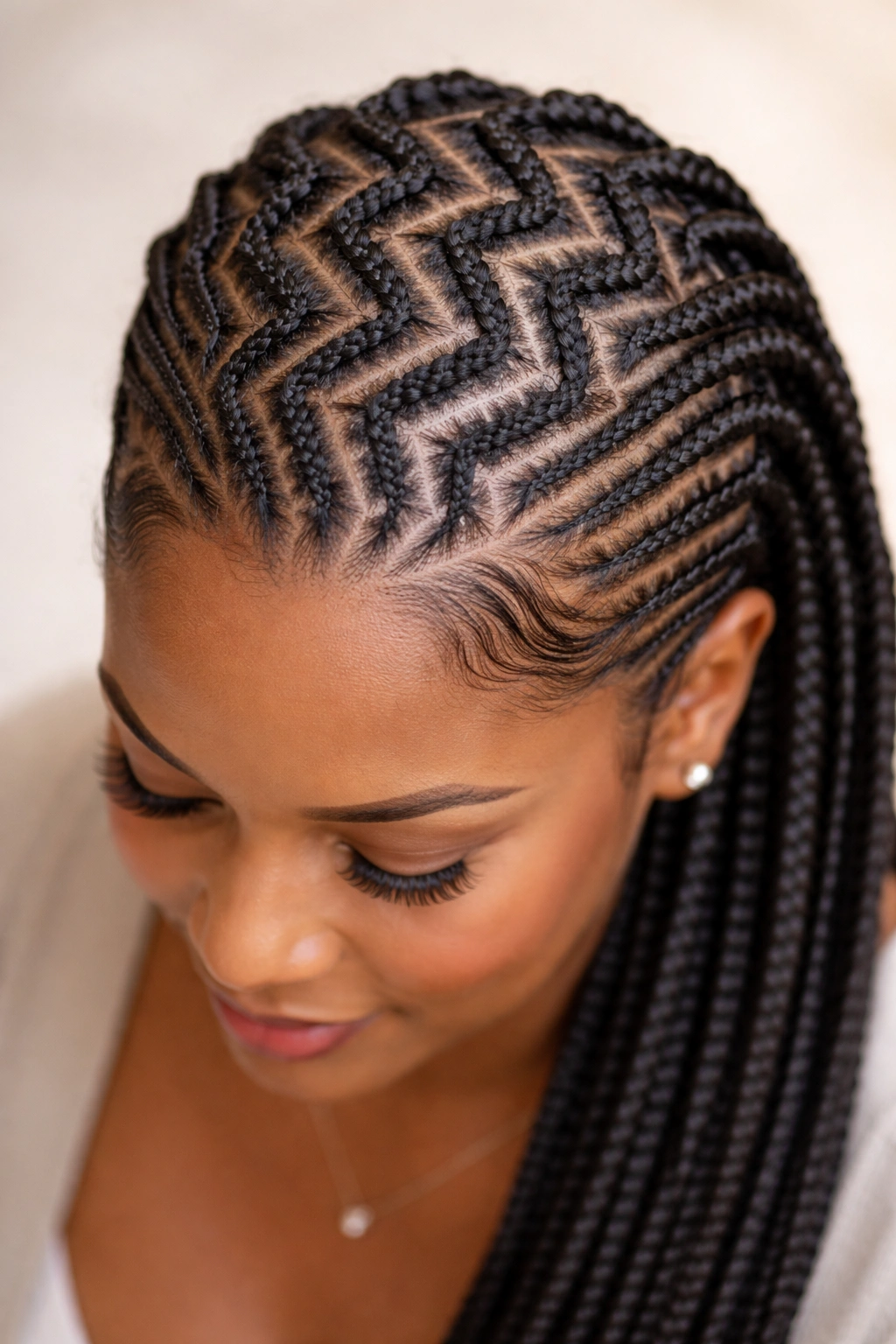
Instead of running your cornrows straight, angled, or in standard parallel lines, create a zigzag pattern with your braids. The cornrows weave from side to side across your head in a zigzag formation, creating geometric interest and visual texture that’s genuinely eye-catching. This style requires more precision and skill to execute well, but the result is a sophisticated, intentional look that reads as modern and considered.
Understanding the Zigzag Geometry
A zigzag pattern means your cornrows don’t follow a predictable linear path—instead, they change direction, creating a back-and-forth visual pattern. This pattern is more complex than straight or angled cornrows, which means it naturally reads as a more intentional, designed style. The zigzag interrupts the roundness of your face shape by creating geometric complexity that the eye finds engaging and interesting.
Why Zigzag Patterns Work
Geometric patterns and complexity are inherently more flattering on round face shapes because they draw the eye and create visual interest that prevents the roundness from being the focal point. Instead of looking at your face shape, the eye is looking at the fascinating pattern created by the zigzag braids. This is a smart visual trick that works beautifully, particularly if you’re confident in your styling and want something that makes a statement.
Technical Execution
A true zigzag requires careful planning from your stylist. Rather than braiding in one direction and then the next (which would create separated sections), true zigzag cornrows weave back and forth in a connected pattern. This is advanced braiding work, so you’ll want a skilled braider who understands the technique. If you can’t find someone experienced with zigzag patterns, you can create a modified version with alternating directions of standard cornrows.
Styling and Finishing
Zigzag cornrows look striking worn loose and flowing, or pulled back into a gathered style that showcases the pattern. You can finish them in a bun that displays the zigzag, or leave them loose so the pattern is visible down your back. The geometric pattern itself is the design statement, so consider your styling choices with the understanding that you’re showcasing the pattern you’ve created.
10. Cornrows Pulled Back with Crown Volume for Lifted Proportion
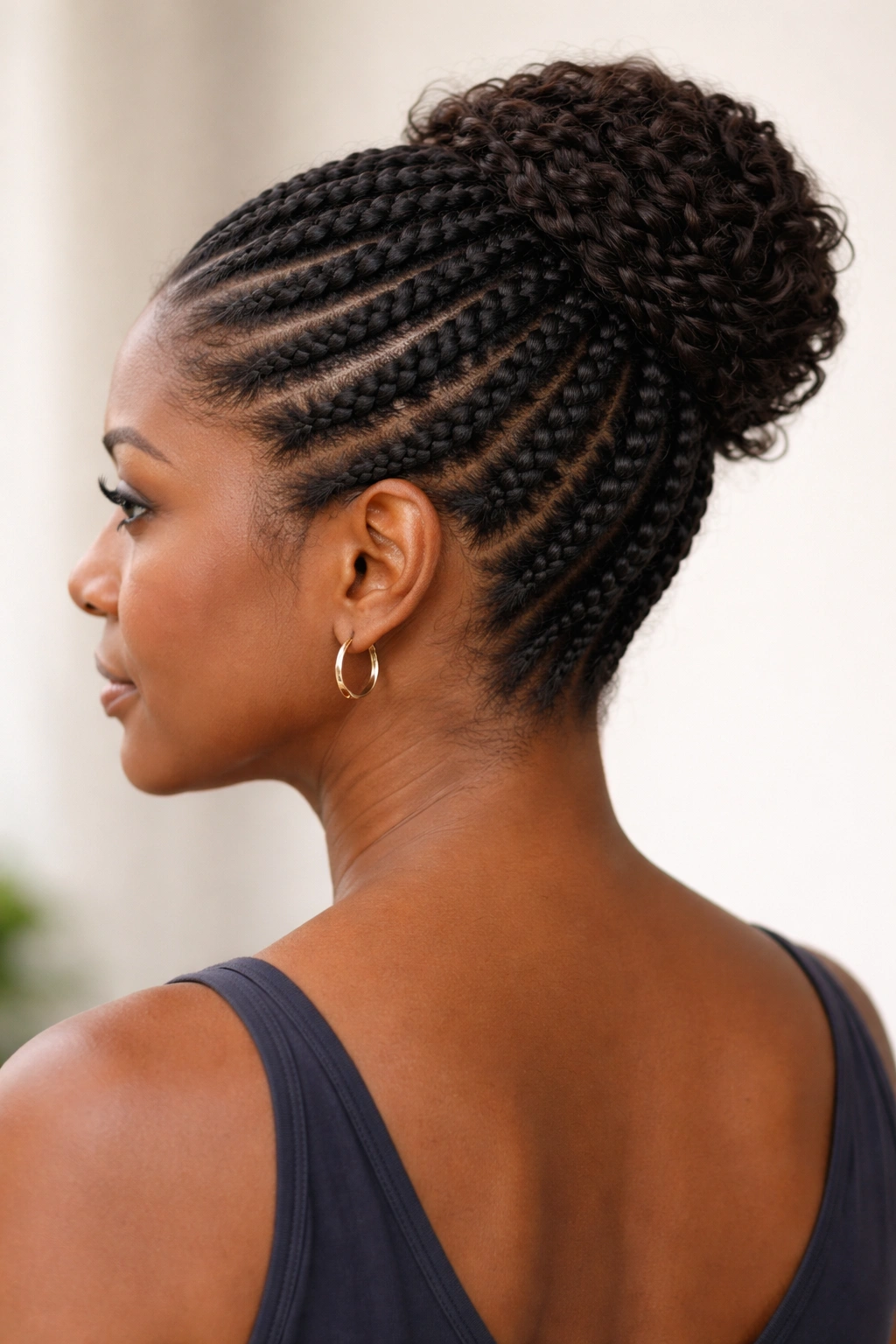
This style combines pulled-back cornrows with intentional volume at the crown, creating a silhouette that’s lifted and proportionate rather than flat or weighted down. The braids are pulled back from your face and secured, while the crown area has visible volume—either through loose waves, textured braids, or gathered sections with texture. This combination creates the illusion of a longer, narrower face while maintaining the sophisticated, protected-styling benefits of cornrows.
Creating Crown Volume
The crown volume can come from several sources: leaving some braids slightly loose and textured at the crown, gathering longer braids at the crown and creating texture through twisting or coiling, or even incorporating a small hairpiece or faux locs at the crown for extra volume. The key is that the volume is concentrated at the crown specifically, not spread throughout your hair. This concentration creates the lifted, face-lengthening effect you want.
The Pulled-Back Foundation
Your cornrows should be pulled back clearly from your face, creating a clean, open face frame while the volume work happens at the crown. You can use classic straight-back cornrows, angled cornrows, or cornrows following a deep side part—the placement you choose will set the tone for the overall style. The important thing is that the front and sides of your face are clear and unobstructed, allowing the crown volume to be the visual focus.
Why This Works for Mature Faces
For women over 40, this style creates sophistication through balance. The pulled-back sections show off your face and features, while the crown volume adds the visual height that round faces need. It’s a style that says you’re confident in your features and you’ve made thoughtful choices about what flatters you—not trying to hide behind your hair, but styling intentionally to create proportion and balance.
Finishing Options
You can finish with a low bun that showcases the crown texture, a wrapped crown that displays the volume, or even leave the crown loose for a softer, more romantic effect with the pulled-back sections secured. Each option creates a slightly different vibe while maintaining the core principle of crown volume with a pulled-back foundation.
11. Cornrows with Wrapped Ends for Refined Detail
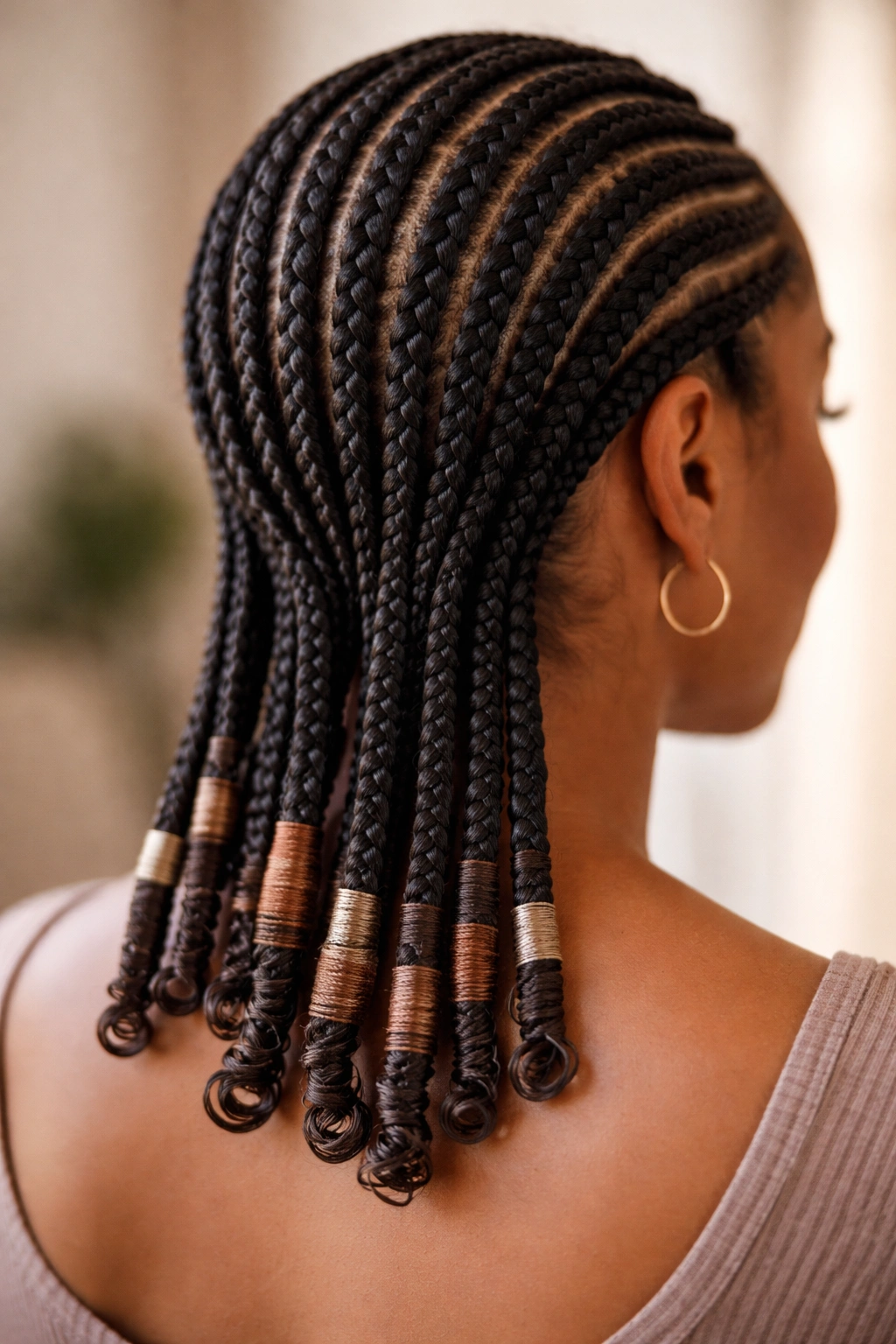
This style involves cornrows in any placement pattern (straight back, angled, centered, etc.) with the braids’ ends wrapped with thread, yarn, or thin strips of fabric. The wrapped ends add visual interest, intentionality, and a refined quality that transforms a straightforward cornrow style into something more polished and designed. Wrapping serves both aesthetic and functional purposes—it protects the ends of your braids and adds texture and color accent that can complement your overall aesthetic.
The Art of Wrapping
Wrapped ends can use coordinating or contrasting colors depending on your preference. A coordinating color creates a subtle, sophisticated effect, while a contrasting wrap adds visual punch and intention. You can wrap just the final inch or two of each braid, creating a small detail that’s visible when you move. Alternatively, you can wrap more extensively, creating longer sections of wrapped ends that are more visually prominent.
Wrapping Materials and Techniques
Floss or embroidery thread works beautifully for wrapped ends and comes in countless colors. You can also use thin yarn, fabric strips, or even decorative wire depending on the effect you want. The wrapping is typically started at a specific point on the braid (often about an inch from the end) and wound tightly around the braid multiple times, with the thread secured by weaving it through the wrapping or tucking the ends underneath. This is functional craft work that adds a handmade, intentional quality to your style.
Why Wrapping Elevates the Style
For women over 40, wrapped ends signal that you’ve put thought and care into your styling. It’s a refined detail that transforms a standard cornrow style into something more intentional and considered. The wrapping also adds color and visual interest without requiring much additional work once the cornrows are complete. You can change the wrap colors seasonally or for different occasions, giving yourself styling flexibility within the protective style framework.
Color Coordination
Consider coordinating your wrap colors with your skin tone, your clothing colors, or your personal aesthetic. Metallic wraps add subtle glamour, while contrasting wraps make a bolder statement. Even neutral thread wraps add texture and intentionality without being visually loud. The wrapping becomes a personalization element that allows you to make the style your own.
12. Cornrow Bun Styles for Polished Elegance
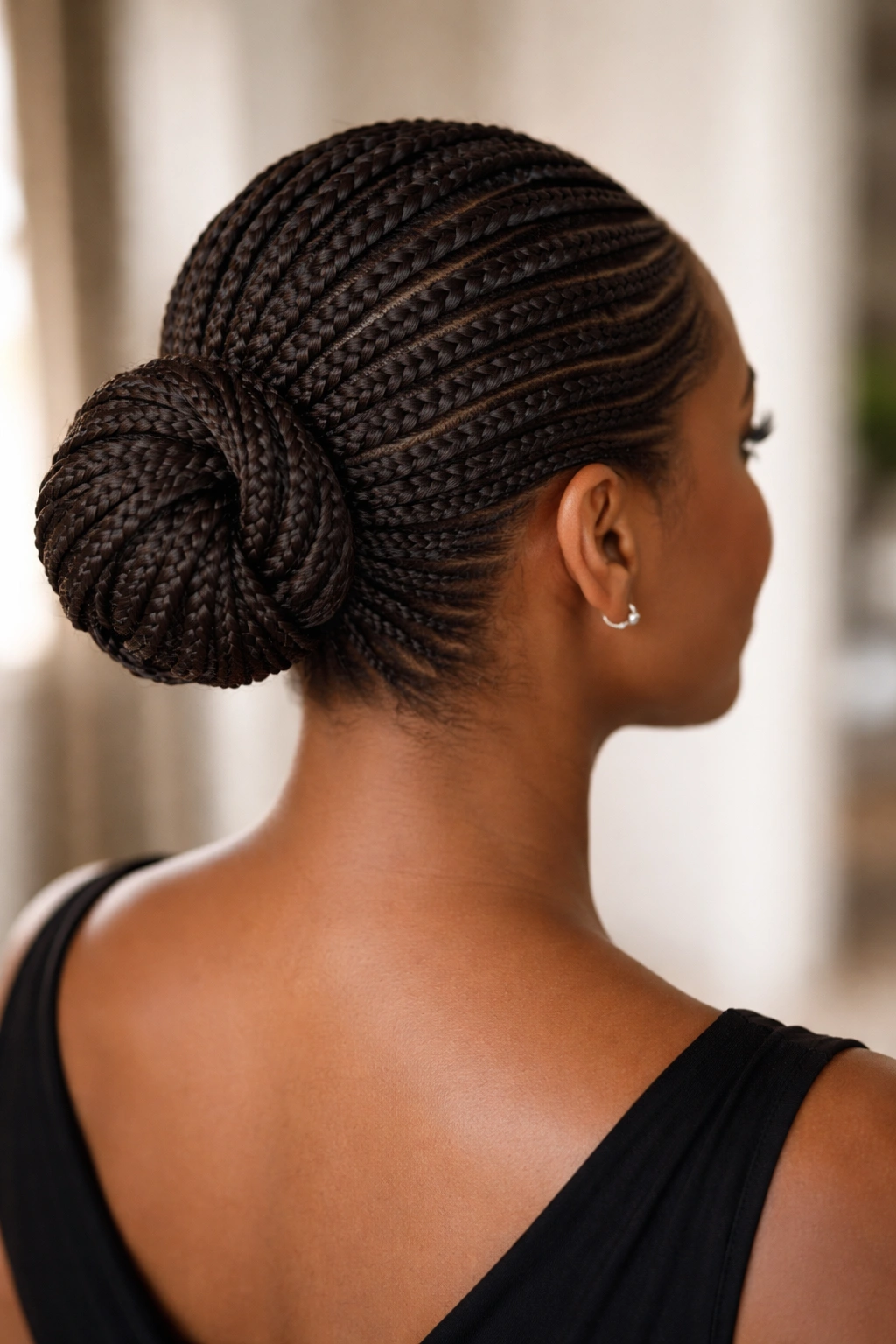
This final style gathers cornrows into a bun at the nape of your neck, creating a polished, elegant look that reads as sophisticated and intentional. The cornrows create the structural foundation and slimming face-shape benefits, while the bun gathers everything into a neat, contained silhouette. This is perhaps the most versatile of all cornrow styles because it works for virtually any occasion, any lifestyle, and any preference—from casual everyday wear to professional settings to special events.
Bun Placement and Structure
The bun can sit at the very nape of your neck (lowest point), mid-neck, or higher depending on your preference and the overall design you’re creating. A lower bun tends to be more formal and elegant, while a slightly higher bun can feel more casual and contemporary. The bun itself can be constructed from the ends of your cornrows twisted, coiled, or woven together, or you can secure the braids and then style additional hair around them for a fuller bun.
Bun Style Variations
A sleek, compact bun reads as polished and professional. A softer, more voluminous bun feels romantic and contemporary. A wrapped bun (where you wind a section of hair, thread, or fabric around the base) adds visual detail and refinement. A braided bun (where you braid the gathered ends together in a coil) adds texture. Each variation creates a different aesthetic while maintaining the core principle of gathered, contained styling at the nape.
Why Buns Work for Round Faces
Gathering your hair into a bun pulls the visual weight away from your face and down toward your neck and shoulders, which automatically elongates your face proportion. The bun also creates a contained silhouette that feels sophisticated and intentional. For women over 40, a cornrow bun is the definition of timeless elegance—it works for decades, it’s appropriate in virtually any setting, and it says you have refined, classic taste in styling.
Styling Options and Occasions
Cornrow buns work for casual daily wear, professional settings, athletic activities, and special occasions—you simply adjust the tightness, the texture, and any accessories to suit the context. A tight, sleek bun with minimal accessories works for the office or gym. A softer, slightly looser bun with decorative pins or wrapped details works for social events. The adaptability makes this style genuinely practical for women who want protective styling that also works across their entire life.
Final Thoughts
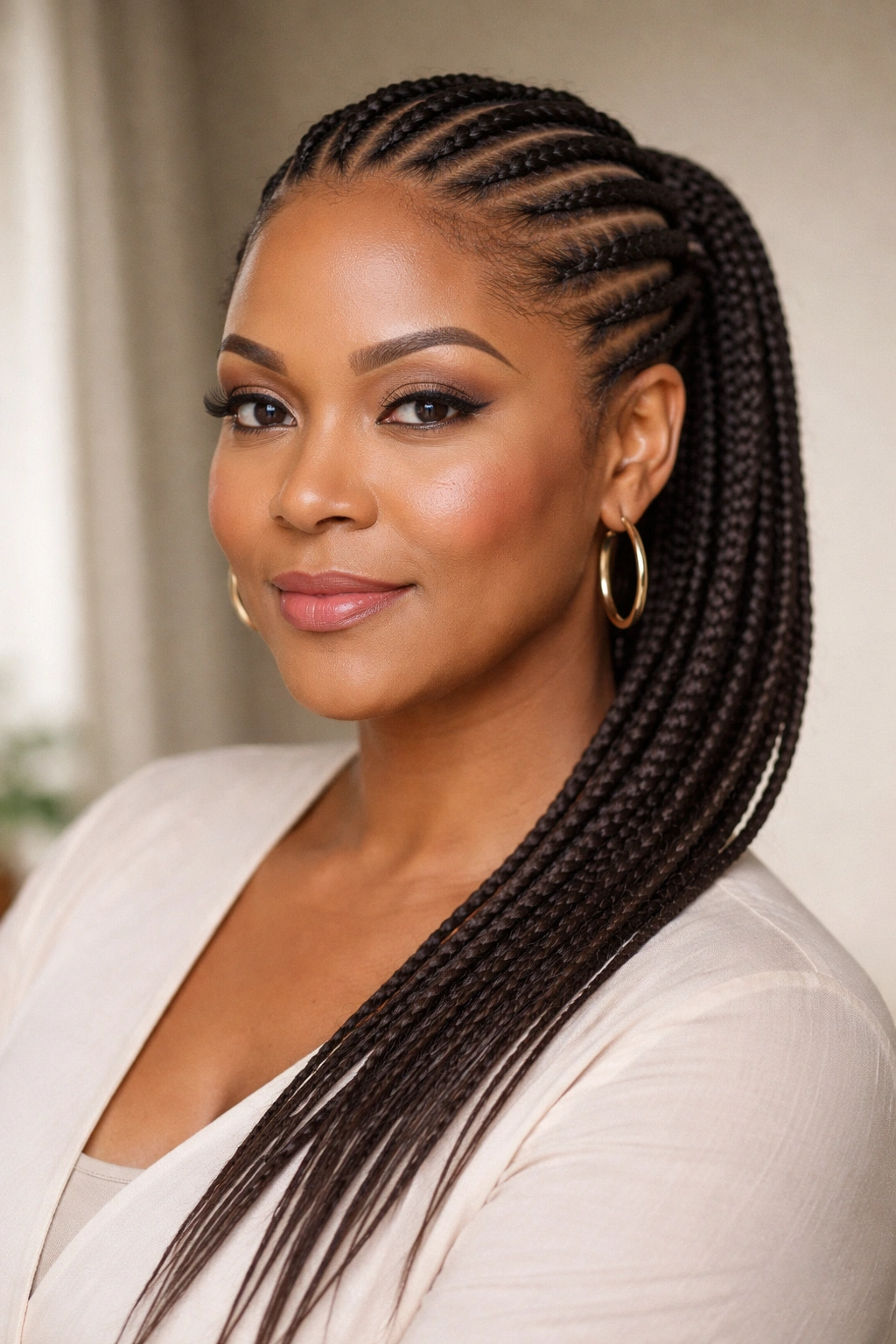
Cornrows aren’t just a protective styling choice—they’re an opportunity to shape how your face appears, to add intentionality and sophistication to your overall aesthetic, and to create a style that works beautifully with your mature features rather than against them. When you’re selecting a cornrow style as a woman with a round face over 40, you’re making a choice that says you understand what works for you, you value both protection and polish, and you’re styling with purpose and confidence.
The styles covered here all share a common principle: they create vertical lines, add dimension, draw attention upward or away from face width, and maintain a sophisticated, refined aesthetic that complements mature features. Some are subtle and understated, while others make a more dramatic statement—and they’re all valid choices depending on your personal style, your lifestyle needs, and how you want to show up in the world on any given day.
The most important thing to remember is that cornrow styling is deeply personal. These recommendations are guideposts, not rules. Your stylist’s expertise, your hair’s unique characteristics, and your own instincts about what makes you feel confident and beautiful should drive your final decision. When you find the cornrow style that makes you feel like the best version of yourself, you’ll know it—and that confidence will be the most flattering thing you can possibly wear.
