



Coily hair is gorgeous, but keeping a ponytail intact through a full day of work, activity, or just living requires strategy. Regular ponytail techniques that work fine on straight or wavy hair often fail spectacularly on coils—the hair slides out, the style falls flat, or flyaways explode outward within hours. The good news is that with the right technique, sectioning method, and styling approach, you can absolutely create ponytails that hold from morning through evening without getting disheveled or damaging your curls.
The key difference between a ponytail that holds and one that doesn’t comes down to friction, tension distribution, and working with your coil pattern rather than against it. Coily hair needs slightly more strategic planning than other textures because the natural springiness and density of coils means traditional methods like basic elastic bands don’t grip the way they do on straighter textures. But here’s what makes coily ponytails special: when you nail the technique, they look incredible. The texture, volume, and visual interest that coily hair brings to any style is unmatched—you’re not fighting your hair, you’re highlighting what makes it unique.
Whether you’re looking for something sleek and polished for professional settings, a protective style that gives your edges a break, or a casual everyday look that still holds strong, these ten ponytail styles have been tested on actual coily hair and deliver the hold you need without requiring elaborate daily maintenance.
1. High Sleek Ponytail with Wrapped Base
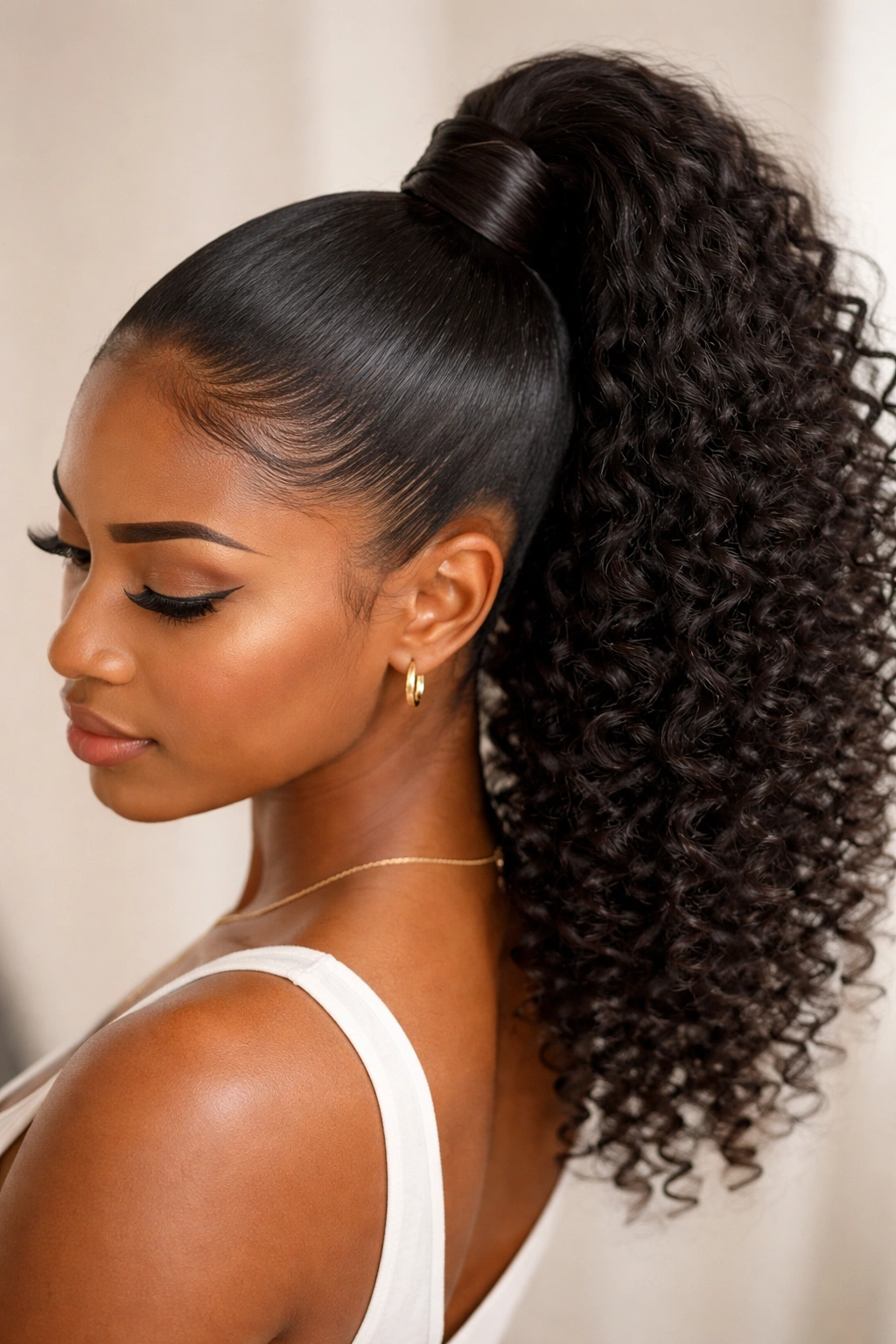
This is the workhorse ponytail style for coily hair—sleek on top, coily volume at the bottom, and a wrapped base that looks intentional and polished. The wrapped base does triple duty: it holds the ponytail securely, disguises the elastic band, and adds a finished, professional touch that elevates the entire look.
Why This Works for Coily Hair
The technique begins with applying a smoothing cream or gel to the crown and upper sections while leaving the coil pattern looser toward the ends. This gives you controlled sleekness without flattening your entire curl pattern. The wrapped base is crucial for holding power—using a small section of hair wrapped tightly around the elastic creates friction that prevents slipping, which is especially important since coily hair doesn’t grip smooth elastics as easily as straighter textures do.
How to Create It
Start with damp or freshly moisturized coily hair. Apply a smoothing product to your roots and gently brush or use a fine-tooth comb to smooth the crown area—you’re creating a smooth perimeter, not eliminating your coil pattern entirely. Gather your hair high on the crown and secure with a thick elastic band or multiple smaller bands stacked together for extra grip. Take one small section from the ponytail itself and wrap it tightly around the base of the ponytail, covering the elastic completely. Pin the wrapped section with bobby pins that match your hair color, securing them into the coils beneath the wrap so they’re invisible.
Pro tip: Use an edge control product on your edges during this style—it keeps flyaways controlled for that polished finish without adding greasiness.
2. Chunky Braided Ponytail
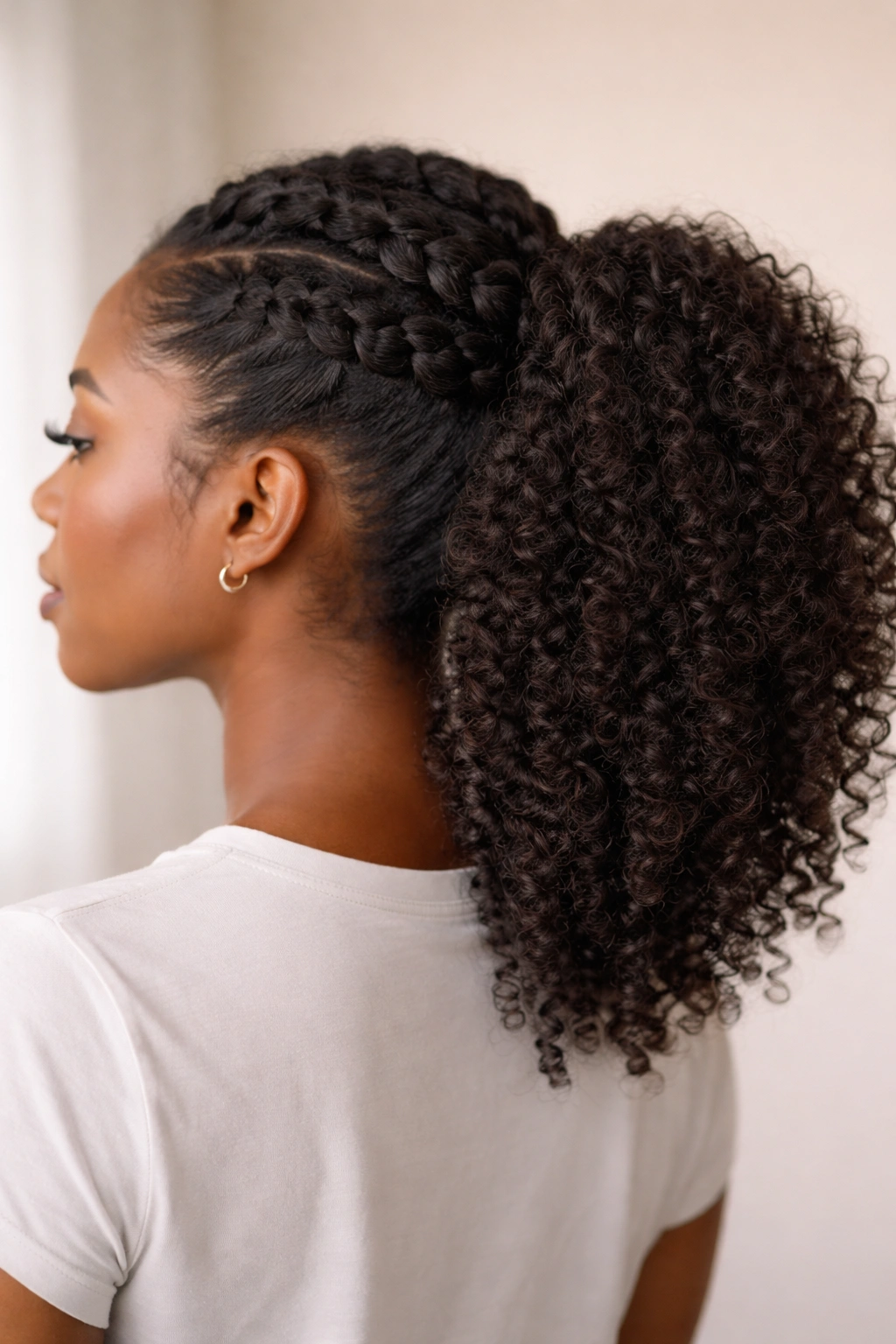
A chunky braided ponytail that starts at the crown and flows into a full, textured tail is pure coily hair magic. The braids create grip points along the length of the style, which dramatically increases holding power while celebrating the density and texture your coils naturally offer.
Why This Braided Approach Holds Better
When you create two or three thick braids that converge into a single ponytail, you’re distributing tension evenly across multiple grip points instead of relying on a single elastic band at the base. Braids create mechanical hold through the interlocking of strands, making them especially effective for thick, coily hair. The coils actually grip each other within the braid, so the style becomes stronger the more you move, not looser.
Building Your Braided Ponytail
Section your hair into two or three chunks from your temples toward your crown. Braid each section loosely—you want thick, chunky braids that show off the texture, not tight, refined braids that flatten your coils. As you braid, let the coil pattern show through rather than trying to smooth everything flat. Once all braids reach the nape of your neck, gather them together with the remaining loose hair and secure everything with a thick elastic band. You can add a wrapped base if you want extra polish, or leave the braids visible and textured for a more casual look.
Worth knowing: This style actually holds better the day after it’s created, once the braids have settled and the coils have naturally nested into each other.
3. Twisted Coil Ponytail
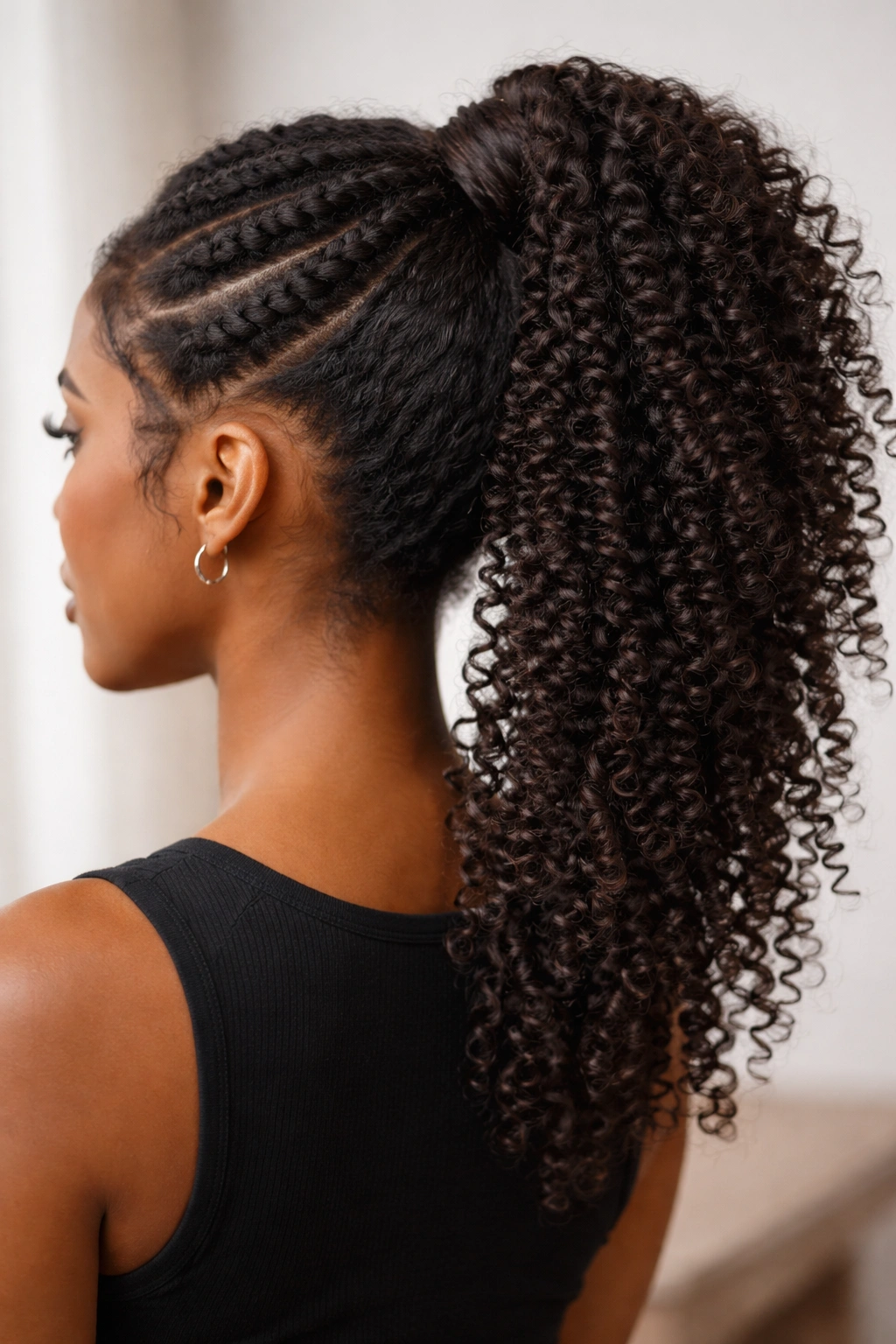
Instead of braiding, create hold through twisted sections. This style is faster to execute than braids and still delivers serious staying power because twists create interlocking that prevents your coils from sliding.
The Mechanics of Twists for Coily Hair
When you twist coily hair tightly, the individual coils interlock with each other, creating a structure that holds almost like a rope. Unlike braids, which require three-strand manipulation, twists work with just two sections of hair twisted together—and the coil pattern itself does much of the interlocking work for you. This makes twists less dependent on technique precision than braids, which is genuinely helpful when you’re styling your own hair.
Creating the Twisted Ponytail Style
Take the front sections of your hair and create two deep twists, starting from your temple area and spiraling back toward the crown. Don’t twist too tightly—you want the coil pattern to remain visible and textured. Gather all your hair, including the twisted sections, into a high ponytail and secure with an elastic band. You can create a wrapped base for additional polish, or leave the twists visible at the top. The beauty of this style is that you can adjust the placement of twists based on your face shape—more twists on the sides if you want a narrower look, or a single thick twist down the center for a dramatic statement.
4. Half-Up, Half-Down Coil Pony
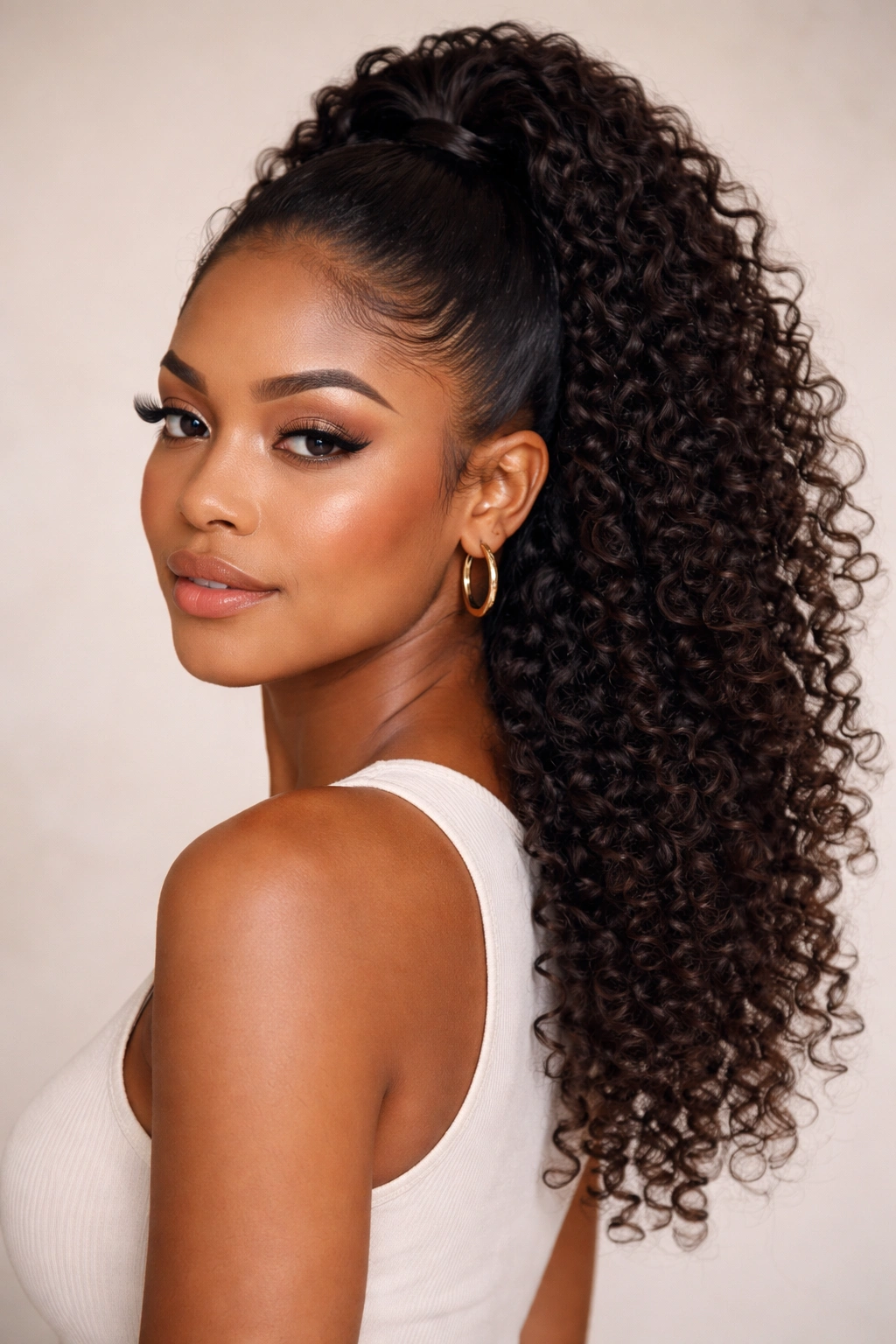
This style gives you the practical benefits of a ponytail (keep hair off your face and neck) while preserving the gorgeous volume and definition of your coils at the bottom. It’s protective enough for real work and life, while looking effortlessly chic.
Why Half-Up Works Particularly Well for Coils
Half-up ponytails prevent you from tying down your entire crown, which means less tension at the hairline and less flattening of your coil pattern at the roots. You’re only securing the upper portion, so the lower half of your coils remain completely free to show their natural dimension and bounce. This is genuinely gentler on your hair while still keeping everything functional and styled.
Building the Half-Up Version
Create a deep side part or center part, depending on what flatters your face. Gather the top half of your hair, starting from just above your ears, into a ponytail at the crown or high on the back of your head. Secure with an elastic band. The bottom half of your coils falls completely loose, creating volume and showing off defined curls. You can add braids or twists into the half-up section for extra grip, or keep it smooth for a more minimal look. Wrap the base if you want polish, or leave it loose for a casual vibe.
Quick styling tip: Apply lightweight mousse or curl cream to the bottom half before styling—it defines the loose coils and makes them look intentional rather than like you forgot to finish styling.
5. Stacked Bun Ponytail
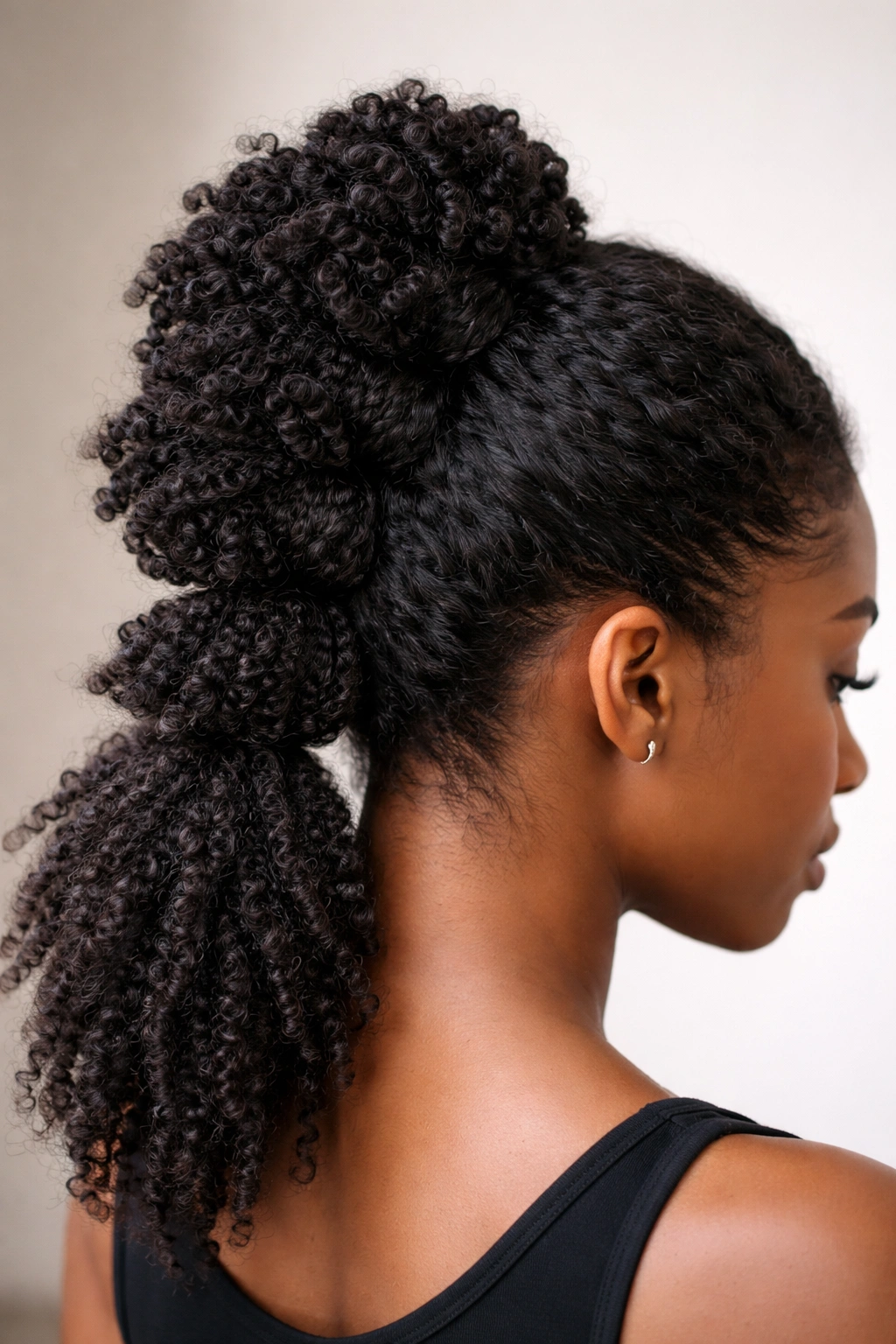
This style takes a regular ponytail and transforms it into a stacked structure with multiple levels of buns or coil clusters. It’s undeniably chic, holds incredibly well, and the stacking actually distributes tension better than a single concentrated bun.
Why Stacking Increases Hold
When you stack sections of coily hair into multiple smaller clusters or buns instead of one large bun, you’re reducing the weight and tension on any single point. The coils grip each other at multiple levels, and gravity works with the style rather than constantly pulling down on a single top knot. The visual effect is sophisticated and intentional—this doesn’t read as a rushed bun, it reads as styled.
Creating the Stacked Structure
Gather your hair into a high ponytail and secure it. Divide the ponytail into two or three sections from base to tip. Twist each section tightly, then wrap each twisted section around itself to create a small coil-shaped bun. Pin each bun individually to the ponytail base using bobby pins. The result is a multi-level stack of textured buns that sits at the crown. You can keep the stacks tight and polished, or leave them slightly loose and textured to show off your coil definition.
Professional note: This style photographs beautifully and holds through a full day of meetings or events without a single touch-up.
6. The Claw Clip Pony with Defined Curls
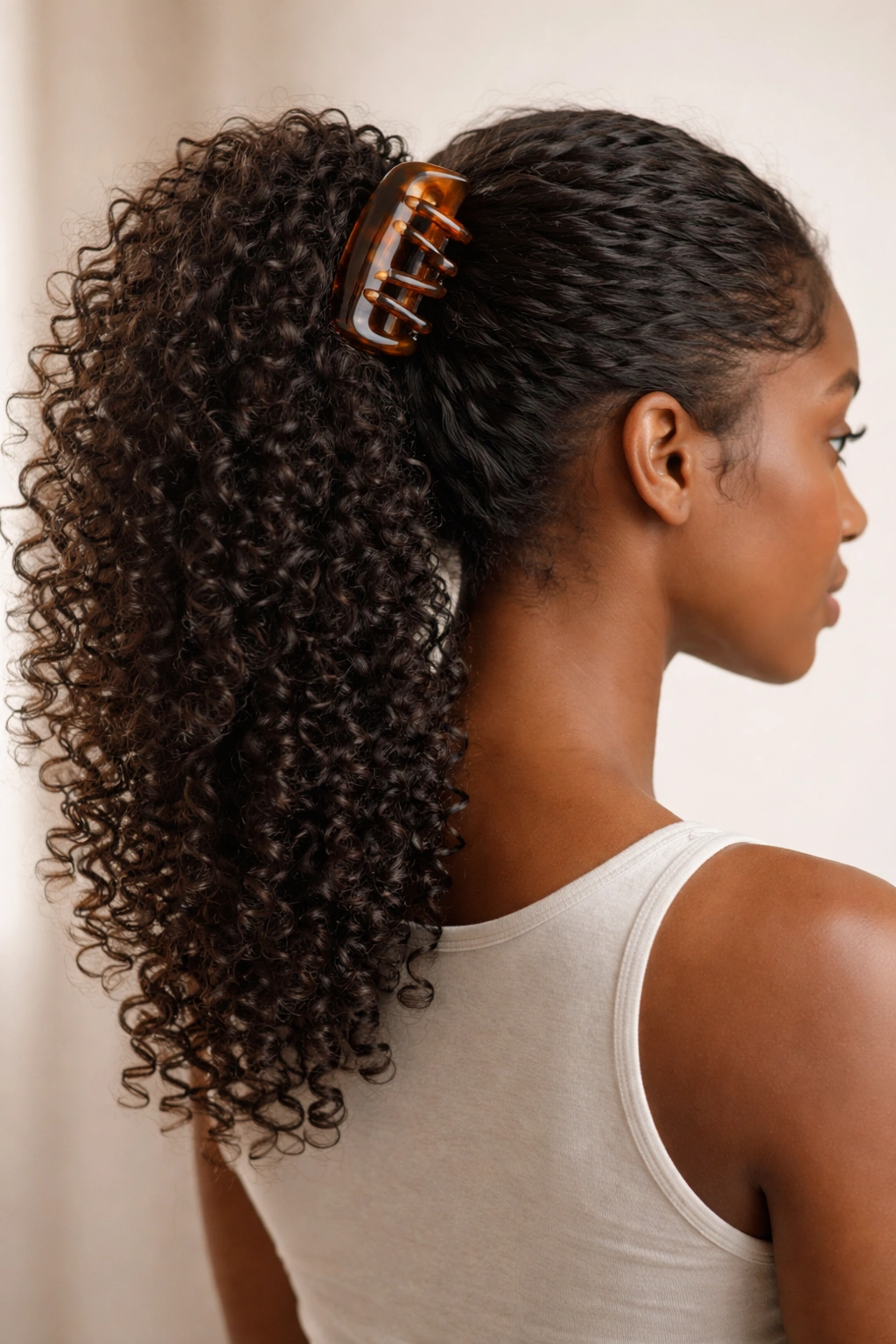
Using a claw clip instead of traditional elastics changes the entire grip dynamic for coily hair. Claw clips work by clamping around the hair bulk itself rather than relying on friction against individual strands, making them genuinely superior for thick, coily textures.
Why Claw Clips Are Coily Hair’s Secret Weapon
Traditional elastic bands eventually slip and slide on coily hair because they’re trying to grip the shaft of individual strands. Coily hair has texture and bulk that elastics just slide over. Claw clips, by contrast, open and close around the entire ponytail section, creating hold through clamping pressure rather than friction. For coily hair, this is genuinely transformative—a claw clip ponytail stays exactly where you put it, all day.
Styling with a Claw Clip
Gather your coily hair into a ponytail at your preferred height. Use a large claw clip to secure the ponytail, making sure you’re clamping around the bulk of the hair. You can position the clip so it’s fully visible and becomes part of the aesthetic (which looks intentional and stylish), or tuck it slightly under a wrapped section of hair if you prefer a more traditional look. The coils will naturally bunch and create texture within the clip—this is perfect and intentional, not a flaw.
Practical detail: If your hair is exceptionally thick, use two claw clips positioned close together for the most secure hold. This is especially helpful for very dense coily hair or when you’re going to be active.
7. Feed-in Braided Ponytail
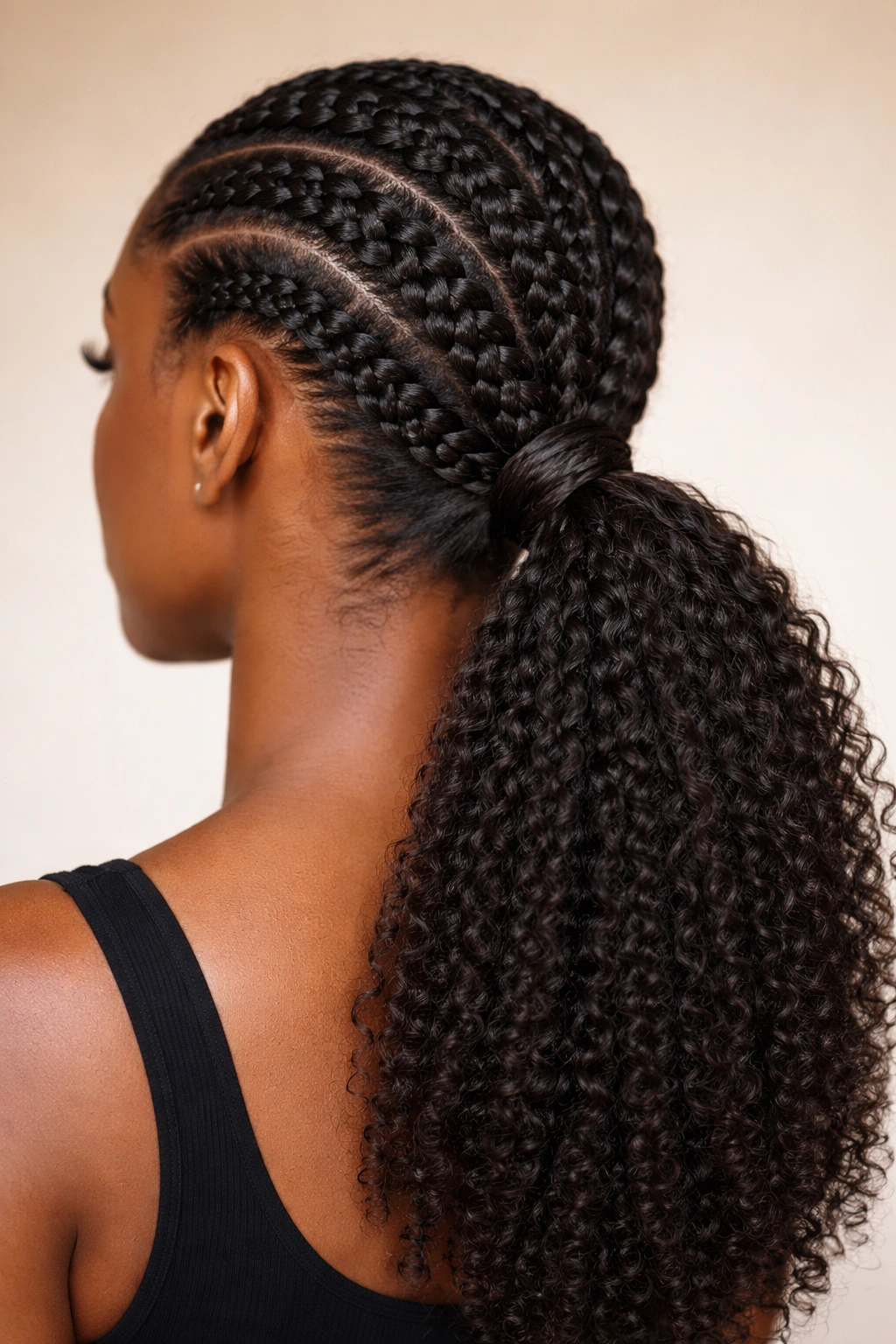
A feed-in braid is created by continuously adding small sections of new hair into the braid as you move from the crown down to the nape. When you take this technique all the way down and convert it into a ponytail, you get a style that’s both intricate and incredibly secure.
The Hold Advantage of Feed-In Structure
Feed-in braids create multiple grip points along the entire length of the braid, and because you’re continuously anchoring new hair as you braid, there’s no opportunity for the style to slip or shift. When you convert the feed-in braid into a ponytail at the base, you’re starting with a foundation that’s already mechanically locked in place. The ponytail is essentially the final anchoring point for a structure that was already holding firm from the crown down.
Executing the Feed-In Braid Ponytail
Start with a three-strand braid at your crown using a small section of hair. As you braid downward, pick up small sections of hair from either side of the braid, incorporating them into the three strands as you continue braiding. The braid will travel down the back of your head, continuously incorporating new hair. Once you reach the nape of your neck, gather all remaining hair (both the braid and any unsecured hair below it) into a ponytail and secure with an elastic band. This creates a professional, polished look that absolutely holds through movement, exercise, and a full day of wear.
Insider tip: This style actually looks better and holds tighter the next day after the initial styling, once all the hair has nestled together overnight.
8. Puffed Crown Ponytail
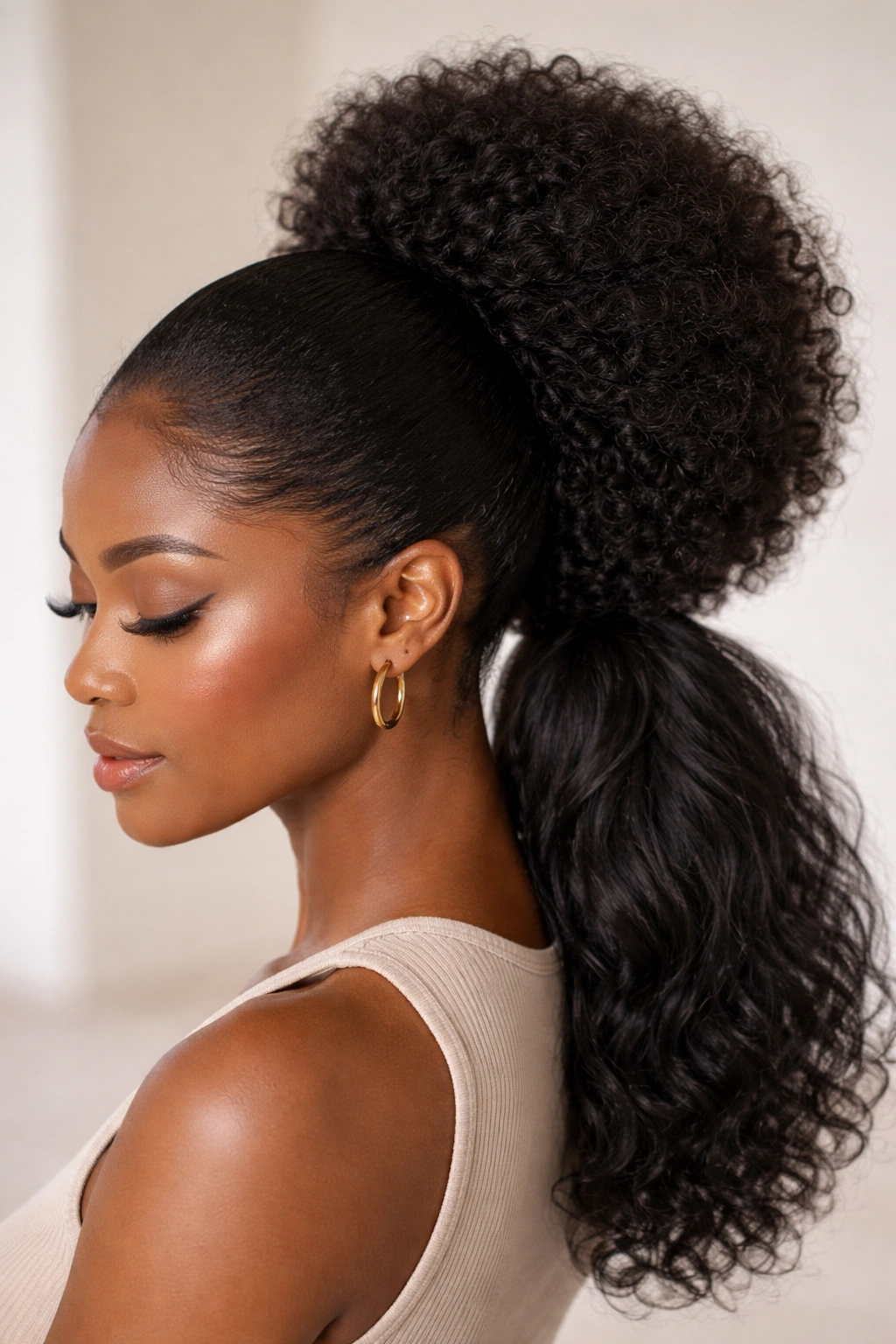
This style creates intentional volume at the crown by puffing out a section of your coils, then gathering everything into a ponytail beneath that puffed crown. It’s eye-catching, dramatically flattering, and the puff itself actually contributes to holding power.
How Puffing Creates Visual and Structural Hold
When you puff out a section of hair, you’re creating volume that sits above the base of your ponytail. This volume acts as an anchor—it’s harder for the ponytail beneath it to slip downward because it’s supporting the weight of the puff above it. Visually, the puffed crown makes the entire style look fuller and more substantial. For coily hair, which naturally has beautiful texture, puffing amplifies that asset into something truly statement-making.
Building the Puffed Crown
Take a section of hair from your crown (roughly the size of your fist) and secure it loosely with a small elastic band positioned low in that section. This creates a pouf of hair above the elastic. Take the elastic out (or leave it if you prefer it anchored) and gently fluff and smooth the puffed section to create shape and volume. Then gather your entire hair, including the base of the puff, into a low or mid-height ponytail beneath it. Secure with an elastic band. The visual effect is a voluminous crown of coily texture sitting atop a clean ponytail.
9. Low Textured Knot Ponytail
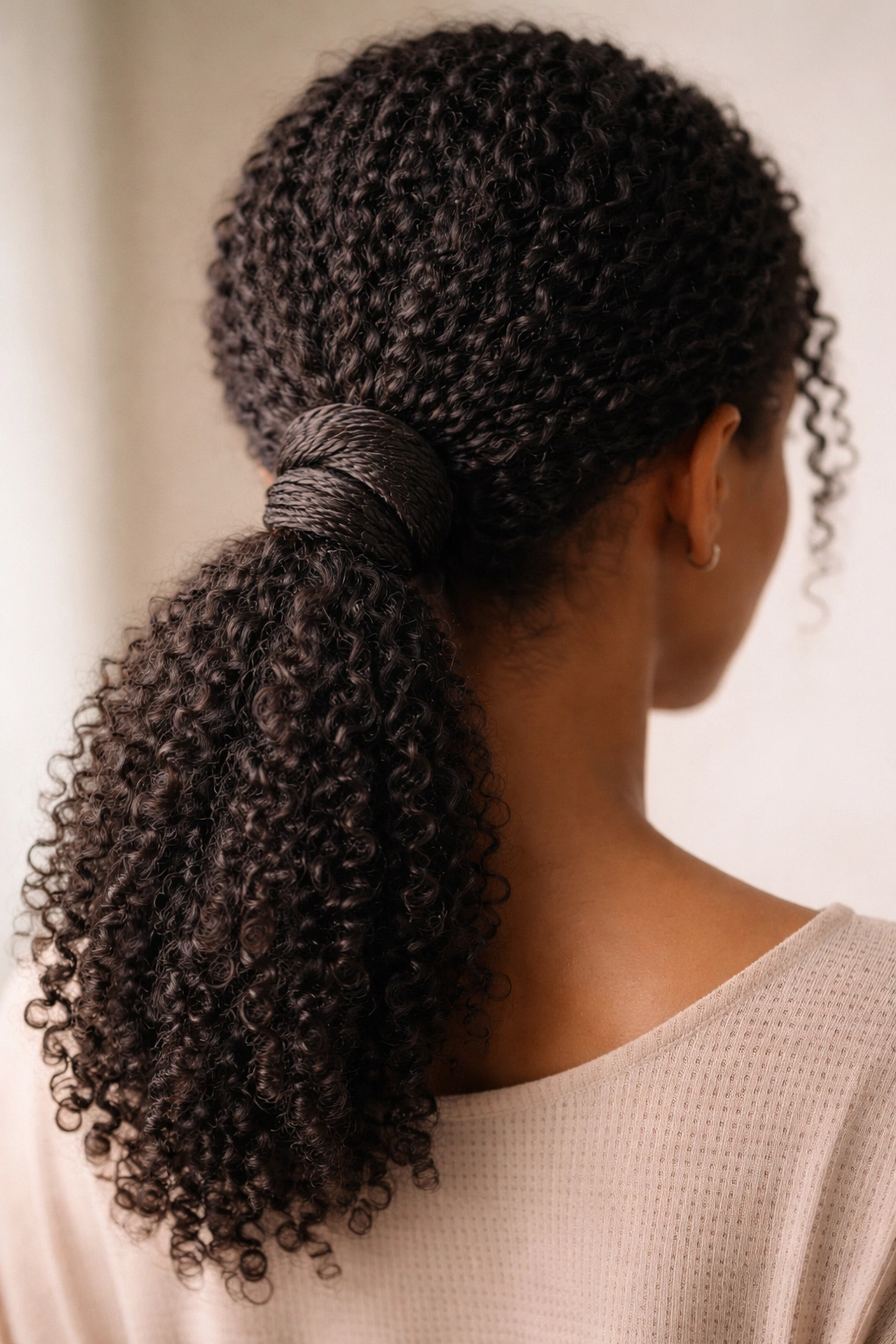
Instead of a traditional elastic-gathered ponytail, this style ties your hair into an actual knot, creating hold through the knot itself rather than relying on an elastic band to maintain tension.
Why Knotting Holds Coily Hair Securely
When you tie coily hair into a knot, the coils themselves lock and grip each other within that knot structure. The knot doesn’t depend on elastic friction—it depends on the physical interlocking of your actual hair strands. For coily hair, which naturally interlocks easily, a knot is genuinely more secure than an elastic band. Once the knot is tied, it’s not going anywhere.
Creating the Knot Ponytail
Gather your coily hair into a low ponytail position at the nape of your neck. Instead of securing with an elastic band, divide the gathered hair into two sections and tie them together in a simple knot, just like you’d tie a knot in a rope. Pull the knot tight. If you want additional hold, you can wrap a thin section of hair around the outside of the knot and pin it, or simply leave the knot visible as part of the design. Some people add a small elastic band just above the knot for extra security, while others let the knot do all the work. Test what works best for your hair density.
Worth noting: This style works best on hair that’s been conditioned and moisturized—overly dry hair can be more prone to breakage when tied in a knot, so make sure your coils are healthy and flexible.
10. The Spiral Twist Ponytail
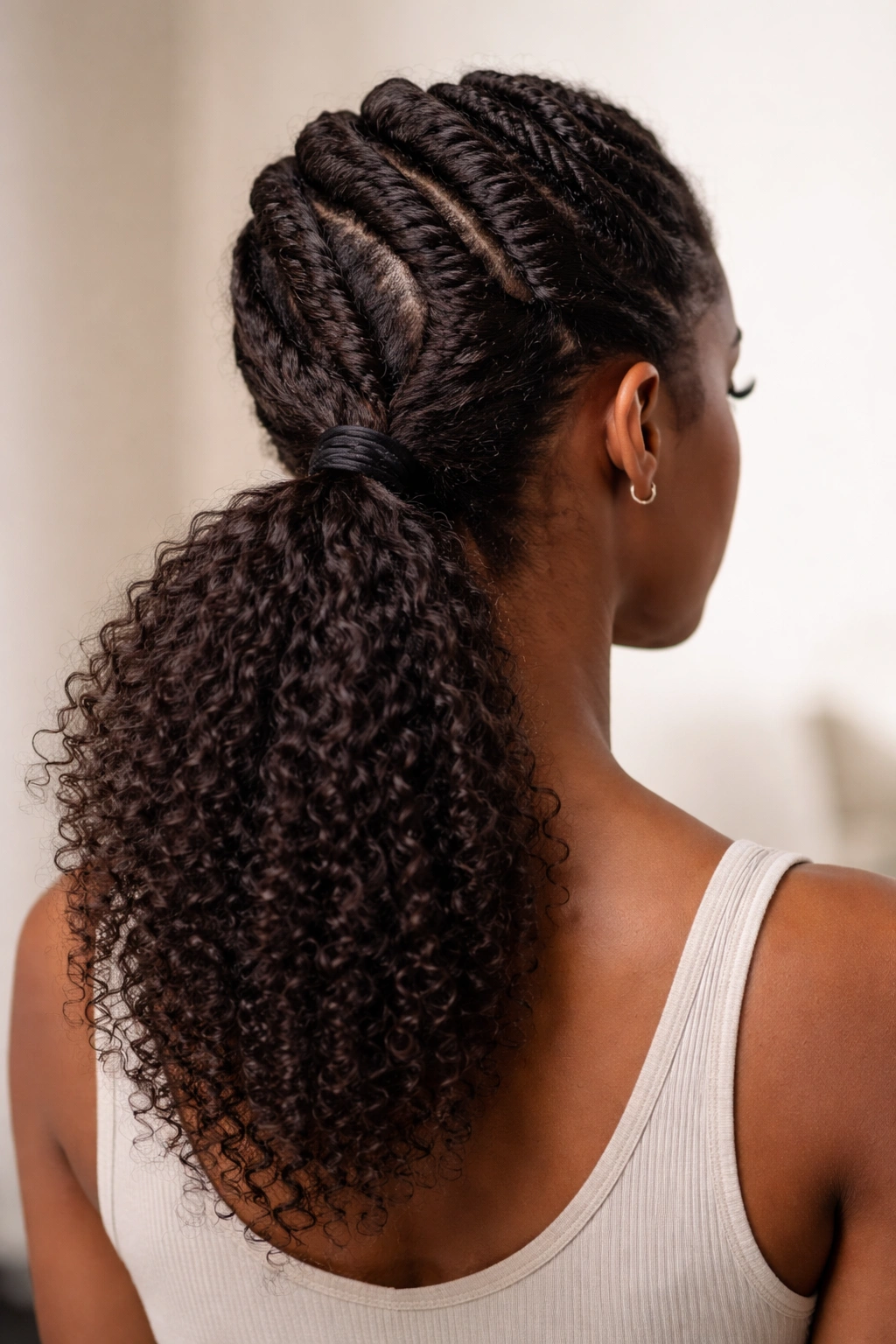
This style creates spiraling twists that flow down the back of your head and converge into a ponytail, creating visual movement and serious structural hold through the spiral pattern.
The Structural Advantage of Spiraling
Spirals create continuous interlocking along their entire length. Unlike a simple twist (which is two sections twisting around each other), a spiral involves wrapping hair in a continuous circular pattern. For coily hair, spirals are particularly effective because your coils naturally want to curl and spiral anyway—you’re working with your hair’s natural inclination rather than against it. The result is a style that’s stronger the more natural your coil pattern is.
Building Spiral Twists
Create two or three spiraling twists by taking small sections at the front of your head and spiraling them backward toward the crown and nape. You can spiral loosely (for a soft, natural look) or tightly (for a sleek, defined appearance). Once your spirals reach the back of your head, gather them together with any remaining loose hair into a ponytail and secure with an elastic band. You can wrap the base for polish, or leave the spirals visible and let the twists become the focus of the style.
Practical tip: Spirals hold better when your hair has some texture or product in it—apply a light gel or mousse before spiraling for maximum grip and definition.
Final Thoughts
The absolute best ponytail style for your coily hair is the one you’ll actually wear, which means choosing something that fits your lifestyle, your skill level, and what genuinely makes you feel confident. Some of these styles take five minutes once you’ve done them a couple of times; others require more finesse and patience upfront. All of them hold because they work with coily hair’s natural texture and grip, not against it.
The real shift that happens when you commit to mastering even three of these techniques is that you stop thinking of ponytails as a backup plan or a compromise. Instead, they become intentional styling choices that showcase your coils while keeping your hair functional and protected. Your ponytail doesn’t have to be the less-interesting version of your down hair—it can be its own complete look, textured and dimensional and absolutely reliable to hold from morning through whatever your day throws at you.
