



Oval faces are the canvas that virtually every hairstyle looks good on—and cornrows are no exception. The balanced proportions of an oval face shape, slightly wider through the cheekbones and tapered at both the forehead and jaw, mean you’ve got serious flexibility when it comes to choosing braided styles. But just because you can wear almost anything doesn’t mean you shouldn’t be strategic about it.
The best cornrow styles for oval faces emphasize your natural symmetry while adding dimension, texture, and visual interest. Some designs play up the length and elegance your face shape allows, while others add volume and movement to create even more definition. The key is understanding which patterns, directions, and placements will complement your features and enhance your overall look.
What makes oval faces so forgiving is that they don’t have the extreme angles of a square face or the length concerns of a rectangular one. You’re not fighting against your proportions—you’re working with them. That means you can experiment with bold geometric patterns, intricate multi-directional braids, sleek centered designs, and playful asymmetrical layouts with equal confidence. Whether you’re looking for something understated and polished for work or bold and artistic for the weekend, there’s a cornrow style here that’ll make you feel like your best self.
1. Classic Center-Parted Box Braids Cornrows
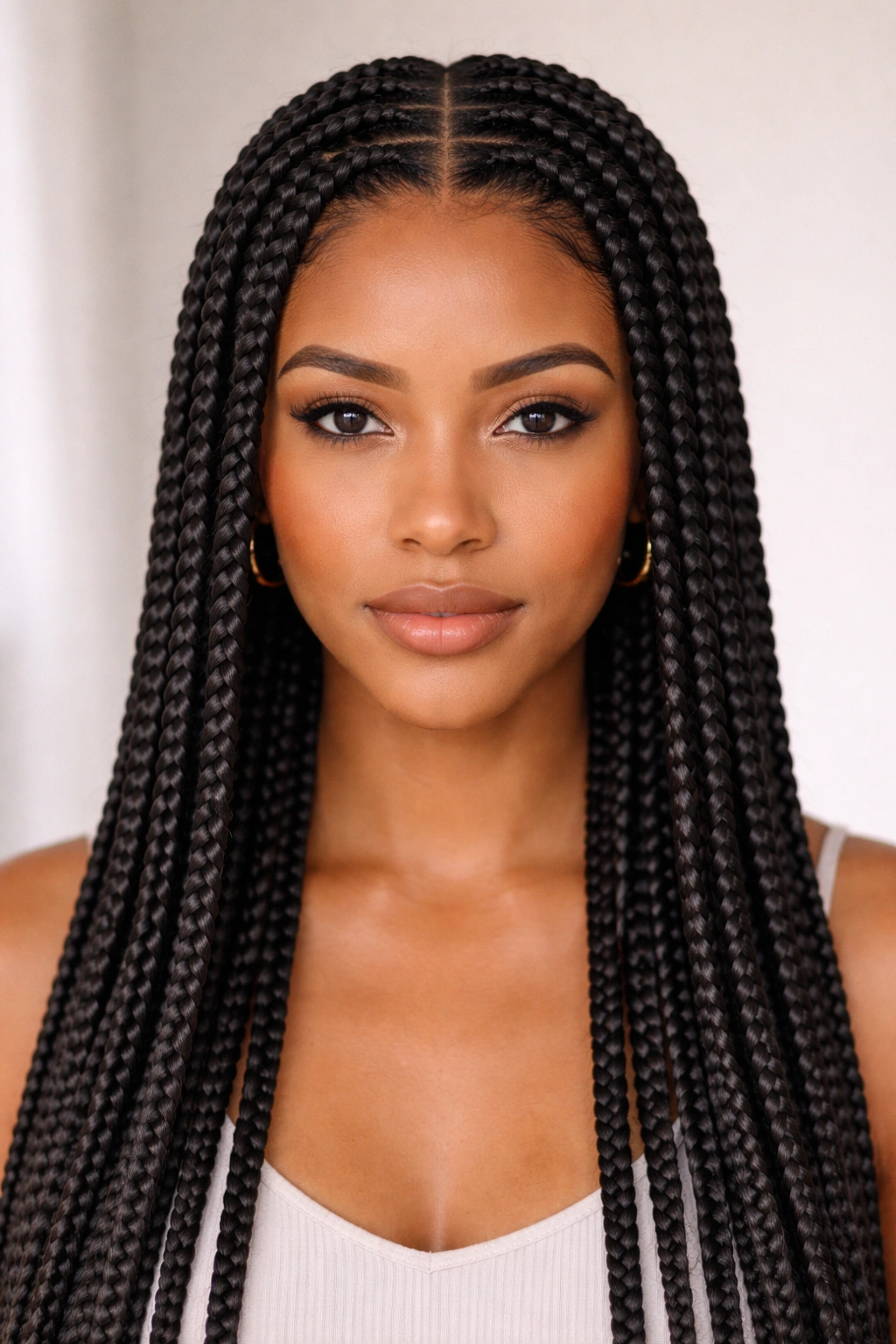
The center-parted box braid cornrow style is the foundation of braided hair fashion, and for good reason—it’s timeless, flattering, and works beautifully on oval faces. This style creates a perfectly symmetrical line down the middle of your head, with box-shaped braids extending from your hairline straight back. The clean geometry of this pattern draws attention upward to your eyes and creates a frame that’s both sophisticated and approachable.
Why This Works for Oval Faces
The center part enhances the natural balance your oval face already has. Because oval faces are wider through the middle and tapered at the top and bottom, a center-parted style actually emphasizes these ideal proportions rather than fighting them. The symmetry is pure—literally mirrored on both sides—which gives the whole look a polished, intentional feeling. You’re not trying to hide or reshape anything; you’re celebrating the proportions you already have.
How to Make It Your Own
- Vary the thickness of the braids: thicker braids create bold, sculptural lines, while thin braids add delicate detail and intricacy
- Add beads, rings, or wraps to select braids for visual interest and personal flair
- Leave hair out at the crown for a softer, less severe appearance, or braid all the way to the ends for maximum sleekness
- Combine two different bead colors or alternating bead patterns to create custom designs along the braids
- Experiment with slightly curved rather than perfectly straight sections for a more organic, less rigid look
Pro tip: If you want the center-parted look but find it feels too severe, try leaving a 1-2 inch section at your crown completely unbraided with curls or loose waves—this softens the overall effect while keeping the elegant center-part structure.
2. Curved Cornrows Framing the Face
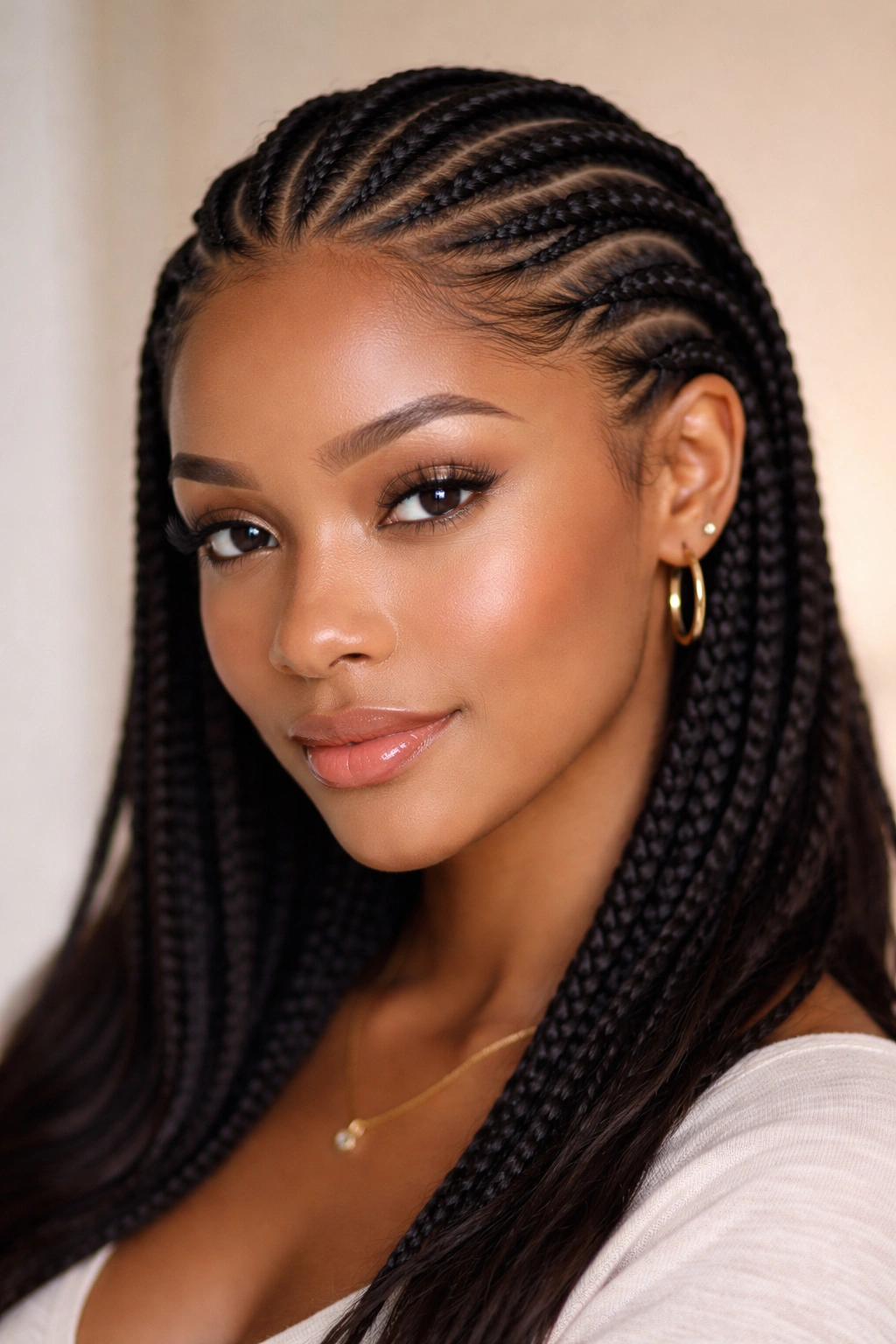
Curved cornrows that sweep outward and frame your face are pure flattery for oval face shapes. Instead of moving straight back from your hairline, these braids follow an organic, slightly curved path that moves from your center hairline outward toward your temples, then backward along your head. The effect is softer and more sculptural than straight-back braids, and it creates wonderful movement and dimension.
The Geometry That Works
Curved designs take advantage of an oval face’s natural width through the cheekbones. By creating cornrows that sweep toward your face initially before moving back, you’re drawing the eye along these curves and emphasizing the elegant proportions of your face. The curved lines are also inherently more flattering than harsh straight lines—they’re more forgiving and have a more organic, intentional quality that reads as polished rather than severe.
Styling Variations to Try
- Create a larger curve on each side, starting at center and moving outward before angling back—creates a swooping, almost wave-like effect
- Combine curved cornrows with a flat-twisted crown section for mixed texture and visual intrigue
- Mix braid thickness: thicker curves with thinner accent braids can add complexity and artistry
- Add metallic thread or thin string through select braids to catch light and add shimmer
- Finish the curved cornrows at your crown and leave loose hair at the back for a half-up hybrid look
Worth knowing: Curved cornrows require a skilled braider who understands geometry and tension control—they’re not as forgiving as straight designs because any unevenness in the curve is immediately visible. It’s worth finding a stylist who specializes in this particular technique.
3. Geometric Zigzag Cornrow Pattern
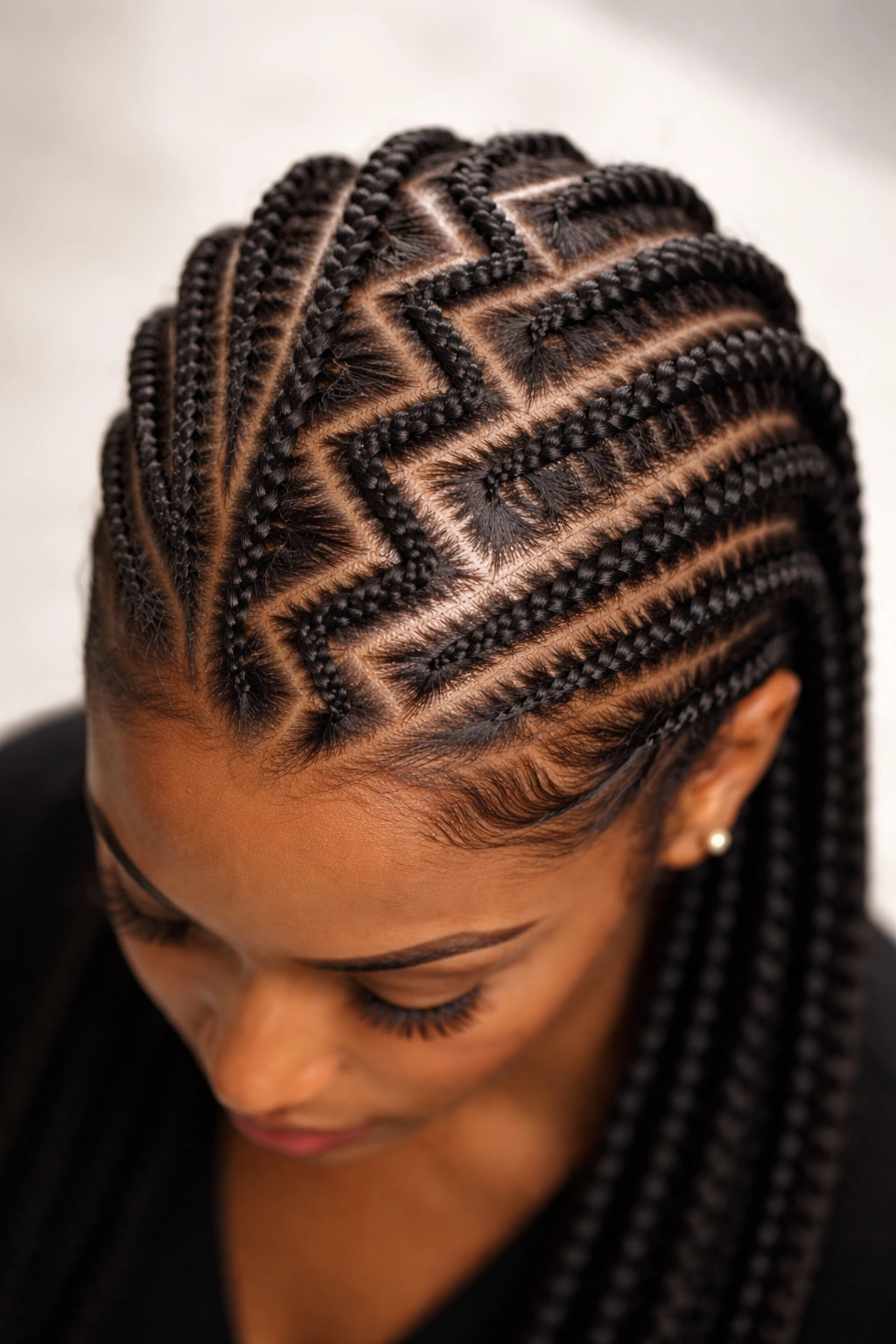
Geometric zigzag cornrows are where artistry meets boldness. Instead of following the natural directional flow of your hair from front to back, these braids create a pattern that moves left and right in a zigzag formation across your entire head. From above, you see angular, sharp lines creating visual rhythm and texture. The pattern is striking and immediately signals that you’re thoughtful about your style choices.
Why Oval Faces Own This Look
Zigzag patterns work particularly well on oval faces because the balanced width and tapered ends of your face shape can handle the visual complexity without feeling cramped or chaotic. Your forehead has enough space to accommodate the angular lines without them appearing overwhelming, and your overall face proportions are proportionate enough that the geometric intensity reads as artistic rather than busy.
Creating Your Geometric Design
- Decide your zigzag width: narrower angles create more intricate patterns with more braids, while wider angles use fewer, bolder braids
- Plan your pattern in advance or work with a stylist who can sketch it out—mapping the path before you start prevents mistakes
- Mix braid textures: some people alternate between cornrows and individual box braids along the zigzag path for added dimension
- Consider adding colorful thread or using two different bead colors to accentuate the geometric lines
- Keep the edges clean and precise—the zigzag only works if the lines are sharp and intentional
Real talk: Zigzag cornrows look incredible in photos and feel amazing when you’re wearing them, but they do take longer to install than standard patterns. Block out extra time with your braider and communicate clearly about exactly how you want the angles to flow.
4. Side-Swept Cornrows
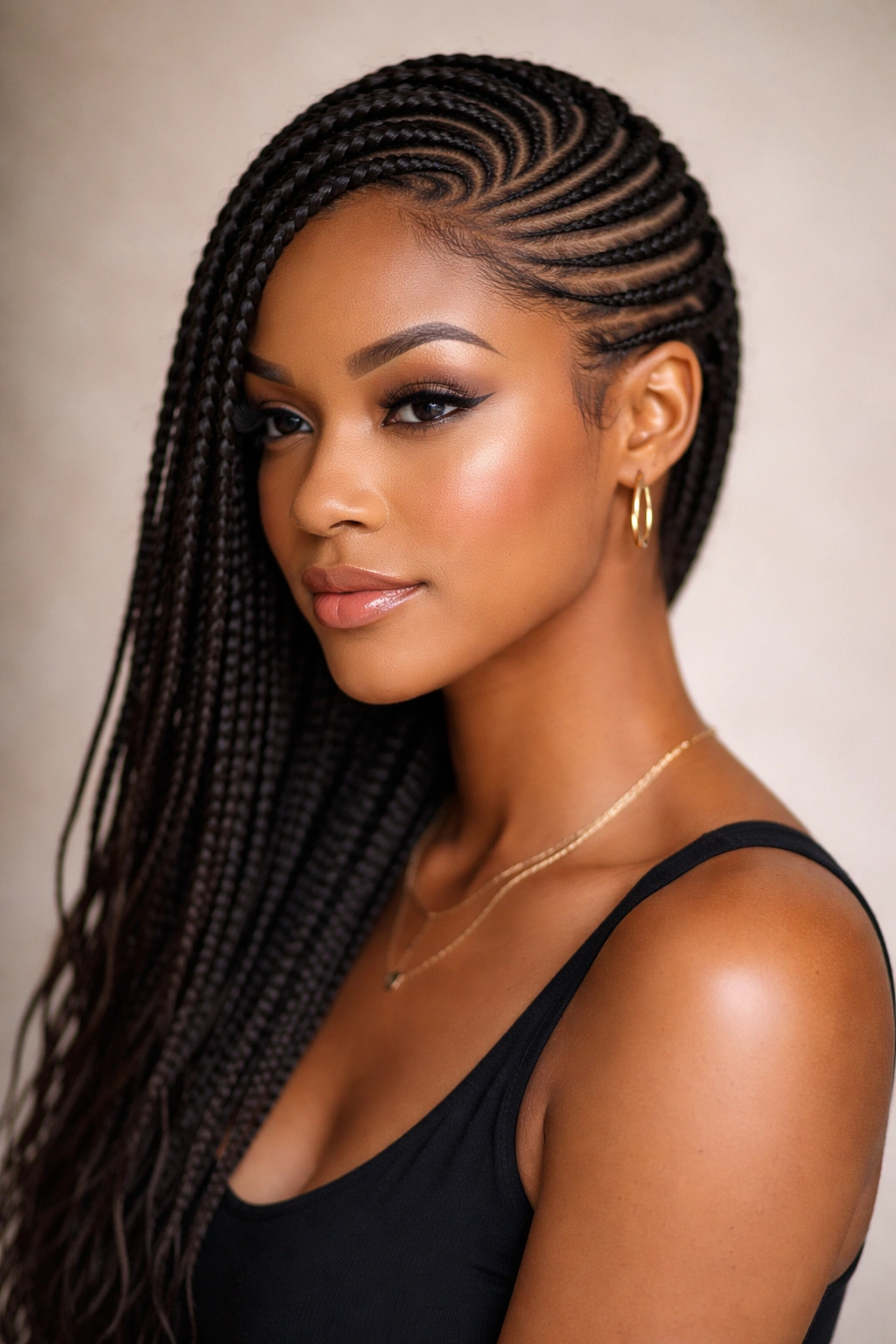
Side-swept cornrows create a sophisticated asymmetry that’s perfect for oval faces because it adds movement and direction without compromising your balanced face proportions. In this style, the bulk of your braids are swept toward one side of your head, while the opposite side has fewer or no braids. The effect is dramatically different from a centered style while remaining elegant and intentional.
The Asymmetrical Advantage
Oval faces are naturally balanced, which means they can actually handle—and even benefit from—subtle asymmetry. A side-swept cornrow style uses that flexibility to create visual interest and personality without making you look unpolished. The sweeping direction creates movement that travels across your face, which adds a dynamic quality that pure symmetry sometimes lacks.
Design Options and Tips
- Fully braid one side of your head from hairline back, leaving the other side open with loose curls or waves
- Create a partial side-sweep where braids start at center and curve toward your preferred side
- Combine side-swept braids with an undercut or faded sides for an edgy, modern interpretation
- Add a waterfall effect where braids seem to cascade from full braids into loose, unbraided sections
- Use color-blocking with different bead colors on braided vs. unbraided sides for increased visual separation
Insider note: The direction you choose matters. If you naturally part your hair to one side, matching that side with your braid sweep will feel effortless and intentional, while going against your natural part creates a more dramatic, fashion-forward effect.
5. Cornrows with Loose Hair at the Crown
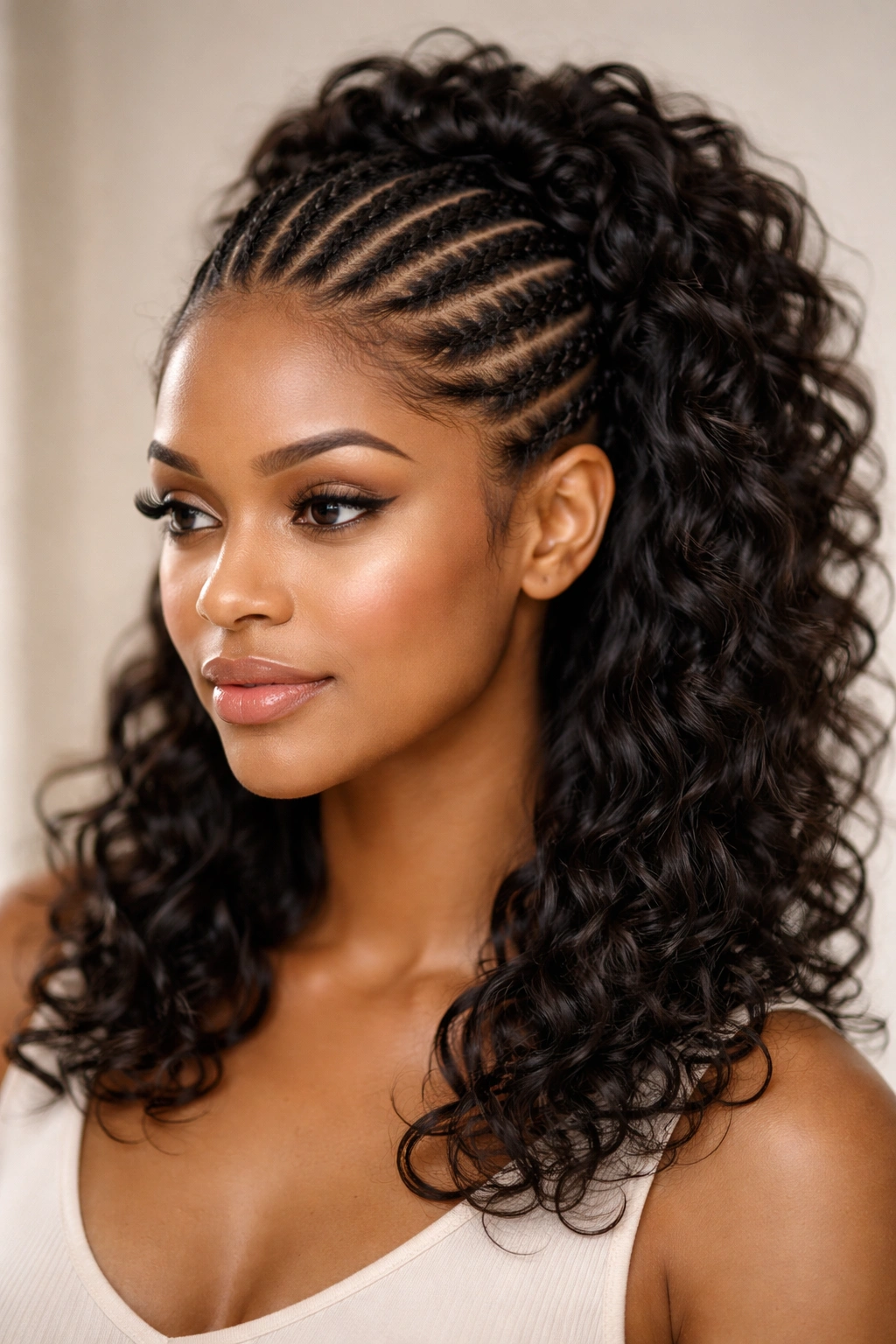
Cornrows that travel from your hairline back to your crown, then transition into loose curls, coils, or waves, are an ideal middle-ground style for oval faces. You get the sleekness and artistry of cornrows exactly where it matters—framing your face and showing off your hairline—while the loose volume at the back adds softness and movement.
Why This Hybrid Approach Works
This style honors the fact that oval faces look good with both sleekness and volume. By creating cornrows that are deliberate and polished near your face, then transitioning to loose texture at the crown, you’re getting the best of both worlds. The braided portion draws attention to your features and creates a refined frame, while the loose hair adds dimension and doesn’t feel overly “done” or severe.
Creating the Transition
- Braid tight cornrows from your hairline approximately 2-3 inches back, stopping before your crown begins
- Secure the braids with a small elastic or thread where they naturally end
- Leave unbraided hair at your crown loose, then style it however you prefer—curls, coils, waves, or kinky texture
- For a seamless blend, make sure the transition point falls where loose hair naturally moves into texture
- Consider braiding all the way to your crown but leaving the last 4-5 inches unbraided for an ombré effect from braided to loose
Pro tip: This style actually gets better as it ages because the loose texture at the crown relaxes and becomes softer and more blended with any movement or frizz. Unlike purely braided styles that can look tired after a week or two, this hybrid version maintains its appeal through several weeks of wear.
6. Multiple Thin Cornrows with Beads
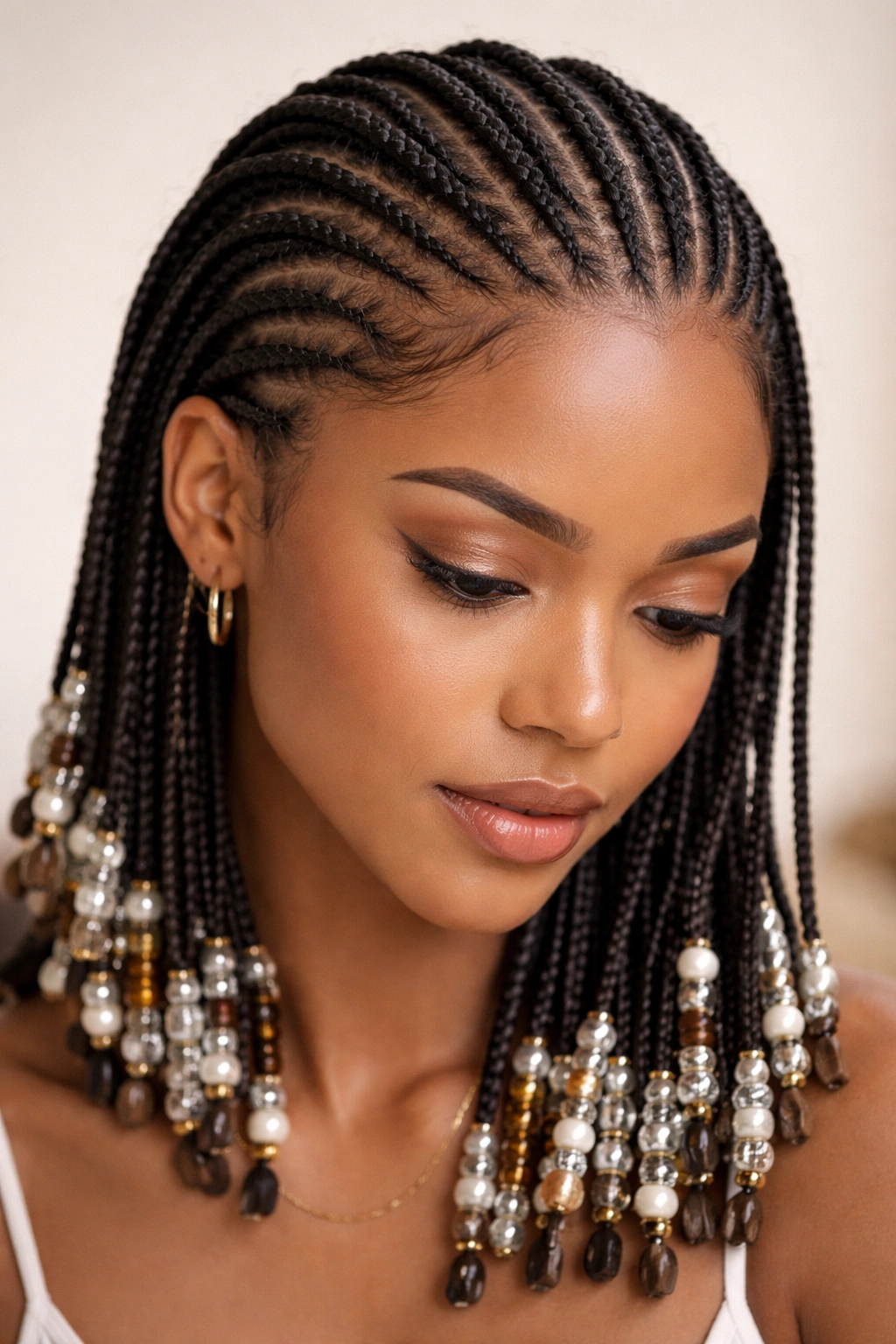
Multiple thin cornrows—sometimes called micro cornrows when you’re really going for delicate fineness—create a detailed, intricate look that works beautifully on oval faces. By using many braids instead of fewer, thicker ones, you create a different visual texture altogether. Add beads throughout, and you’ve got a style that catches light, moves visually, and feels both polished and playful.
The Appeal of Detailed Intricacy
Thin cornrows create a textured canvas that’s fascinating to look at and deeply personal. Each individual braid becomes a design element, and when you add beads, colors, or metallic accents, you can create custom patterns that are uniquely yours. For oval faces, this level of detail works because your balanced proportions don’t create visual confusion—the intricacy reads as artistic rather than chaotic.
Bead and Color Strategies
- Space beads evenly along each braid for a systematic, organized feel, or vary bead placement for a more organic, collected aesthetic
- Mix bead types: metallic, stone, wooden, acrylic, or natural materials can coexist in one style
- Create patterns using two-color bead combinations that repeat throughout the braids
- Cluster beads at the ends of braids for weight and visual interest, or distribute them throughout for an even texture
- Use clear, translucent, or metallic beads to keep light movement and visual flow
Worth knowing: The weight of many thin cornrows with beads is actually distributed better than thick braids with heavy beads. More braids = more anchor points, which means less tension on your hairline and more comfort over time.
7. Cornrows in a High Crown Pattern
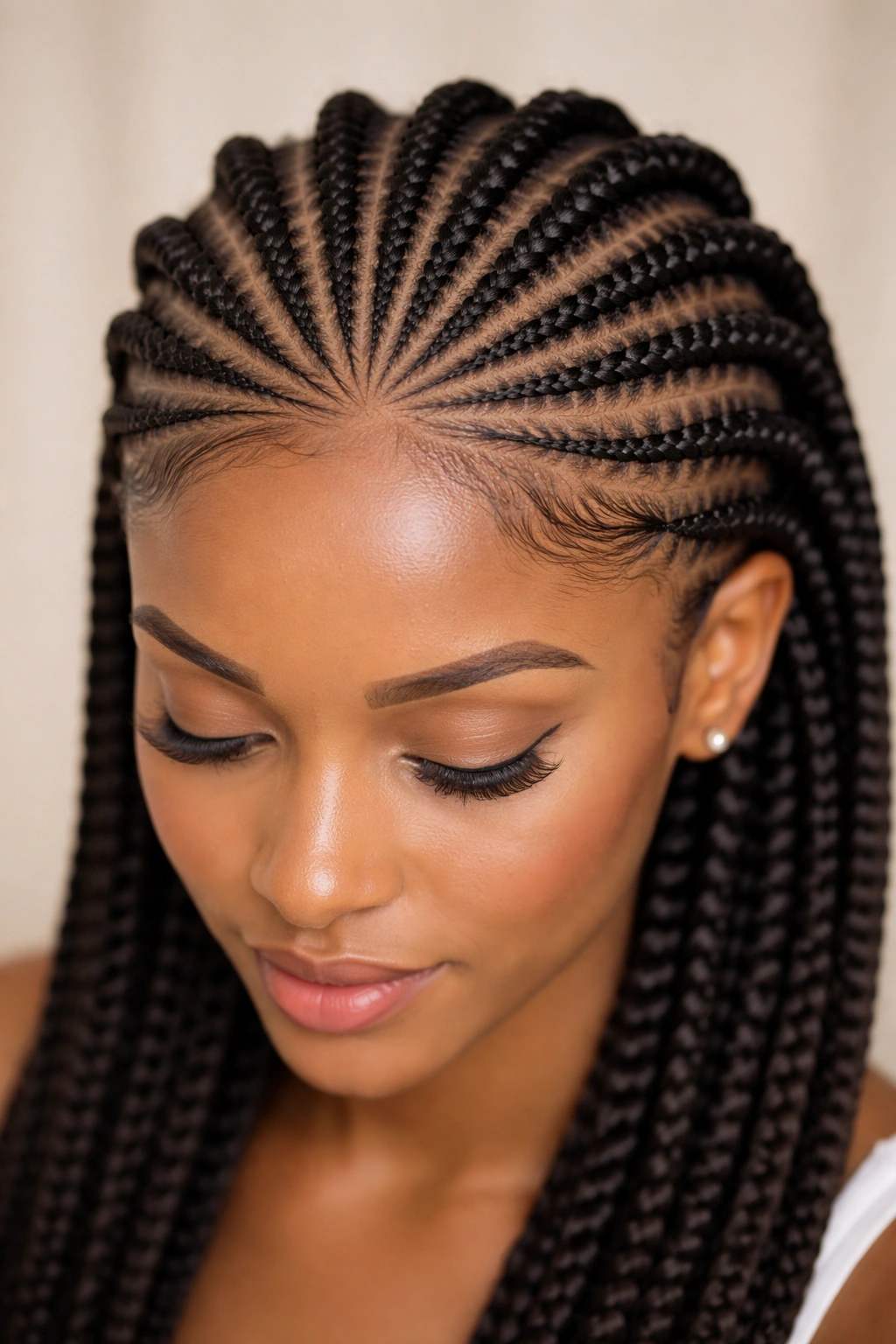
Cornrows arranged in a crown pattern—where braids radiate outward from a center point at the crown of your head, then curve around to frame your face—create a regal, intentional look that’s especially flattering on oval faces. This style centers visual attention at the crown rather than at your face, which creates an interesting dynamic.
Why the Crown Pattern Suits Oval Faces
An oval face has enough height and proportion that pulling attention upward and outward to the crown actually creates balance and elegance. The radial pattern (like lines on a sunburst) is inherently symmetrical and structured, which plays beautifully with your face shape’s natural balance. The effect is sophisticated, intentional, and slightly unconventional—which works because oval faces aren’t fighting their proportions.
Creating Radial Braids
- Divide your crown into sections (typically 8-12 depending on hair volume and desired braid thickness)
- Create cornrows from each section radiating outward from the crown
- Allow braids to curve naturally as they move down toward your hairline and face
- Some braids curve around your face, others fall down the back—the asymmetry of the radial pattern is actually part of its appeal
- Secure the outer ends with beads, elastics, or by tucking them into other braids
Pro tip: This style photographs beautifully from above and behind. If you love how this looks but are self-conscious about seeing it at every angle, remember that most people experience your hairstyle from the front and side—where it looks equally stunning, just differently.
8. Cornrows with Cuffs and Wraps
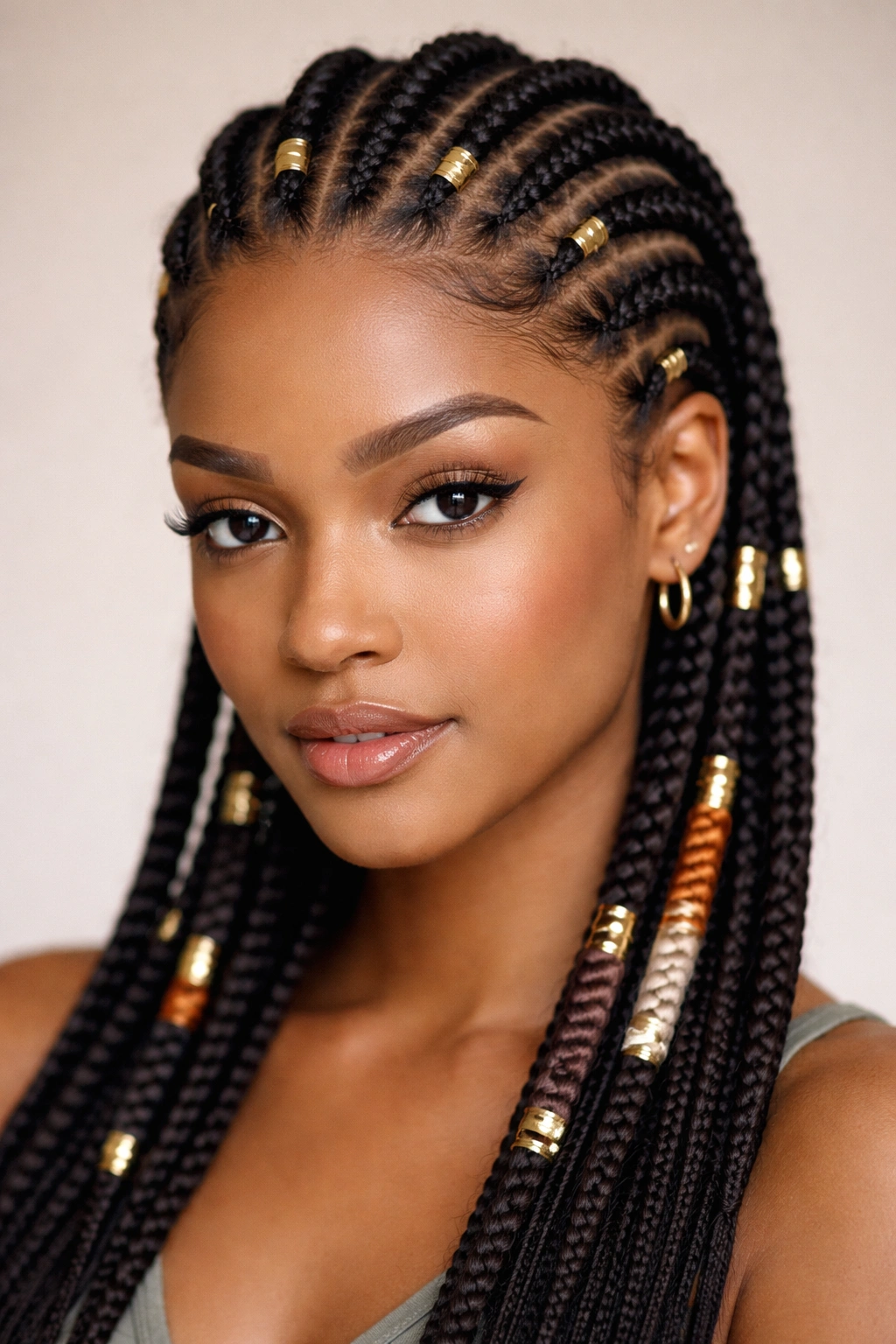
Cornrows adorned with metal cuffs, colorful thread wraps, or decorative sleeves along select braids add an extra layer of sophistication and artistry. Instead of relying solely on beads at braid ends, you’re creating continuous visual elements that travel along the length of the braid. This detailed approach works particularly well on oval faces because it shows intentionality and personal style.
Design Details That Make the Difference
Metal cuffs can be gold, silver, rose gold, or copper, and they create a polished, almost jewelry-like quality to your braids. Thread wraps in coordinating or contrasting colors can create patterns—stripes, gradients, or color-blocking effects. These elements transform straightforward cornrows into a style that feels custom and personally curated.
- Use cuffs on every other braid for visual rhythm, or only on a few accent braids for subtlety
- Create gradient effects with thread wraps: start with one color and gradually transition to another along the length of each braid
- Combine cuffs and thread for maximum visual interest—metallic cuff at the end, then thread wrap higher up
- Match cuff and thread colors to your outfit or personal color palette for added intention
- Mix metals: rose gold cuffs with silver thread, or copper cuffs with gold accents
Insider note: Quality matters with cuffs and wraps. Cheap metal cuffs can leave marks or cause breakage; invest in smoothly finished cuffs with no sharp edges. Thread should be thin enough to wrap smoothly without bunching but thick enough to provide color and coverage.
9. Spiral Cornrows
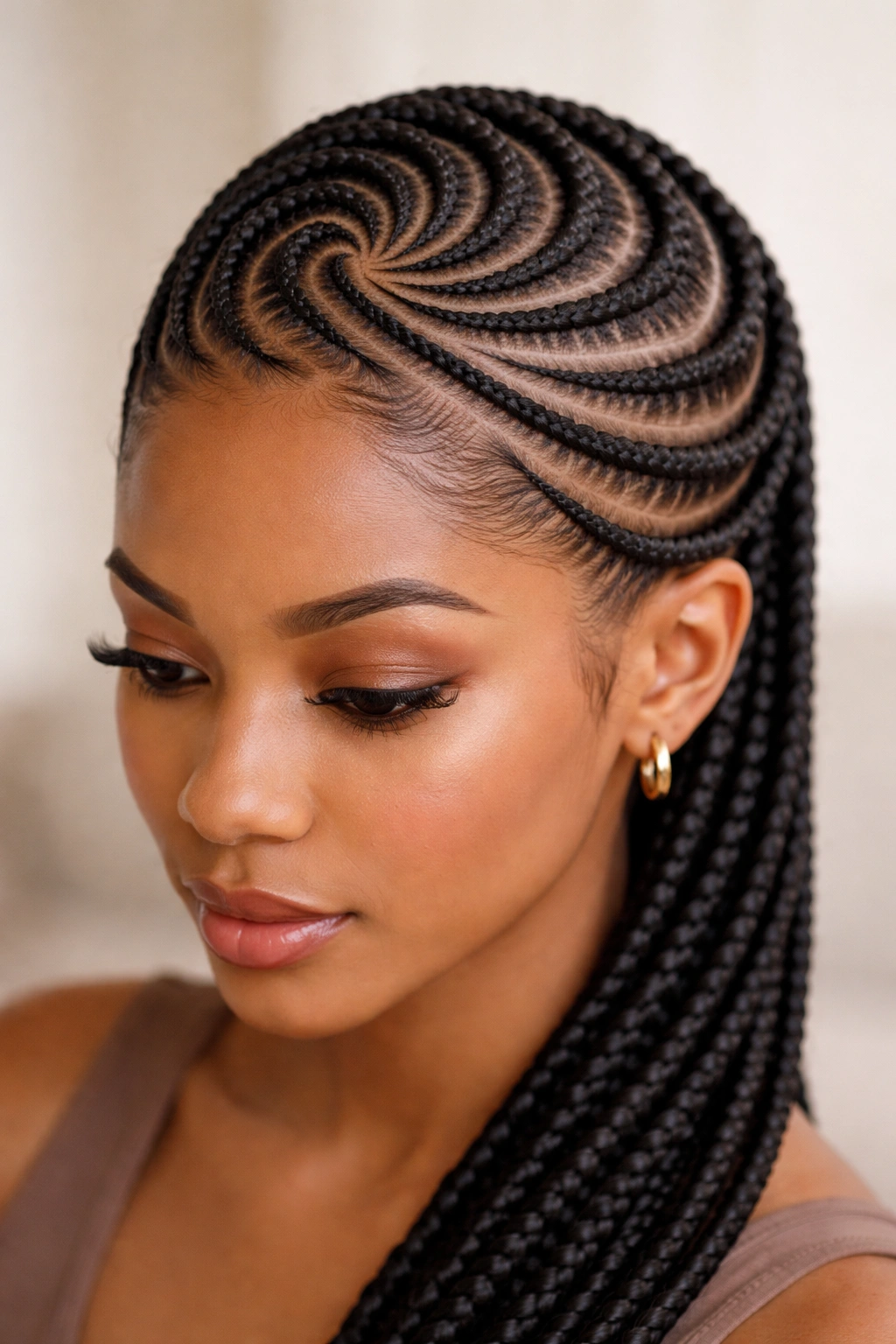
Spiral cornrows follow a twisted, helical path rather than straight lines, creating an optical illusion of movement and rotation along your braids. Instead of moving directly backward from your hairline, each braid spirals slightly as it moves back, creating dynamic, organic lines. This style is bolder and more unconventional than standard cornrows, which makes it perfect for people who want their style to feel distinctly personal.
The Movement and Flow
Spiral cornrows work beautifully on oval faces because the movement they create adds energy without overwhelming your balanced face proportions. The twisting lines draw the eye along the braids’ path rather than asking the viewer to focus on your face directly—it’s a subtle redirection that makes the style itself the focal point.
Creating Authentic Spirals
- Understand the difference between braids that are twisted during the braiding process (true spirals) versus braids that are wrapped with thread to create the appearance of spirals (less authentic but easier to execute)
- True spiral braids require a braider with patience and precision—the braid itself follows a rotating, corkscrew pattern
- Decide on the tightness of your spiral: tight spirals are more subtle and sculptural, while looser spirals are more visually obvious
- Consider which direction your spirals rotate: all moving the same direction creates optical unity, while alternating directions creates more visual complexity
- Spiral cornrows actually last longer than straight ones because the overlapping sections of the braid lock together more securely
Real talk: Spiral cornrows are harder to install and take more time than any other cornrow style. They’re absolutely worth the investment if you love them, but go in knowing that your braider will need extra time and that your cost will likely be higher than standard cornrows.
10. Feed-In Cornrows for Seamless Blending
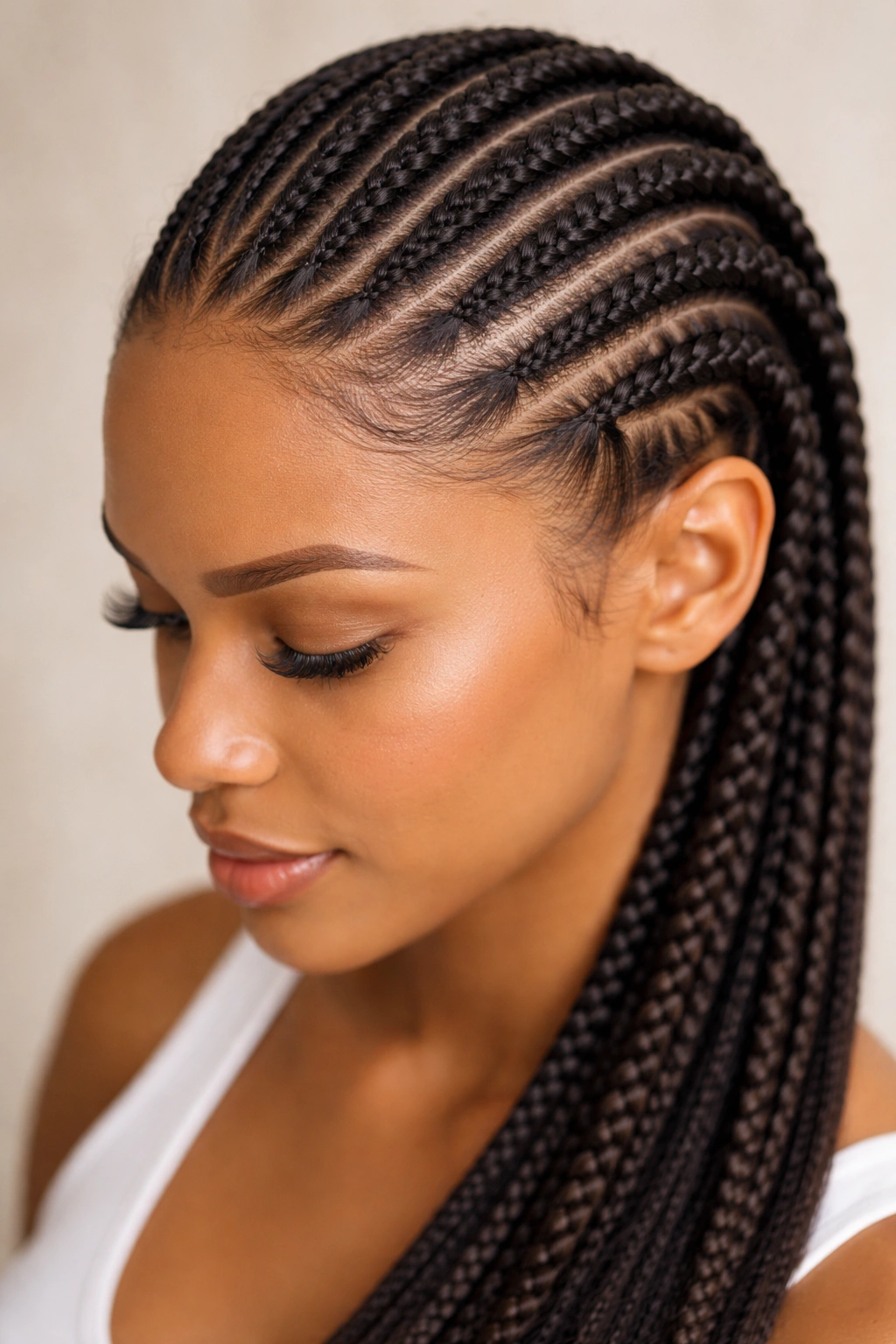
Feed-in cornrows—a technique where hair is gradually incorporated into the braid as you work backward from your hairline—create an incredibly seamless blend between your natural hair and the braids. Rather than cornrows sitting on top of your hair, feed-in braids emerge from your hair, making the transition nearly invisible. This technique works on any face shape, but it’s particularly elegant on oval faces because it emphasizes smoothness and refinement.
Why Feed-In Braids Feel Different
The feed-in technique requires more skill and time than regular cornrows, but the result is worth every penny. Your hairline looks intact and uninterrupted, the braids feel lighter because tension is distributed differently, and the overall effect is impossibly polished and refined. On an oval face, this seamless quality amplifies the natural balance and elegance you already have.
Execution and Customization
- Feed-in cornrows can be installed in any direction, pattern, or thickness that regular cornrows can be
- You can combine feed-in braids with regular cornrows in the same style for variety and visual interest
- The feed-in technique is particularly important if you have a sensitive hairline or are concerned about traction alopecia
- Feed-in braids tend to last longer because they’re more secure and distribute tension more evenly
- Once installed, feed-in cornrows feel like an extension of your natural hair rather than an added element
Worth knowing: Not every braider specializes in feed-in cornrows because it genuinely does require more skill and precision. If this is the style you want, ask potential braiders directly about their feed-in experience and ask to see photos of previous work. It’s worth seeking out someone who’s expert at this technique.
Final Thoughts
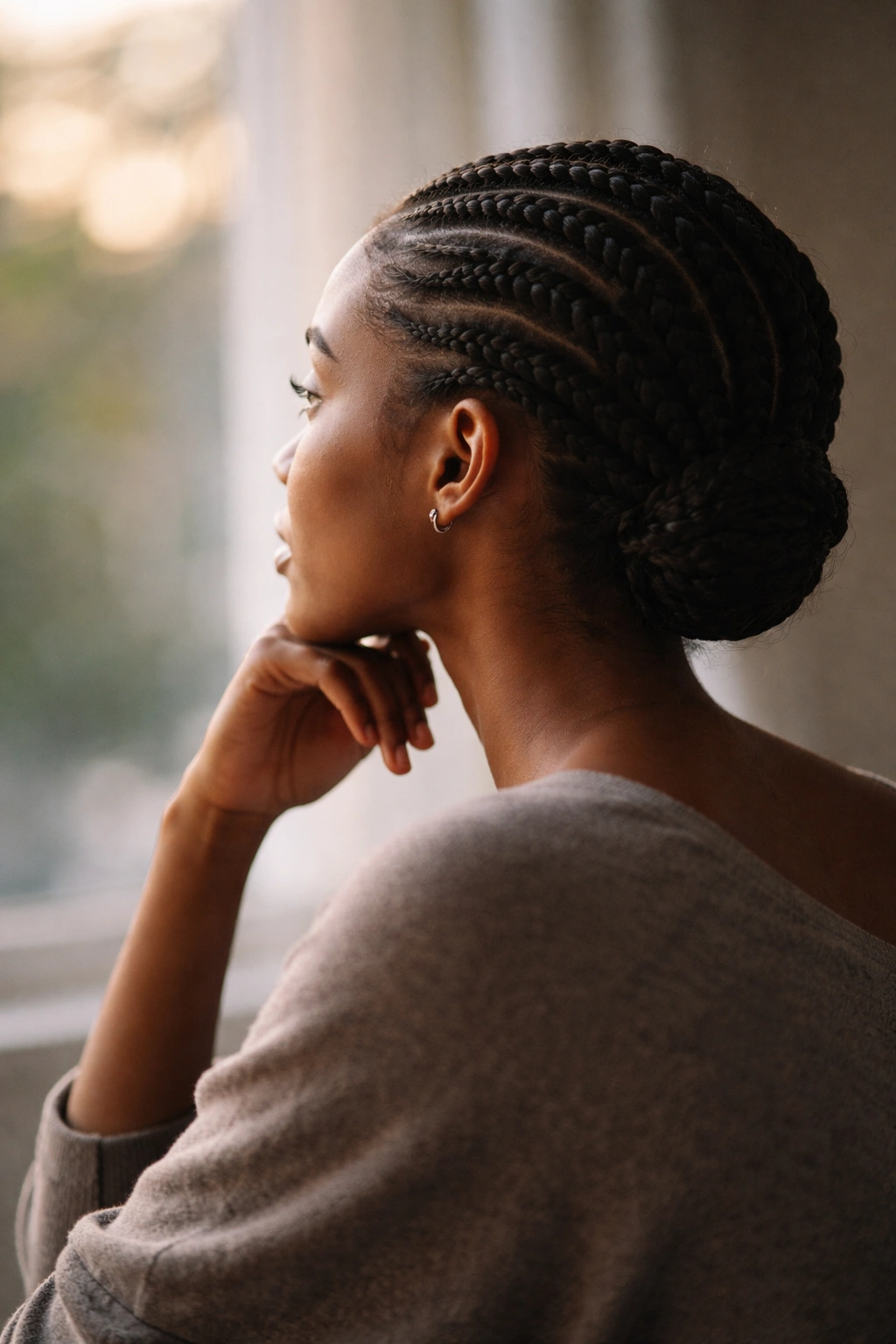
The beauty of choosing a cornrow style for an oval face is that you’re working from a position of strength. Your balanced proportions give you the freedom to experiment with designs, patterns, and placements that might feel overwhelming on other face shapes. Whether you’re drawn to the timeless elegance of center-parted box braids, the artistic boldness of geometric zigzags, or the refined sophistication of feed-in cornrows, there’s a style here that will feel authentic to your personal aesthetic.
The key is thinking about what draws you forward. Are you craving sleekness and polish, or do you want your braids to feel playful and decorative? Do you want attention drawn to your face, or do you prefer the style itself to be the focal point? Do you naturally gravitate toward symmetry, or does asymmetry feel more like you? Your answers to these questions will guide you toward the styles that will feel most genuinely yours rather than just following a trend.
Remember that cornrow styles age beautifully—they actually often look better in week two or three than they do fresh from the salon as the initial tension softens slightly and your hair settles into its new shape. Give yourself time to live in a style before deciding whether it’s truly for you. And don’t underestimate the power of working with a skilled, experienced braider who understands both technical execution and the artistic vision behind your chosen style. The difference between a cornrow style that feels merely done and one that feels distinctly yours often comes down to the person installing it.
