


A cornrow mohawk sits at the intersection of bold self-expression and practical protective styling — it’s the kind of hairstyle that turns heads while keeping your natural hair healthy and low-maintenance. Whether you’re working with coils, kinks, waves, or a dense texture, the cornrow mohawk offers endless creative possibilities that work beautifully on natural hair. The appeal goes beyond aesthetics: cornrows are a time-tested protective style that minimizes manipulation, reduces breakage, and gives your natural hair a real break from daily styling demands.
The beauty of the cornrow mohawk is its versatility. You can wear it sleek and structured, add beads and accessories for personality, play with geometric patterns, or even incorporate color. Natural hair thrives in protective styles like this because the ends are tucked away, there’s minimal tension on your edges when done correctly, and you can wear the style for weeks while still maintaining your hair underneath. The mohawk silhouette itself is bold enough to work as a statement in almost any setting — from everyday wear to special occasions to creative self-expression.
What makes cornrow mohawks especially exciting for natural hair is that they celebrate texture rather than fighting it. You’re not straightening or chemically altering your hair; you’re styling it in its natural form. The raised center creates stunning dimension and actually showcases the beauty of your curl pattern. And because cornrows require your hair to be in a particular state (not freshly washed, ideally with some moisture and texture to work with), they actually encourage healthy natural hair practices like less frequent washing and protective moisture retention.
Below are ten distinct cornrow mohawk styles, each with its own vibe, difficulty level, and maintenance routine. Whether you’re a cornrow beginner or someone who’s been rocking protective styles for years, there’s a version here that’ll speak to you.
1. Classic Single Cornrow Mohawk
The classic single cornrow mohawk is the purest expression of this style — one fat, centered cornrow running from your forehead straight back to your nape. It’s clean, striking, and surprisingly wearable for any occasion. The beauty of this style is its simplicity: there’s nowhere to hide, so the braid itself has to be impeccably done. A well-executed single cornrow mohawk shows off pristine technique and looks intentional rather than hastily thrown together.
Why This Works for Natural Hair
A single cornrow doesn’t require excessive tension because you’re not creating multiple braids competing for hair. The braid sits naturally on your scalp without pulling at your edges if done by a skilled braider. Your natural texture shows beautifully along the sides, framing the braided mohawk perfectly. This is an ideal first cornrow mohawk if you want to test the waters before committing to more complex versions.
How to Wear and Style It
Start with hair that has some moisture and definition — ideally two to four days post-wash. The cornrow should begin at your hairline and continue straight down the middle of your head to the nape of your neck. You can keep the sides completely natural, edge them out for more definition, or even add waves and finger coils to the natural hair on the sides for extra dimension. Some people like to wrap the sides around their head for a continuous look, while others prefer the contrast of cornrow against natural texture.
Maintenance tip: A single cornrow mohawk typically lasts 2-4 weeks depending on your hair growth and how quickly your edges fray. Refresh the edges after the first week with your preferred edge control, and sleep on a silk pillowcase or bonnet to keep the braid looking fresh.
2. Double Cornrow Mohawk
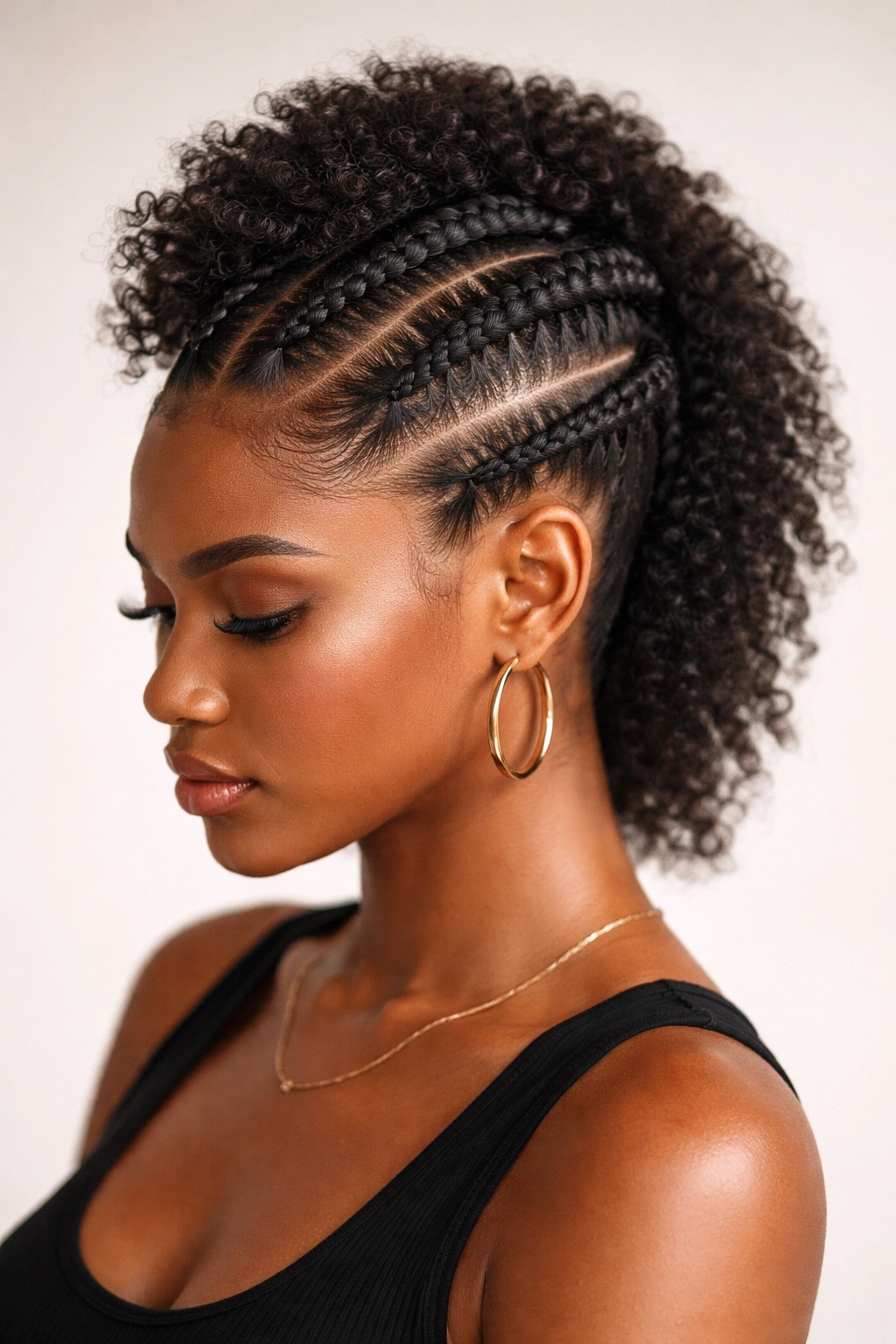
Double cornrows create a fuller, more dimensional mohawk while still maintaining that signature raised center. Instead of one thick braid, you’ve got two parallel cornrows running down the middle of your head. This version has more visual impact and actually distributes the tension more evenly across your scalp since the weight is split between two braids rather than concentrated in one.
The Visual Appeal and Texture Showcase
Two cornrows side by side create a gorgeous stripe effect down your head. The negative space between them is filled with your natural hair texture, which creates a beautiful visual contrast and allows your curls or coils to pop. This style reads as intentional and creative without being overly complex. The double cornrow version is also slightly more forgiving than the single — if one braid gets a little loose, it’s less noticeable because you’ve got the symmetry of the second one to balance it out.
Installation and Customization
Your braider will start both cornrows at your hairline and run them parallel down to your nape, typically spacing them about one-quarter to one-third of the way from the center on each side. You can play with width — thicker cornrows make a bolder statement, while thinner cornrows create a more delicate, intricate look. Some people prefer equal-width cornrows, while others like one slightly thicker than the other for an asymmetrical vibe.
Real-world advantage: The double cornrow mohawk dries faster than other versions if you wash your hair while wearing it, since there’s less total braid coverage on your head. It’s also easier to maintain individual edge definition on both sides.
3. Feed-In Cornrow Mohawk
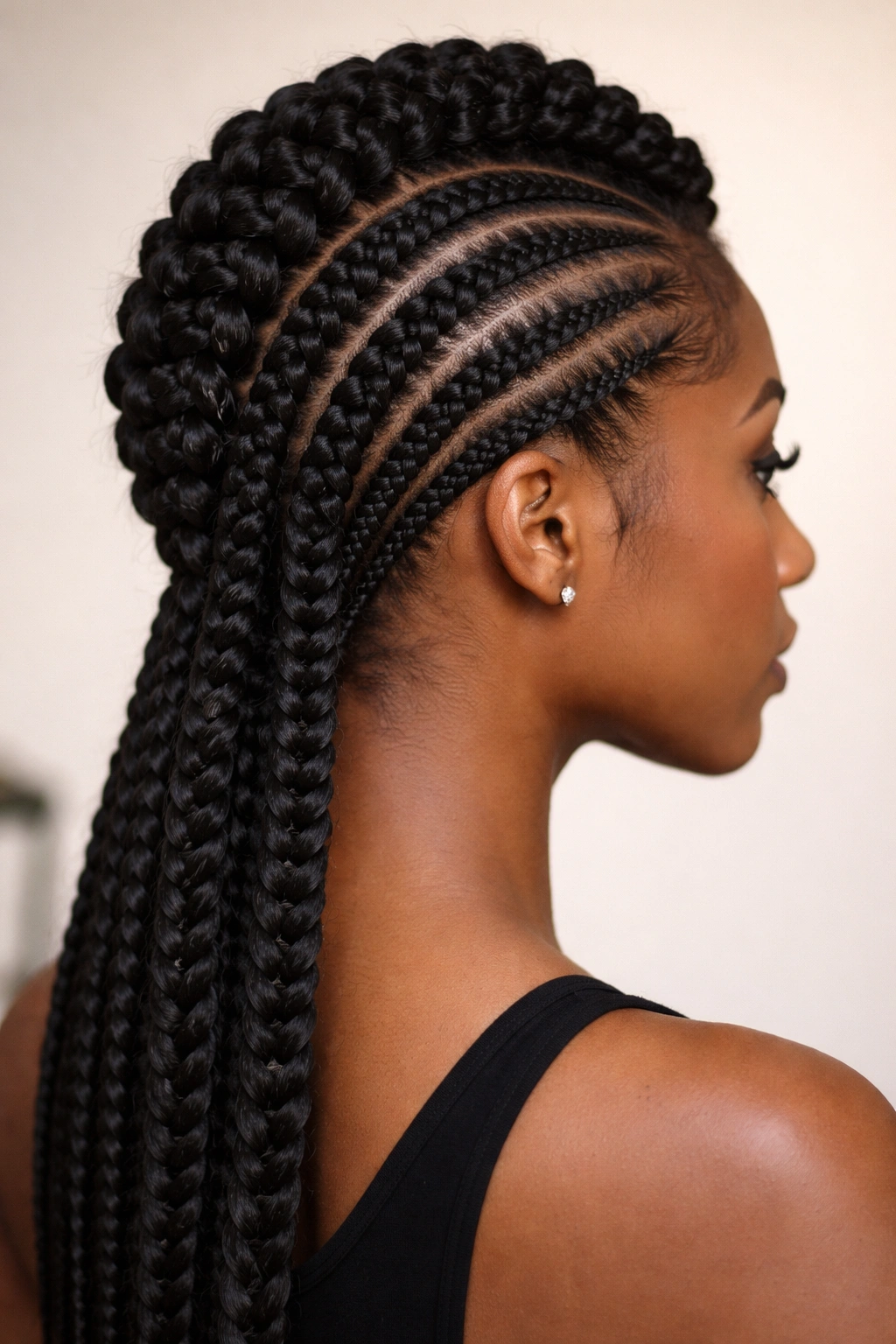
A feed-in cornrow mohawk uses the feed-in braiding technique, where you start with a small amount of your own hair at the root and gradually add more hair as you braid down the length. This creates a cornrow that looks thinner at the top and thicker toward the bottom, with an incredibly smooth, seamless appearance. Feed-in cornrows are considered an advanced braiding technique because they require precision and skill, but the result is absolutely stunning.
Why Natural Hair Loves Feed-In Cornrows
Feed-in braids distribute tension incredibly evenly because they don’t grab large amounts of hair at your hairline. Your edges stay intact and healthy because there’s minimal pulling at the root. The visual effect is polished and sophisticated — feed-in cornrows look intentional and expertly done in a way that’s immediately noticeable. If protecting your edges is a priority, this is your mohawk version.
The Customization Possibilities
Feed-in cornrow mohawks can be single, double, or triple. You can also vary the thickness as you go — some people prefer a consistent taper, while others like their cornrows to be thicker at the nape. Because feed-in braids look so smooth and professional, they’re perfect if you want to wear your cornrow mohawk somewhere you want to look polished. The technique takes longer to install than regular cornrows, but it’s worth the time investment if you have sensitive edges or want a style that’s going to hold beautifully for weeks.
Maintenance advantage: Feed-in cornrows actually fray less noticeably than traditional cornrows because they’re constructed differently. You might get several extra days of wear before needing to refresh the style.
4. Curved Cornrow Mohawk Design
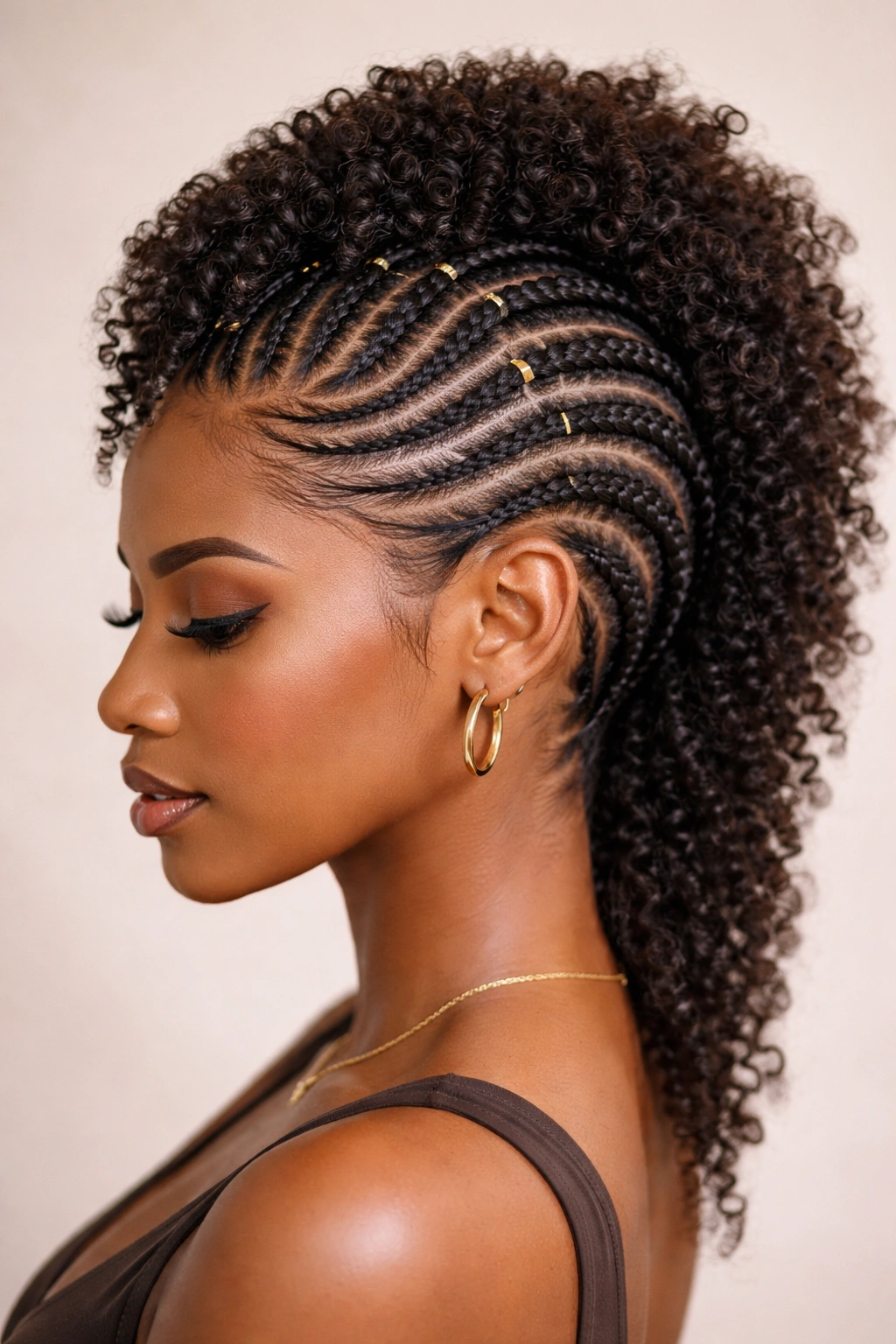
Instead of cornrows running straight down the center of your head, curved cornrow mohawks follow a curved or wave-like pattern. The braids might start at one temple, curve across the top of your head, and end near the opposite nape. Or they could follow an S-curve, a spiral pattern, or gentle waves that create movement and visual interest. This is where cornrow mohawks become an art form.
Technical Creativity and Visual Impact
Curved patterns require a braider with strong spatial visualization skills and lots of practice. The result is uniquely yours because the pattern can be completely customized to your head shape, hair growth pattern, and personal aesthetic. Curved designs draw attention to your face and head shape in sophisticated ways — they can elongate your face, emphasize cheekbones, or create optical illusions depending on how the curves flow.
How to Design Your Pattern
Work with your braider to map out the design before she starts. Look at reference images, consider whether you want symmetrical curves or asymmetrical ones, and think about whether the curves should be tight and controlled or loose and flowing. Some people like geometric precision, while others prefer organic, natural-looking curves. The width of the cornrows, the space between them, and how tightly they’re braided all affect how the curved pattern reads visually.
Creative freedom: This style is perfect for someone who wants a cornrow mohawk that’s entirely unique. You’re not just choosing from standard variations — you’re creating something custom to your vision and your braider’s technical abilities.
5. Cornrow Mohawk with Beads
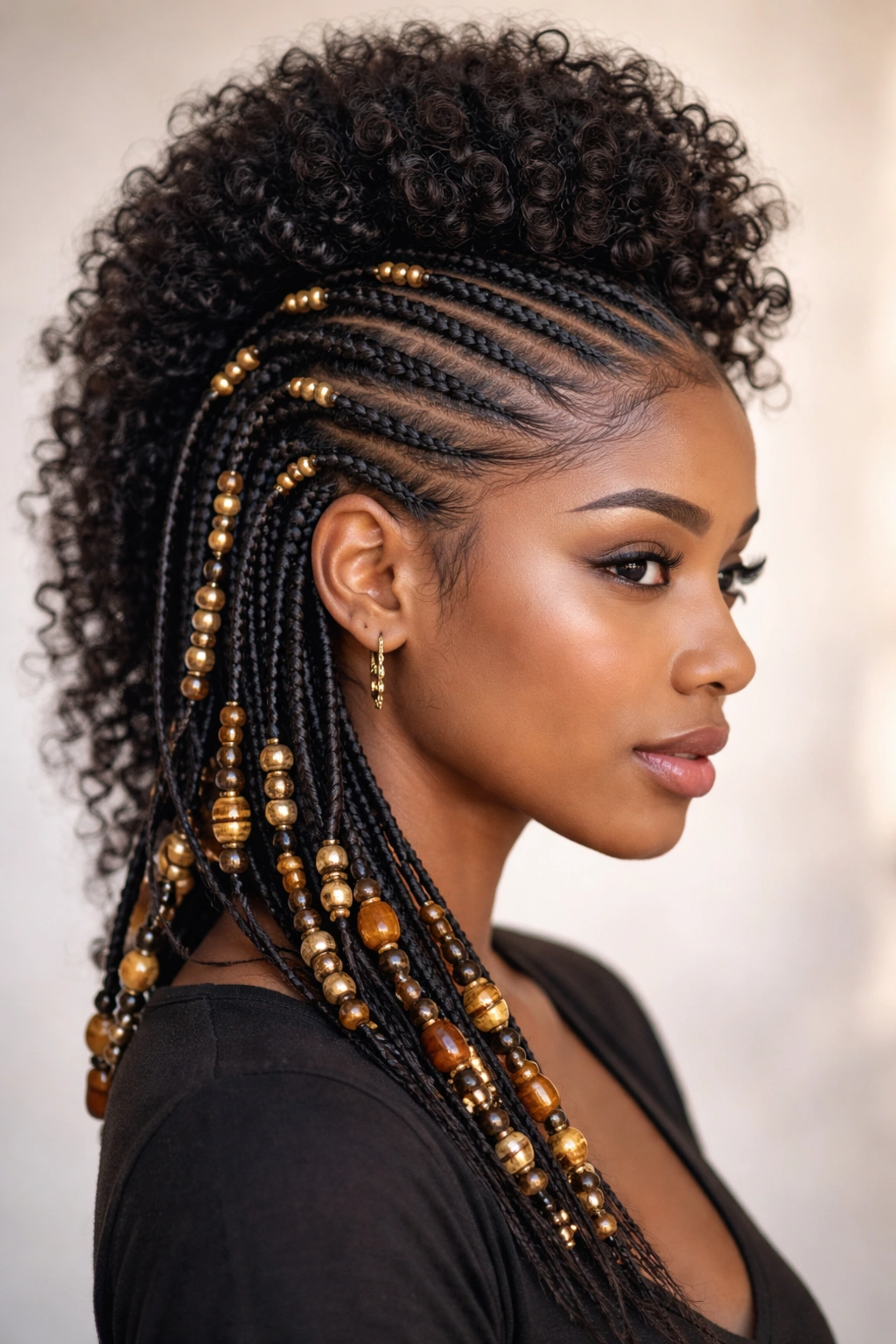
Adding beads to a cornrow mohawk transforms it from a protective style into a full-on fashion statement. Beads can be strung along the cornrows, clustered at the bottom of each braid, placed at specific intervals, or even woven throughout the braids. You might use wooden beads for an earthy vibe, gold or metallic beads for glamour, colorful plastic beads for playfulness, or a mix of different sizes and textures for a eclectic look.
Style Flexibility and Personal Expression
The beads serve a dual purpose: they’re protective (helping to seal the ends of your braids and prevent frizz) and purely aesthetic (giving you unlimited creative options). You can add beads during installation or after, change them out whenever you want, or add more as the weeks go on. Some people use beads all down the cornrows, while others prefer them clustered at the tips for a more understated look.
Bead Selection and Application
Choose beads that complement your personal style, skin tone, and overall aesthetic. Consider weight — heavier beads can actually add nice definition to your braids and create a statement through sound and movement, but they can also cause tension. Lighter beads are more comfortable for daily wear. Some people prefer large, prominent beads, while others love the delicate look of small seed beads. You can match your beads to jewelry you wear, coordinate them with your wardrobe, or go completely bold and unexpected.
Practical consideration: Beads can snag on clothing, especially if you’re wearing tight necklines or fabrics that catch easily. Be aware of this if you’re wearing fitted clothing or styles that come up high on your neck. Also, beads will shift over time — the bottom ones especially will work their way down the braids as you move and sleep.
6. Side-Swept Cornrow Mohawk
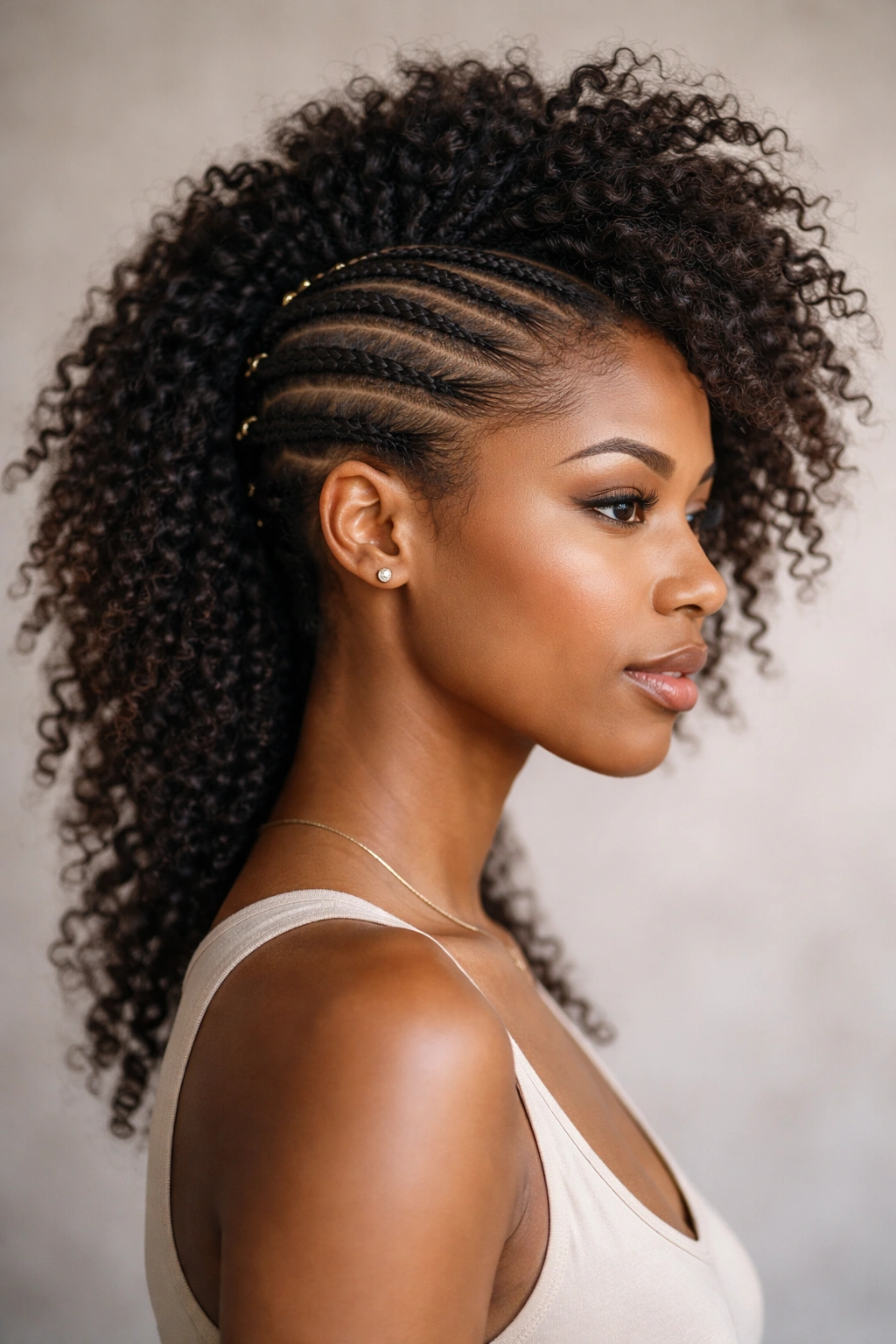
A side-swept cornrow mohawk runs diagonally across your head rather than straight down the center. The cornrow mohawk section starts on one side (perhaps at your temple or side part) and sweeps across to the opposite ear or nape. The remaining side is left as natural texture or can be styled with twists, waves, or left completely natural. This creates an asymmetrical, edgy vibe that’s sophisticated and modern.
The Asymmetrical Appeal
Side-swept designs work beautifully with face shapes because you can angle the cornrow to complement your features. If you want to emphasize one side of your face, draw attention to an undercut or faded side, or simply create movement and visual interest, the side-swept mohawk does it effortlessly. This version is less “punk rocker” and more “fashion-forward” — it feels intentional and styled rather than like a statement of rebellion.
Styling Options for Both Sides
One approach is to braid the cornrow mohawk section and leave the other side completely natural. Another is to add subtle styling to the natural side — finger coils, two-strand twists, waves, or just clean edges. Some people will even add an undercut or fade to the shorter side, creating a totally different vibe. You could also add beads, rings, or cuffs to the cornrow side while keeping the natural side completely texture-forward.
Visual trick: The side-swept cornrow actually makes your head appear more elongated and can be really flattering if you have a rounder face shape. The diagonal line draws the eye and creates illusion of dimension.
7. Zigzag Cornrow Mohawk Pattern
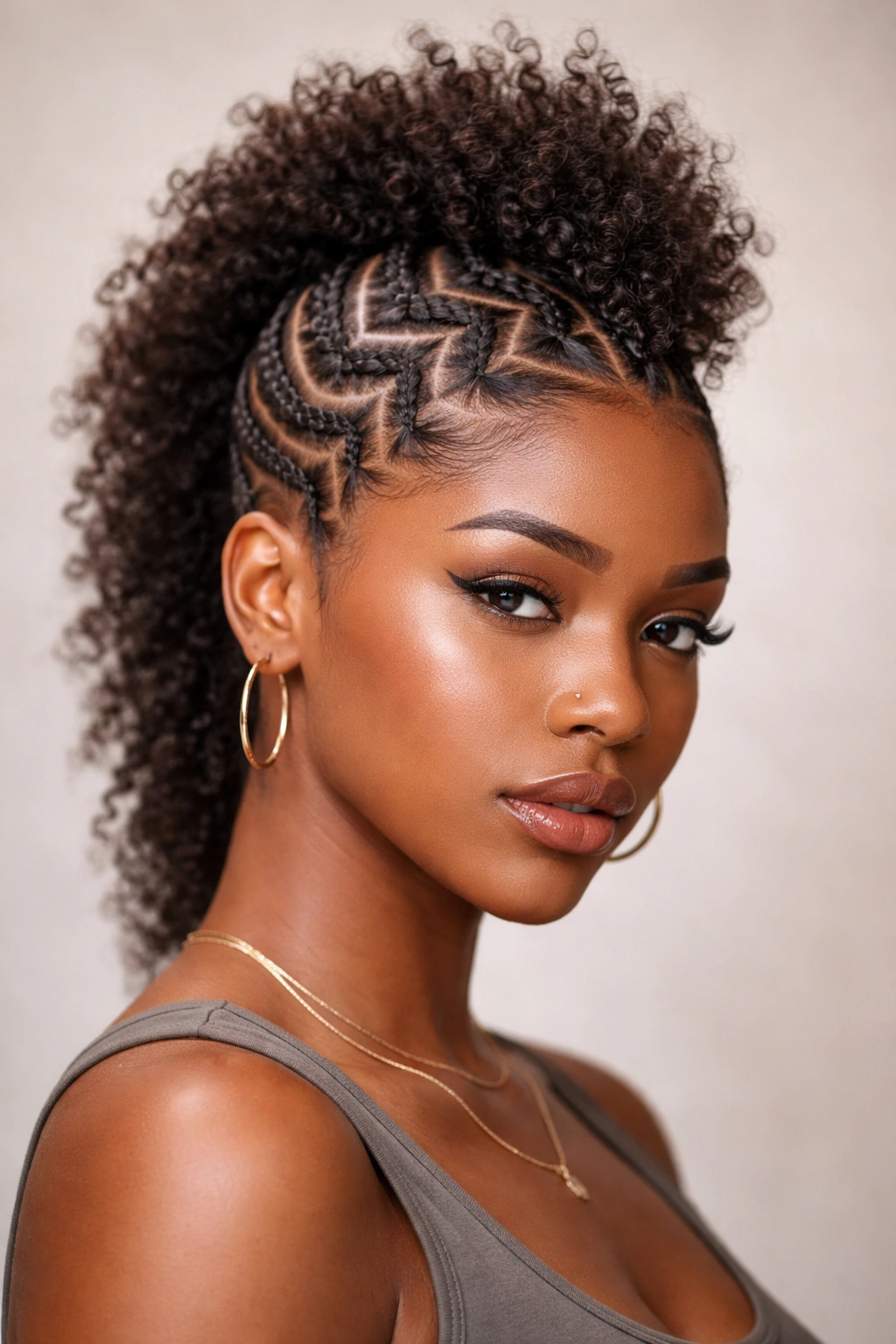
Instead of straight or gently curved lines, zigzag cornrow mohawks follow a sharp zigzag pattern down the center (or across) your head. The cornrows might go right, then left, then right again in a lightning-bolt pattern. This is definitely the most eye-catching option — it’s bold, geometric, and impossible to ignore. The pattern can be tight and controlled or loose and flowing depending on how your braider executes it.
Technical Skill and Patience
Zigzag patterns require serious skill and precision from your braider. Every turn has to be clean and intentional, and the mathematics of fitting the braids into a zigzag pattern while keeping tension even is genuinely complex. This is not a beginner braider’s choice, and it’ll likely take longer to install than standard cornrows. But if your braider can execute it, the result is absolutely stunning.
Creating Optical Interest
The zigzag pattern creates movement and energy on your head even when you’re standing still. It draws the eye from your hairline all the way down to your nape and creates an almost optical-illusion effect. The pattern can be subtle (gentle zigzags) or dramatic (sharp, exaggerated angles). You could also combine a zigzag pattern with other elements — beads, color, or specific width variations — to create even more visual interest.
Bold statement: This is the cornrow mohawk version that announces your presence. If you’re looking for something that definitely turns heads and marks you as someone with strong creative vision, the zigzag is your choice.
8. Thin Cornrow Mohawk with Twists
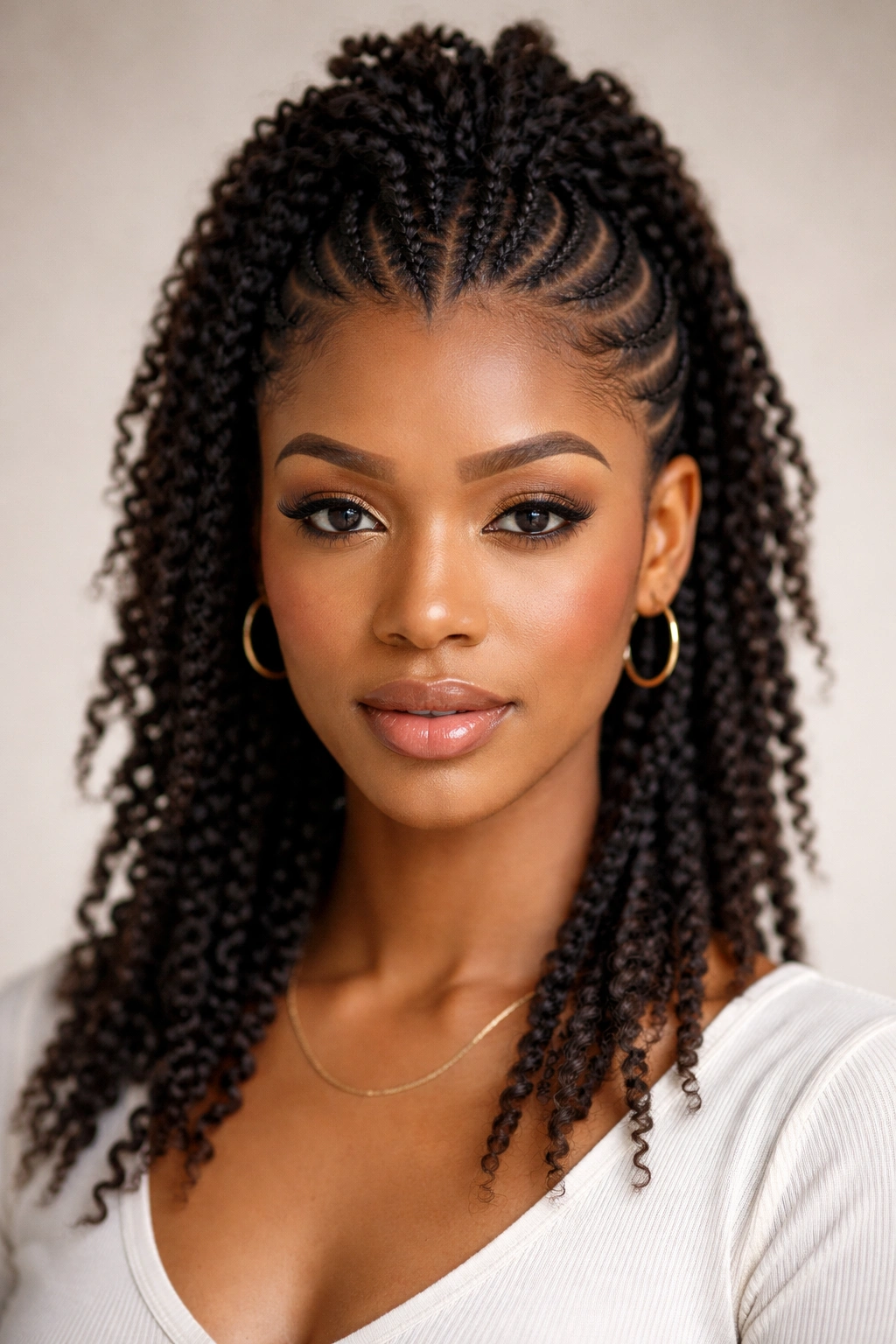
Thin cornrows create a more delicate, intricate aesthetic, and when you combine them with twists on the sides, you get a style that’s complex and beautifully detailed. This might mean two or three very thin cornrows down the center with two-strand twists framing them on each side, or it could mean one thin cornrow with thicker twists beside it. The contrast between the tightly braided center and the looser texture of twists creates visual and tactile interest.
Texture Contrast and Versatility
Thin cornrows paired with twists offer something different than cornrows alone — the twists can be fluffed and shaped to add volume, while the cornrows stay sleek and controlled. This style allows you to play with texture in interesting ways. The twists can be styled closer to your head or fluffed outward, can be tucked and pinned, or can flow freely. You might even twist out the twists after a week or so to create a completely different look without redoing your braids.
Installation Approach
Your braider can install both the thin cornrows and the twists in one session, which means you get a completely cohesive style from the start. Alternatively, you could get the cornrow mohawk done and add twists to the sides on a different day if you want more flexibility. The cornrows hold their shape indefinitely, while twists might need refreshing after 5-7 days depending on how they’re twisted and how much you manipulate them.
Low-manipulation benefit: Having the central cornrows very thin means they won’t require as much hair, so there’s less total styling going on. Combined with twists that can be left mostly untouched, this is a genuinely low-maintenance protective style.
9. Cornrow Mohawk with Faded Sides
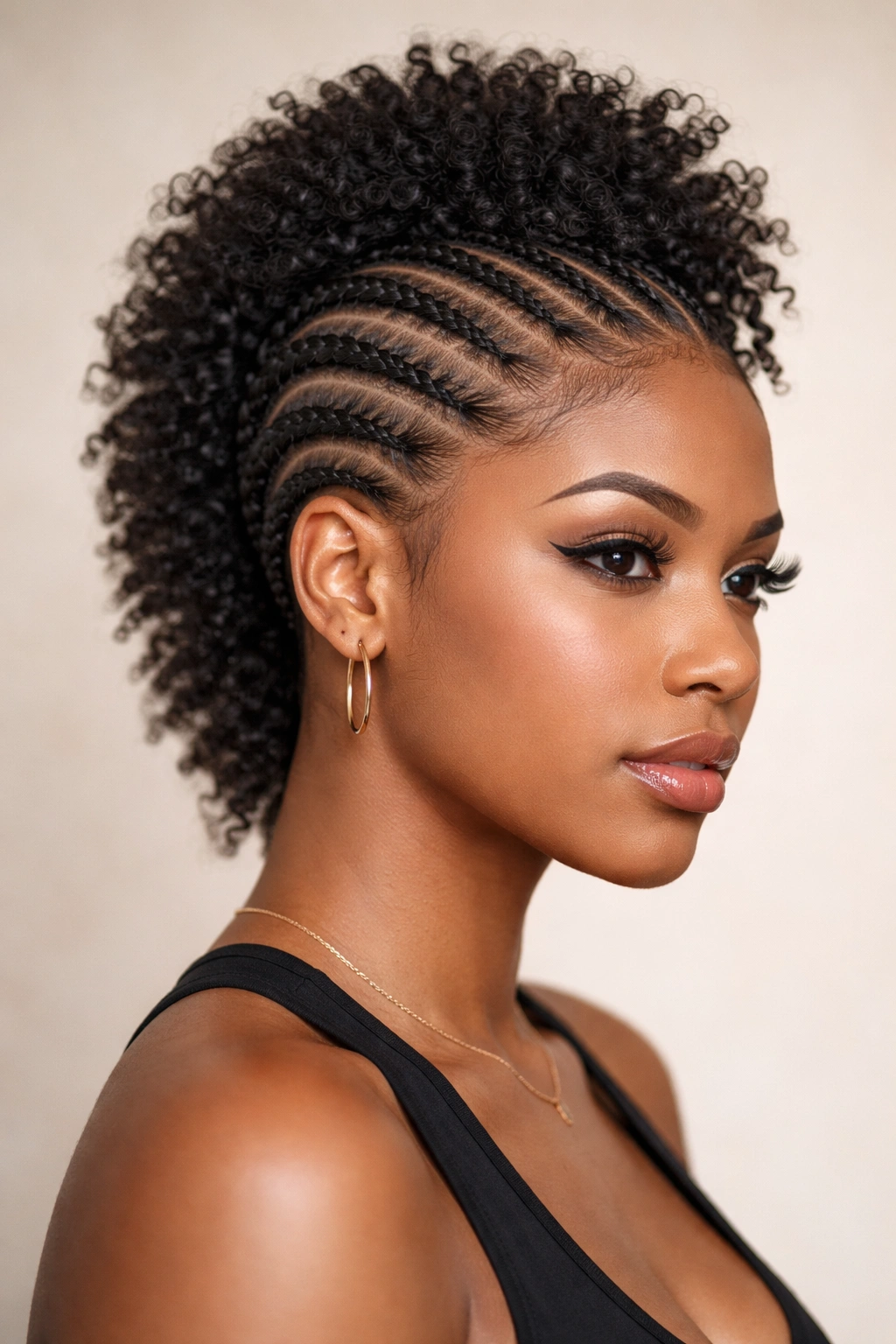
A cornrow mohawk with faded sides pairs the braided center section with a sharp fade, undercut, or very short hair on the sides and back. The contrast between the length and texture of the cornrows and the closely cropped hair beneath is absolutely striking. This is the version that says “I’m making a statement.” The fade could be very subtle (just a quarter-inch difference) or dramatic (shaved down to bare skin).
The Bold Statement and Low Maintenance
Faded sides take this hairstyle firmly into statement territory. It’s edgy, modern, and undeniably creative. From a maintenance perspective, faded sides are actually easier than natural sides because you’re not managing long hair on the sides — just the cornrow mohawk itself. However, keeping the fade fresh usually requires trims every 2-3 weeks, so you need to factor that into your overall hair maintenance routine.
Customizing the Fade
Work with your barber or hair stylist to determine the length you want on the sides. You could go with a subtle taper that blends into your cornrows, or a sharp, clean line where the cornrows meet the fade. Some people like a simple fade, while others incorporate designs into the shaved sections — lines, patterns, or shapes that create additional visual interest and personalization.
Visual impact: The contrast between textured cornrows and smooth, faded sides makes your head shape more visible and emphasizes the geometric quality of the braids. This is perfect if you’re confident in your head shape and want to celebrate it.
10. Cornrow Mohawk with Shaved Designs
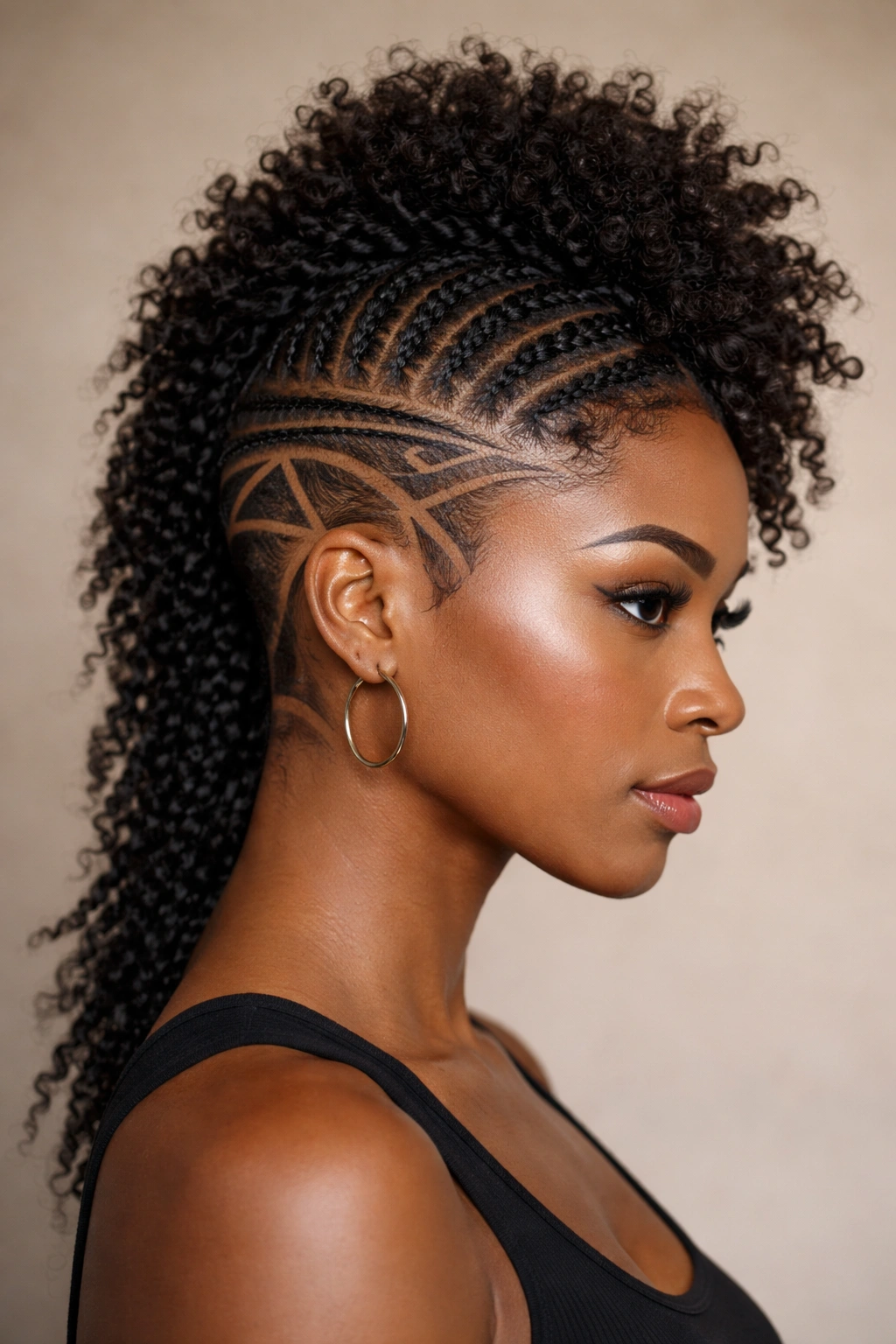
Taking the customization even further, you can add shaved designs into the sides or even work designs into the space between cornrows. This might be a simple geometric pattern, a meaningful symbol, your initials, a line design that echoes the pattern of your cornrows, or something completely custom. The shaved designs are a canvas for your personal style and creativity.
Artistic Expression and Individuality
This is the ultimate customization — your cornrow mohawk becomes truly unique. The shaved designs can complement the braiding pattern, tell a story, represent something meaningful to you, or simply be visually striking. You might work with your barber ahead of time to plan designs, or you might give them creative freedom based on your general vibe and let them suggest something that would look good on your head shape.
Technical Execution
Clean, precise shaved designs require a skilled barber with artistic ability and a steady hand. The designs need to be intentional and well-executed to look professional rather than accidental. This is worth getting done by a professional rather than attempting at home, especially if you want intricate or detailed designs. The good news is that shaved designs fade as your hair grows out, so if you decide you want something different, you just let it grow and redesign next time.
Personal branding: Some people use shaved designs as a way to express their personality, interests, or identity. Others use them to coordinate with their cornrow pattern or create a cohesive look. This is where protective styling becomes personal art.
Final Thoughts
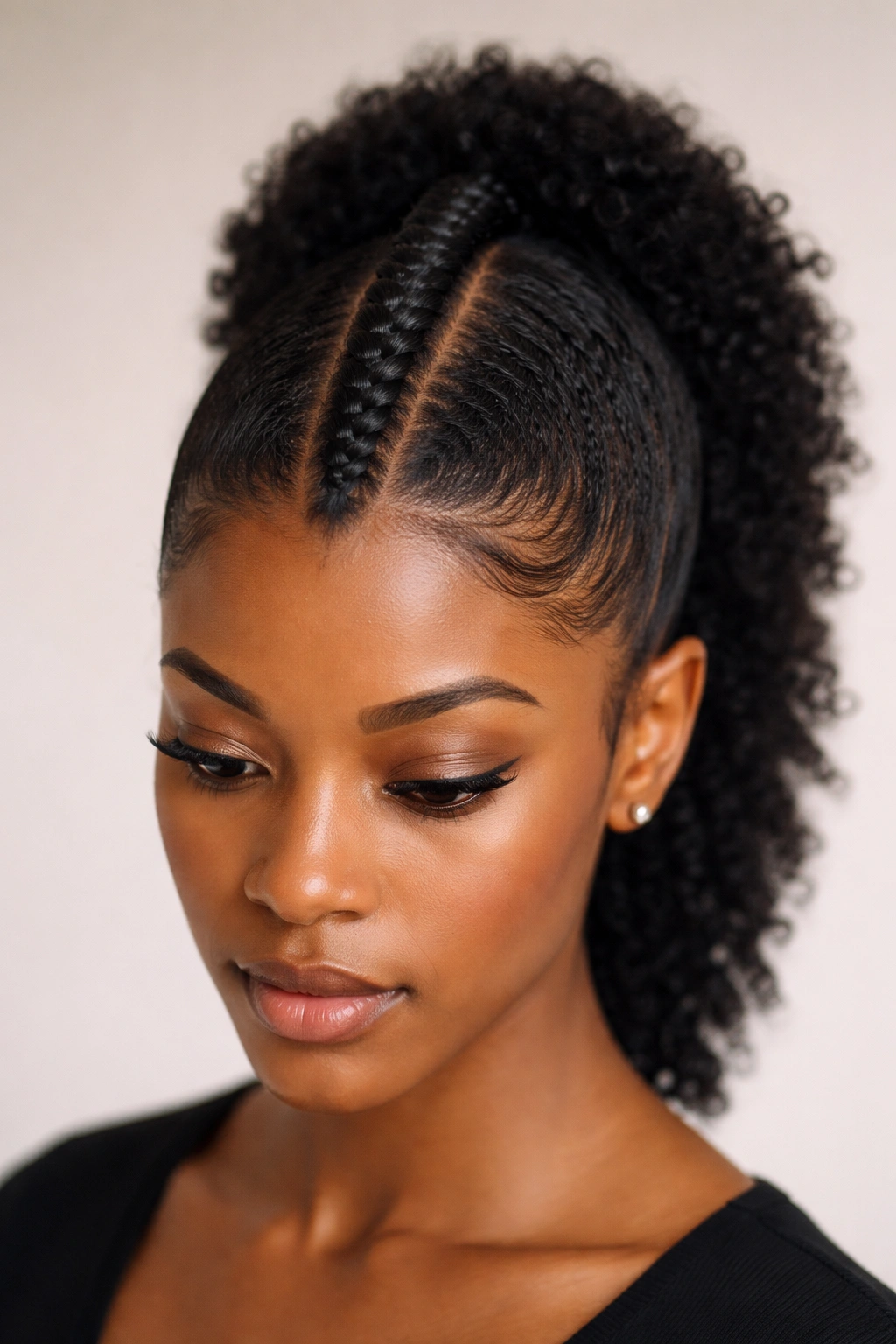
Cornrow mohawks on natural hair are more than just a protective style — they’re a powerful form of self-expression that celebrates your texture while keeping your hair healthy and thriving. Whether you choose a classic single cornrow for simplicity, a curved pattern for artistic flair, beads for personality, or a combination of multiple elements, the style you choose says something about who you are and how you want to move through the world.
The most important thing to remember is that protective styles only work if they’re not pulling your edges or causing tension on your scalp. A good cornrow mohawk should feel secure and intentional, but not tight. Your braider should be someone you trust and who understands how to handle natural hair with respect. The style should feel comfortable enough that you forget it’s there after the first day or two.
Natural hair thrives when it’s protected, moisturized, and given space to breathe. A well-executed cornrow mohawk gives you all of that while letting you express yourself boldly. Whether you’re keeping your cornrows for 2 weeks or 6 weeks, maintaining them with light refreshes and keeping your natural hair moisturized underneath will ensure your edges stay intact and your curls come out of this protective style bouncy, healthy, and ready for whatever you style them into next.