



If you’ve ever scrolled through hair inspiration and felt drawn to that effortlessly tousled, movement-filled look, wavy layered haircuts in blonde are likely what caught your eye. There’s something undeniably appealing about blonde tones paired with textured waves and choppy layers — it catches light beautifully, adds dimension, and creates that coveted lived-in texture that feels modern and approachable. The combination works because layers amplify waves naturally, creating volume and shape without requiring blunt, heavy styling, while blonde shades showcase the dimension that layering creates.
The magic of this pairing lies in how the two elements work together. Layers aren’t just about cutting hair shorter at different lengths — they’re about creating breakpoints that allow waves to sit naturally and move independently. When you add blonde into the equation, you’re introducing color movement that makes those layers visually pop. Darker roots paired with lighter midlengths and ends, sun-kissed highlights woven through layers, or a full blonde canvas — each approach brings out the three-dimensional structure of the cut itself.
What makes this hairstyle genuinely versatile is that it suits multiple hair types and face shapes. Fine, straight hair can gain movement and fullness through the right layered cut. Naturally wavy hair gets enhanced structure. Even curly hair benefits from strategic layers that define pattern without creating bulk. The blonde element is equally adaptable — whether you’re maintaining your natural blonde, going platinum, warming up to honey tones, or adding subtle highlights to a lighter brunette base, these cuts work across the spectrum.
Whether you’re looking to refresh your current style or trying something entirely new, understanding the specific variations of wavy layered haircuts will help you communicate your vision to your stylist with confidence. The following styles showcase the range of possibilities within this category — from subtle, barely-there waves to pronounced texture, from classic long layers to modern choppy bobs.
1. The Beachy Blonde Shag
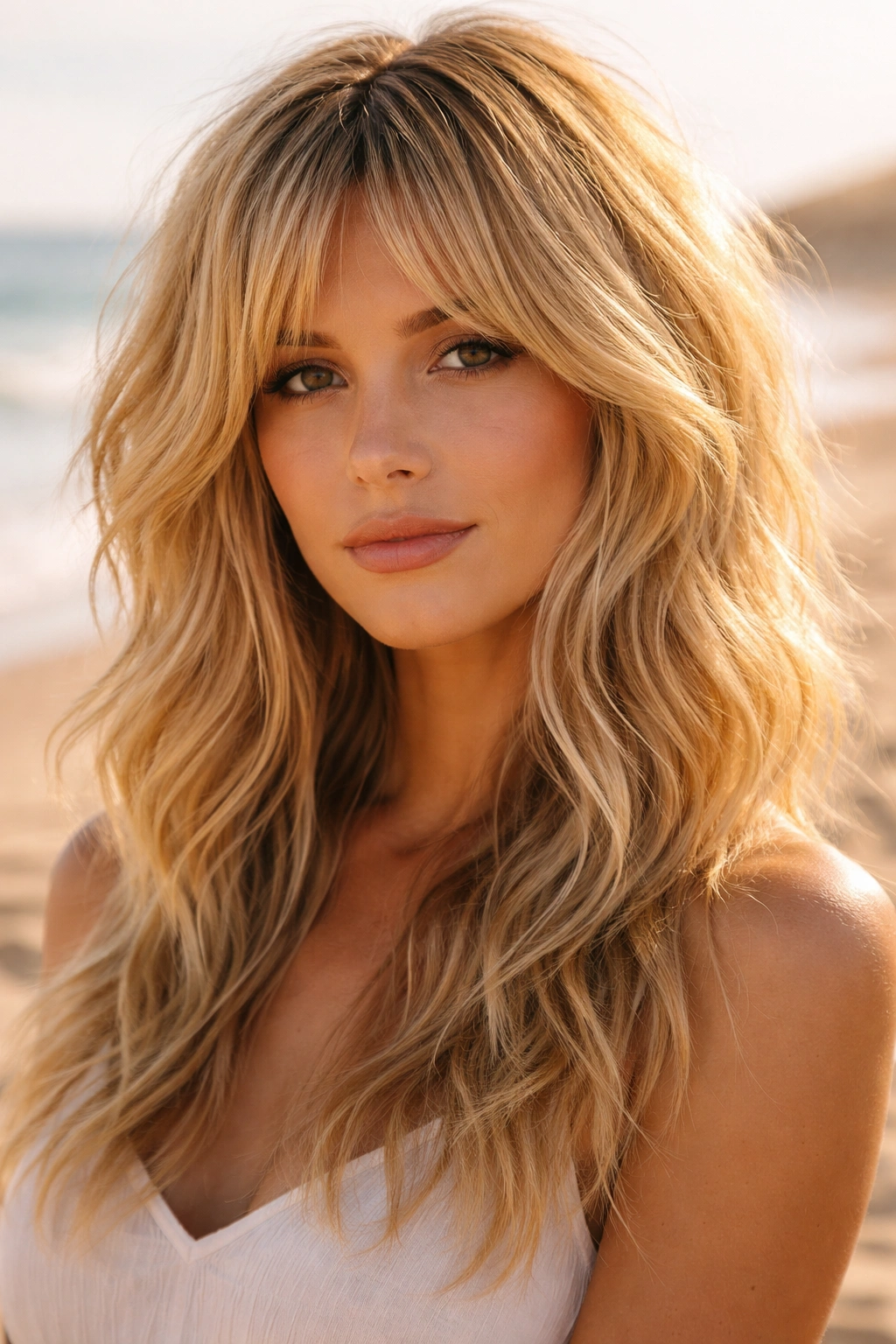
A true shag is all about embracing texture and movement with intention. This cut features multiple choppy layers throughout the entire head, starting from shorter, razor-textured layers at the top and gradually blending into longer pieces toward the bottom. The blonde coloring typically uses natural-looking highlights that mimic sun exposure — lighter pieces framing the face and slightly darker roots that ground the look.
Why This Cut Delivers Movement
The shag works beautifully for wavy hair because the layers are designed to move with your natural texture rather than against it. Each layer is cut at a different angle, which means when waves form, they follow multiple directions and create a tousled, three-dimensional effect. The shorter layers on top don’t sit flat — they stand away from the scalp and catch light, making even thin hair appear fuller.
Key Styling Details
- Work a texturizing spray through damp hair to enhance wave formation
- Use a blow dryer with a diffuser attachment to encourage natural waves
- Apply a sea salt spray for definition and that effortless, beachy finish
- Run fingers through hair while it dries to direct the shag layers outward
- Pair this cut with a honey-blonde or balayage for maximum dimension
Pro tip: The shag is forgiving on styling — slightly imperfect, undone waves actually look better with this cut than perfectly uniform waves do.
2. The Face-Framing Lob with Choppy Layers
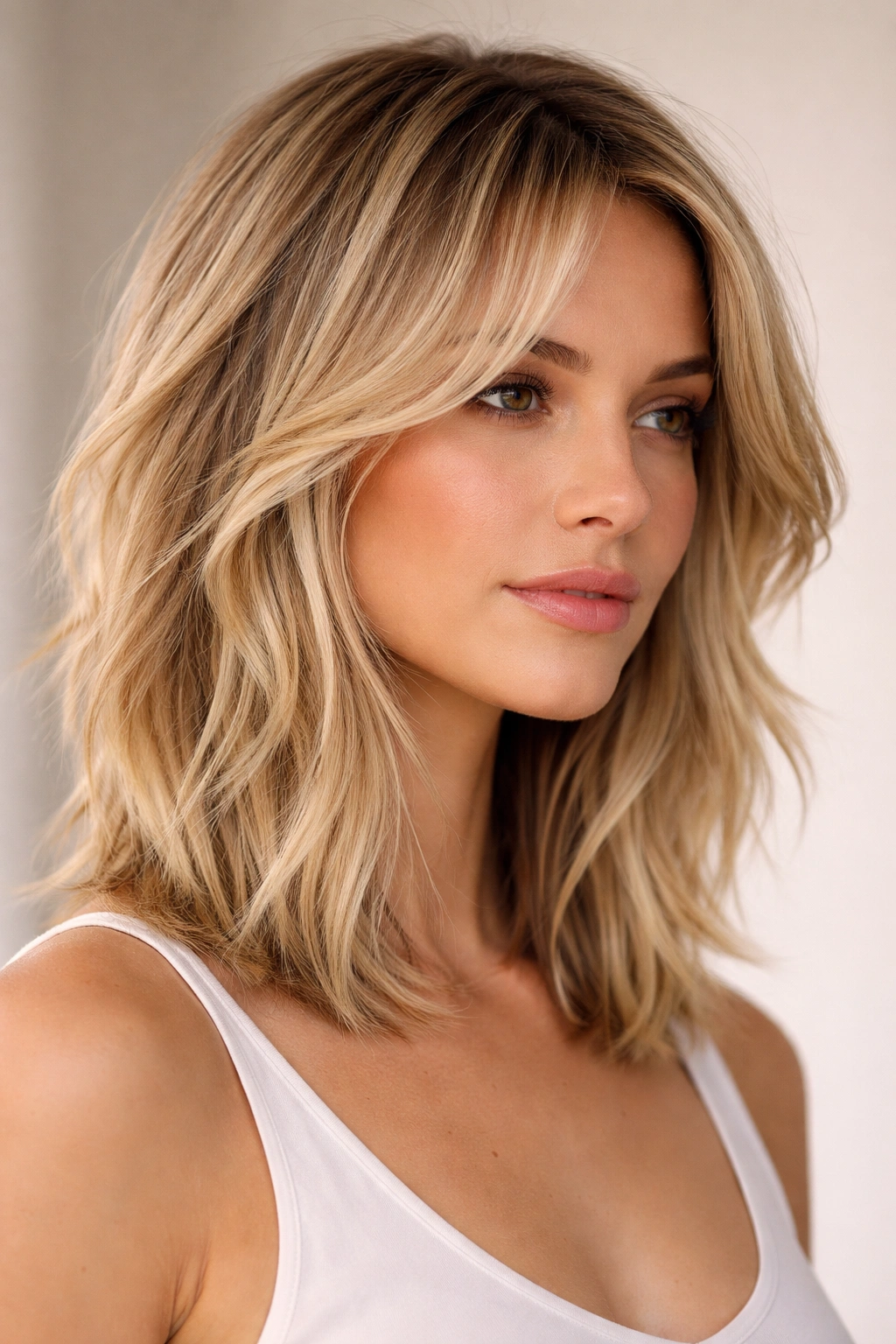
A lob (long bob) in the shoulder-length range gets transformed when you add choppy layers specifically around the face. These shorter face-framing pieces typically hit at cheekbone or chin length, while the back stays longer — creating an asymmetrical, modern silhouette. Blonde tones emphasize the contrast between the layered sections.
What Makes the Face-Framing Technique Special
Face-framing layers serve a dual purpose: they’re flattering for almost every face shape because they draw attention to the eyes and cheekbones, and they add instant movement to the overall look. The shorter pieces blend into the longer hair, so there’s no abrupt line — instead, you get a graduated effect that’s contemporary and polished.
Styling and Maintenance Considerations
- Blow-dry with a round brush to create subtle inward waves around the face
- Use a 1.5-inch curling iron on the face-framing layers for defined, bouncy waves
- Keep the choppy layers looking intentional by refreshing them every 6-8 weeks
- Blonde hair showing shorter, choppy layers will require more frequent root maintenance
- A lightweight mousse applied to damp roots helps layers stand away from the face
Worth knowing: This cut works especially well if you have a longer face, as the horizontal choppy layers create visual width.
3. The Wispy, Feathered Blonde Waves
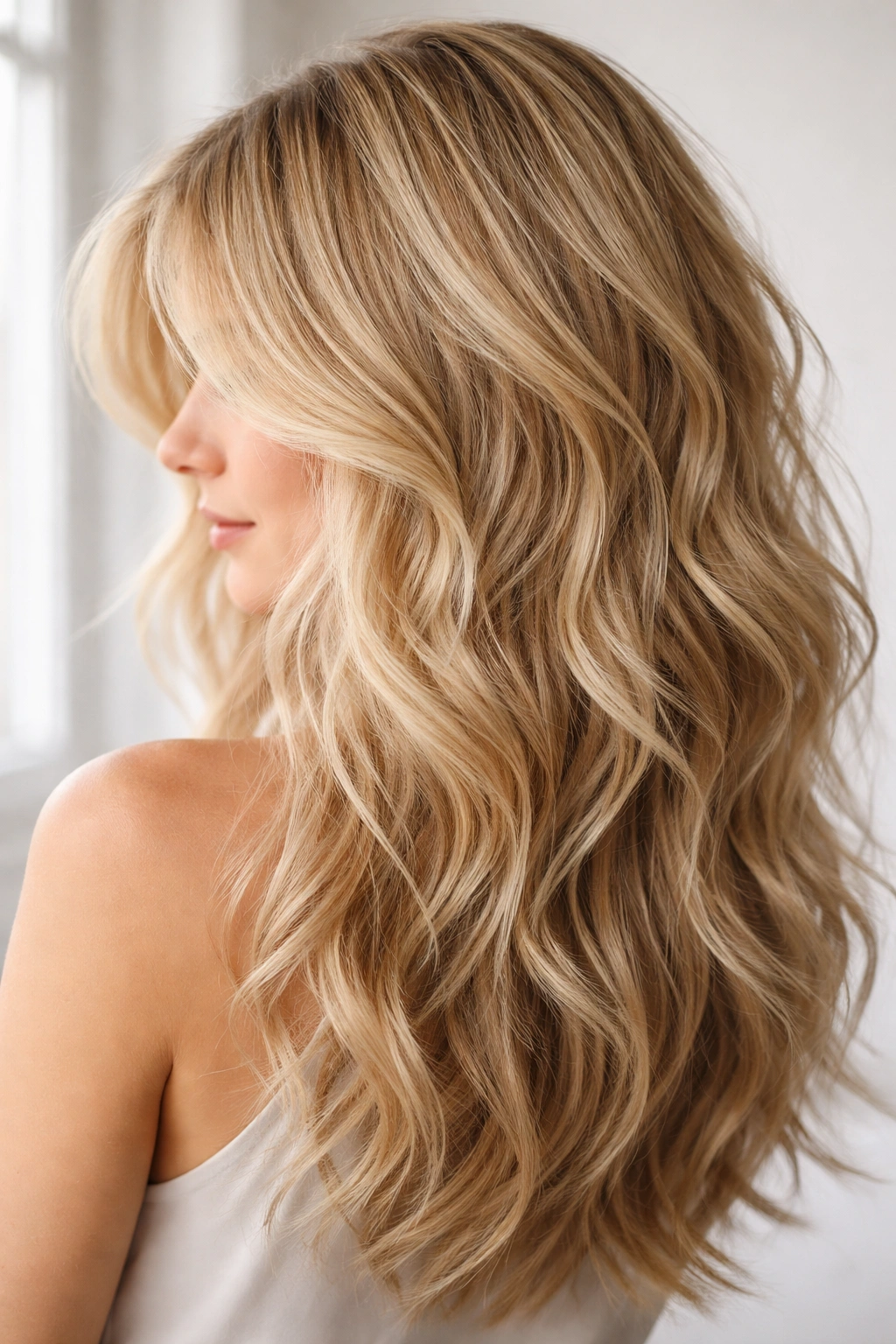
Feathering is a layering technique where each layer is cut in a curved, contoured line that follows the head’s shape rather than creating blunt ends. The result is soft, wispy pieces that graduate subtly rather than dramatically. This blonde wavy cut emphasizes subtlety over chop — waves flow naturally through the cut without the razor-sharp angles of a traditional shag.
The Softness Factor
Where shags are undeniably edgy, feathered layers lean soft and romantic. The feathering technique is especially flattering if you prefer a more delicate, feminine aesthetic. Blonde hair with feathered layers catches light along each graduated edge, creating shimmer and dimension without requiring dramatic highlights.
How to Style Feathered Waves
- Apply a smoothing serum to damp hair to avoid frizz
- Blow-dry with a paddle brush for a sleek base that feathered pieces can rest on
- Use a 1-inch curling iron to create soft waves that roll through the feathered sections
- Finish with a flexible hold hairspray that keeps movement intact
- The best result comes from waves that are slightly loose and relaxed, not tightly spiraled
Insider note: Feathered layers require a stylist with genuine precision — this isn’t a cut where choppiness adds charm.
4. The Textured Pixie-to-Bob Transition
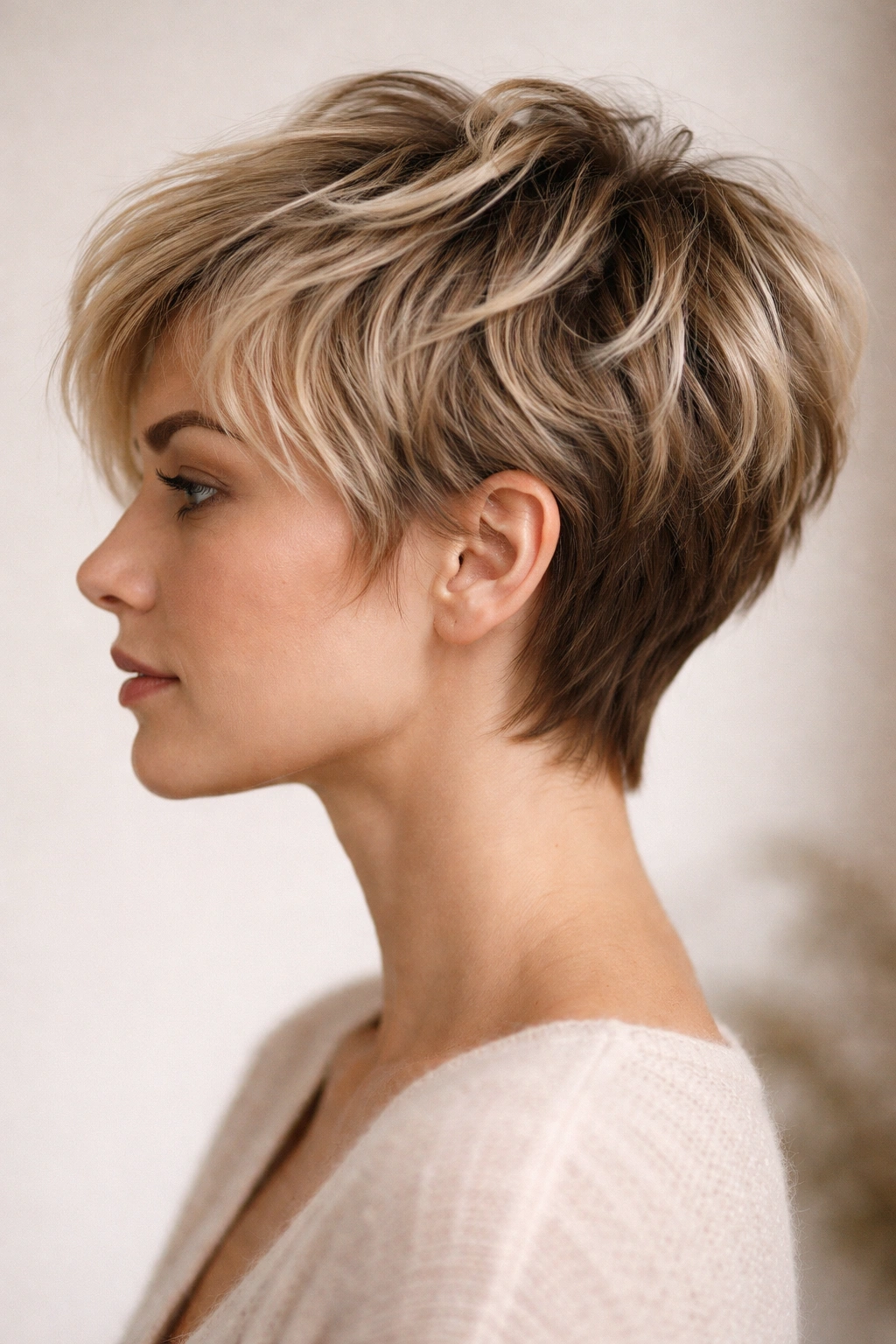
This is a modern take on a textured cut that keeps significant length in the back and sides while shortening the top into choppy, textured layers. It sits somewhere between a pixie and a bob — longer than a true pixie but shorter overall than a traditional layered bob. On blonde hair, the shorter top layers show off the blonde shade while longer pieces in the back provide dimension.
Why the Transition Works
This cut appeals to people who want noticeable texture and layers but aren’t ready to commit to a full short cut. The longer back gives you options for styling — you can wear it down and wavy, or pull it up on busier days. The textured top catches light and provides shape.
Styling for Maximum Impact
- Blow-dry the top layers upward and away from the scalp for volume
- Use sea salt spray on damp hair before drying for enhanced texture
- A light pomade on the tips of top layers creates intentional piece-y separation
- The back can be styled with waves or kept sleeker, depending on your mood
- This cut looks especially polished with warm blonde tones like honey or caramel
Pro tip: This cut requires styling product to look intentional — without texture spray or paste, the shorter layers can look too messy rather than fashion-forward.
5. The Long Layered Blonde with Subtle Waves
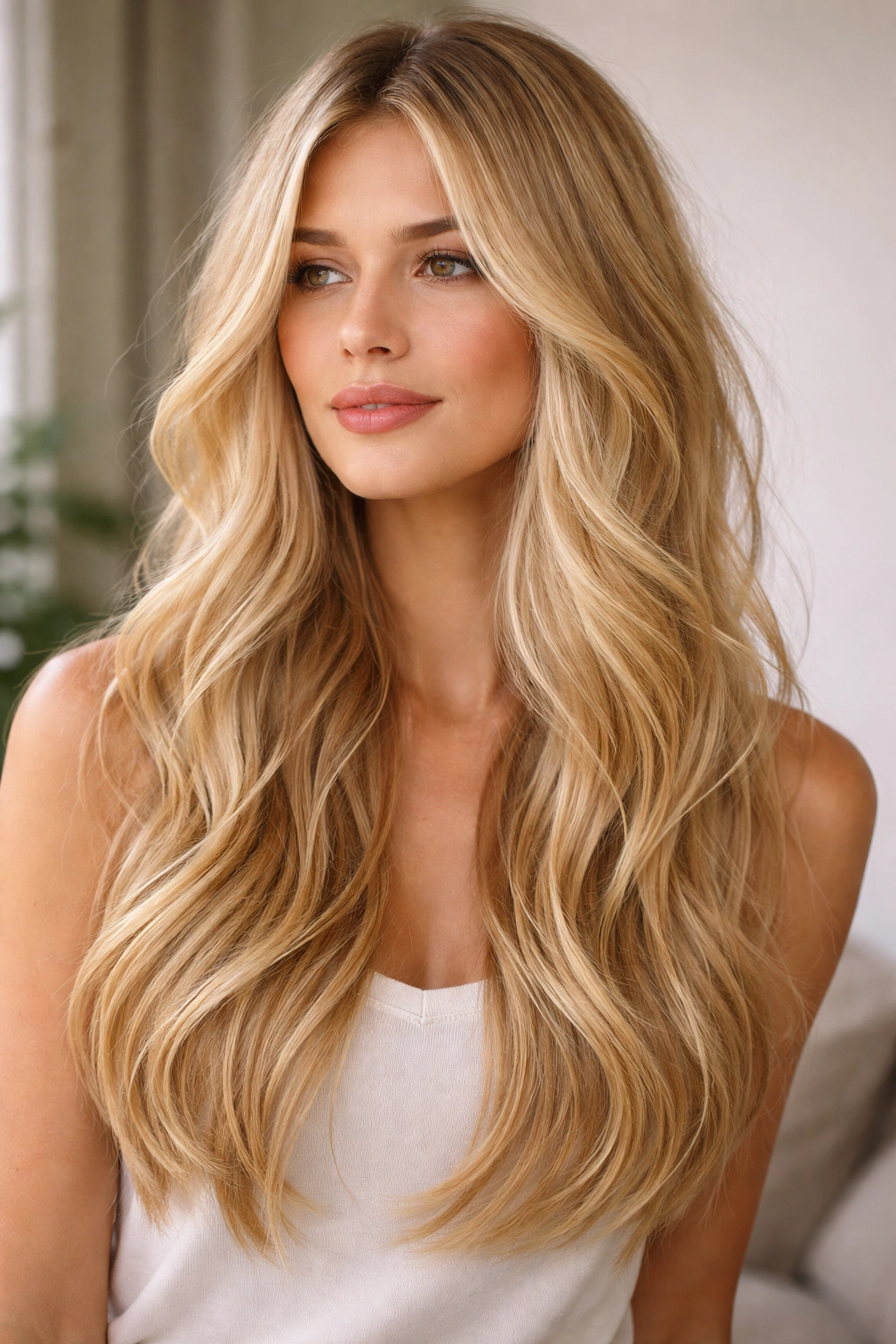
For those who want length without sacrifice, a long layered cut keeps hair well below shoulder length while adding layers throughout to create movement. The layers are more subtle than a shag — not choppy, but definitely present. Waves are softer and more uniform than the tousled shag effect, creating an elegant, flowing look.
Why Long Layers Work for Wavy Hair
Longer hair tends to weigh down natural waves, making them look more like soft bends than actual waves. Strategic layering removes just enough weight to let the waves show up naturally without requiring the hair to be short. The blonde color emphasizes where the layers catch light along the length.
Maintenance and Styling Details
- Trim every 8 weeks to keep layers looking defined as hair grows
- Blow-dry with a medium-sized round brush for consistent wave shape
- Use a large-barrel curling iron (2 inches or wider) for loose, romantic waves
- Apply a light hair oil to the ends to prevent dryness from multiple waves
- Blonde hair benefits from a color-safe shampoo and conditioner to maintain vibrancy
Worth knowing: This cut actually gets better with some styling — the longer length provides enough weight that waves need assistance to really show up.
6. The Wolf Cut: Shag Meets Mullet
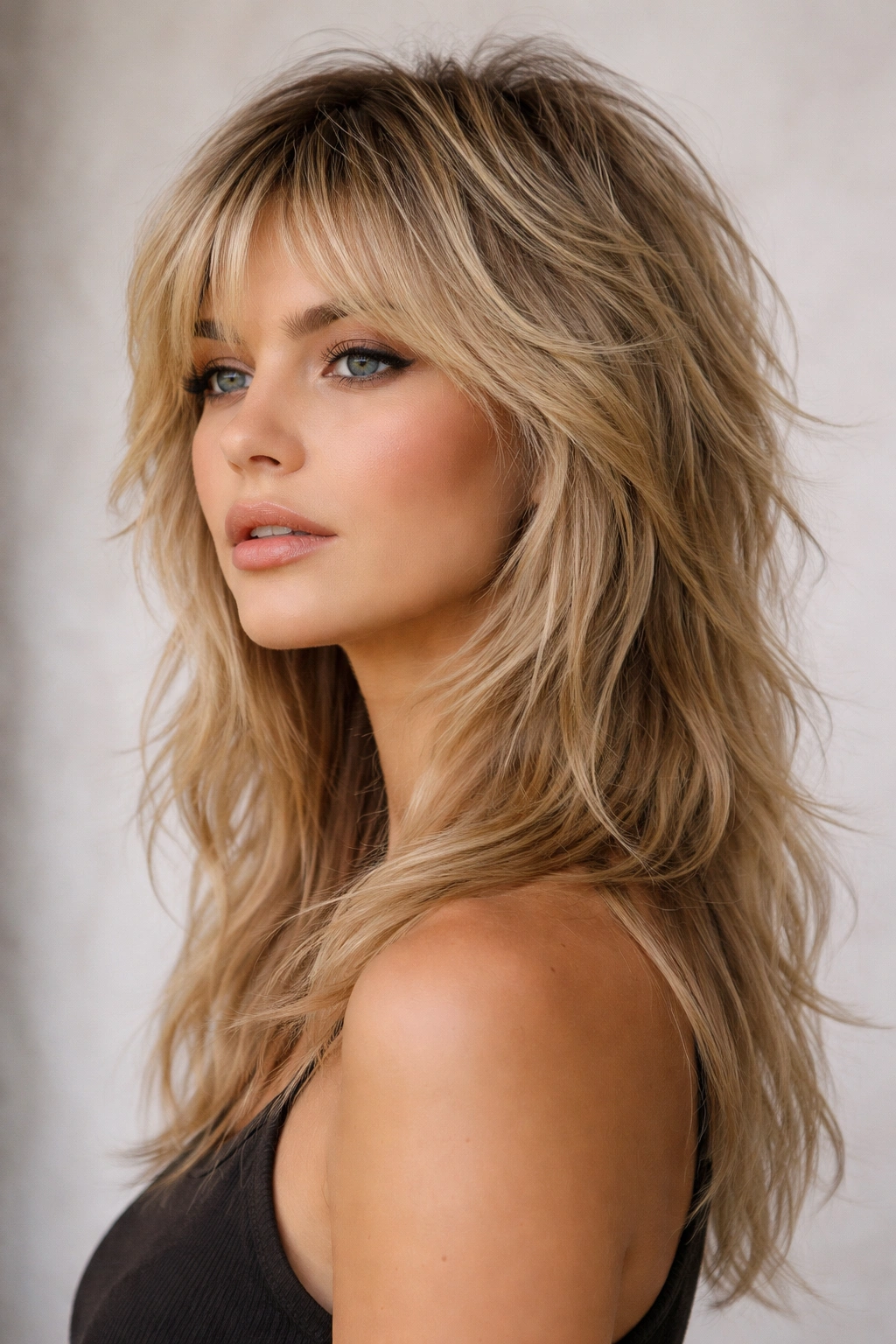
A wolf cut is a playful hybrid that combines shag texture on top with longer, straighter pieces underneath. The contrast between the choppy, textured crown and the longer, sleeker back creates a modern, almost edgy look. On blonde hair, this contrast is visually striking — the textured top can be lighter while the back shows deeper blonde or different tones.
The Modern Appeal of Wolf Cuts
This cut has gained popularity because it’s fashion-forward and undeniably unique. It works especially well if you want to express personality through your hair. The wolf cut is particularly flattering if you have wavy or curly hair naturally — the top layers enhance your texture while the longer back provides balance.
Styling a Wolf Cut
- Apply texturizing spray to the top layers while damp to maximize chop and movement
- Blow-dry the crown upward for height and volume
- Curl or wave the back separately for definition
- This cut looks best slightly undone — perfectly smooth styling feels at odds with the style’s personality
- Blonde with subtle rooting (darker roots) emphasizes the texture at the crown
Pro tip: A wolf cut requires confidence to pull off. It’s not a subtle haircut — you’ll get comments and questions about it, which is part of the appeal for many people.
7. The Subtle Textured Bob with Wave
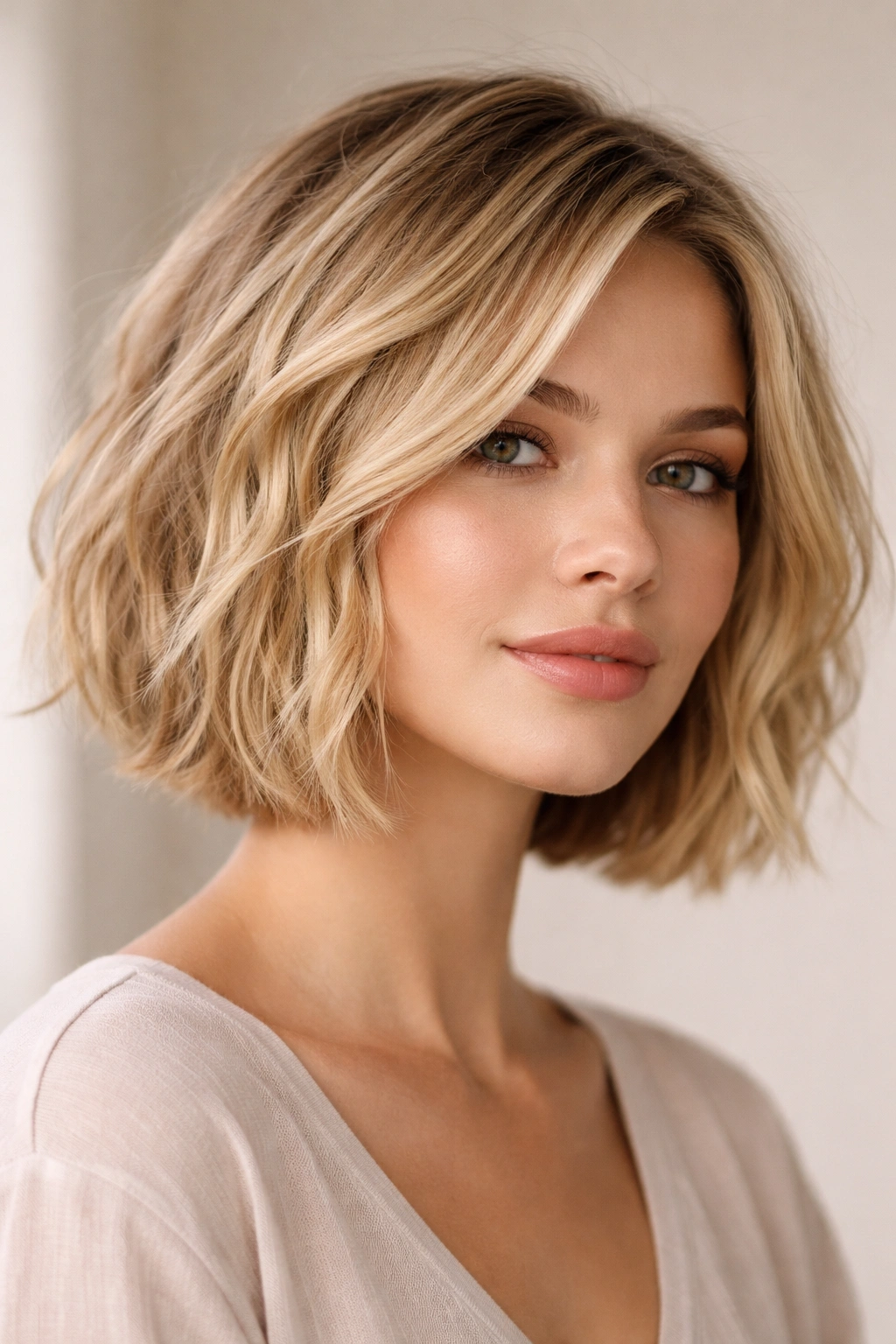
A textured bob hits at chin length or slightly shorter, with layers woven throughout that aren’t obvious until the hair moves. This cut is more conservative than a shag or wolf cut — it’s professional enough for work settings but textured enough to show off waves. Blonde works beautifully here because subtle layers in blonde hair create light-catching dimension that reads as intentional rather than unkempt.
The Conservative-Yet-Textured Balance
If you want layers and waves but need something that works in formal settings, a textured bob delivers. The layers are there, but they’re refined. The waves are present, but they read as polished rather than tousled. This cut is genuinely versatile in that it can look sharp and put-together on one day and relaxed and undone the next.
Waving and Styling Options
- Blow-dry straight with a paddle brush for a sleek, professional look
- Use a 1-inch curling iron to create subtle waves for a softer version
- Apply a light-hold mousse to damp roots for natural-looking lift
- A smoothing serum keeps frizz at bay without weighing down the texture
- Blonde hair in a textured bob benefits from glossing treatments every 6-8 weeks
Worth knowing: This cut is incredibly forgiving of styling and hair type. Fine hair gains dimension, thick hair gets shape, and wavy hair gets definition.
8. The Choppy Pixie-Bob Hybrid
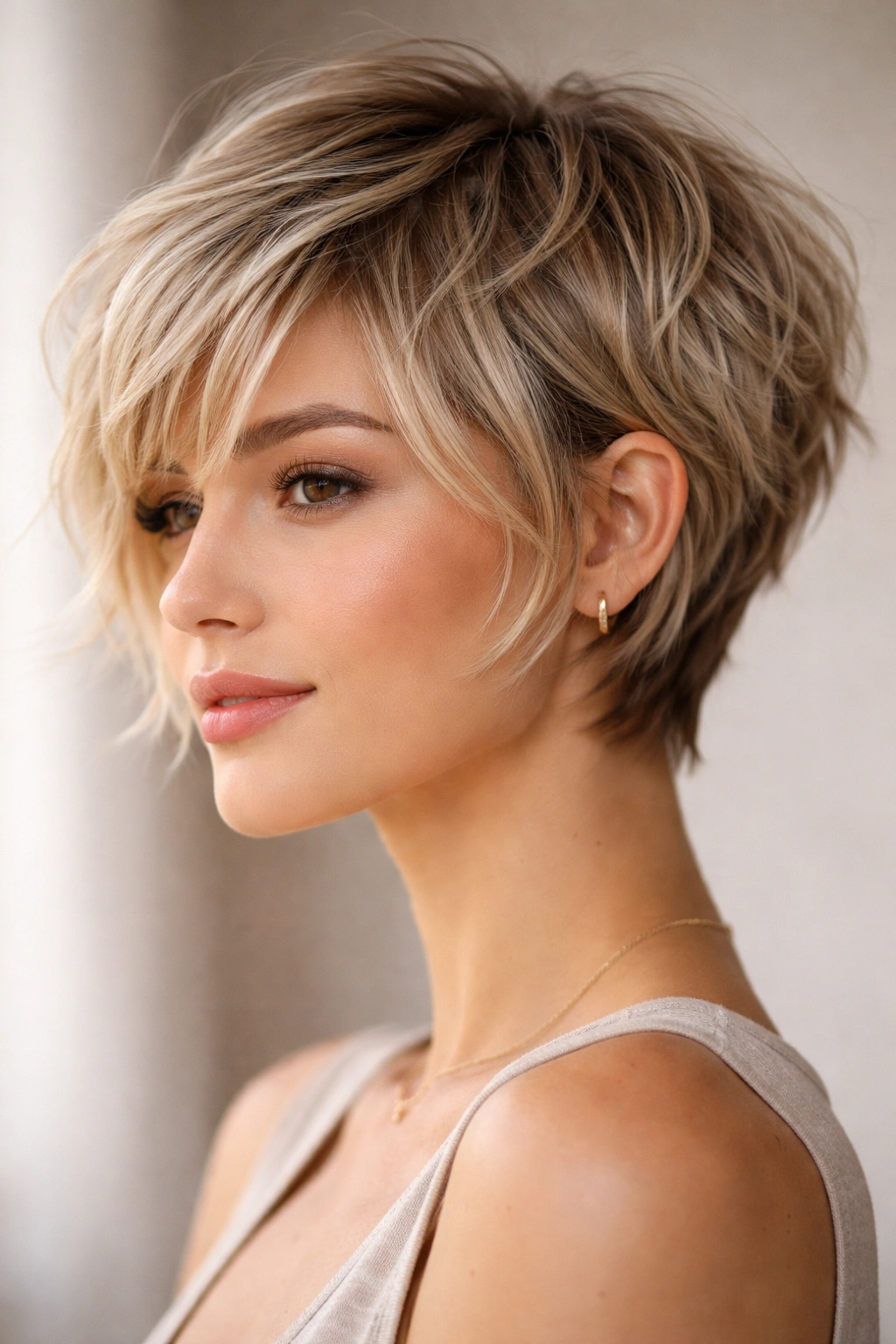
This cut combines the shortness of a pixie with the length options of a bob, typically keeping hair shorter all over (around ear length at shortest, chin length at longest) with significant choppy layering throughout. It’s essentially a very short, textured cut that still allows for styling options. On blonde hair, the choppy nature means every strand catches light.
Who This Cut Suits Best
This cut works beautifully if you have finer hair or less hair overall — it provides the illusion of fullness through texture rather than requiring heavy length. It’s also great if you want a dramatic change but need something relatively low-maintenance. The choppy layers on blonde hair mean styling can be as simple as drying with your fingers.
Styling the Pixie-Bob
- Use a texturizing spray on damp hair for automatic texture
- Blow-dry with fingers for that undone, piece-y look
- A light pomade applied to the tips creates intentional separation
- This cut actually looks better slightly tousled than perfectly smooth
- Blonde shows off the color variation between piece-y layers beautifully
Pro tip: This cut requires commitment to regular trims (every 4-6 weeks) to maintain the choppy shape as it grows out.
9. The Beachy Blonde with Spiral Waves
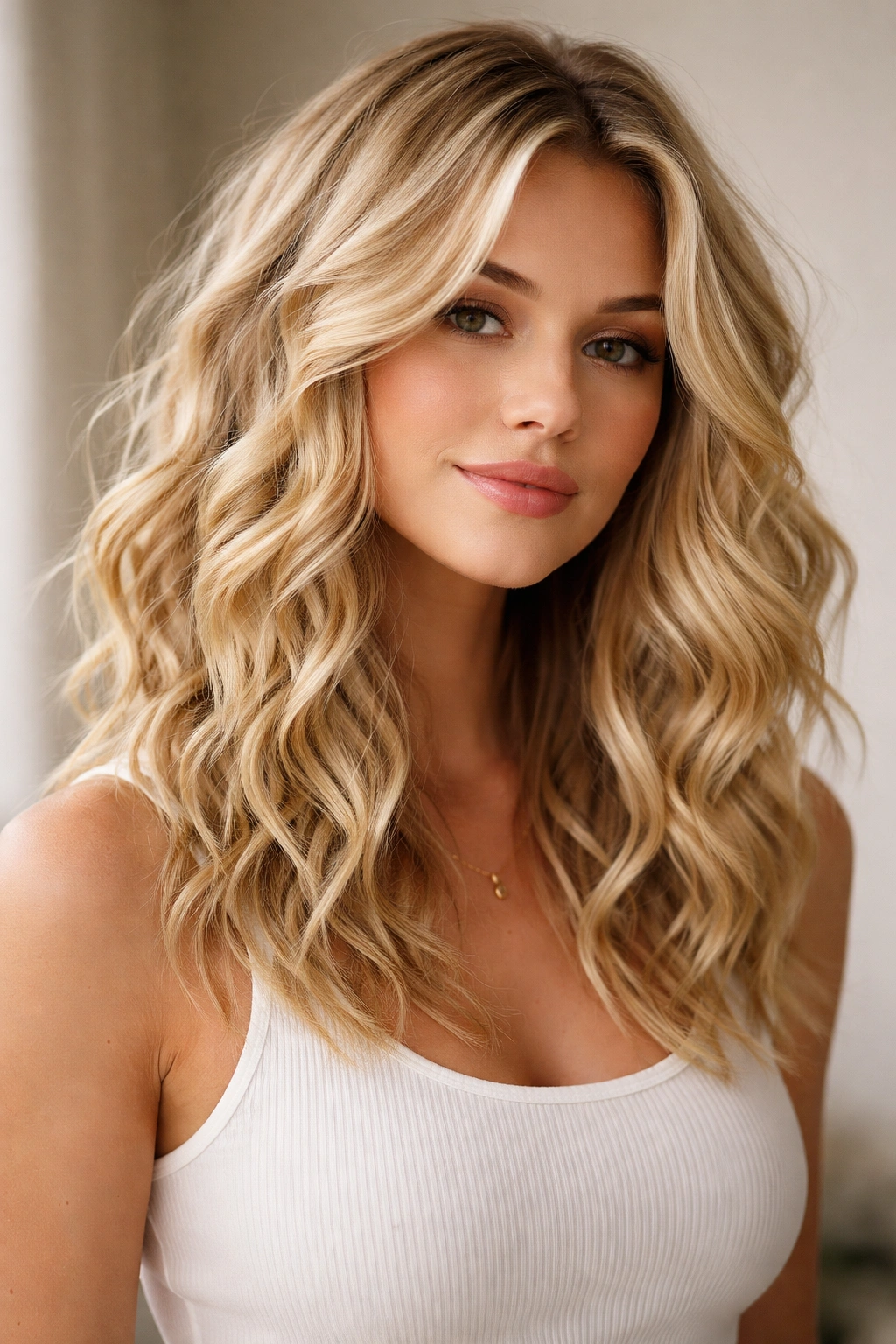
This approach uses longer wavy layers (typically shoulder length or longer) where waves form tight spirals rather than loose waves. The spirals create texture and movement without the shag’s choppy, feathered aesthetic. Layers support the spiral waves by removing weight at strategic points. On blonde hair, spiral waves catch light differently at each turn of the spiral.
Creating and Maintaining Spiral Waves
Spiral waves require either natural wave pattern or deliberate styling with a curling iron. The layers in this cut are designed to support curls or waves — they’re graduated to prevent the bulkiness that typically comes with curly hair. Blonde is perfect for this style because the color provides contrast that makes the spiral texture visible.
Styling for Defined Spirals
- Use a curling iron or wand to create spirals through layered sections
- Apply a curl-defining cream before styling for hold and definition
- Diffuse-dry to encourage natural wave formation if you have wavy hair
- A light hairspray maintains spirals without creating crunchiness
- Refresh spirals with a curling iron every 2-3 days or as needed
Worth knowing: Spiral waves and tight curls require more frequent deep conditioning than straighter textures, especially on blonde hair which can be drier from color processing.
10. The Modern Mullet: Business in Front, Party in Back
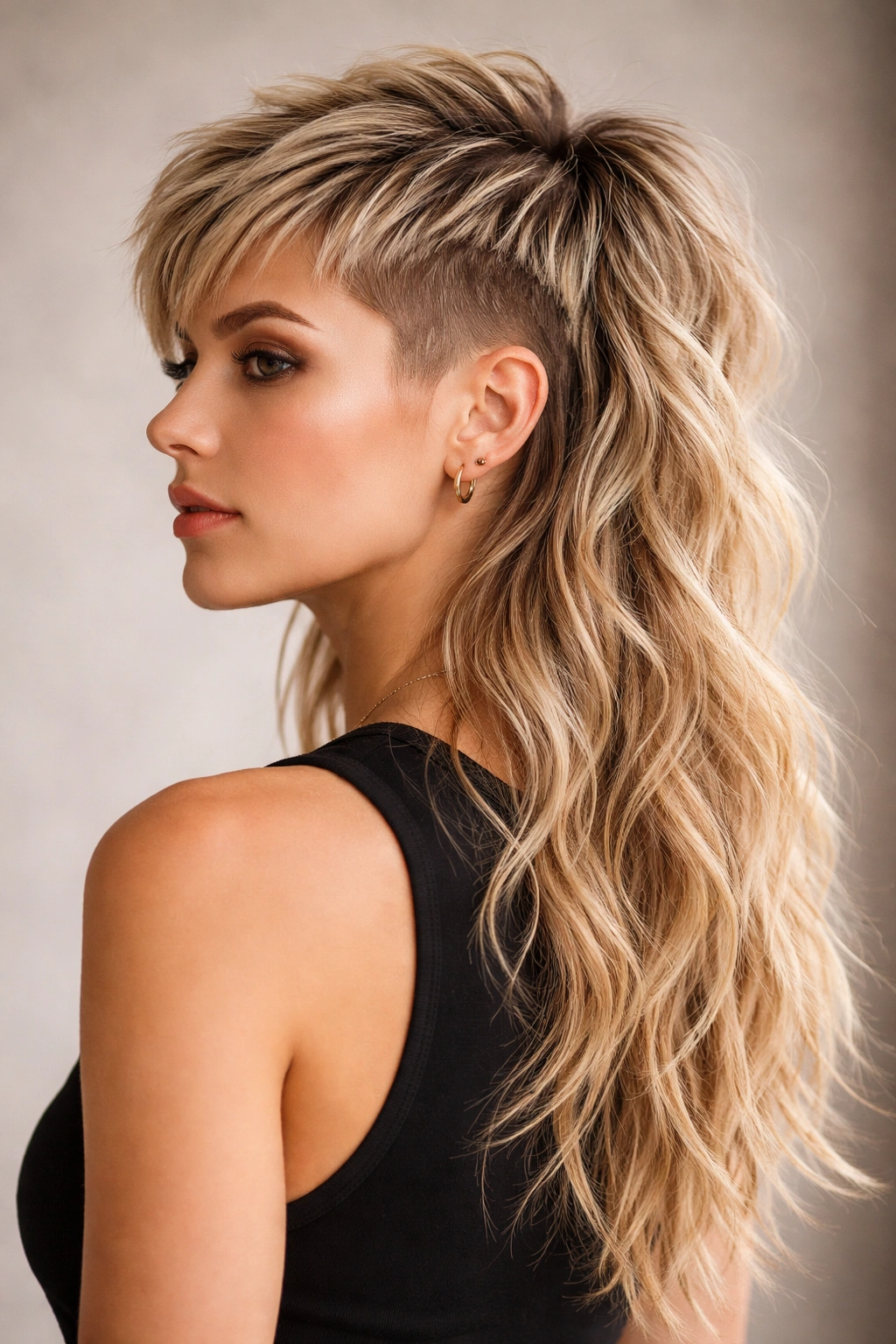
A modern mullet features shorter layers on top and sides (think textured, almost pixie-like) with significantly longer hair in the back. The contrast is intentional and sharp. On blonde hair, you might pair a lighter blonde on top with slightly darker tones or dimensional highlights in the back, or keep it all one shade for a more subtle approach to the trend.
The Evolution of the Mullet
Today’s mullet isn’t the ’80s version — it’s fashion-forward and often ironic. It appeals to people who want an undeniably statement-making cut. The layering on top creates movement and texture, while the long back provides practicality and styling options.
Styling a Modern Mullet
- Blow-dry the top layers for volume and texture using texturizing spray
- Curl or wave the back to match the intentional texture of the top
- This cut looks best when both sections are styled intentionally rather than naturally
- Blonde works well with rooted or dimensional coloring to emphasize the contrast
- The back can be pulled up in a ponytail or left down depending on the occasion
Pro tip: A modern mullet requires genuine confidence and the ability to laugh at your own fashion choices. It’s not a subtle statement.
11. The Shaggy Bob with Face-Framing
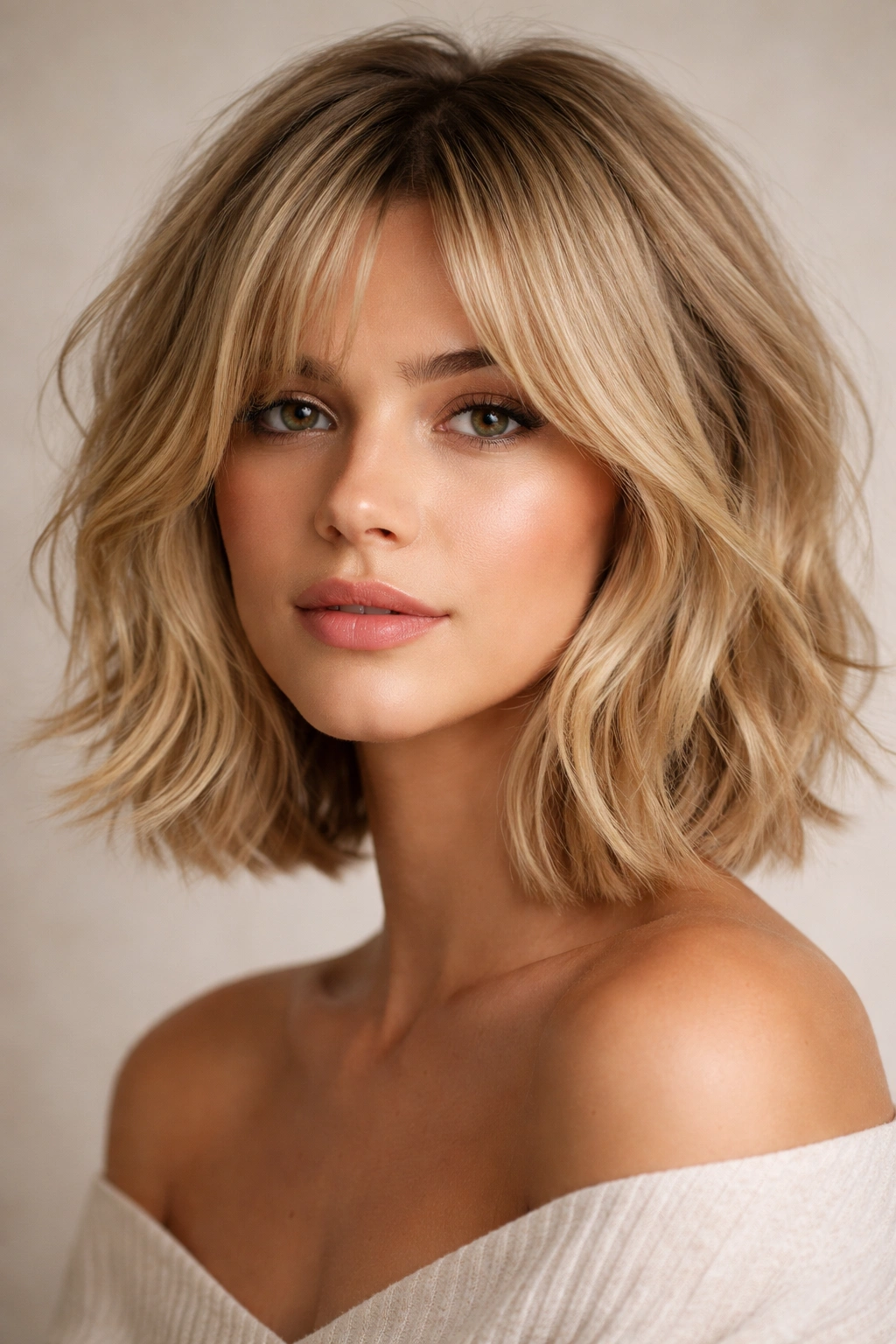
This cut keeps hair at bob length (around chin length) but adds choppy, shaggy layers throughout, with special emphasis on shorter face-framing pieces. It’s longer than a true textured bob but has more intentional chop than a subtle layer cut. The layers create movement throughout while the shorter face-framing pieces provide softness around the cheekbones.
The Balance of Structure and Movement
This cut is genuinely flattering because the shorter face-framing pieces define cheekbones and draw attention upward, while the longer bob length prevents the cut from feeling too severe. The shaggy layers throughout add movement that shorter cuts can sometimes lack.
How to Style a Shaggy Bob
- Blow-dry with a round brush to smooth the base and direct layers
- Use a 1.5-inch curling iron on face-framing pieces for emphasized waves
- Apply volumizing mousse to roots for lift in the crown area
- A light texturizing spray enhances the shaggy quality without flattening the style
- Blonde hair shows off the dimension of this cut, especially with subtle highlights
Worth knowing: This cut requires a stylist who understands how layers should graduate — poorly executed, it can look choppy and uneven rather than intentionally shaggy.
12. The Waist-Length Blonde with Delicate Layers
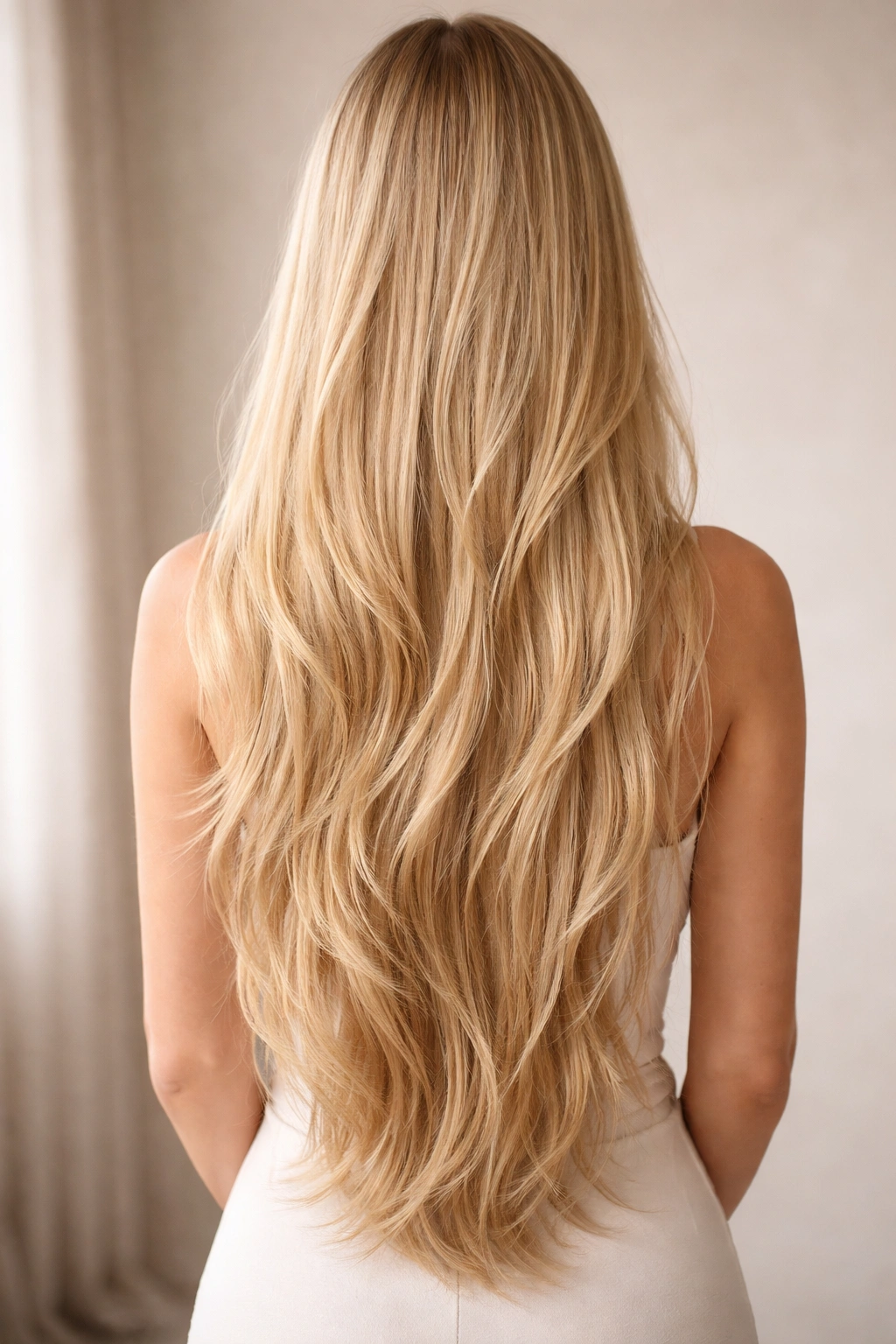
For those committed to keeping significant length, a waist-length or longer cut with delicate, nearly invisible layers provides subtle movement without sacrificing length. The layers are present but graduated so gradually that they’re not obvious until the hair moves. Blonde hair shows the subtle dimension created by these thin layers.
Why Minimal Layers Work for Very Long Hair
Long hair naturally waves without layering — the weight and gravity alone can create gentle waves. Adding subtle layers prevents the wavy texture from looking stringy or overly straight at the ends. The layers are strategic, placed to enhance wave formation without creating chop.
Maintaining and Styling Very Long Blonde Hair
- Trim minimally but regularly (every 10-12 weeks) to prevent splitting
- Use a moisturizing conditioner or hair mask weekly for long hair
- Blow-dry only when necessary — air-drying often produces better waves on long hair
- Apply a light oil to the ends after washing to prevent dryness and splitting
- Blonde hair this long will benefit from glossing treatments to maintain color vibrancy
Pro tip: Very long wavy hair looks best with some intentional styling effort. Slightly undone waves require the right product and technique to avoid looking bed-head messy.
13. The Choppy Curtain Cut with Blonde
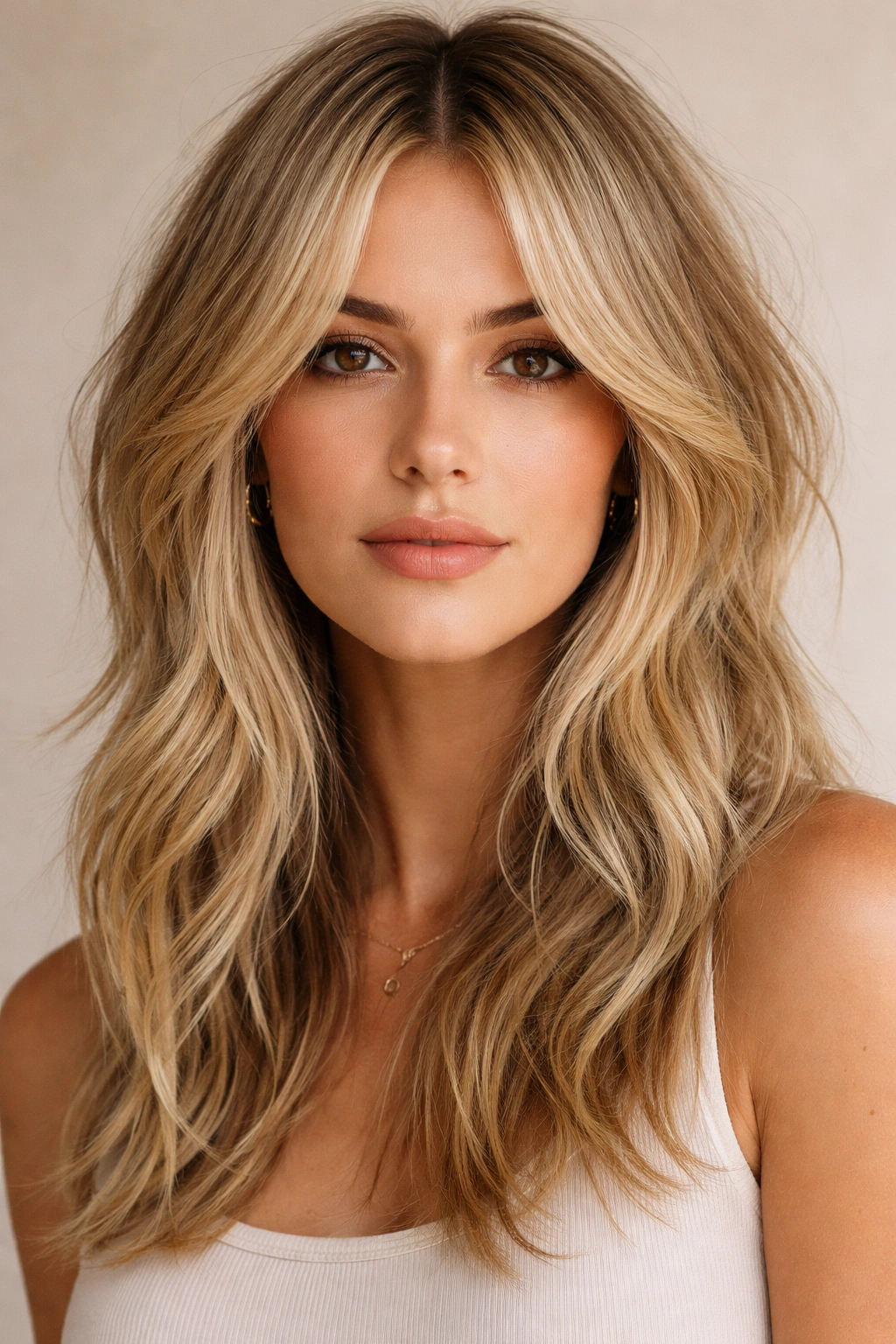
A curtain cut features longer pieces in the center (parted in the middle) that gradually transition to shorter, choppy layers toward the sides and back. The contrast is subtle or dramatic depending on execution. On blonde hair, the longer center pieces in a lighter shade with choppy sides in a slightly deeper tone creates visual interest.
The Curtain Cut’s Current Moment
This ’70s-inspired cut has resurged in popularity and works beautifully with wavy hair. The center part is flattering for most face shapes, and the longer center pieces prevent the cut from feeling too severe. The choppy layers on the sides add modern texture.
Styling the Curtain Cut
- Blow-dry with a round brush to create gentle curves in the longer center pieces
- Use a large-barrel curling iron to enhance waves throughout
- Apply volumizing mousse at the roots for lift around the center part
- A light texturizing spray enhances the choppy quality
- Blonde works especially well with dimensional coloring that emphasizes the longer center pieces
Worth knowing: The center part is a key element of this cut — side parts change the entire look and feel of a curtain cut.
14. The Razored Layers with Textured Waves
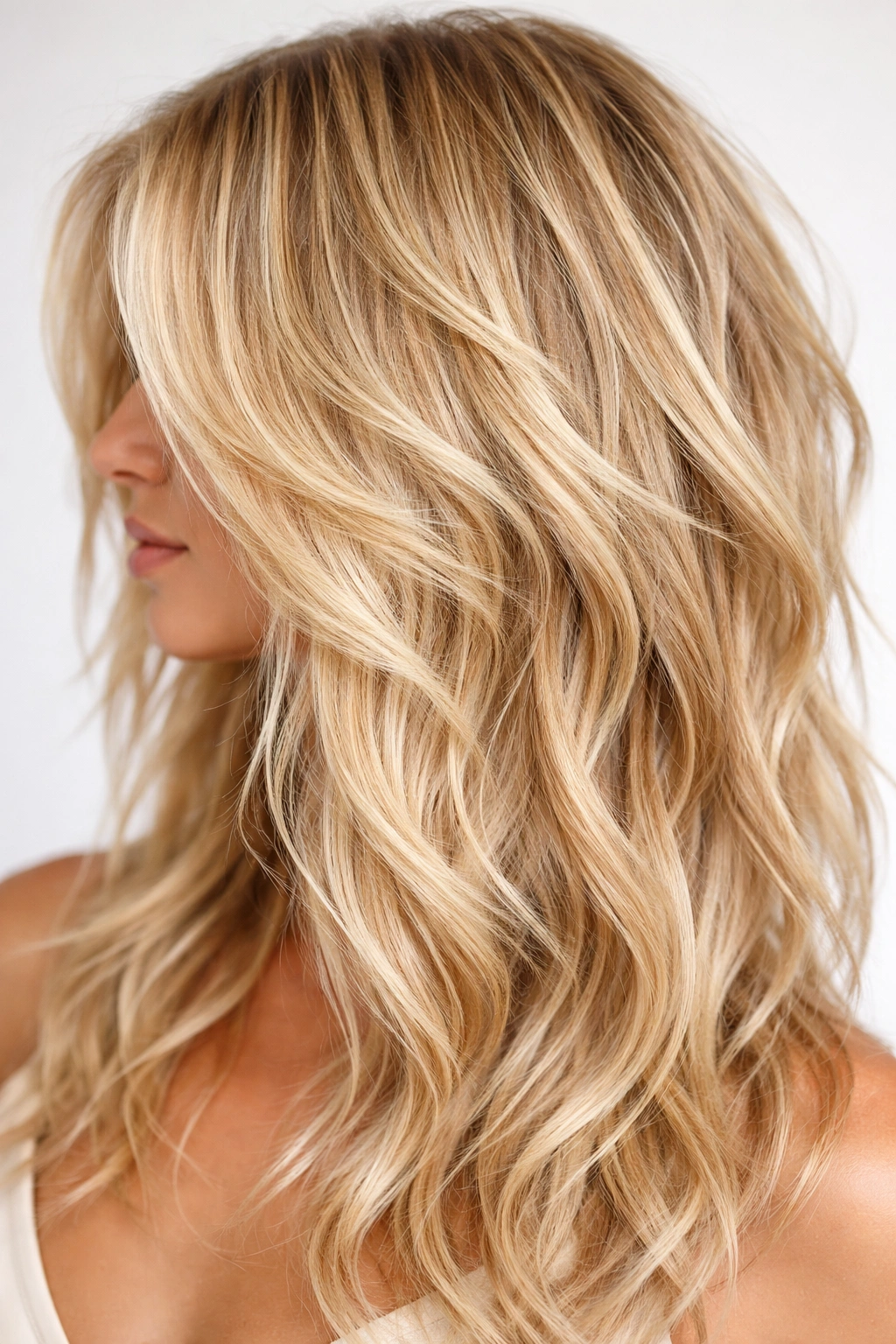
Razoring is a cutting technique that creates sharp, defined layers with pointed ends rather than blunt edges. When applied to a layered blonde cut intended for waves, razoring creates pieces that separate visually and catch light individually. This technique is bolder than scissors-only layering, resulting in a more obvious, intentional texture.
The Razoring Advantage
Razored layers are lighter and more movement-friendly than blunt layers because the sharp edges don’t catch and bind together. On blonde hair, each razored piece reflects light individually, creating visible dimension. This technique is especially effective on fine to medium hair types.
Styling Razored Layers
- Use a texturizing spray on damp hair to encourage separation
- Blow-dry with fingers rather than a brush to maintain the piece-y quality
- Light styling products (mousse or lightweight pomade) enhance piece separation
- Waves flow more naturally through razored layers with less styling effort
- Blonde hair emphasizes the piece-y quality of razoring beautifully
Pro tip: Razored layers require a skilled stylist — poor razoring looks choppy and unrefined, while good razoring looks intentionally textured.
15. The Symmetrical Wavy Bob
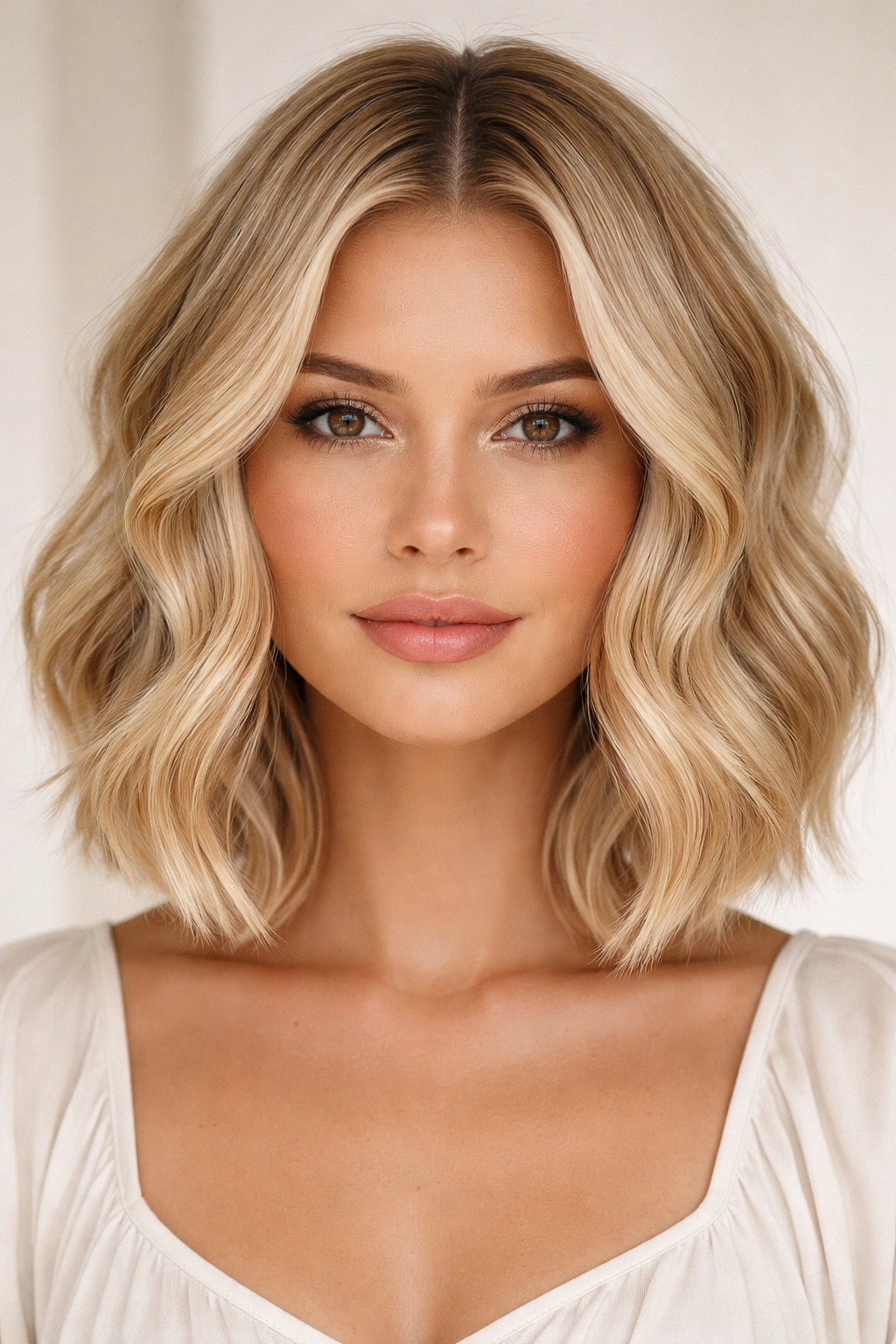
This cut keeps hair at bob length all around (no longer pieces in back) with even, symmetrical layers throughout. Waves are consistent all around the head rather than directional. It’s a classic approach that works for people who prefer structured cuts to asymmetrical styles. On blonde hair, the uniform length allows color and light to play across the entire cut evenly.
Why Symmetry Matters
A symmetrical cut is easier to maintain than asymmetrical cuts — both sides are identical, so as it grows out, it maintains balance longer. It’s also more forgiving of styling variations. Whether you blow-dry smoothly or slightly tousled, the symmetrical structure holds up.
Styling a Symmetrical Bob
- Blow-dry with a round brush for consistent wave formation all around
- Use a 1.5-inch curling iron to create waves that fall in the same direction on both sides
- Apply volumizing mousse to roots for lift throughout the crown
- A texturizing spray adds movement without disrupting the symmetry
- Blonde works beautifully with this cut — the uniform length shows off color vibrancy
Worth knowing: This cut looks best with regular trims every 6-8 weeks. As it grows, the symmetry is what keeps it looking intentional rather than grown-out.
16. The Choppy Shoulder-Length Layered Cut
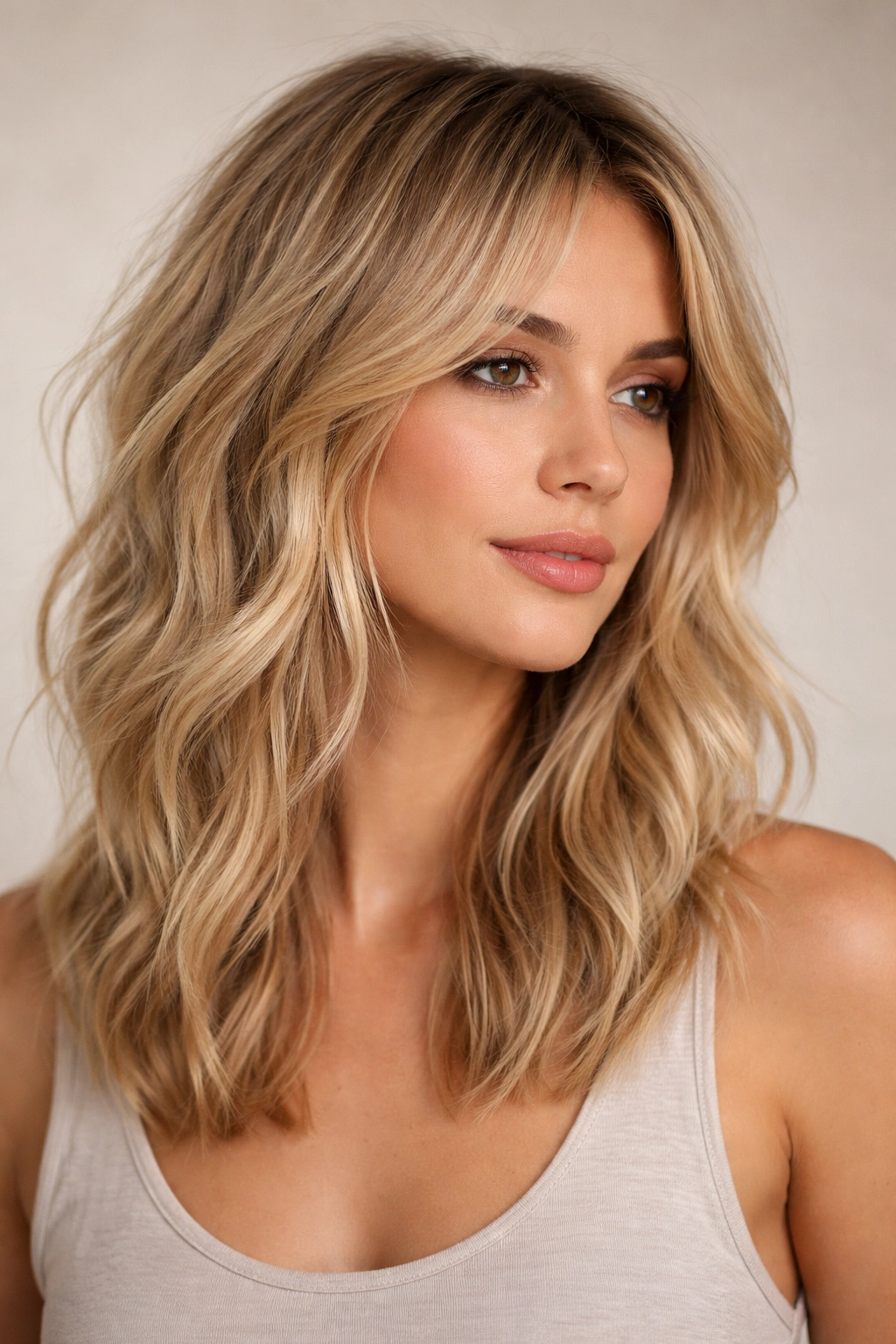
Shoulder-length layered blonde hair with choppy texture sits at a versatile length — long enough for styling options like ponytails, yet short enough to show off the layering. The chop is present throughout without being as dramatic as a full shag. Waves flow through the choppy layers naturally or with light styling.
The Goldilocks Length
Shoulder length is the ultimate sweet spot for many people — long enough to feel like you have length, but short enough that styling is manageable. Adding choppy layers to shoulder-length hair creates movement without requiring a significant commitment to styling time.
Versatile Styling Options
- Wear down with natural waves for a casual, daytime look
- Blow-dry smooth with strategic curling for an evening look
- Pull into a ponytail or bun for a polished, practical style
- Use texturizing spray for casual texture or mousse for more defined waves
- Blonde at this length requires trims every 6-8 weeks to keep choppy layers looking fresh
Pro tip: This length is forgiving enough for people unsure about committing to short hair, yet gives you the texture and movement benefits of layering.
17. The Blonde Ombre with Textured Layers
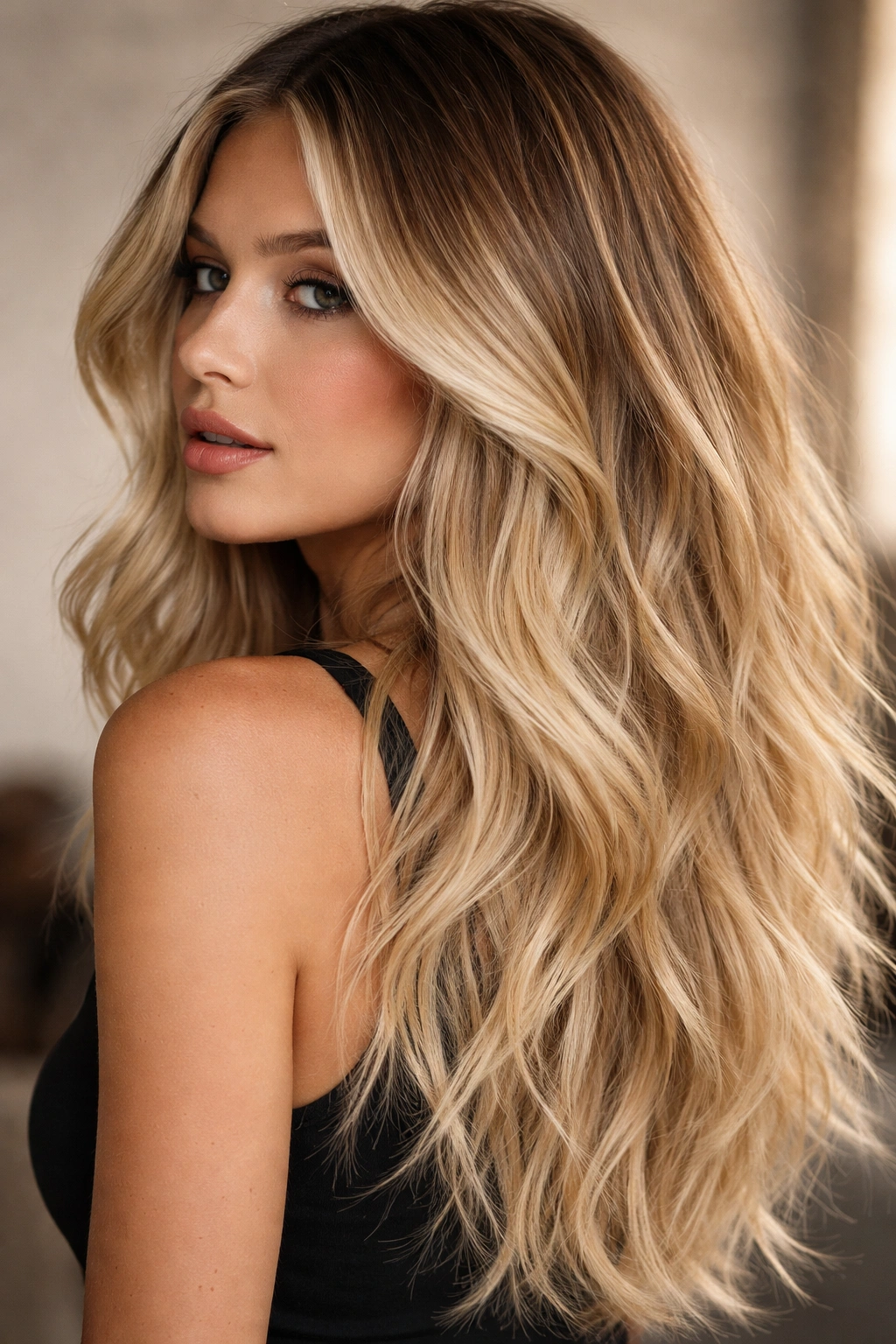
This approach combines textured, layered blonde hair with an ombré color technique — typically darker roots with progressively lighter blonde toward the ends. The layering ensures that the color transition is visible throughout the cut, not just at the tips. Textured layers break up the ombré gradient and prevent it from looking like a simple, single color transition.
How Color and Texture Work Together
An ombré by itself can read flat if the hair is all one length. Adding layers means the color shows up in multiple places throughout the head — at face-framing pieces, along choppy layers, at the ends. This creates visual movement and dimension that neither the color nor the texture could achieve alone.
Maintaining Ombré Blonde
- Color-safe shampoo and conditioner are essential to prevent fading
- Toning treatments keep blonde ends from turning brassy
- Trim every 6-8 weeks to prevent the ombré from appearing grown-out and sparse at the ends
- Texturizing spray works beautifully with ombré — it emphasizes the color transition
- Deep conditioning treatments prevent the lighter blonde ends from becoming dry
Worth knowing: Ombré requires visible grow-out to look intentional, so you’ll see your darker roots. If perfectly matched roots bother you, this style might frustrate you over time.
18. The Heavily Textured Choppy Blonde with Bangs
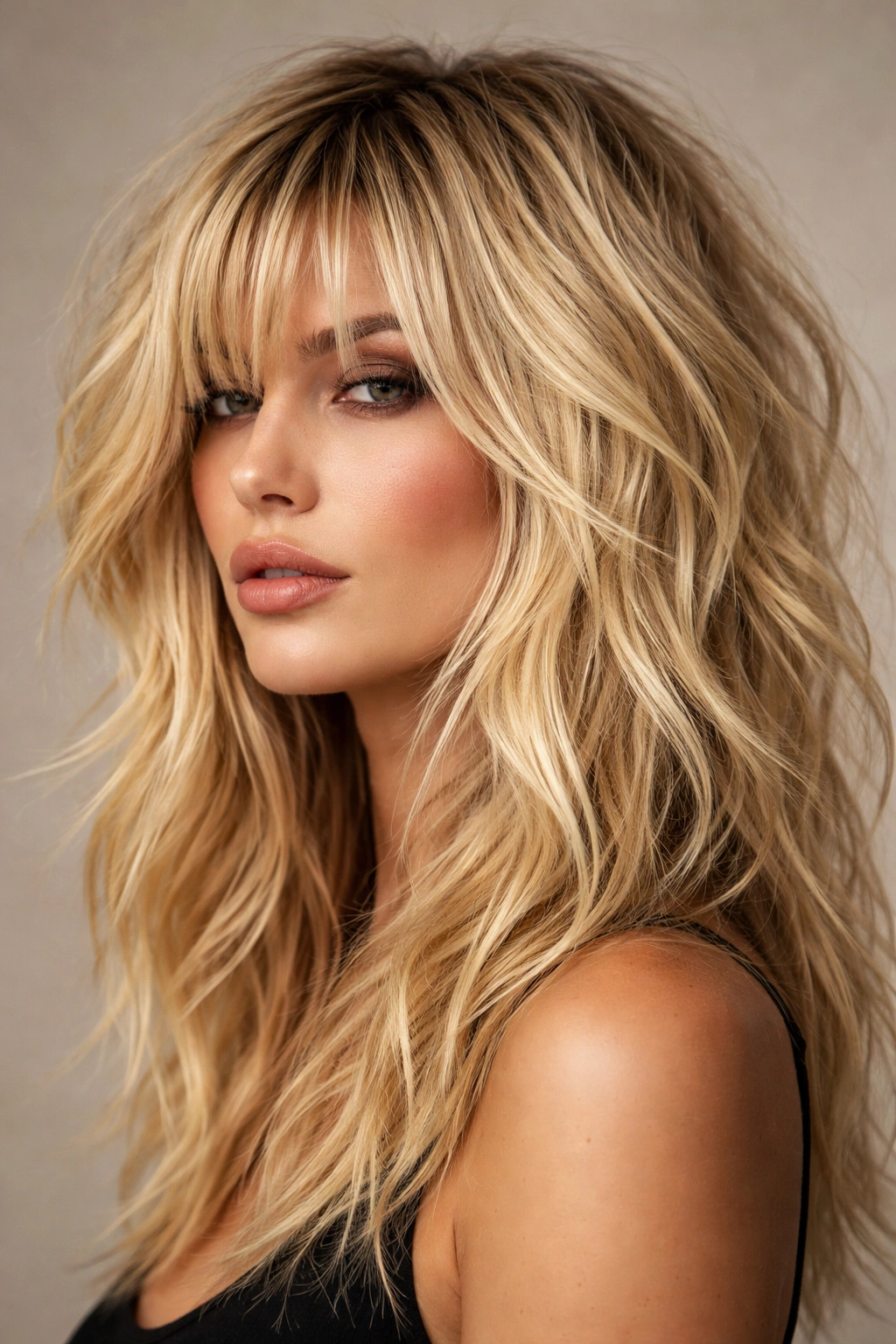
This is texture taken to the maximum — very choppy, heavily textured layers throughout, paired with choppy bangs that frame the face. Waves have room to move and separate in every direction. It’s a bold, statement-making cut that requires styling commitment but delivers undeniable personality. On blonde hair, the chop and texture create a dynamic, light-catching style.
The Commitment Required
This cut is not low-maintenance — it requires styling time, regular trims, and styling products to look intentional rather than unkempt. But for people who enjoy playing with their hair and want an undeniably textured, fashion-forward look, it’s worth the effort.
Styling the Maximum-Texture Cut
- Texturizing spray is essential — apply it to damp hair before blow-drying
- Blow-dry with fingers for maximum separation and piece-y texture
- Use a light pomade or wax on tips to enhance piece separation
- Bangs need direction — blow-dry them to the side rather than straight down
- Regular trims (every 4-6 weeks) prevent the texture from looking grown-out
- Blonde shows off this level of texture beautifully, with light catching each piece
Pro tip: Style this cut slightly undone for the best effect. Trying to make it smooth or perfectly groomed fights against the cut’s personality.
Final Thoughts
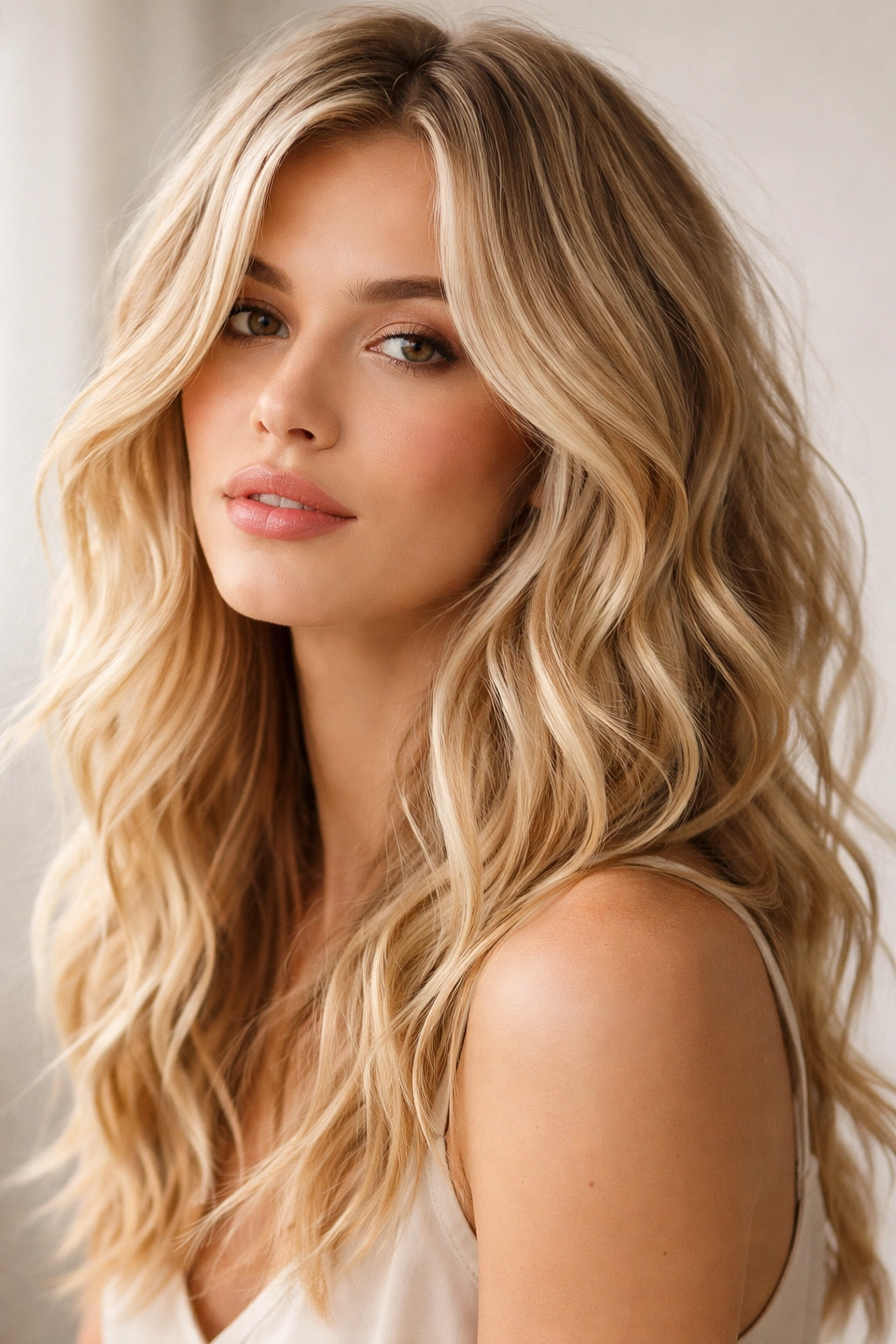
Wavy layered haircuts in blonde work because they combine three powerful elements: texture that catches light, movement that prevents styling from feeling rigid, and color that emphasizes three-dimensional depth. Whether you choose subtle, delicate layers or dramatic, choppy texture, the right cut depends on your hair type, lifestyle, and how much styling commitment you’re willing to make.
The most important conversation to have with your stylist is about your natural hair texture and your daily routine. Someone with naturally wavy hair might need fewer layers than someone with straight hair who wants wave movement. Someone working in a corporate office might choose a more refined cut than someone in a creative field. And your willingness to style your hair daily affects which cut will feel manageable versus frustrating.
Once you’ve chosen your cut, maintenance is what keeps it looking intentional. Regular trims every 6-8 weeks (or more frequently for very short, textured cuts) prevent layers from looking ragged. Blonde hair specifically benefits from glossing treatments and color-safe products to maintain vibrancy and prevent brassiness. And investing in good texturizing products — whether that’s sea salt spray, texturizing cream, or mousse — transforms how your wavy layers look from day to day.
