



Cornrow ponytails have become a go-to protective style for people with natural hair, offering a sleek, polished look that keeps your curls and coils safe while giving you styling flexibility. What makes this combination so appealing is that cornrows do the heavy lifting—they’re the foundation that keeps everything secured and neat—while the ponytail element lets you add personality and flair. Whether you’re heading to work, hitting the gym, or just want a low-maintenance style that lasts a couple of weeks, cornrow ponytails deliver on both practicality and aesthetics.
Natural hair thrives when it’s protected from daily manipulation, and this is where cornrow ponytails truly shine. The style locks your hair into place without requiring constant styling each morning, which means less breakage and healthier retention over time. Plus, the variety is genuinely endless—you can take the same basic cornrow-ponytail framework and transform it completely just by changing the braid direction, the ponytail position, or the pattern complexity. This article walks through 11 distinct approaches to the cornrow ponytail, from classic high ponytails to more intricate designs that turn your hair into actual art.
Before diving in, keep this in mind: the quality of your cornrow ponytail depends heavily on the braiding technique, the tension (it should be secure but never painfully tight), and how well your stylist understands your hair texture. A good cornrow ponytail should feel comfortable enough to wear for hours, and if you’re experiencing soreness at your edges or scalp after a few hours, the tension is too tight and you should have it adjusted or redone. With that foundation in place, let’s explore the styles.
1. Classic High Cornrow Ponytail
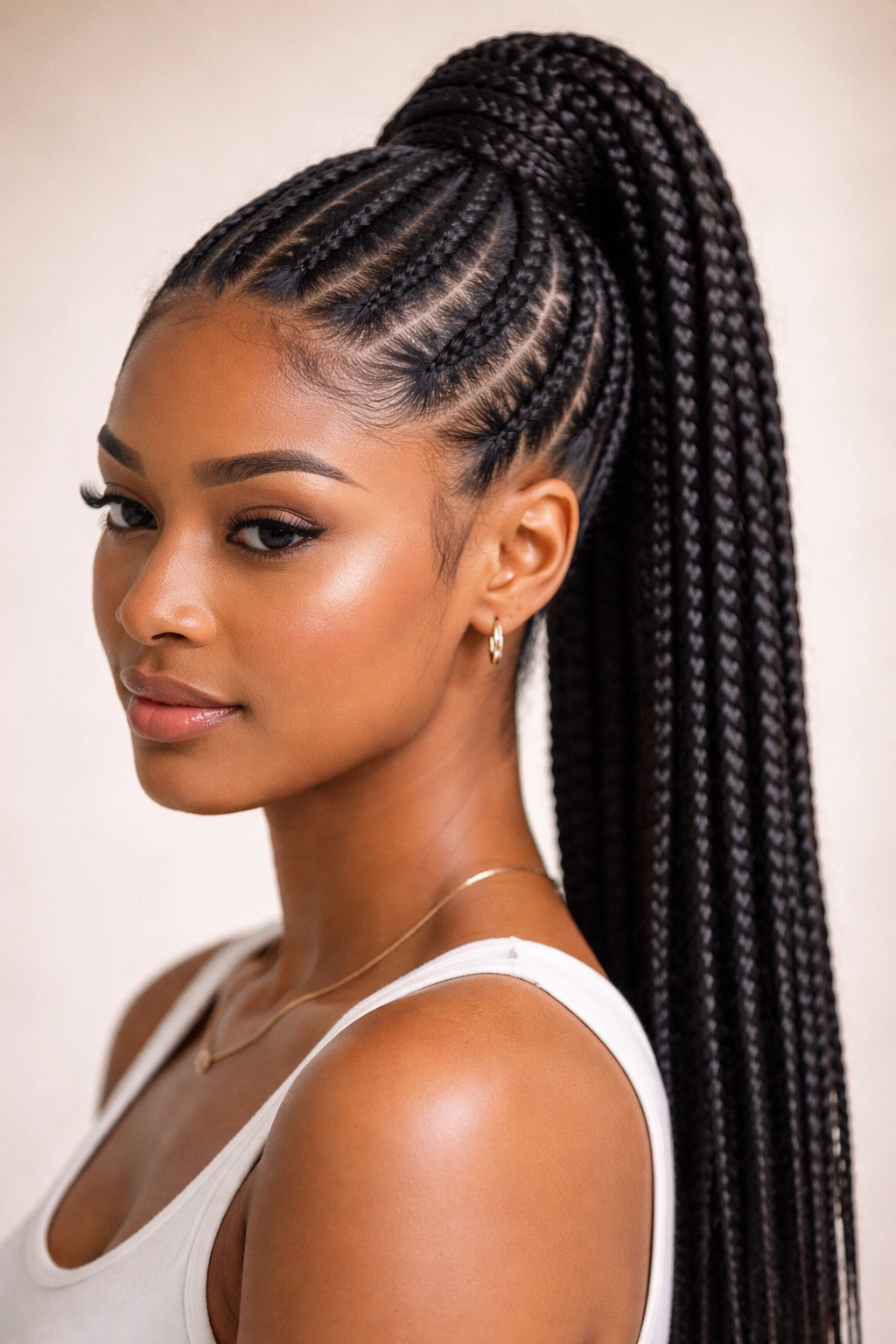
The classic high cornrow ponytail is the foundation style that works for virtually every occasion, hair type, and age group. You get two or more cornrows running straight back from your forehead toward the crown, where they feed into a high ponytail at the base of your head. The cornrows hold all the stress and styling work, so your natural hair stays protected underneath, and the ponytail portion can be as simple or elaborate as you want it to be.
Why This Style Works So Well
This approach succeeds because it combines professional polish with protective benefits. The cornrows create a clean, finished look that works in corporate offices, classrooms, and casual settings equally well. The high positioning gives the illusion of height and elongates your face shape, which is why so many people gravitate toward it. Beyond aesthetics, the tension distribution is generally the most even with this style—the cornrows aren’t pulling from a severely angled direction, which means less stress on your hairline and edges.
Best Practices for Success
- Start with fresh braids that have good tension but aren’t painfully tight—you should be able to fit a finger under a braid comfortably
- The ponytail at the crown can be a wrapped high bun, a sleek high pony with extensions, or even a fluffed curly pony for more texture
- Keep the ponytail secured with a silk or satin hair tie to prevent breakage and frizz
- This style typically lasts 7-10 days before the cornrows start loosening and slipping
Pro tip: Wrap your ponytail with one strand of your hair or a matching yarn to hide the base and create a seamless, finished look that appears intentional and polished.
2. Side-Swept Cornrow Ponytail
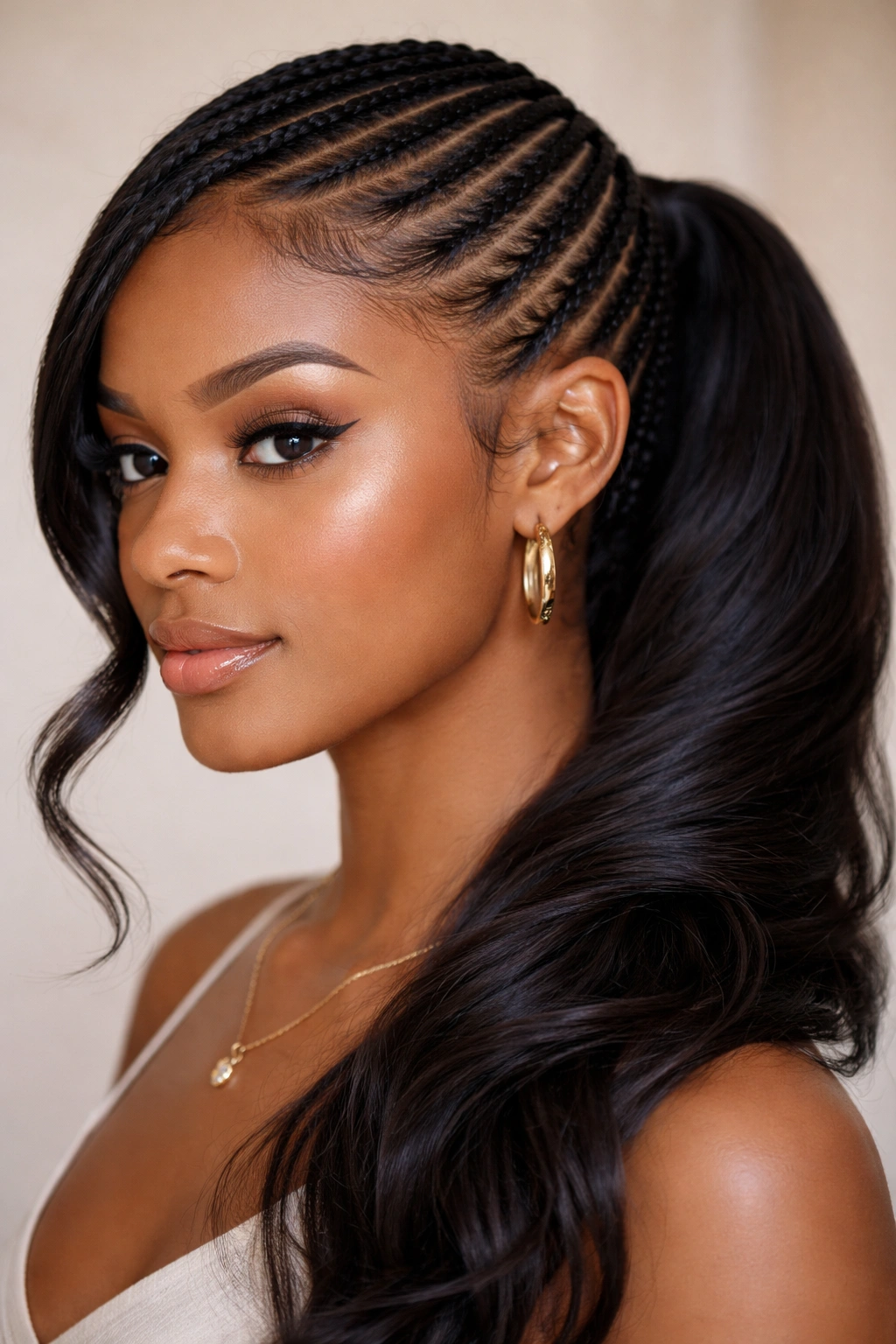
The side-swept version angles your cornrows diagonally across your head, creating movement and visual interest that the straight-back approach doesn’t offer. Instead of running straight to the crown, the cornrows travel from one temple area toward the opposite side of your head, then feed into a low or side ponytail. This style has an edge and personality that photographs beautifully and suits most face shapes.
The Visual Impact and Face-Framing Potential
A side-swept cornrow ponytail naturally frames one side of your face, which can highlight your features and create an asymmetrical, intentional look. If you have a side part that you love or want to emphasize one side of your face more than the other, this is your style. The diagonal braid lines actually make your face appear longer and more sculpted compared to straight-back cornrows, which is why this variation is so popular for special events and photo shoots.
How to Get the Most From This Style
- Ask your stylist to angle the cornrows at roughly 45 degrees rather than a sharp diagonal—this looks more polished and intentional
- The side ponytail can sit at ear level, at your mid-back, or even lower depending on your preference and hair length
- You can add more texture by backcombing or fluffing the ponytail section, or keep it sleek depending on your aesthetic
- This style works especially well with colorful extensions or metallic yarn woven through the ponytail
Worth knowing: This style can be adjusted to sit either on your left or right side, so you can switch up which side feels fresh on your next rebraiding appointment.
3. Dutch Braided Crown Cornrow Ponytail
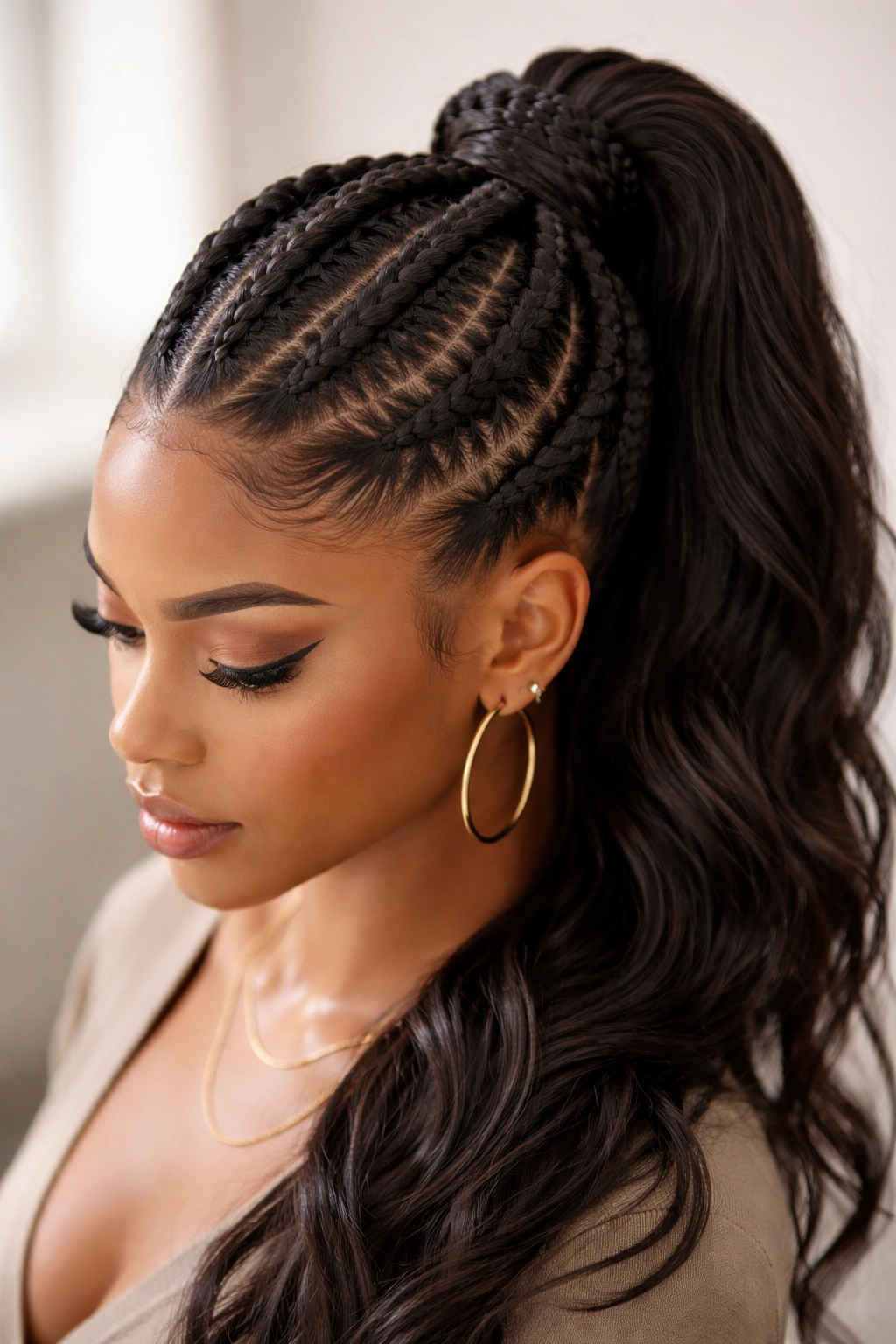
Dutch braids are the inverse of regular cornrows—the hair is braided under rather than over, which creates a raised, three-dimensional effect that sits proudly on top of your scalp. When you run Dutch braids from your hairline back toward a crown ponytail, they become an sculptural element, not just a protective mechanism. This style announces that you’re wearing a protective style with intention and artistry.
Why the Raised Texture Makes a Difference
The Dutch braid creates visual dimension that flat cornrows simply can’t match. Because the braid sits raised on your scalp rather than lying flat, it catches the light differently and creates shadow and depth. This is especially striking with natural hair that has texture and curl pattern, because the raised braid showcases the dimension of your hair in a way that flat braids don’t. The Dutch braid also feels slightly more modern and intentional than traditional cornrows, which is why many stylists recommend it for younger wearers or anyone wanting a fresher spin on the protective style.
Technical Considerations for Dutch Braids
- Dutch braids require slightly different tension than regular cornrows—too tight and they can look uncomfortable, too loose and they lose definition
- The braid sits higher on your scalp, which actually reduces some of the tension on your hairline if done correctly
- These braids work beautifully with thin, medium, and thick hair textures
- A Dutch braid ponytail tends to hold its shape slightly better than regular cornrows because the braiding direction naturally encourages more volume
Insider note: Dutch braids look especially striking when you add thin metallic ribbon or yarn woven through the braid itself—the raised texture shows off the color beautifully.
4. Curved Feed-In Cornrow Ponytail
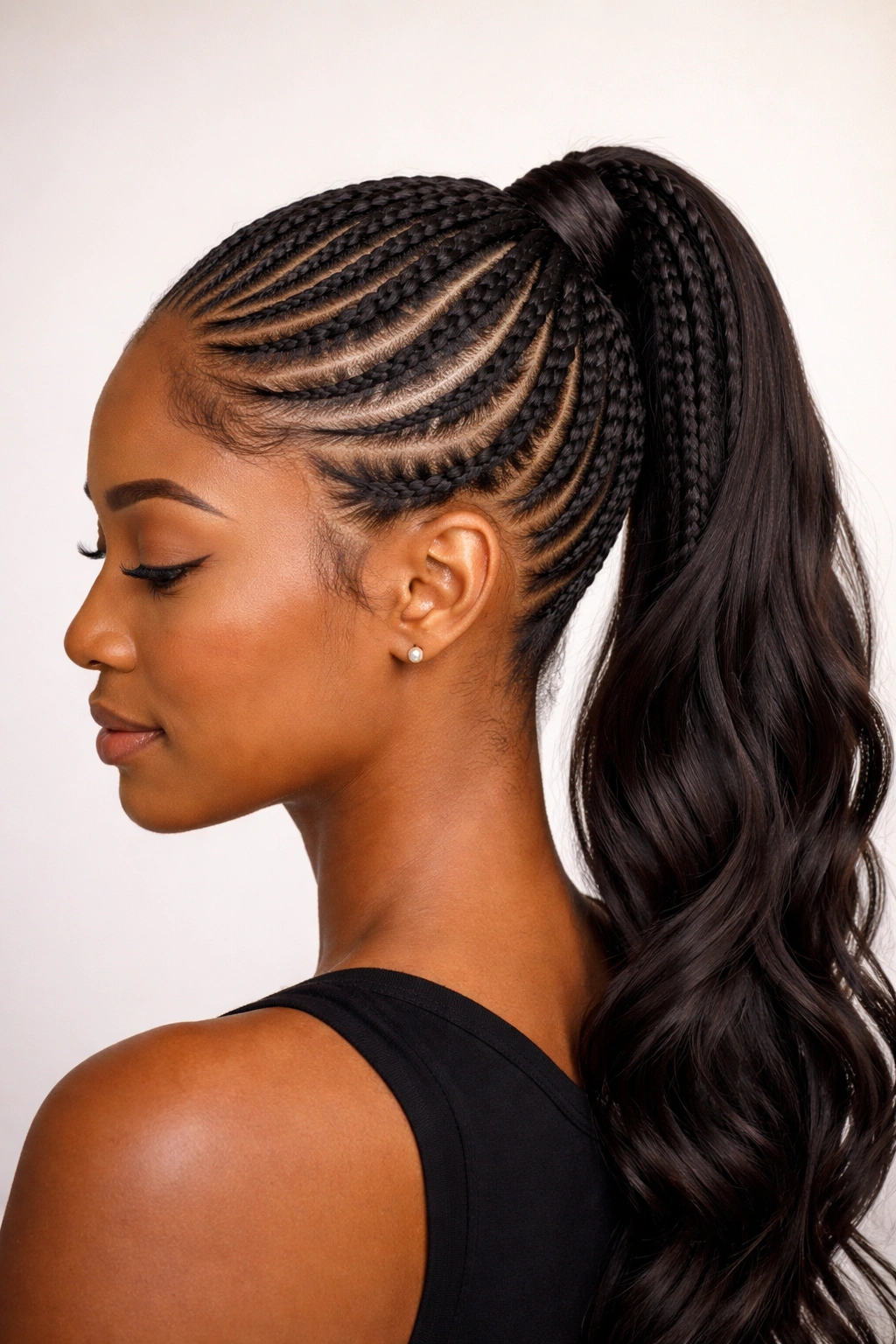
Feed-in cornrows are a modern braiding technique where you gradually add hair to the braid as you move along, creating cornrows that look thinner and more refined at the start and thicker as they progress. When you curve or pattern these feed-in cornrows toward a ponytail, you get a sophisticated, deliberate look that shows real technical skill. The cornrows literally flow like rivers toward the ponytail destination.
What Feed-In Braiding Actually Does
With feed-in technique, your stylist adds small sections of hair incrementally to the braid, rather than picking up hair in full chunks the way traditional cornrows work. This creates cornrows that feel less bulky near your hairline and scale up gradually, which is much gentler on your edges and creates a more refined appearance. When these are curved, they follow your scalp contours naturally, creating an organic, sculpted look rather than geometric straight lines.
Styling Options With Curved Feed-In Braids
- Curve your feed-ins in a wave pattern that flows toward the back, or create nested curves for a more complex pattern
- The ponytail can be high, mid, or low depending on where your last curve lands
- This style works particularly well with long hair or hair with extensions, because the curved path takes up more scalp real estate than straight braids
- You can create symmetrical curved patterns on both sides or asymmetrical patterns that feel more artistic
Pro tip: Curved feed-in cornrows photograph exceptionally well, especially from above or at an angle where the pattern becomes visible—if you love social media-worthy styles, this is worth the extra time and cost it takes to execute.
5. Double Cornrow Ponytail
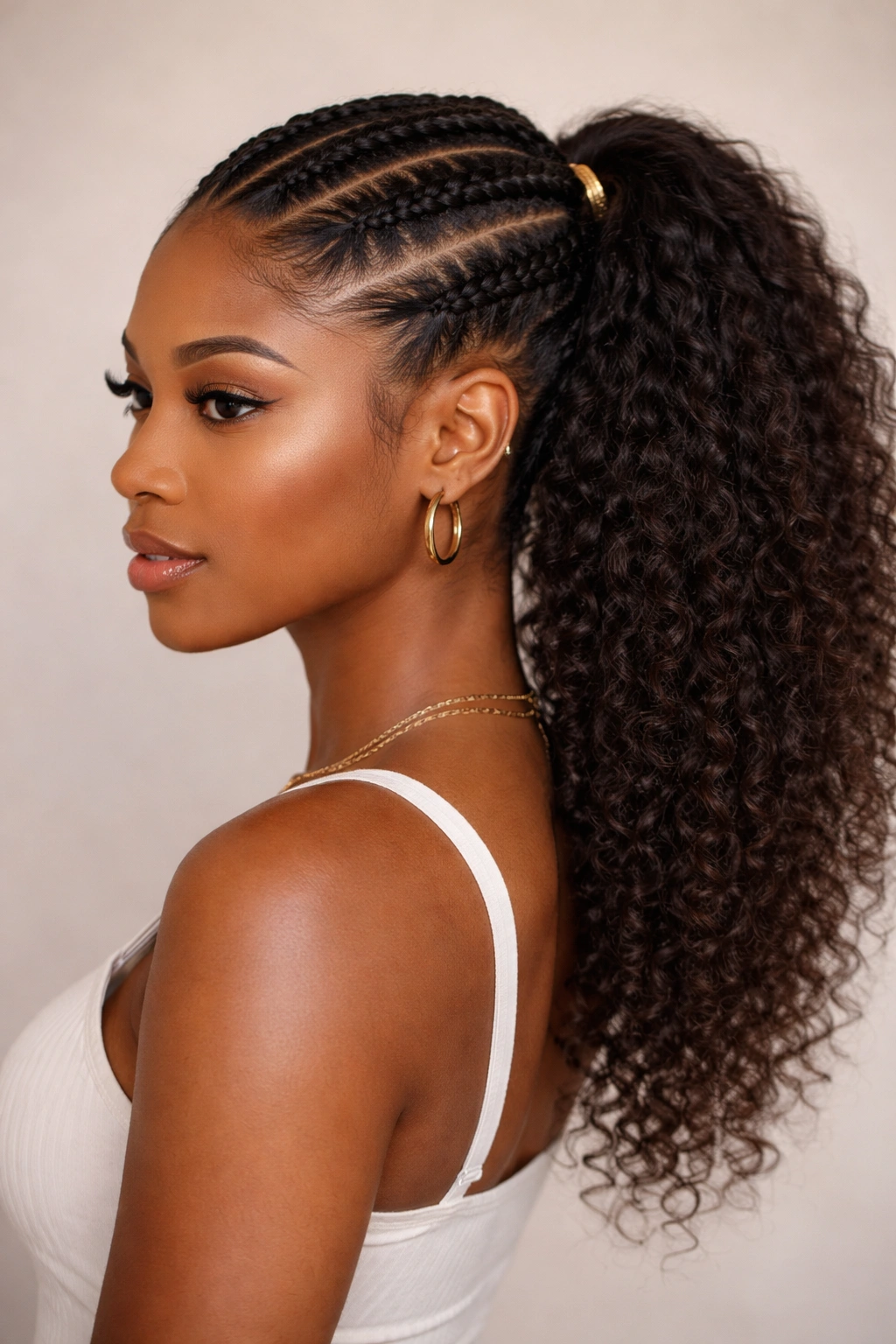
Instead of three or more thin cornrows feeding into a single ponytail, the double cornrow ponytail features just two thick, substantial cornrows running parallel back toward your head. These two braids do all the holding work, and they feed into a generous, voluminous ponytail that’s thick and feels textured. This style is minimalist in terms of braid count but maximalist in terms of visual impact.
The Balance Between Simplicity and Drama
Two thick cornrows are actually easier to maintain and adjust than four or more thinner ones, yet they create a striking visual statement. The dual-braid approach leaves more of your natural hairline exposed, which some people prefer because it means less tension across your entire scalp. The ponytail that results from two thick braids is naturally full and requires less padding or fluffing to look voluminous, which is another practical advantage.
Making Two Braids Look Intentional
- Place your two cornrows at the temples, creating a flattering frame for your face, or place them closer to the center for a more architectural, bold look
- The space between the two braids becomes a design element—even spacing looks balanced and intentional, while asymmetrical spacing creates artistic tension
- You can leave small sections of hair loose between the braids for softness, or keep everything braided for a cleaner look
- A thick ponytail allows you to create more texture and movement at the ends
Worth knowing: Double cornrow ponytails actually tend to last longer before loosening up, because two thick braids maintain tension better than multiple thin braids that can shift independently.
6. Feed-In Cornrow Bun With Extensions
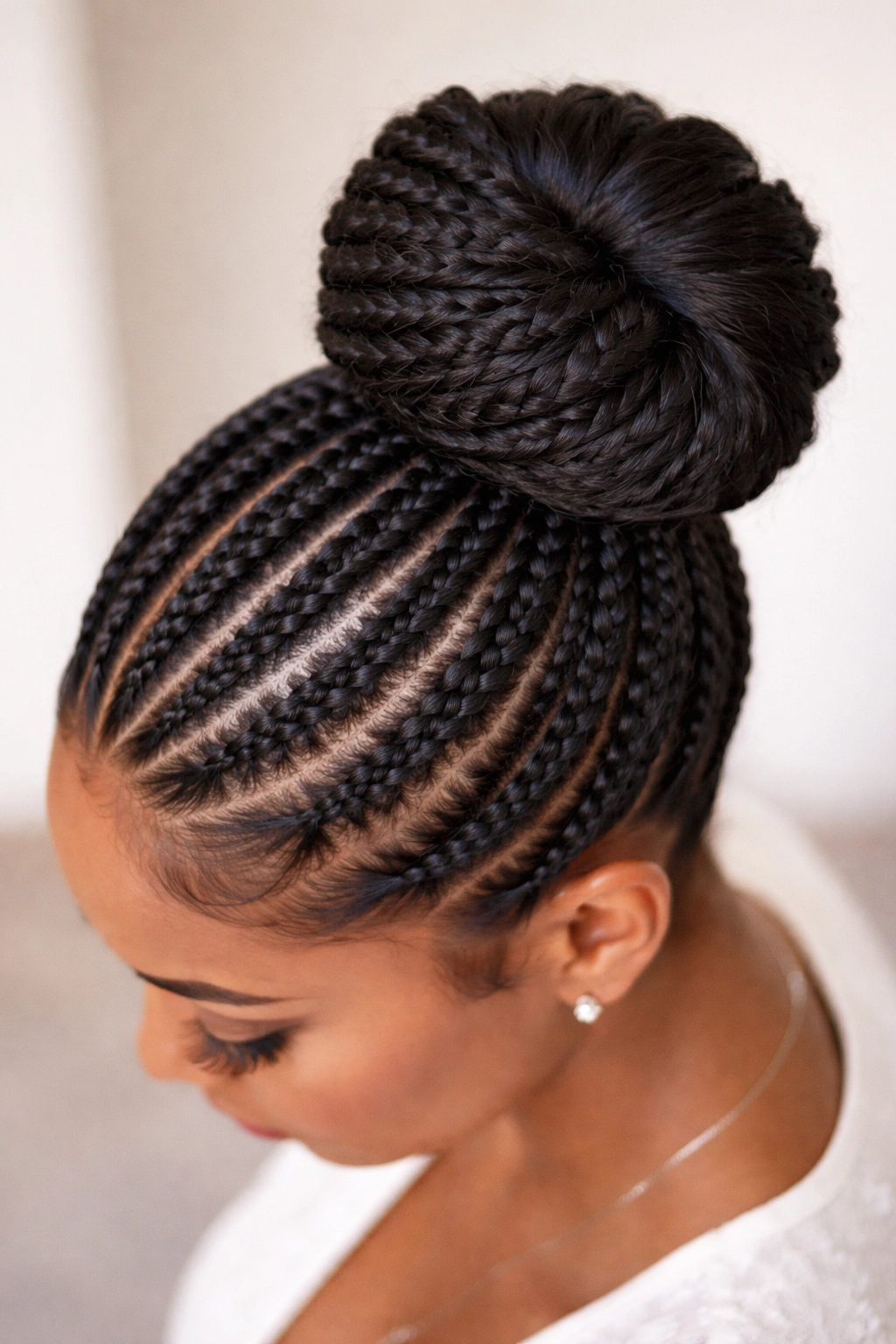
This style takes cornrows even further by extending them into a full bun rather than a loose ponytail. Feed-in cornrows travel from your hairline to the crown, where they wrap around and feed into a bun shape. You’ll typically need extensions to create a full, rounded bun, which means the bun portion can be as thick and voluminous as you want. It’s protective styling that looks like a fashion statement.
Why the Bun Finish Feels More Formal
A bun projects polish and intentionality in a way that a loose ponytail sometimes doesn’t. Whether your bun sits high, mid-crown, or low at your nape, it reads as put-together and deliberate. The wrapped bun also keeps the ends of your hair completely tucked away, which means maximum protection—there’s no ponytail tail swinging around or frizzing up throughout the day. This is ideal if you’re wearing your hair for professional settings or extended periods.
Bun Styling Variations
- A high, tight bun projects sleek, athletic energy, while a low bun feels more sophisticated and elegant
- You can create a smooth, wrapped bun or a textured, fluffed bun depending on your preferred aesthetic
- Some people like a single, perfect bun, while others add smaller braids or twists around it for complexity
- The feed-in technique allows your stylist to bring all the braids to converge at the bun point smoothly
Insider note: Buns hold up exceptionally well during workouts, swimming, or any activity where you need your hair completely secured for hours.
7. Braided Wrap Cornrow Ponytail
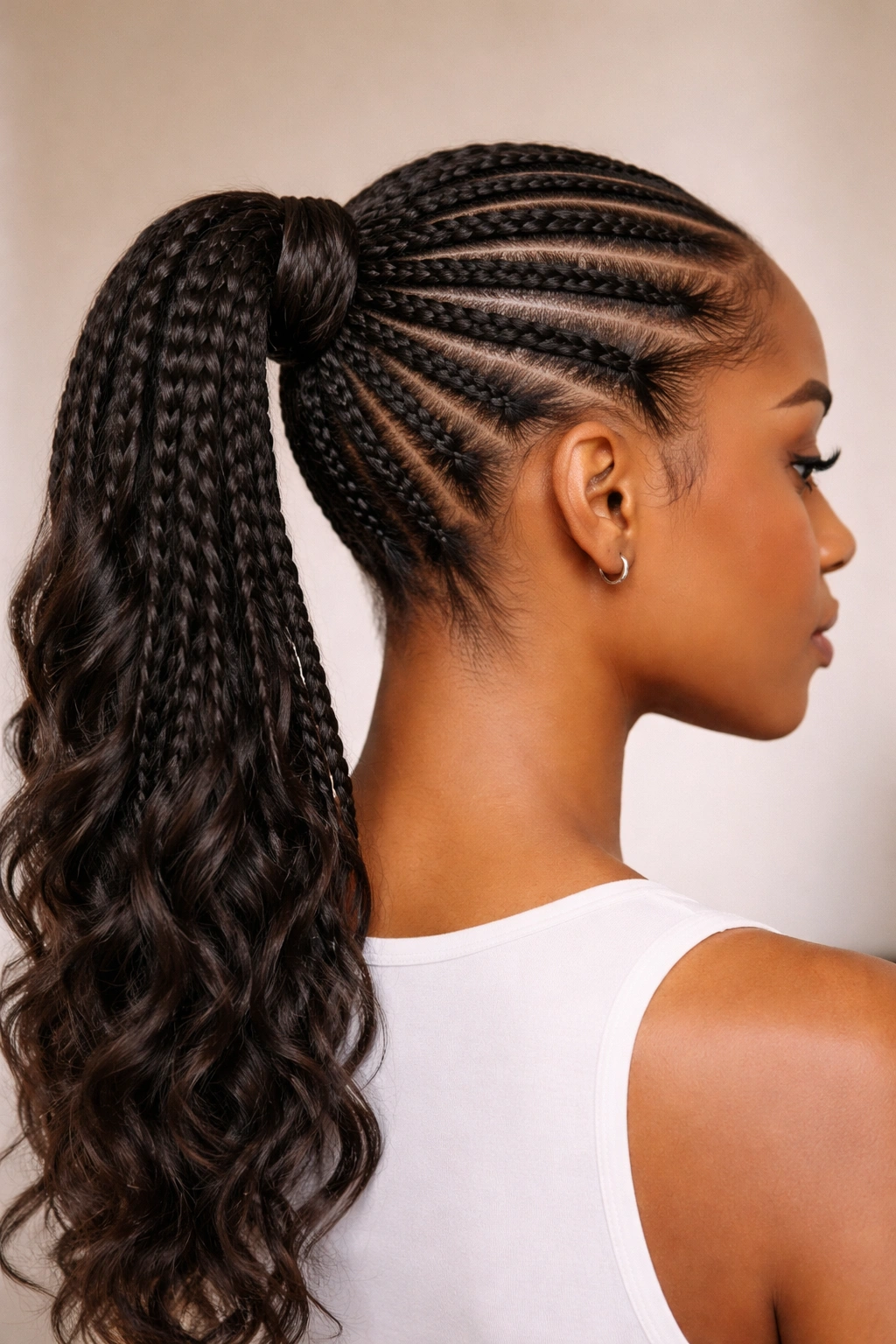
A braided wrap cornrow ponytail takes your finished cornrow ponytail and wraps a thin braid around the base where the cornrows meet the ponytail, creating a polished finishing detail. Instead of just tying the ponytail off with a simple elastic, you spiral a thin braid around the base and secure it, which covers the tie completely and looks intentional and refined.
The Finishing Touch That Changes Everything
That thin wrapping braid transforms a basic cornrow ponytail into something that looks salon-finished and carefully considered. The wrap serves a functional purpose—it secures everything and hides the elastic tie—but it’s also a design element that signals attention to detail. You can create this wrap with your own hair or with extensions in a contrasting color for visual interest.
Creative Wrap Variations
- A simple thin braid wrap in your natural hair color creates understated polish
- A colorful extension wrap draws the eye to your ponytail base and creates an intentional statement
- You can wrap the braid once around the base or spiral it multiple times for more texture
- Some stylists add small beads or jewelry along the wrapping braid for extra embellishment
Pro tip: If you want your wrap to last as long as the cornrows themselves, ask your stylist to braid it in a way that incorporates a bit of extension hair—a wrap made entirely of your natural hair may start loosening before the cornrows do.
8. Zig-Zag Pattern Cornrow Ponytail
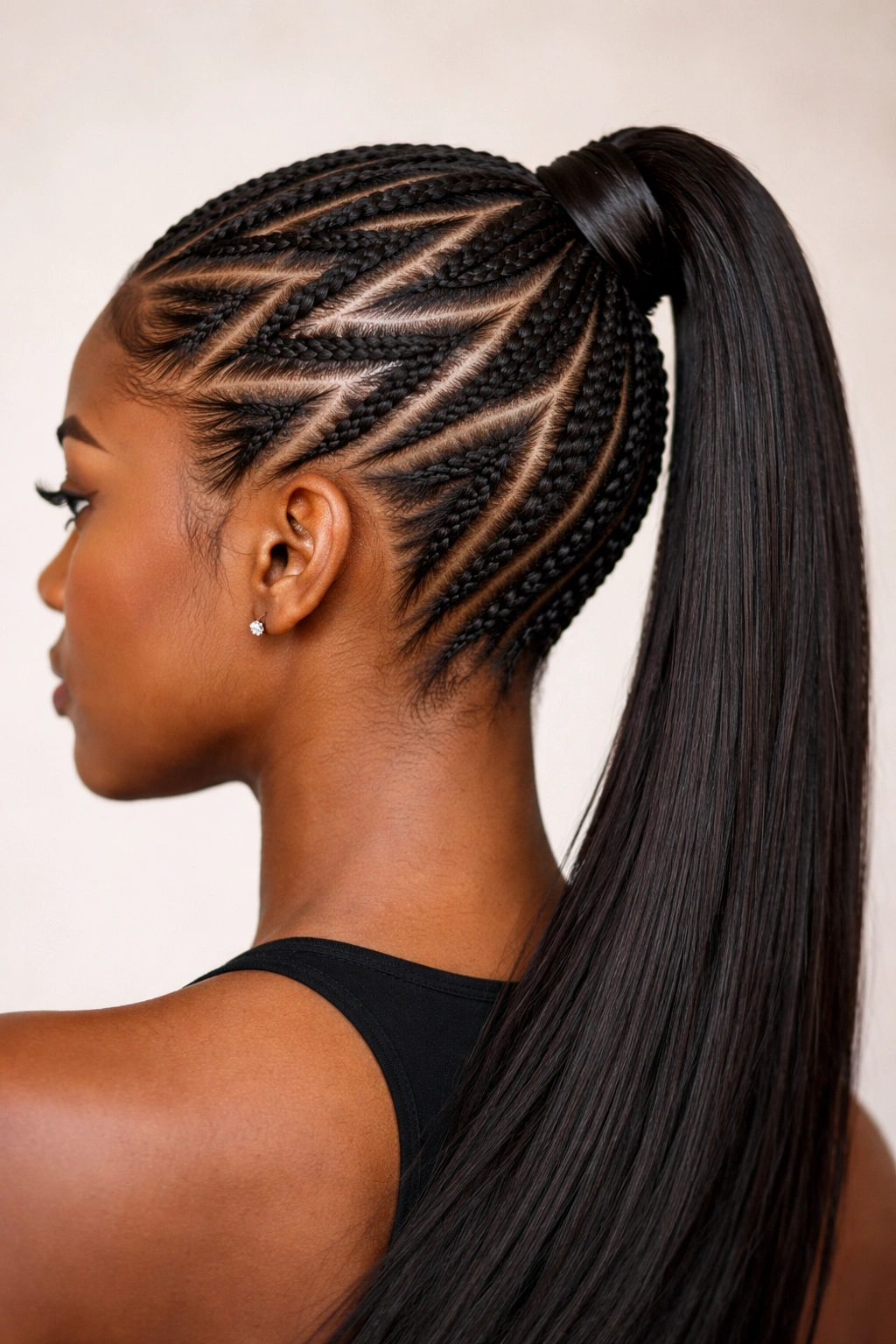
Instead of straight cornrows or curved ones, zig-zag pattern cornrows follow an angular, back-and-forth direction across your scalp. This creates visual movement and a bold, geometric aesthetic that’s impossible to ignore. When these zig-zag braids feed into a ponytail, the final result is striking and contemporary.
The Visual Drama of Geometric Patterns
Zig-zag cornrows are pure pattern design—they transform your scalp into a canvas where the braids themselves become the artwork. This style works beautifully on camera and creates visual interest that feels modern and intentional. The angular lines actually make your head appear a different shape than it is, which some people love as a way to play with their appearance.
Executing a Clean Zig-Zag Pattern
- The angle of your zig-zag determines the overall look—tight, sharp angles feel more bold and artistic, while wider angles feel more wearable
- Zig-zag patterns work best with clean, defined cornrows rather than curved or feed-in styles, because the geometry needs to be visible
- You’ll want to work with a stylist who has experience creating patterns, because the precision matters
- This style photographs beautifully and works well for special events or when you want to make a statement
Worth knowing: Zig-zag patterns can make the braiding process take longer since your stylist is essentially creating a map on your scalp, so budget extra time and potentially extra cost for this design.
9. Cornrow Ponytail With Curled Ends
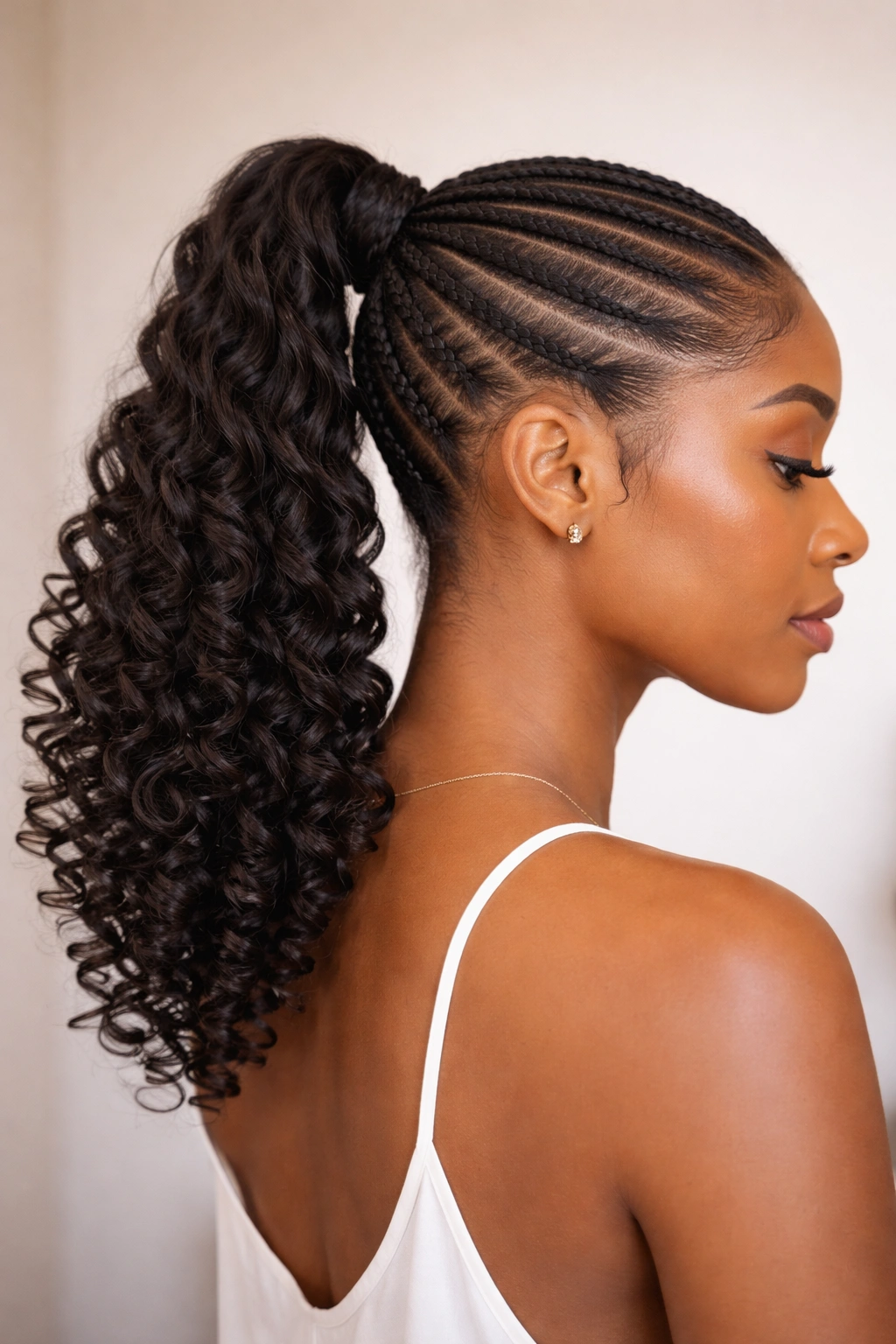
Most cornrow ponytails have straight or loose ends, but you can also set your ponytail ends in curls while wearing the protective cornrows. This means your ends are curled upward when you remove the style, creating bounce and texture. The cornrows do the protective work while the curled ponytail portion gets styled for drama.
How Setting Curls Into a Cornrow Ponytail Works
Your stylist creates the cornrows in the usual way, then wraps the ponytail section around perm rods, flexi-rods, or creates two-strand twists that are left in and air-dried or heat-set. When you unravel the style, you get defined curls that have been sitting in place, creating ringlets or waves depending on the curl tool used. This is an excellent option if you want to enjoy curled hair without the daily styling—the cornrows handle protection while setting the curl.
Best Practices for Curled Ponytail Ends
- Smaller rods create tighter, more defined curls, while larger rods create bigger, looser waves
- Two-strand twists set into the ponytail typically create a slightly softer, more natural curl pattern
- You can apply setting lotion or curl cream before wrapping to encourage hold and definition
- Keep the rods in for at least 24-48 hours before unraveling to allow the curls to fully set
Pro tip: This style is ideal if you’re taking a protective break from braiding but still want your hair protected underneath—you get the beauty of curls without the daily manipulation.
10. Knotless Cornrow Ponytail
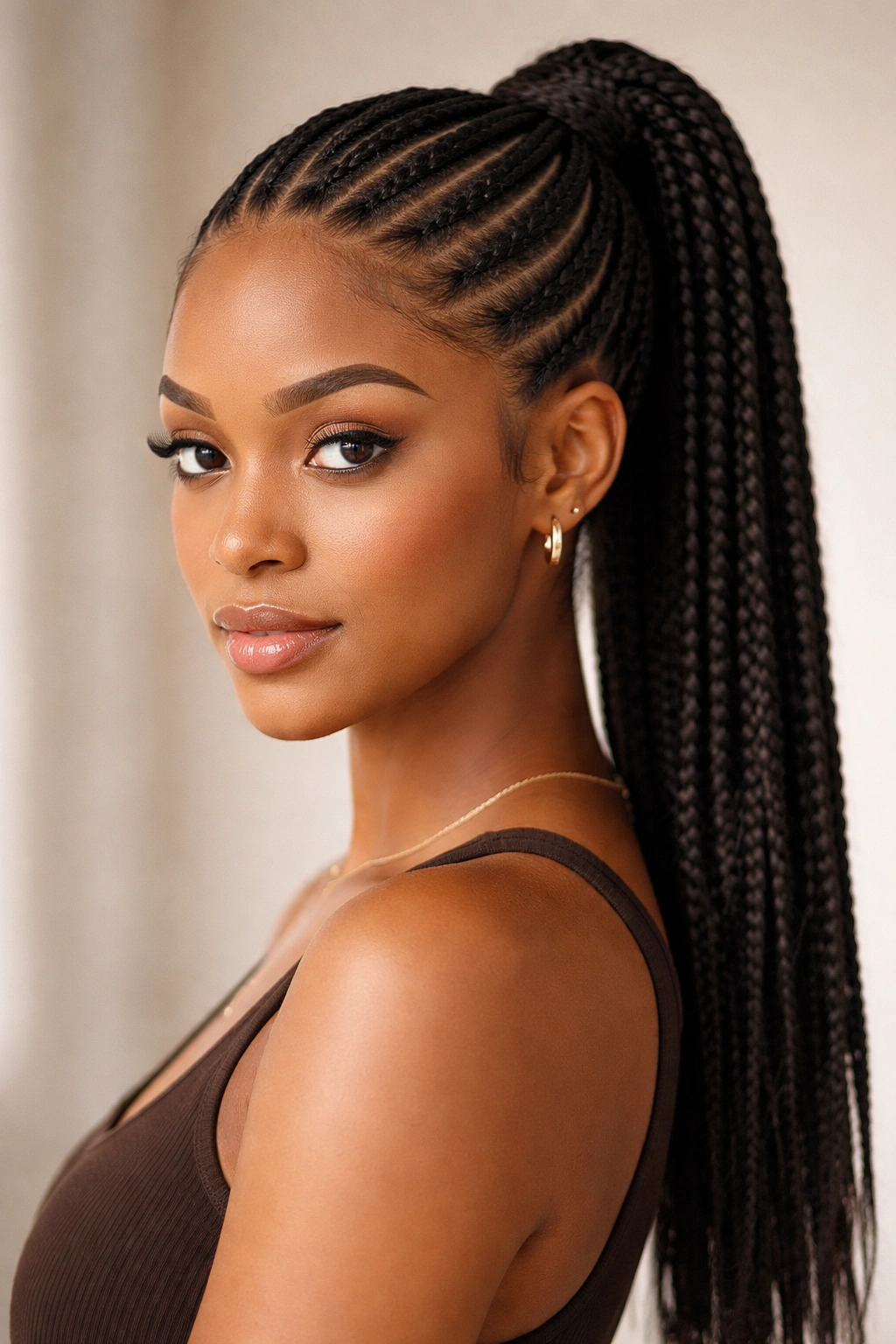
Knotless cornrows are a newer braiding technique that eliminates the knot at the base of the braid, creating an even flatter, more seamless appearance. With knotless braids, the cornrow literally starts with a section of your natural hair and is braided from the beginning, rather than starting with a knot of extensions. When applied to a cornrow ponytail, knotless braids feel lighter, more natural, and less bulky.
The Difference Knotless Braiding Makes
Knotless cornrows feel softer against your scalp because there’s no knot point creating pressure at the braid origin. They also photograph differently—they look more like an extension of your natural hair rather than a separate element placed on top. Many people find knotless braids more comfortable for extended wear and less stressful on the scalp overall. They do require a slightly different braiding technique and take a bit longer to execute, but many natural hair wearers consider the comfort difference worth it.
Managing and Caring for Knotless Cornrows
- Knotless braids may loosen slightly faster than traditional cornrows because there’s no knot anchoring the braid, so plan for a slightly shorter style lifespan
- They work beautifully with extensions that match your hair color and blend seamlessly
- The lack of a knot means a cleaner, flatter base, which is particularly nice if you’re styling your ponytail into an updo
- These braids are exceptionally good for sensitive scalps or anyone who experiences soreness with traditional cornrows
Insider note: If you have a history of traction alopecia or scalp sensitivity, knotless cornrows are worth the extra investment because they distribute tension more evenly.
11. Tribal-Inspired Cornrow Ponytail
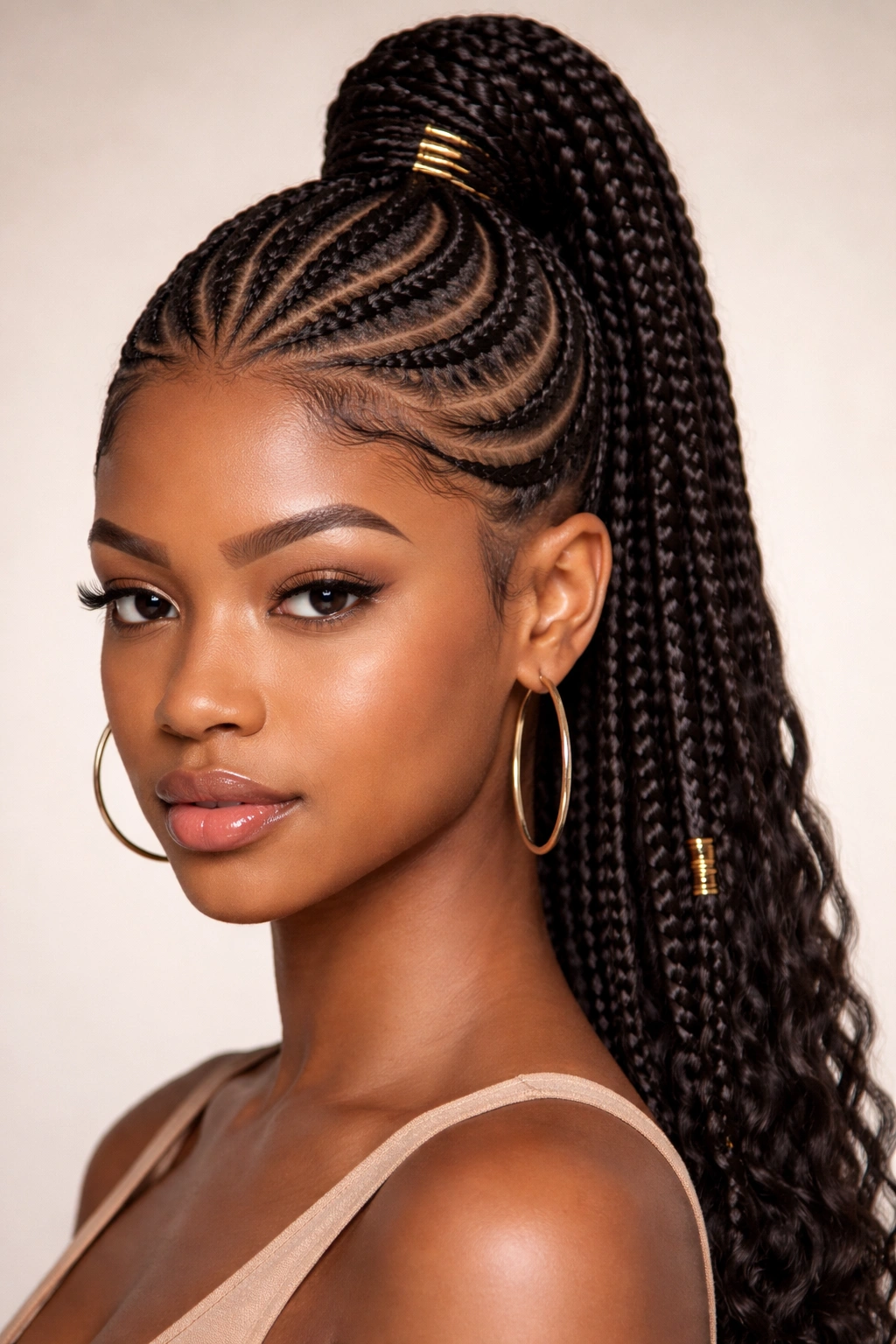
A tribal-inspired cornrow ponytail incorporates multiple braiding directions, thicknesses, and sometimes patterns that come from and honor various African braiding traditions. This might include sections of thick cornrows alongside thin braids, straight sections adjacent to curved ones, or woven patterns that reference specific cultural styles. The ponytail feeds from this complex combination of elements.
Understanding Braiding Cultural Context
Tribal-inspired designs draw from real protective styling traditions with deep cultural significance. These styles honor the braiding practices of various African and African diaspora communities. It’s important to approach these styles with respect and awareness that you’re drawing from living cultural traditions. Many natural hair stylists who specialize in this work have studied traditional patterns and can create styles that authentically reference their cultural origins while being wearable in modern contexts.
Creating a Respectful Tribal-Inspired Cornrow Ponytail
- Work with a stylist who understands and respects the cultural origins of the patterns you’re requesting
- Be specific about which cultural tradition inspires you—don’t just ask for “tribal” which is vague and potentially dismissive
- Incorporate multiple braid sizes, patterns, and possibly metallic elements to create visual complexity
- The resulting ponytail is typically chunky and textured rather than simple, because the foundation is complex
Worth knowing: These styles often take significantly longer to execute because of the pattern complexity and the multiple braiding directions involved. Plan for 4-6 hours at the salon and budget accordingly.
Final Thoughts
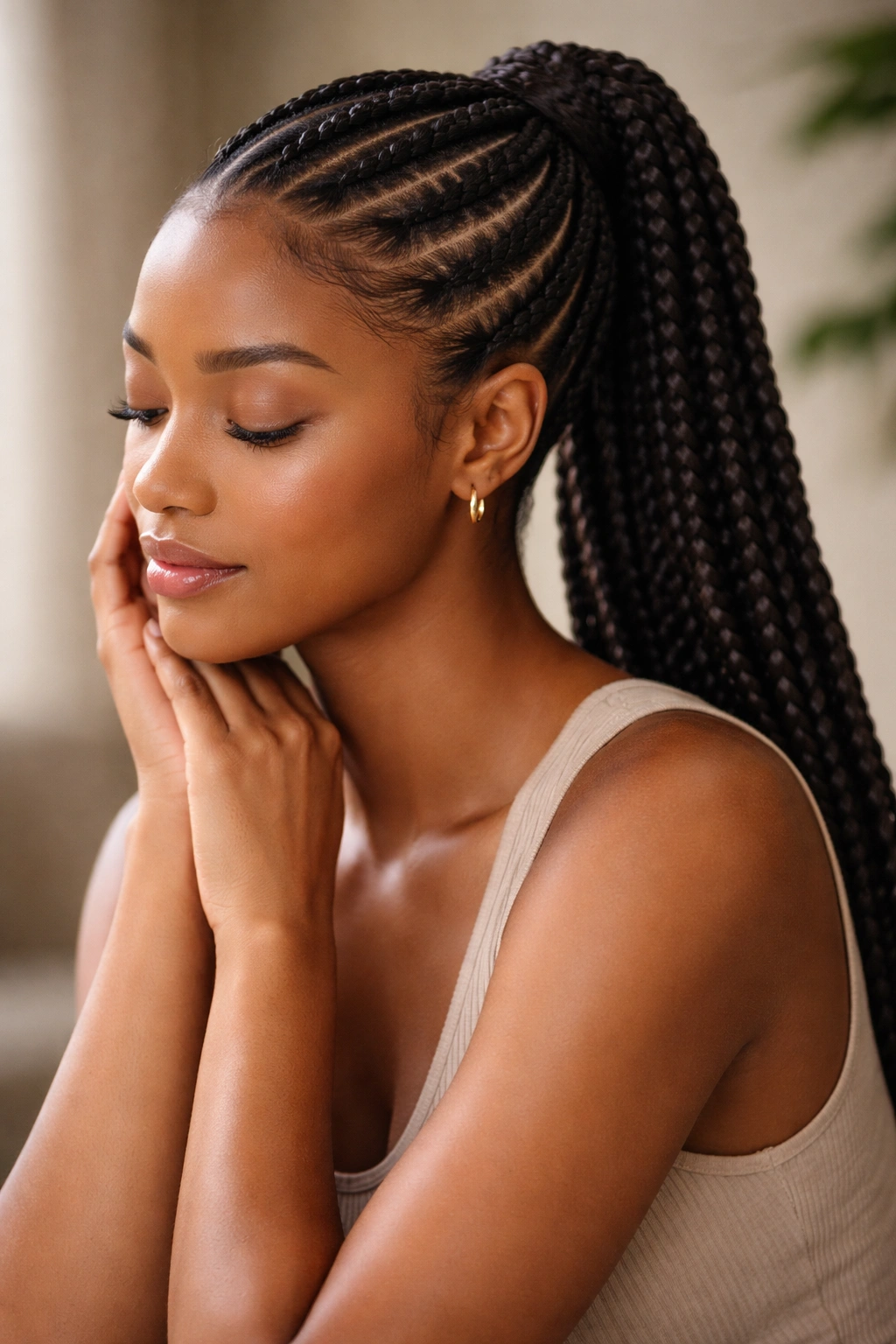
Cornrow ponytails remain one of the most practical and versatile protective styles available, and the 11 variations here barely scratch the surface of what’s possible. What matters most is finding a skilled stylist who understands your hair texture, respects your scalp comfort, and can execute the specific style you want with clean, consistent lines. A great cornrow ponytail should feel secure without feeling tight, look intentional rather than accidental, and protect your natural hair for weeks without requiring daily styling.
The beauty of this style category is that you can switch up the approach every few months without committing to an entirely different protective style. One braiding session might be classic and straight, the next might be curved and artistic, and the one after that might be bold geometric patterns. Your hair stays protected throughout, which is ultimately what matters most for natural hair health and length retention. Take time to find a stylist you trust, communicate clearly about tension and comfort, and don’t hesitate to get a style adjusted if something doesn’t feel right. Your edges and your overall hair health depend on getting the foundation right.
