



Cornrow ponytails are a fantastic protective hairstyle option for kids—they’re practical, cute, and work beautifully whether you’re prepping for school, a special event, or simply managing a busy week. The combination of cornrows with a ponytail keeps hair off the face while showing off creative braiding patterns, and the versatility means you can adapt the look to suit your child’s hair type, length, and personal style. Whether you’re drawn to sleek minimalist designs or playful styles with colorful beads and texture, there’s a cornrow ponytail option for every child and every occasion.
What makes cornrow ponytails especially appealing for kids is the balance they strike between low-maintenance and stylish. Once braided, the style holds up beautifully throughout the day without constant touching up, meaning less time spent on hair management and more time for play, sports, or other activities. The braids also help protect the hair’s natural texture and reduce breakage caused by constant manipulation and friction. Beyond the practical benefits, cornrow ponytails give kids a chance to express themselves through different braid patterns, textures, and creative additions—whether that’s colorful thread woven through the braids, shiny beads, or unique geometric designs.
The styles below range from simple and elegant to bold and creative, so you’ll find options whether you’re working with relaxed hair, coily curls, or anything in between. Each style includes guidance on what hair type works best, estimated longevity, and practical tips for maintaining the look during the week.
1. High Ponytail with Crown Braids
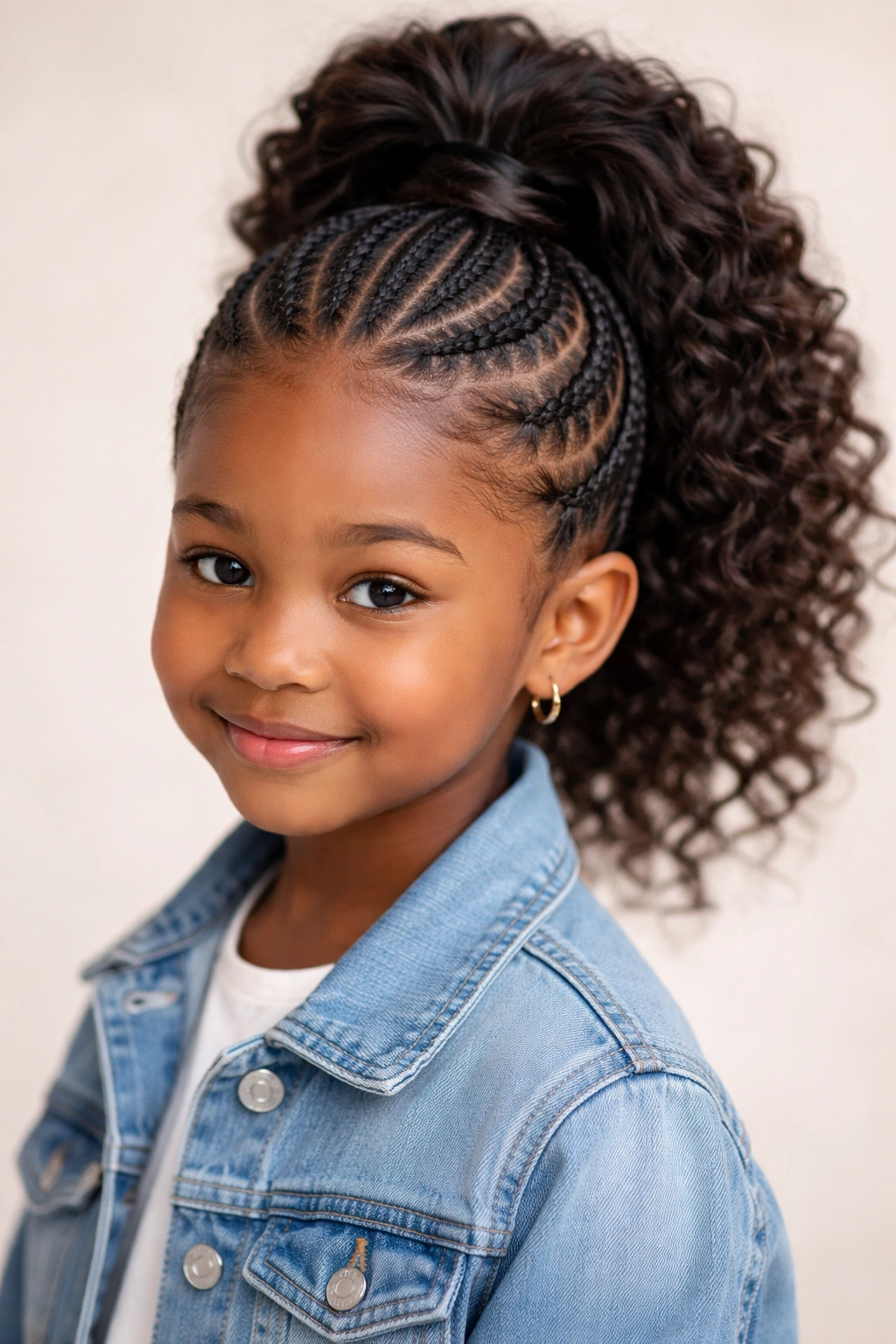
This regal style creates beautiful braided detailing around the crown while gathering the hair into a high, voluminous ponytail at the back. The crown braids frame the face and create visual interest above the ears, making this an excellent choice for kids who want their braids to be a statement feature. The high placement gives off a confident, polished vibe perfect for school days, performances, or family photos.
Why Kids Love This Style
The crown braid detail makes even a simple ponytail feel special and intentional. High ponytails tend to feel energetic and youthful, which appeals to kids who want their hair to match their personality. The braided crown also keeps flyaways secured and prevents hair from falling into the eyes during active play, which is a genuine practical advantage beyond just aesthetics.
How to Create and Maintain It
- Start with freshly moisturized, detangled hair for best results
- Create two thin cornrows that start at each temple and curve around the crown toward the back of the head
- Gather all remaining hair—including the tail ends of the cornrows—into a high ponytail at the crown
- You can leave the ponytail smooth, add texture with small braids, or use curling methods on the ends
- This style holds beautifully for 7-10 days with gentle sleeping habits (use a silk pillowcase or bonnet)
- Refresh flyaways daily with a light moisturizing spray and edge control
2. Sleek Low Cornrow Ponytail
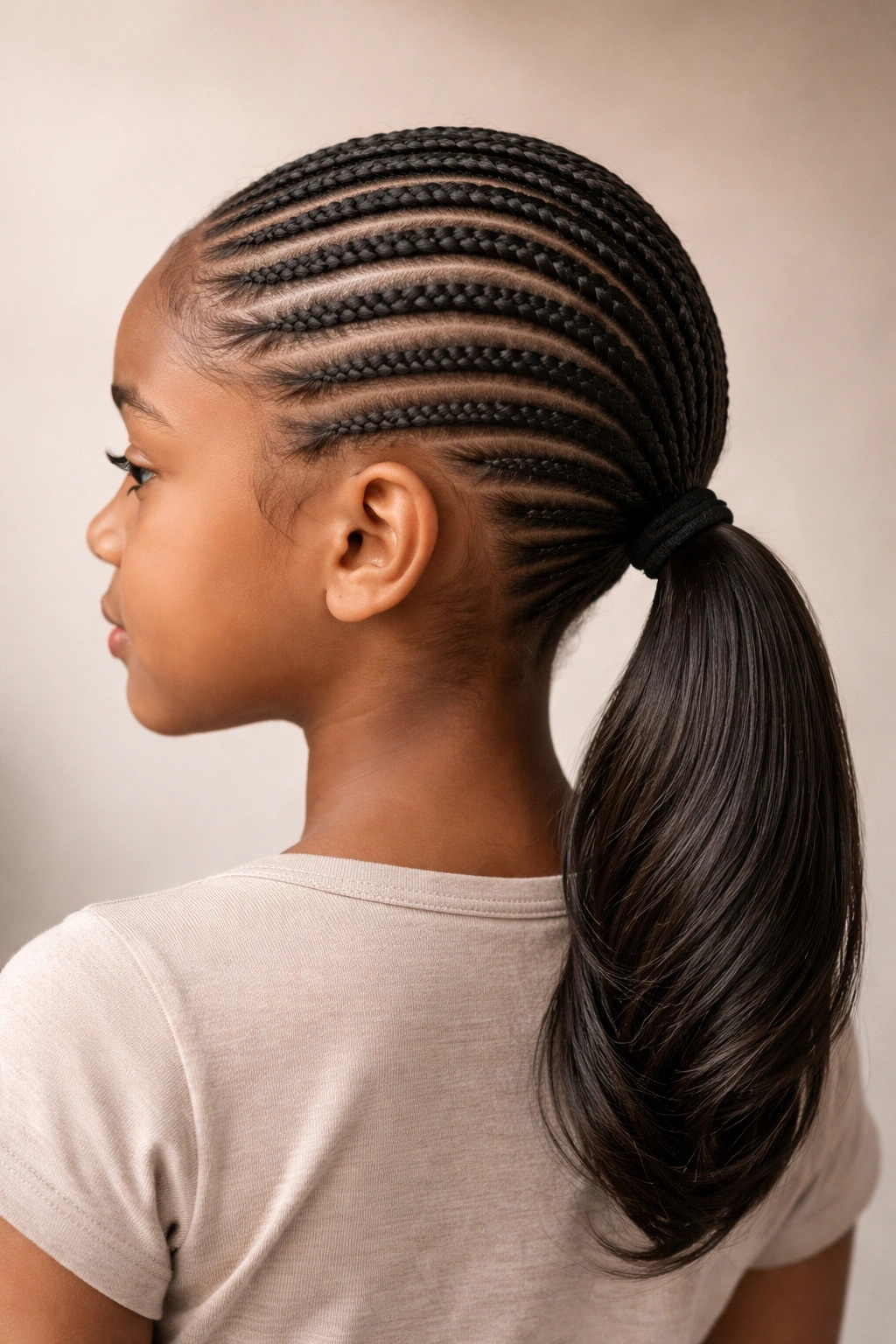
Sometimes the simplest styles are the most elegant. A sleek low cornrow ponytail features multiple thin, precise cornrows that converge at the nape of the neck into a smooth, gathered ponytail. This style reads as sophisticated and put-together while remaining low-key and wearable for everyday situations. The low placement is particularly flattering for kids with rounder face shapes or those who simply prefer their hair off the very top of their head.
The Appeal for Busy Parents
This style takes longer to install initially—typically 1.5 to 2 hours depending on the number of braids and your speed—but once it’s done, it’s genuinely hands-off for 7-10 days. No morning styling, no constant retying, no frizz battles. For parents managing multiple kids or hectic mornings, that trade-off of upfront installation time for a week of ease is genuinely valuable. Kids can swim, play sports, and be active without the style falling apart.
Styling Variations
- Create 4-6 cornrows from the hairline back to the nape for a classic look
- Vary the thickness of the braids for visual interest (thicker braids = fewer of them, quicker install time)
- Secure the ponytail with a smooth elastic, covered by a section of hair wrapped around the base for a polished finish
- The ponytail section can be left smooth, twisted, braided, or curled depending on your preference and the time you have
- Add subtle beads to select cornrows for a touch of personality without overwhelming the clean aesthetic
3. Bubble Ponytail with Cornrows
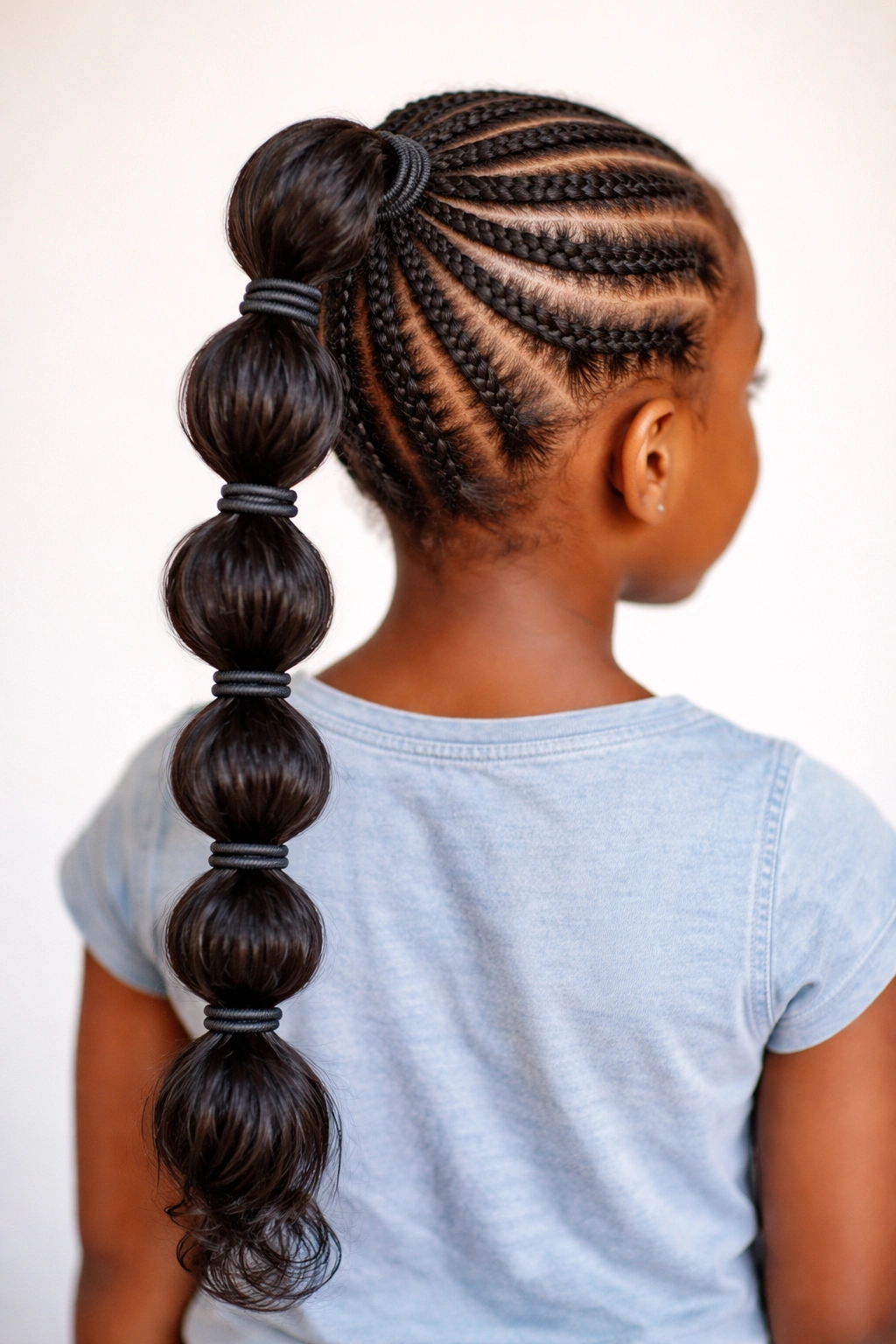
This playful style pairs cornrows leading back to a ponytail, but the ponytail itself features multiple bubble sections created by tying elastic bands down the length of the ponytail. Each bubble puffs out slightly, creating texture and visual movement that kids absolutely adore. The bubble effect makes the style feel fun and youthful while maintaining the neat, controlled vibe that cornrows provide.
Why Bubble Ponytails Work for Kids
Kids are drawn to the dimensional, tactile quality of bubbles—they can literally feel the texture, and there’s something satisfying about the visual pattern of repeating rounded sections. This style also creates the illusion of thicker, fuller hair, which is flattering on all hair types but especially helpful for kids with finer or thinner hair. The bubbles also reduce the weight pulling on the hairline since the ponytail is distributed into sections rather than hanging as one thick rope.
Installation and Upkeep
- Create however many cornrows suit your child’s preferred look (could be 2-4 or up to 8)
- Gather into a ponytail and secure with the first elastic at your desired height
- Measure equal distances down the ponytail (typically 1.5 to 2 inches apart) and add a new elastic at each point
- Gently pull and fluff each bubble section to create fullness
- The bubble effect holds well for 5-7 days; refresh by gently manipulating the bubbles each morning
- Be cautious about the elastics being too tight, which can cause tension breakage over time
4. Side-Swept Cornrow Ponytail
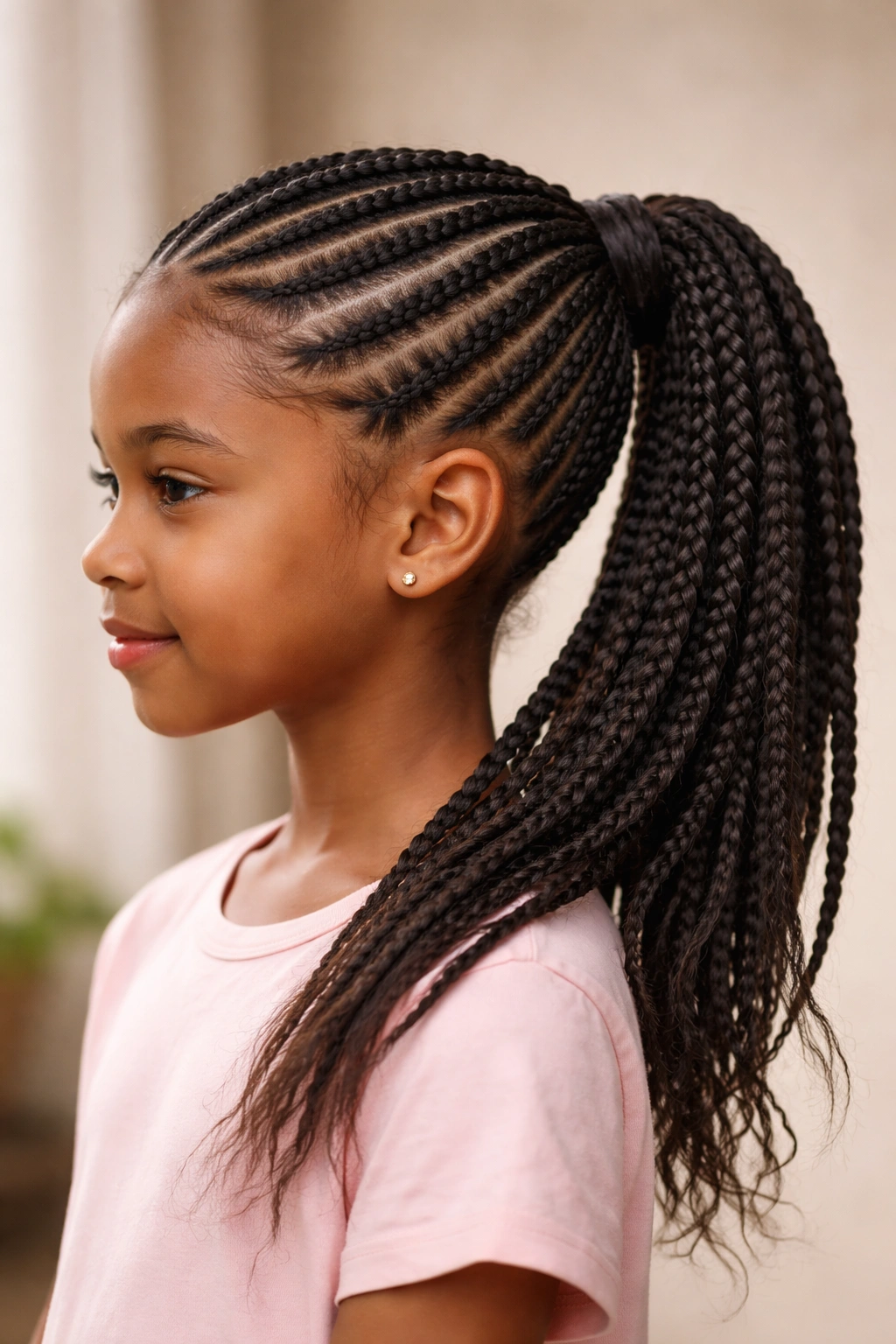
Rather than centering the ponytail, this style sweeps cornrows to one side and gathers the ponytail at the side of the head, creating an asymmetrical, fashion-forward look. The side placement automatically feels more dynamic and interesting than a centered style, and it’s particularly flattering for kids whose hair is naturally thicker on one side or who have varying hair density. This style works beautifully whether the ponytail is placed at the temple or further back at the side of the neck.
The Versatility Angle
Side-swept styles photograph beautifully and read as intentionally styled rather than just “everyday hair.” Kids who are conscious about their appearance often gravitate toward this style because it feels more mature and editorial than centered ponytails. The side placement also naturally prevents hair from falling directly in the center of the face, which some kids prefer. Additionally, you can vary which side you choose based on your child’s part line or personal preference—there’s no “correct” side.
Styling Approach
- Create 3-5 cornrows angled from one side of the hairline toward the opposite side of the head
- Gather the ponytail at your chosen side location and secure with a smooth elastic
- You can create the ponytail smooth, textured with curls, or with a braided section
- The asymmetry means you can balance the style with the direction of the braid pattern and ponytail placement
- This style holds beautifully for 7-10 days
- Sleeping on the opposite side from the ponytail helps preserve the style’s side-swept shape
5. Cornrow to Curly Ponytail
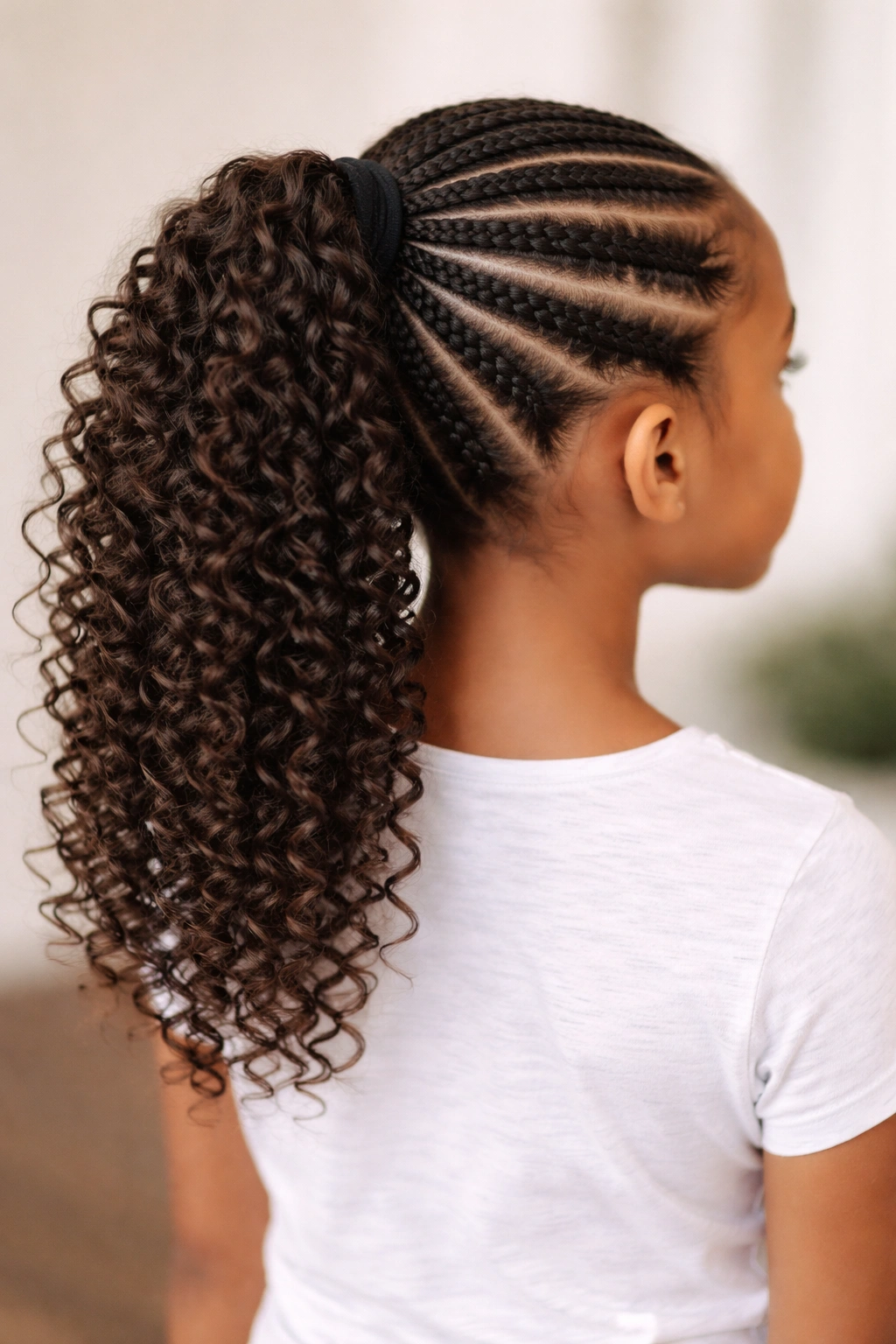
This style transitions from neat cornrows into a ponytail of loose, textured curls, creating a beautiful contrast between structured braiding and natural texture. It’s a fantastic option for kids with naturally curly or coily hair who want some styling without completely covering or changing their texture. The cornrows maintain hair off the face and neck while celebrating the curls that make up the majority of the ponytail.
When This Style Shines
This hybrid approach is perfect for kids who enjoy protective styling’s benefits but also love showing off their natural curl pattern. The cornrows give a groomed, intentional aesthetic, while the curly ponytail section feels free and natural. It’s a confidence-building style because kids get to wear their hair in a way that’s both protective and authentically theirs. The contrast also makes the style visually interesting—the eye moves from the precision of the braids to the beautiful texture of the curls.
Creating the Look
- Create 2-4 cornrows that start at the hairline and curve back toward your gathering point
- The remaining hair forms the ponytail, which should be left loose and textured rather than stretched tight
- Secure gently with an elastic that won’t cause tension
- The curls can be refreshed by misting with a water-based curl refresher spray and gently scrunching them
- Unlike some cornrow styles, refresh this one every 5-7 days since the loose curls get more friction during sleep and movement
- This works best with hair that has natural curl or coil texture; adding heat-set curls to straighter hair can cause unnecessary heat damage
6. Half-Up Cornrow Style
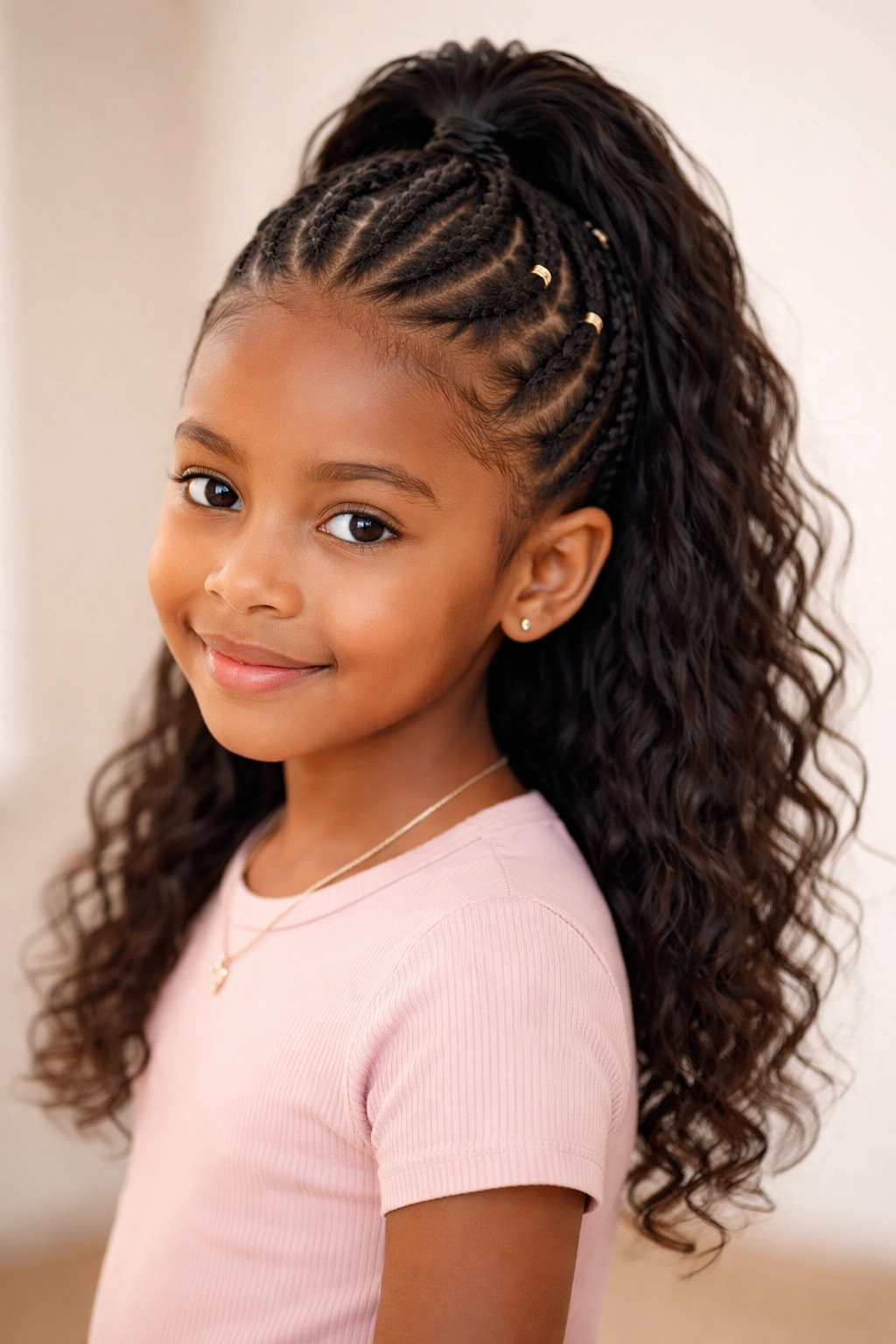
This style keeps some hair down while securing the top half in cornrows that gather into a small ponytail at the crown. It’s a gorgeous middle ground between fully protective and fully down hair—you get some of the styling benefit of cornrows without fully committing to a slicked-back look. Kids often love this style because it’s less severe and allows them to enjoy length and movement while still getting some structure and keeping hair from their faces.
Practical Benefits for Active Kids
The half-up style provides enough securing to keep hair manageable during sports and active play while leaving enough hair down to feel youthful and natural. Kids who are hesitant about fully braided styles often feel more comfortable with this approach because it feels less “done” and more like regular styling with a twist. The style also sits lower on the scalp, reducing tension headaches that some kids experience with very tight, high styles.
Design Options
- Create 2-4 thin cornrows across the crown from one side to the other
- Gather just the braided section plus the hair directly beneath it into a small ponytail
- The bottom section of hair remains loose and can be straight, wavy, curled, or textured depending on your preference
- Secure with a lightweight elastic to avoid creating too much weight at that one point
- Refresh every 5-7 days; the loose bottom section will need more frequent styling than fully braided styles
- This works beautifully with all hair types and is particularly nice for kids with longer hair
7. Zig-Zag Cornrow Ponytail
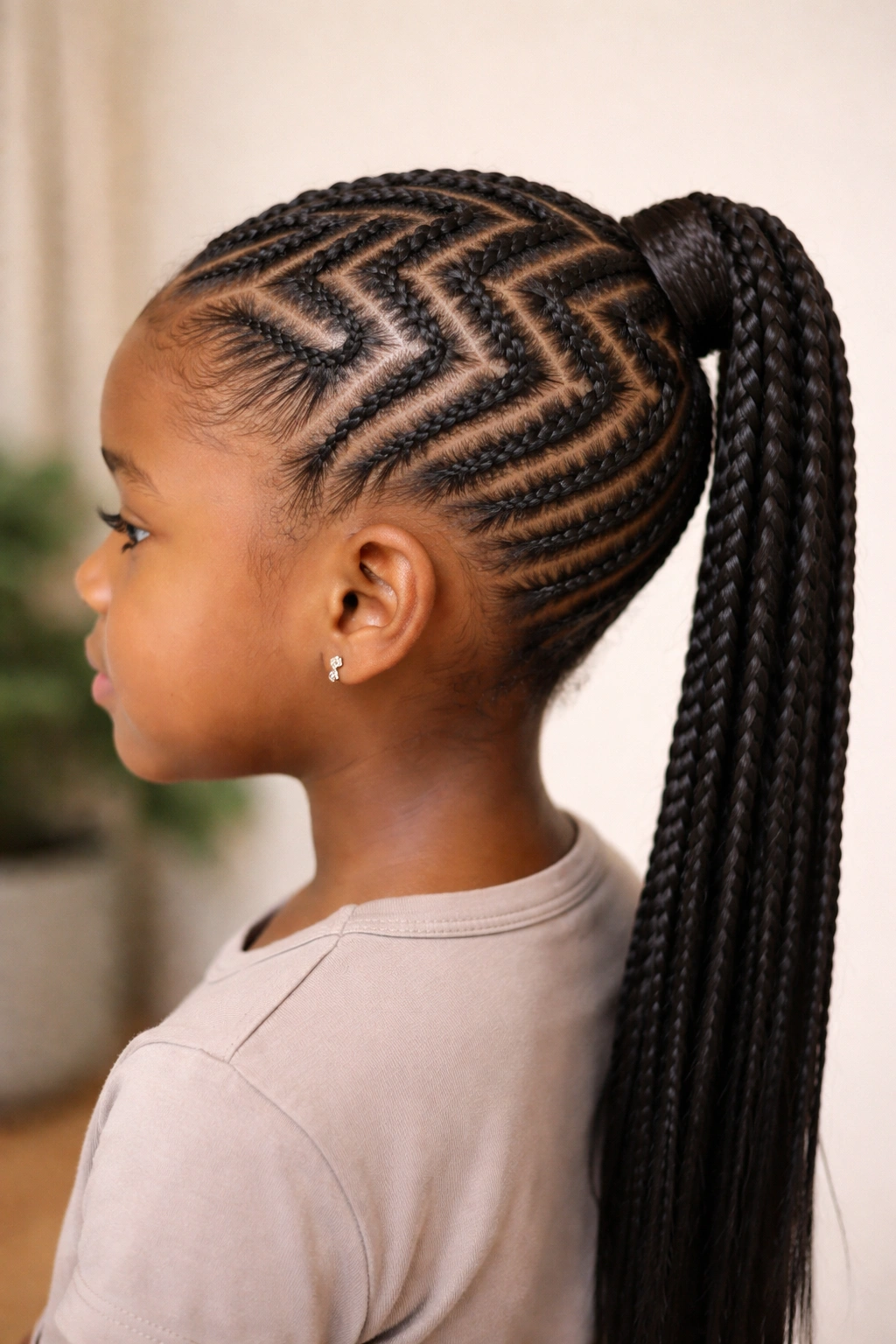
Instead of creating straight-line cornrows, this style features braids that follow a zig-zag or wavy pattern from front to back. The geometric, directional braiding pattern is a creative way to make cornrows feel more interesting and personalized. Kids who love art, geometric patterns, or anything that stands out visually are particularly drawn to this style—it’s a way to make cornrows feel less uniform and more intentional.
The Visual Impact
Zig-zag patterns photograph beautifully and create clear visual interest that a straightforward braiding style doesn’t offer. The pattern can be subtle (gentle curves) or bold (sharp angles), depending on how much deviation you create. Some stylists will even incorporate multiple zig-zag patterns at slightly different angles, creating an almost quilted effect across the head. For kids who want their hair to be a conversation starter, this style delivers.
How to Execute
- Map out your zig-zag pattern before starting to braid; you can use a light pencil on a section of the scalp as a guide
- Create cornrows that follow the mapped pattern rather than straight lines
- Gather all braids at the back into your chosen ponytail style and location
- The gathering point can be high, low, or to the side depending on your design
- Zig-zag patterns hold beautifully for 7-10 days since the braids secure themselves through their interlocked structure
- Refresh the ponytail section more frequently than you would the braids themselves
- This style works on all hair types, though it’s easiest to execute on hair with moderate thickness and density
8. Double Bun with Cornrow Base
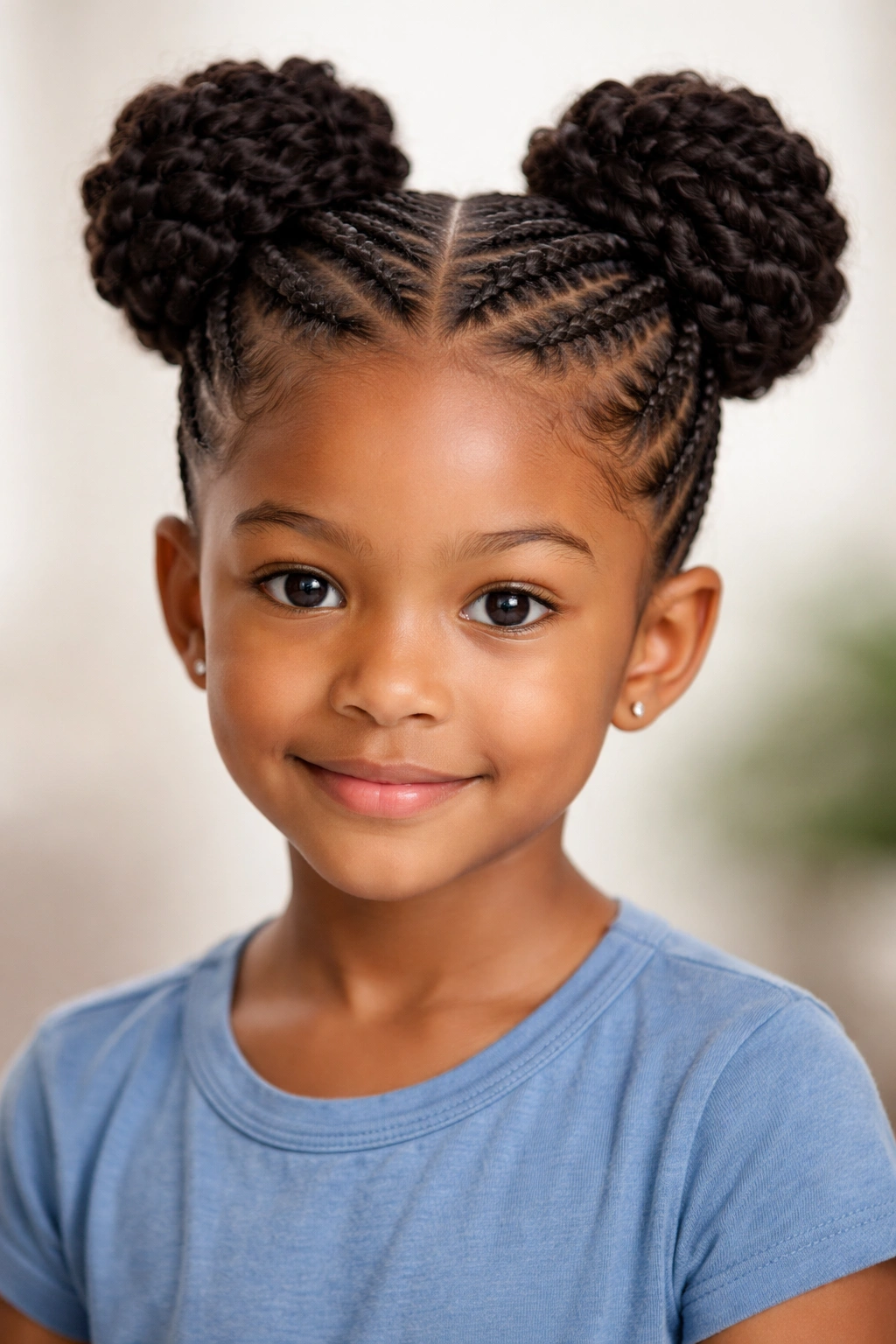
This playful style creates two buns at the crown, with cornrows that merge together at the base of each bun. It’s an adorable, youthful look that feels less severe than a single high ponytail while maintaining great practicality. Kids absolutely love having two buns—there’s something fun and whimsical about the double placement. This style is perfect for younger kids or kids who simply love playful, personality-filled hair.
Why This Works for Very Active Kids
Two buns distribute the weight of gathered hair differently than a single ponytail, which means less tugging sensation on the scalp. The buns also sit higher and more securely than ponytails, which means they’re more resistant to coming loose during tumbling, running, or playing. The cornrow base secures the buns’ placement, so they stay put throughout the day without constant retying. This combination of comfort and security makes it genuinely practical, not just cute.
Creating the Look
- Create 2 cornrows from the front of the head back toward the crown area
- Merge the two braids and gather that section plus all remaining hair into two secured sections at the crown
- Create a bun from each section—you can make them tight and sleek or loose and textured
- Use hair-safe bobby pins or spiral pins to secure each bun at its base
- The style holds beautifully for 7-10 days, though you may need to retighten the buns halfway through the week
- Sleeping with a silk bonnet or on a silk pillowcase helps preserve the bun shapes
- This works best on hair with at least medium density; very fine hair may have difficulty holding two buns securely
9. Cornrow Ponytail with Beads
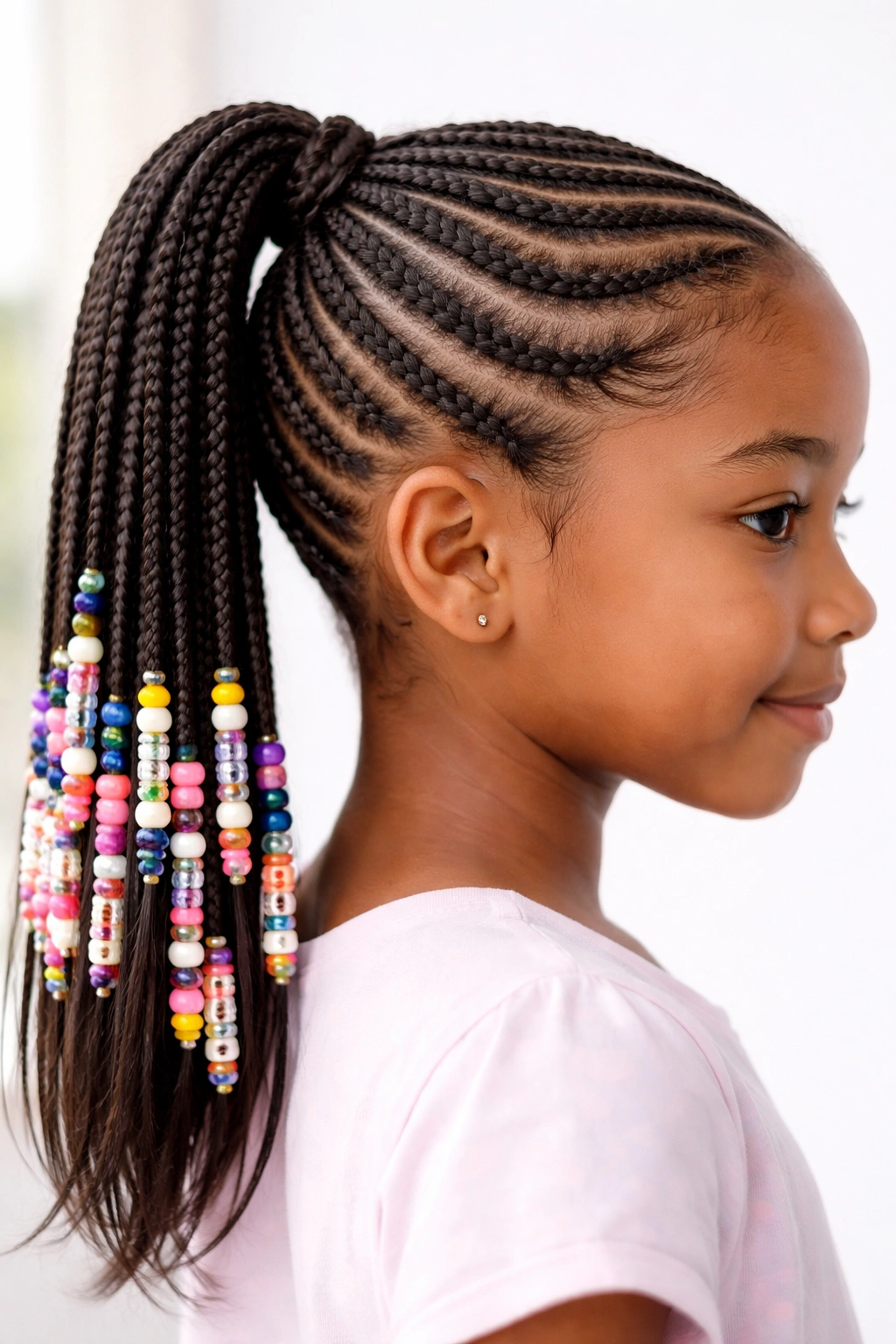
This style incorporates colorful beads strung onto select cornrows, creating a playful, personalized look that’s especially popular with kids who love color and decorative elements. The beads catch light and movement, making the style feel festive and fun. You can use traditional wooden beads, colorful plastic beads, or decorative gold-toned beads depending on your aesthetic preference and your child’s personality.
The Personalization Factor
Beads allow kids to participate in choosing their look and creating something that feels uniquely theirs. They might select beads that match their favorite color, spell out their initials, or simply create a pattern they find beautiful. This element of choice and customization makes kids feel more invested in their styling—they’re not just wearing what mom picked; they’re wearing something they helped create. The tactile quality of beads is also appealing; kids often enjoy the slight weight and the clicking sound they make.
Bead Placement and Maintenance
- Thread beads onto the braid section before tying off the end, or thread them after the braids are complete
- Place beads strategically—all the way down one braid, clustered at the bottom, scattered throughout, or in a specific pattern
- Traditional wooden beads are gentler on hair than some plastics; look for beads with smooth interiors
- The beads add visual interest but also slightly increase weight and tension, so monitor for any signs of discomfort
- Beads can stay in place for the full 7-10 day wear period, though they may require gentle adjustment if they slip
- When removing the braids, carefully thread the beads off rather than pulling them; this prevents hair breakage
10. Geometric Pattern Cornrow Ponytail
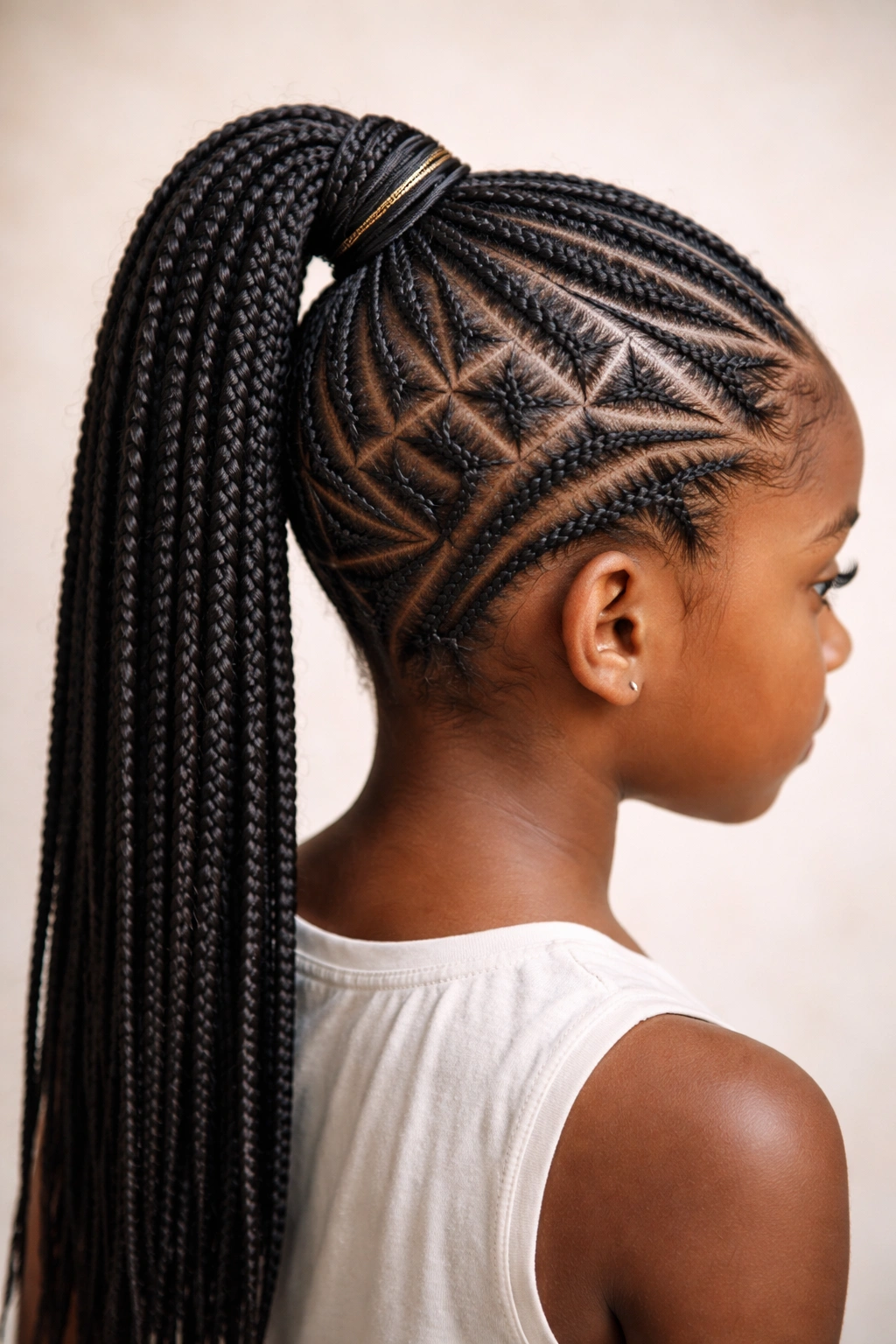
This advanced style creates a planned geometric pattern with the cornrows themselves—think diamonds, hexagons, triangles, or other shapes formed by the braiding lines. It’s the ultimate style for kids who love visually complex designs and unique aesthetics. The pattern becomes a piece of scalp art, turning the entire braided section into a deliberate design rather than simply functional braids that happen to be in place.
For the Creatively Minded Kid
Kids with artistic inclinations or those who love puzzles and patterns often gravitate toward this style. There’s something deeply satisfying about creating order and pattern, and a geometric cornrow design offers that satisfaction in a wearable form. This style also tends to earn compliments and comments, which kids appreciate—it’s clearly something someone thought about and created intentionally rather than just a default hairstyle.
Design and Execution
- Plan your geometric pattern on paper before starting—this prevents mistakes and ensures the pattern will work with your child’s head shape and hair density
- Create cornrows that follow the lines of your planned pattern
- Geometric patterns require more braiding skill and more time—typically 2-3 hours depending on pattern complexity
- The pattern works best viewed from above, so it’s ideal for kids who wear their hair pulled up (which this style does)
- The pattern holds perfectly for 7-10 days since the braiding structure supports itself
- Refresh the ponytail section as needed, but the geometric braids won’t require attention
- This style works on most hair types, though it’s easiest to create on hair with medium to thick density
11. Feed-in Cornrow Ponytail
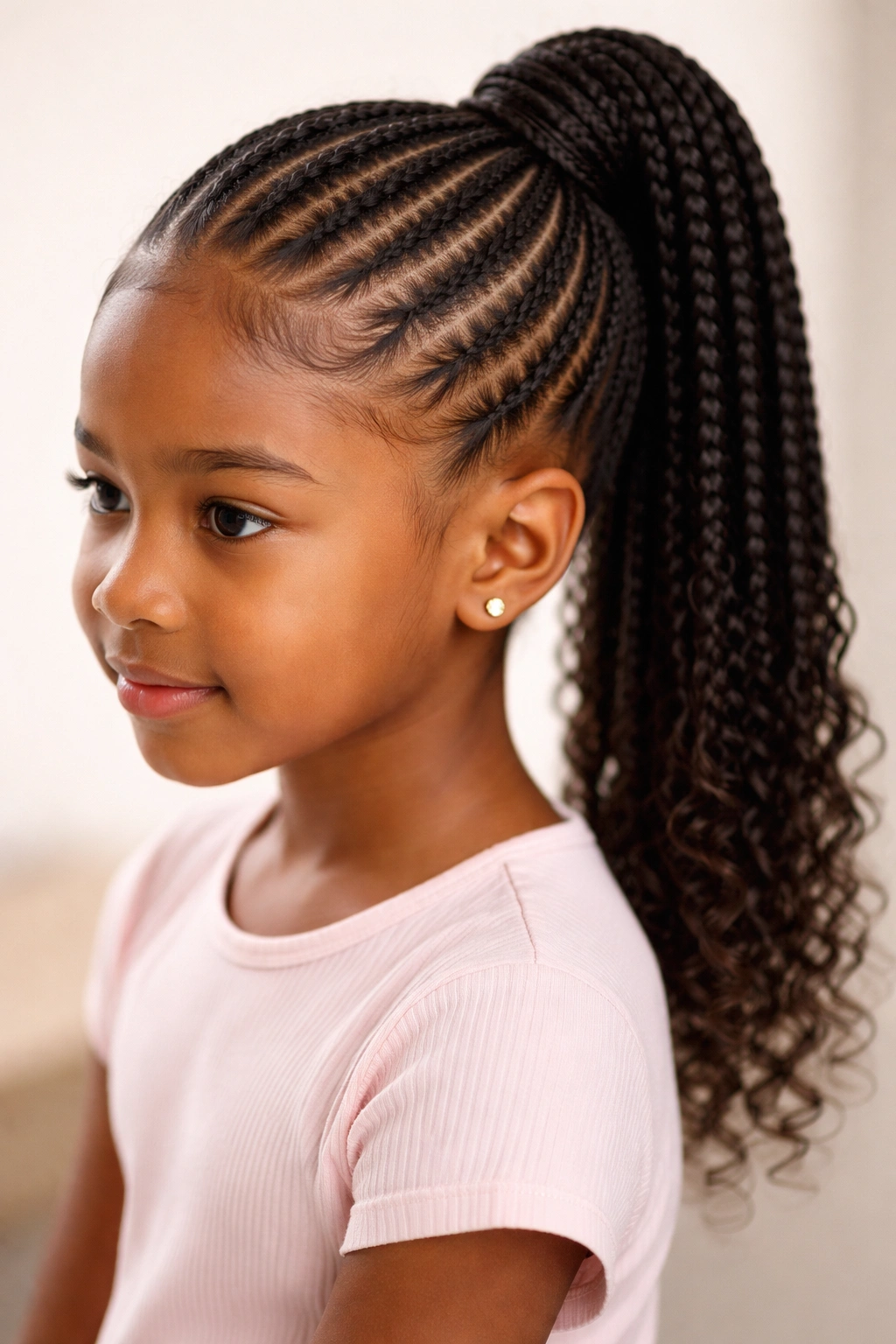
This sophisticated style uses the feed-in braiding technique, where small amounts of hair are gradually added into the braid line as you move back. Feed-in cornrows appear thinner and more refined than traditional cornrows, creating an elegant, understated look. This style gathers into a ponytail and is perfect for kids who prefer subtle styling or whose hair texture naturally looks finer—the feed-in technique creates a more delicate appearance that suits finer hair beautifully.
Why Choose Feed-In Braids
Feed-in cornrows create less tension on the hairline than traditional cornrows since the braiding doesn’t start with a tight base—the braid is thin at the start and gradually becomes thicker. This makes feed-in braids an excellent protective style choice for kids with sensitive scalps, thinner edges, or anyone prone to tension-related discomfort. The thinner appearance also makes the style feel less bulky and heavy, which some kids prefer. Beyond comfort, the finished look is just more refined and elegant—less statement, more sophisticated.
Installation and Care
- Feed-in braiding requires more skill and takes longer than traditional cornrows—expect 2-2.5 hours
- Create however many feed-in braids suit your design (typically 3-6)
- Gather into your chosen ponytail style once the braids reach the back
- The ponytail can be smooth, textured, or braided depending on preference
- This style holds beautifully for 7-10 days and creates minimal tension throughout wear
- Refresh daily with a light moisturizing spray to keep the finished braids smooth and shiny
- This works on all hair types but is especially beautiful on finer textures where feed-in braids show their refined quality best
Final Thoughts
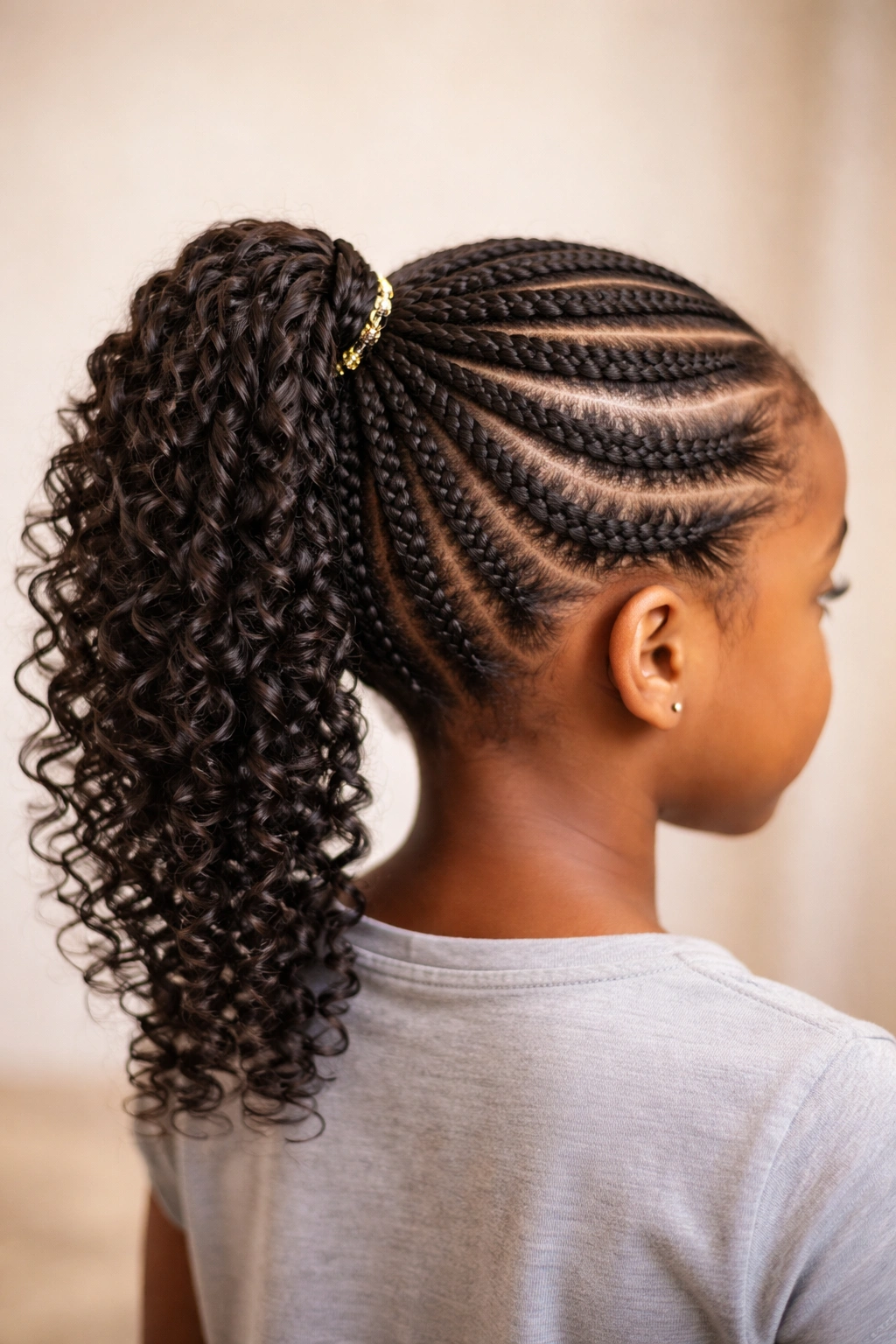
Cornrow ponytails offer kids the best of both protective styling worlds—structured, neat braiding that keeps hair secure and manageable, combined with the youthful versatility of a ponytail. Whether you choose a simple sleek style, an elaborate geometric design, or a playful bubble ponytail, the fundamentals remain the same: start with moisturized, detangled hair, take your time with the braiding process, and commit to gentle daily maintenance that respects your child’s scalp and edges.
The style your child loves will ultimately depend on their personality, hair type, and what feels comfortable to them. Some kids want their braids to be a statement; others prefer understated elegance. Some have naturally curly hair that begs to be celebrated in loose texture; others have straighter hair that needs the structure braids provide. The variety available means there’s genuinely a cornrow ponytail option that fits your child’s unique needs and preferences—and that’s exactly how styling should work.
