



Fine hair demands a hairstyle strategy that’s completely different from the thick, voluminous looks you see everywhere. Too much pulling, too much weight, or the wrong technique can make delicate strands look thin, limp, or stressed. The half up half down style—where the crown section is secured while the rest flows free—is genuinely one of the most flattering options for fine hair because it adds height and dimension without requiring density you don’t have. The secret is choosing the right variation, using the right tools, and styling in ways that add texture and movement instead of flattening everything down.
Short fine hair in particular sits in a sweet spot where half up half down works beautifully. You get enough length in the lower section to frame your face softly, while the pulled-back upper portion creates the illusion of fuller hair at the crown. The styles that work best avoid heavy, solid sections and instead use twisted strands, small braids, teasing at the roots, and texture-building techniques that make every strand count. What works for thick hair—like tight, sleek ponytails or heavy braids—will look skimpy on fine hair. But strategic looseness, intentional texture, and the right styling tricks transform the same basic half up half down concept into something that looks effortlessly full and intentional.
The variety here matters because occasion, outfit, and mood all shift throughout your week. You might want something polished for work, undone and romantic for dinner, or playful and textured for casual days. Fine hair doesn’t lock you into one look—it just requires you to understand which techniques add volume (teasing, twisting, loose sections) and which ones to skip (tight, sleek pulls that flatten everything).
1. The Gentle Twist Half-Up
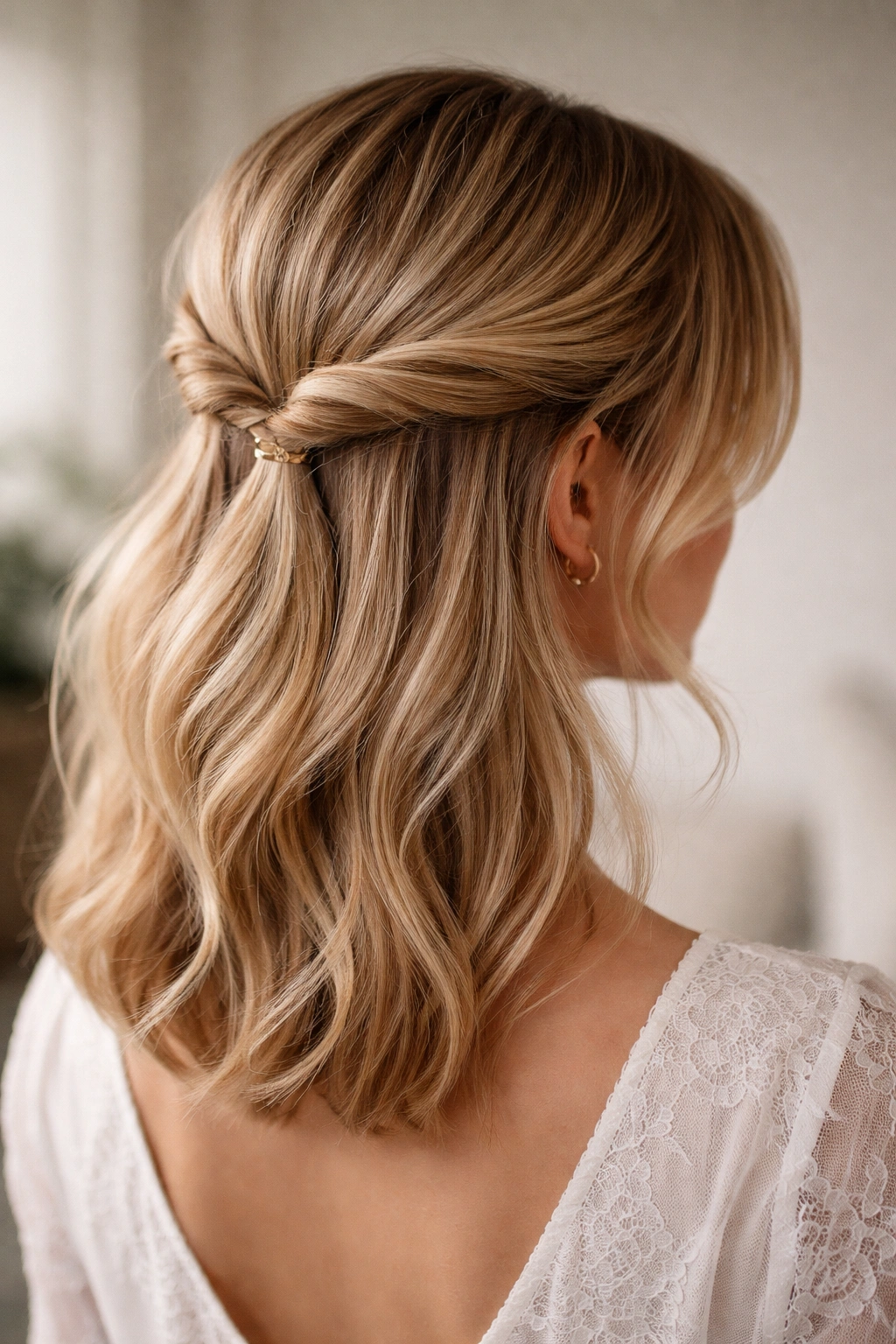
This is the easiest entry point for anyone with fine hair who’s intimidated by more complex styles. You’re taking two small sections from the front of your hair on either side of your face, twisting each one loosely (not tightly—loose twists appear fuller), and bringing them to the back where you secure them together with a small clip or elastic. The magic is in the looseness of the twist itself. Tight twists compress your hair and make it look thinner. Loose twists that have a bit of texture and volume in them look intentional and fuller.
Why This Works for Fine Hair
Loose twisting doesn’t require any teasing or backcombing, which can damage delicate strands. The soft, spiraled texture created by a loose twist adds visual dimension without requiring thickness—it’s pure geometry. Because you’re only pulling back a small section from each side, the rest of your hair cascades freely and frames your face in a flattering way. The twisted sections themselves create a gentle anchor at the back without the weight of a full ponytail.
How to Nail This Look
- Start with second-day hair or add a light texturing spray to damp roots for grip and visual texture
- Take a section roughly the width of your thumb from one side of your face at temple height
- Twist loosely (count to 5-7 twists maximum—you want it visibly spiral-textured, not a tight rope)
- Repeat on the other side with the same tension and twist count
- Bring both twisted sections to the back center and secure with a small claw clip, bobby pins, or a thin elastic wrapped with a strand of hair for a polished finish
- Gently pull at the edges of the twists to loosen them and add width—this creates volume without frizz
Pro tip: If your twists feel too perfect and smooth, run your fingers lightly through them one more time before securing. You want textured, slightly undone twists, not polished spirals.
2. The Wispy Braided Half-Up
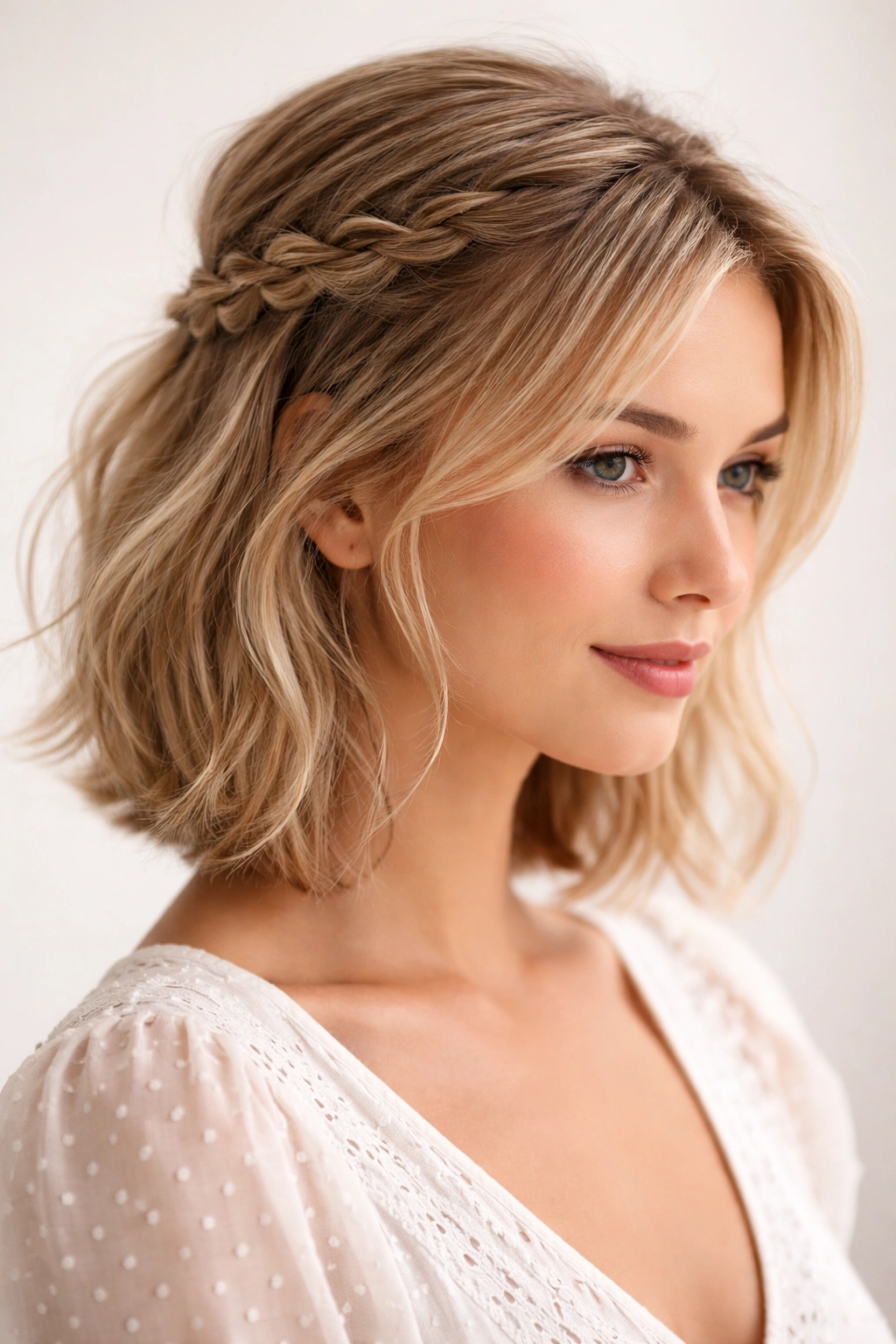
A braid done on fine hair looks delicate and intricate instead of chunky when you use a three-strand braid and then gently stretch the finished braid to add width and softness. This style takes two braids (one from each side) that meet at the back. The key difference from a standard braid is that you’re keeping the braid loose throughout, and then you’re pulling gently on each loop of the braid after it’s finished to expand it and create dimension.
Why This Works for Fine Hair
Braids on fine hair can look thin if done tightly, but a loose braid that’s been gently stretched appears textured and fuller. Because you’re doing two smaller braids instead of one thick one, each braid is proportional to your fine hair and doesn’t overwhelm it. The wispy, delicate appearance actually flatters fine hair texture instead of fighting against it.
How to Nail This Look
- Brush your hair and add a light texturing spray or dry shampoo to add grip
- Starting at one temple, begin a loose three-strand braid, braiding only until you reach the back center of your head (not all the way down)
- Repeat on the other side, starting at the opposite temple
- Meet both braids at the back center and secure with bobby pins or a small elastic
- Gently pull at each loop of both braids, working from the top down, stretching them outward to add width and create a softer, messier appearance
- Leave a few wisps loose around your face for an intentionally undone effect
Insider note: The stretching step is what makes this look work on fine hair—it’s the difference between a thin braid and a textured, dimensional one.
3. The Textured Bubble Ponytail Half-Up
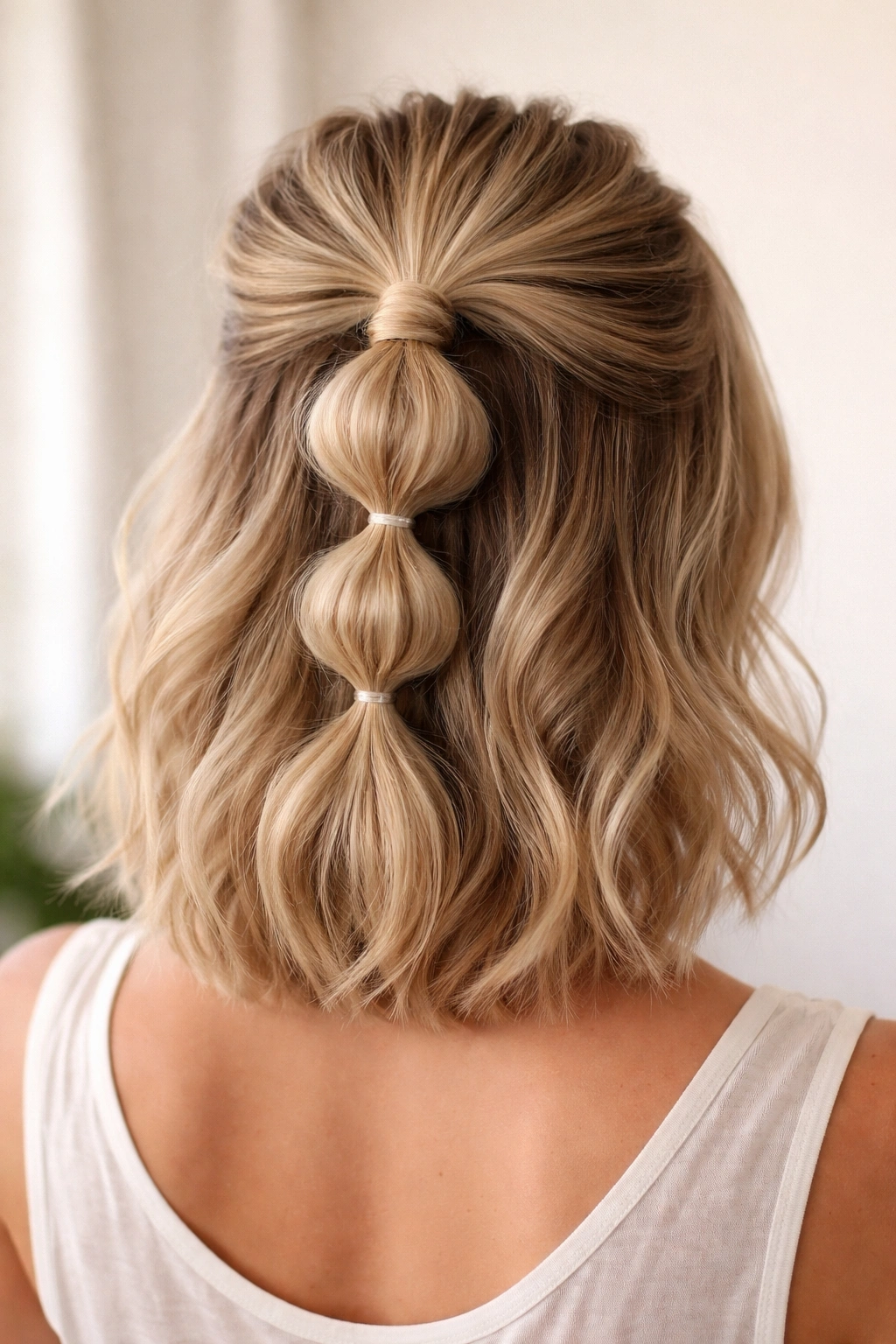
This is a trend that actually suits fine hair better than thick hair because it relies on texture and spacing, not density. You’re creating a half-up ponytail, then dividing that ponytail into 3-4 sections and placing small elastics around each section to create stacked “bubbles.” On fine hair, these bubbles don’t look blocky—they look playful and intentionally styled.
Why This Works for Fine Hair
The bubble effect comes from the bands creating visual separation, not from actual hair bulk. Fine hair benefits from this because you get the impression of fullness and dimension created by the negative space between the bubbles, not the mass of hair itself. It’s a style where fine hair’s delicacy becomes a feature, not a limitation.
How to Nail This Look
- Tease gently at the crown and smooth the top layer for volume without stress on strands
- Create a half-up ponytail at the back center, securing it with a thin elastic
- Divide the ponytail into 3-4 equal sections (use your fingers to guide, don’t pull apart aggressively)
- Place a small elastic around the first section about 1.5 inches from the base of the ponytail, creating the first bubble
- Repeat down the length, spacing each bubble evenly
- Gently pull at each bubble section to add softness and make them appear fuller—pull horizontally outward, not down
- You can leave the very ends of the ponytail loose or secure them with a final elastic
Worth knowing: Use clear or thin elastics so they disappear visually. Thick or colored bands break up the line and interrupt the flow on short, fine hair.
4. The Side-Swept Half-Up
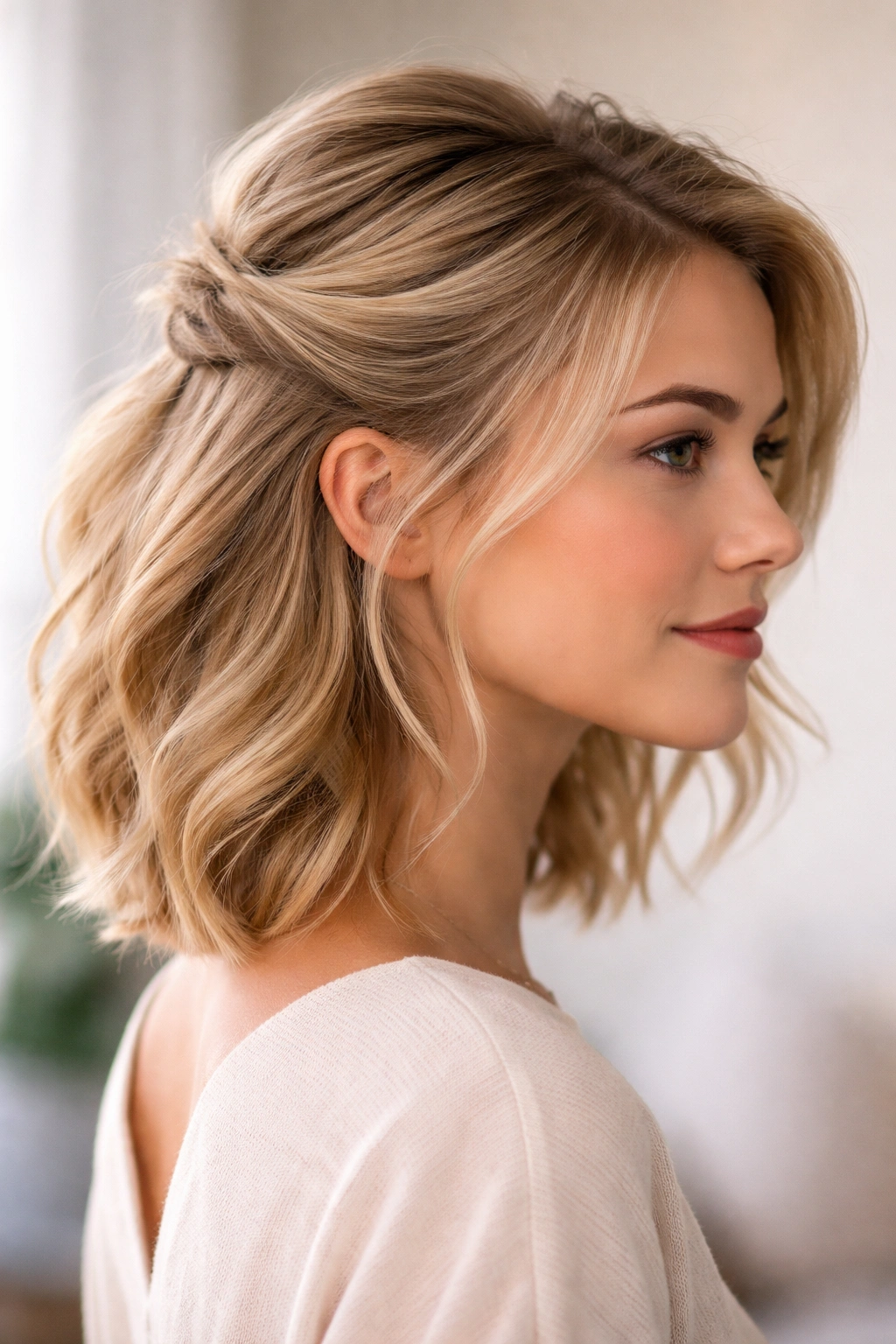
This style is flattering because it creates asymmetry and movement, which immediately makes fine hair feel more dynamic. Instead of pulling hair straight back to the center back, you’re pulling it toward one side, creating a tilted, off-balance look that feels modern and intentional. It works particularly well on short hair because the asymmetry isn’t extreme—it’s just enough to add visual interest.
Why This Works for Fine Hair
Side-swept styling automatically creates the illusion of volume because hair crossing the midline of your head creates shadow and depth. When you pull fine hair straight back and centered, it can look flat because you’re seeing all the way to your scalp. When you sweep it to one side, the overlapping layers and directional movement make it appear fuller. The style also frames your face differently depending on which side you sweep to, giving you two looks in one hairstyle.
How to Nail This Look
- Start with textured, piece-y hair (use a texturizing spray or style your hair wavy before pinning)
- Take a larger section from the crown area, but instead of bringing it straight back, pull it diagonally toward one side of the back of your head
- Secure with bobby pins hidden in the texture, or use a small claw clip placed slightly to the side
- Pull gently at the crown section you’ve pinned back, creating soft, loose waves and volume
- Let the rest of your hair flow down, but use a large barrel or curling iron to add waves that follow the direction of the swept-back section—this creates cohesion
- Leave a few wispy pieces loose around your face on the side you’ve swept away from (so if you sweep back to the right, leave face-framing wisps on the left side)
Pro tip: This style works beautifully with a side part. If you already part your hair to one side, sweep the smaller side back and let the larger side flow.
5. The Teased Crown Half-Up
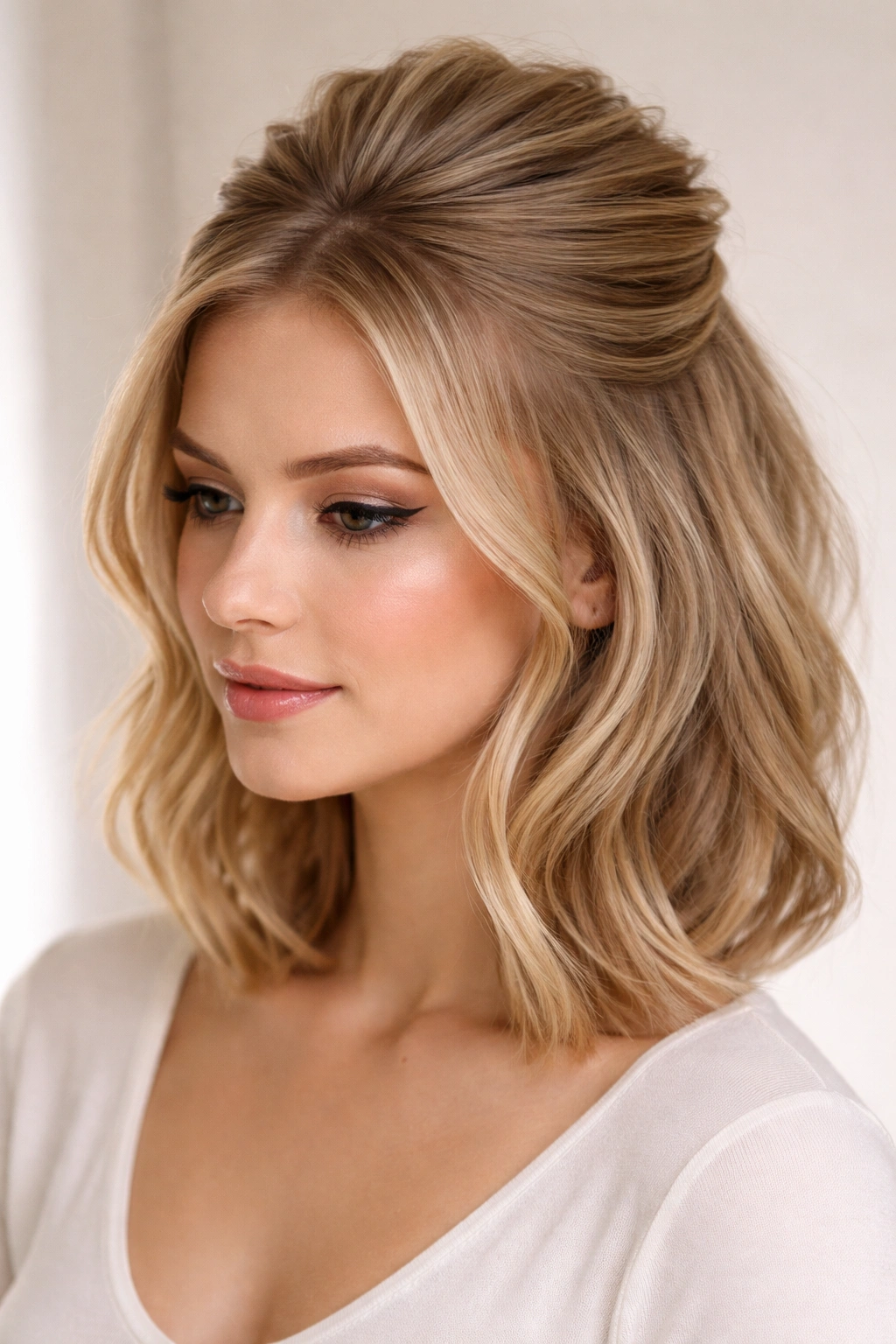
Fine hair can look fuller at the crown with strategic teasing—and half up half down is the perfect style to showcase that volume. You’re gently backcombing the crown area to create a cushion of texture and height, then pulling back just the top layer and sides to reveal the teased base while keeping it soft and intentional, not stiff.
Why This Works for Fine Hair
Teasing (also called backcombing) physically lifts the hair away from the scalp and creates air pockets that make hair appear thicker. On fine hair, light teasing that’s smoothed out on top creates the impression of volume without the damage of heavy backcombing. It’s the difference between a full, tousled look and a damaged, straw-like texture.
How to Nail This Look
- Start with dry hair—teasing doesn’t work on damp or wet hair
- Use a fine-tooth teasing brush or an old toothbrush
- Take a small section at the very crown (roughly the size of a golf ball)
- Gently brush backward toward the roots, using short strokes and light pressure—you’re not trying to completely destroy the hair, just create texture and lift
- Flip your head upside down and tease the underside of that crown section as well for extra lift
- Flip back upright and smooth the top surface of your teased section with a paddle brush or fine-tooth comb, sealing the texture underneath
- Now create your half-up by taking sections from around the teased crown and pulling them back, using bobby pins to secure while displaying the volume you’ve created
- Mist lightly with flexible hold hairspray to set the volume without stiffness
Critical note: With fine hair, less teasing is more. You’re looking for a slight cushion of texture, not a rat’s nest. If you overdo it, you’ll create weakness in the strands.
6. The Twisted Sections Half-Up
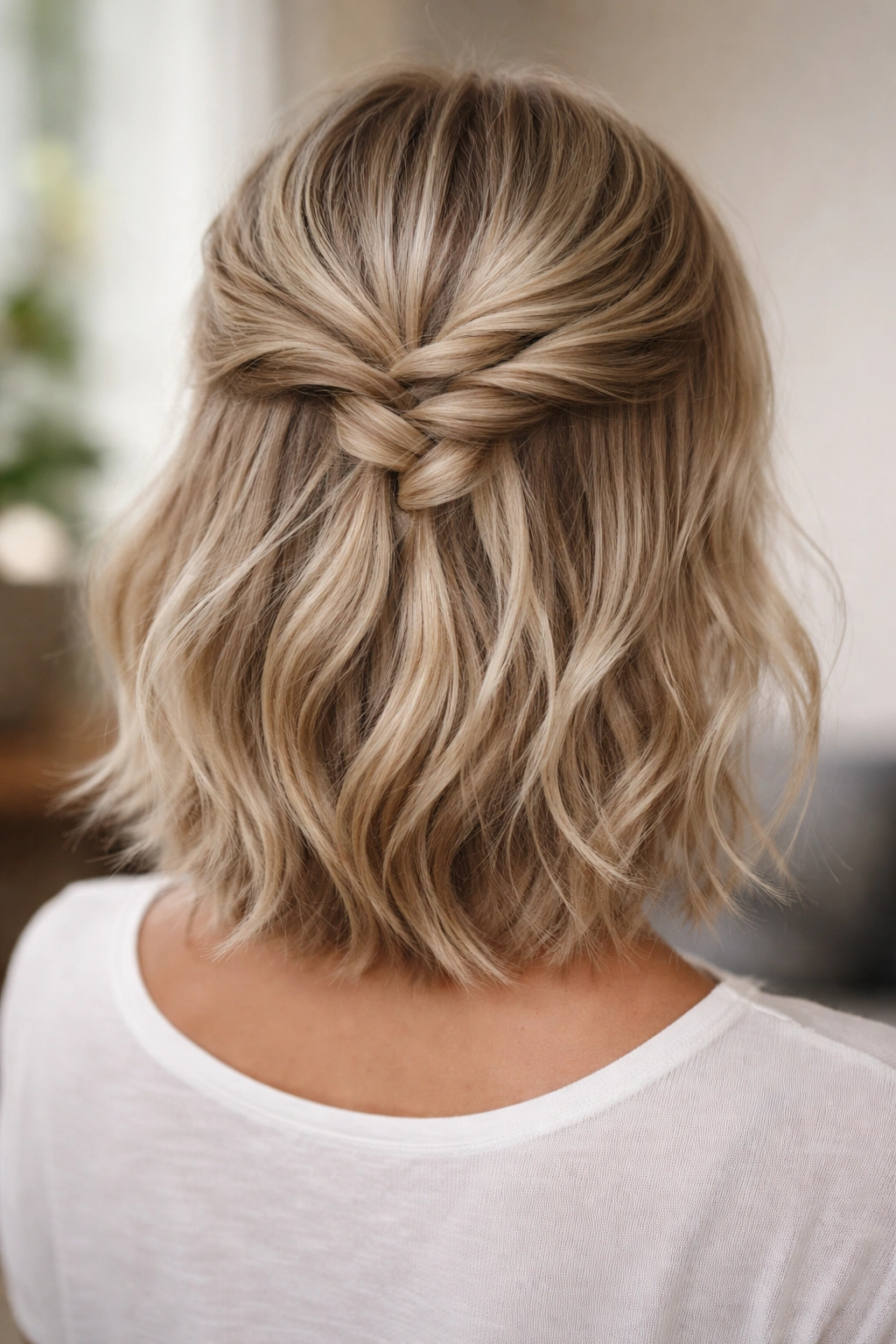
This style takes the concept of the gentle twist and multiplies it for more visual interest and dimension. Instead of two twists meeting at the back, you’re creating 3-4 smaller twisted sections that spiral together, creating a fuller, more intricate appearance at the back while still being relatively simple to execute.
Why This Works for Fine Hair
Multiple thin twists appear fuller than one or two thick twists because each twisted section creates its own spiral texture. The more texture you build, the fuller the overall effect. This is pure visual trick—you’re not adding hair, you’re creating dimension through geometry.
How to Nail This Look
- Apply a light texturizing spray or dry shampoo to add grip and texture
- Divide the crown and upper side sections into 3-4 manageable sections
- Twist each section loosely, using light pressure and minimal twists (5-7 per section)
- Bring all twisted sections to the back center and layer them together, securing with bobby pins or a small clip
- Gently stretch each twisted section outward to add width and softness
- Leave a few face-framing pieces loose and wavy to soften the overall effect
- The back should look full and textured, like multiple delicate spirals meeting
Variation: You can twist some sections in one direction and others in the opposite direction for added visual complexity.
7. The Messy Romantic Half-Up
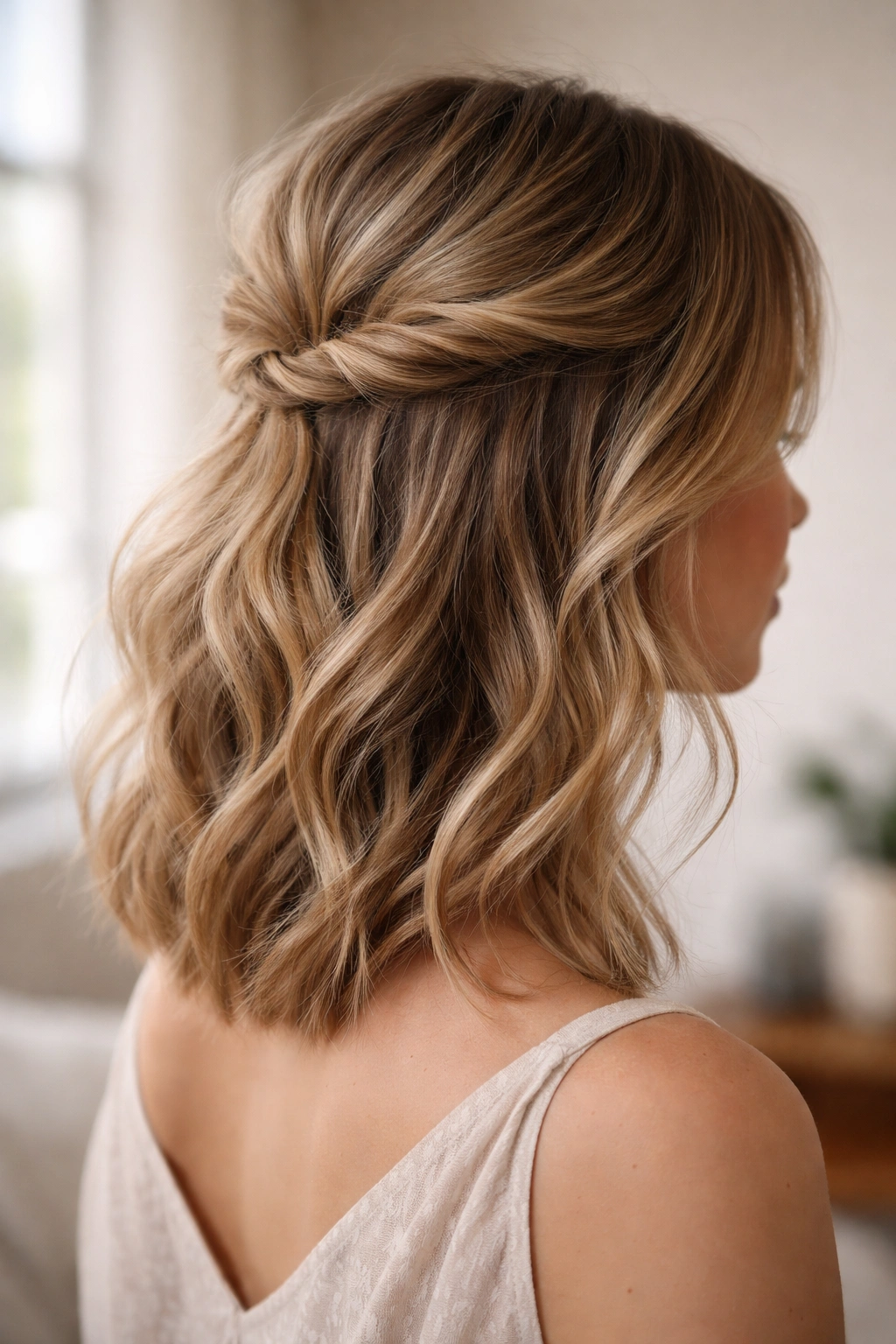
This is the style that looks effortlessly undone—like you didn’t actually style your hair, it just naturally fell this way (even though you absolutely did style it). On fine hair, the “messiness” actually works in your favor because it prevents the sleek, flat appearance that makes fine hair look thinner. Looseness is your friend here.
Why This Works for Fine Hair
Intentional messiness creates visual texture and dimension. Sleek, perfect styles emphasize every strand count (or lack thereof) on fine hair. Undone, tousled styles obscure the actual density and create the impression of fullness through movement and irregularity. This is the style where your fine hair’s natural wisp and delicacy becomes intentional and romantic instead of thin and scraggly.
How to Nail This Look
- Curl or wave your entire head before doing anything else—use a curling iron, flat iron twist, or heat-free waves with a braid or braiding spray
- Let the waves cool and loosen slightly
- Take a section from one side at about temple height and twist or loosely braid it
- Take a matching section from the other side and do the same
- Bring both sections to the back and secure with bobby pins—don’t use a clip, use pins so it looks invisible and intentional
- Pull gently at the waves throughout your hair, especially near your face, to make them more pronounced and undone
- Leave wispy pieces loose around your face
- Use a dry texture spray or sea salt spray to enhance the undone quality
- The overall effect should be soft, romantic, and like you just woke up looking gorgeous
Pro tip: This style improves throughout the day as your waves loosen and settle. It’s intentionally not perfectly styled.
8. The Sleek Low Half-Up
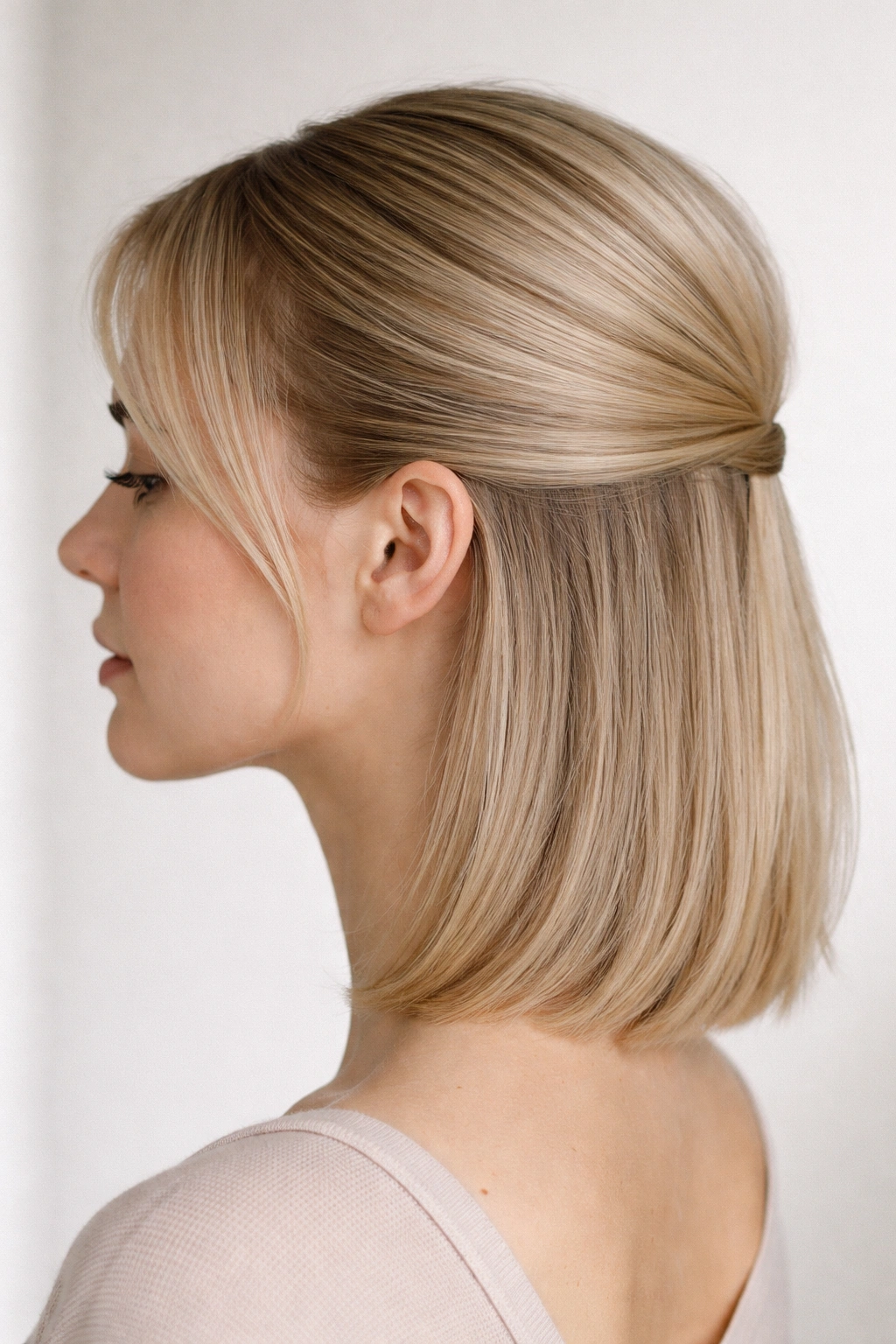
Sometimes elegance on fine hair comes from simplicity rather than texture. A sleek, smooth half-up pulled to a low position at the nape of your neck is chic and works beautifully on fine hair because it’s not trying to create bulk—it’s playing to clean lines and proportion instead. This is your go-to for polished occasions.
Why This Works for Fine Hair
Fine hair can look sleek and refined when you’re not fighting against its texture or trying to make it appear thicker. A smooth, understated half-up shows confidence in your hair type rather than working against it. This style says “I know what I’m doing” rather than “I’m trying to hide my fine hair.”
How to Nail This Look
- Start with smooth hair—blow-dry with a flat iron or smoothing balm to get a sleek base
- Apply a smoothing serum or light styling cream to keep flyaways down without weight
- Take a smooth section from the crown, keeping the lines neat
- Use a fine-tooth comb to smooth it back, pulling it down to the nape of your neck instead of the back center
- Secure with a sleek clip, bobby pins hidden under the smoothed hair, or a thin elastic wrapped with a strand of hair
- Leave the sides completely smooth and unruffled—this is the opposite of textured and messy
- Your low placement keeps the style from pulling heavily on your delicate hairline
- Finish with a light-hold hairspray that maintains shine
Essential note: This style relies on your hair being genuinely smooth, so if you have natural texture or frizz, apply a smoothing product and take time to dry-brush it smooth.
9. The Dutch Braid Half-Up
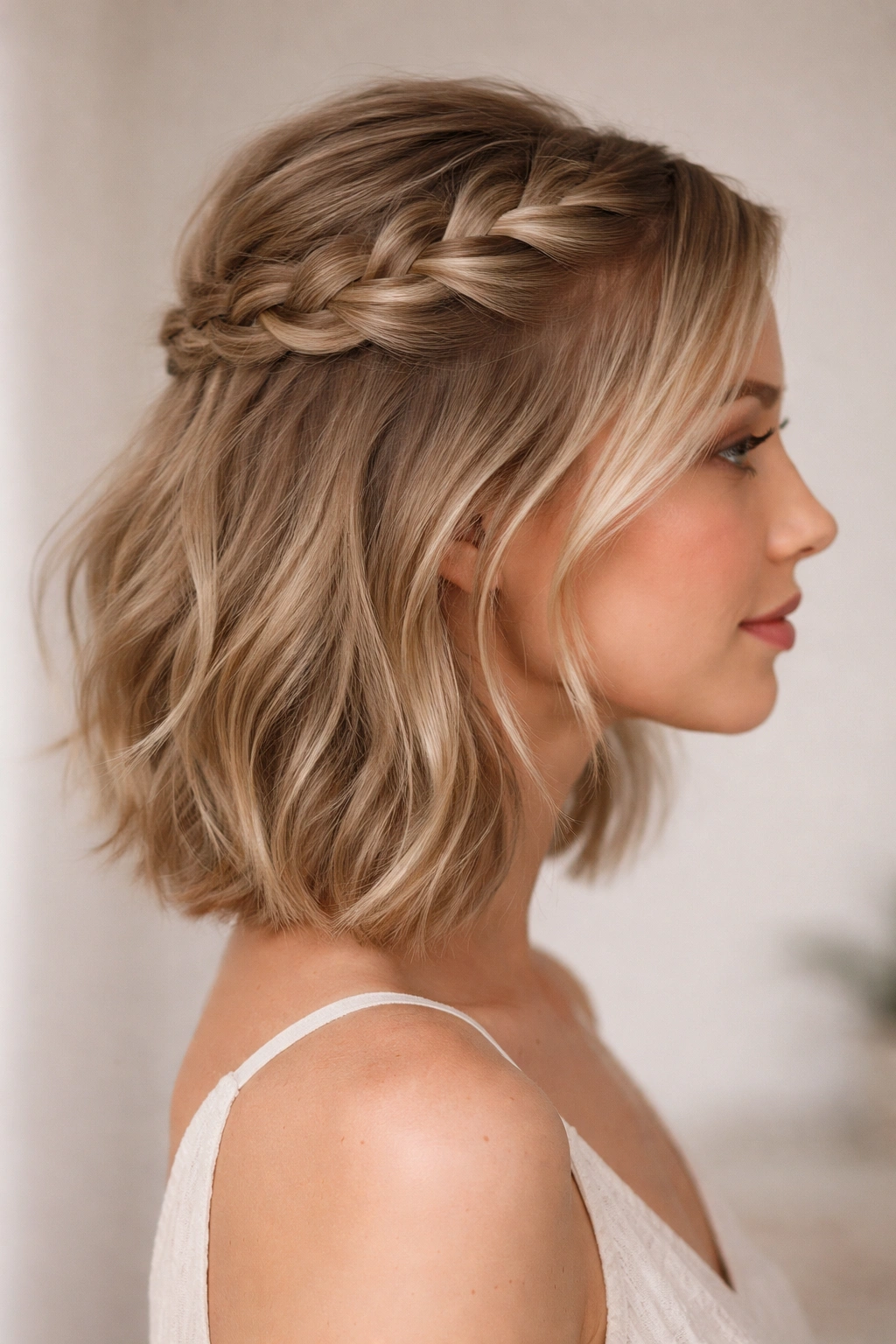
A Dutch braid (which creates a raised, 3D appearance because you’re braiding under rather than over) adds visual dimension and works on fine hair because the raised effect makes hair appear fuller. Bringing just one Dutch braid from the side toward the back creates a half-up that’s more interesting than a simple twist while still being achievable on shorter, finer strands.
Why This Works for Fine Hair
Dutch braids create height and dimensionality through the braiding technique itself, not through hair thickness. The under-braiding creates a lifted, textured appearance that makes even fine hair look substantial. Because you’re only doing one braid in a half-up configuration, it’s proportional to fine hair and doesn’t overwhelm your face.
How to Nail This Look
- Start with textured or slightly wavy hair (flat hair won’t show the braid dimension as well)
- Begin a Dutch braid at one temple, braiding under rather than over
- Braid loosely—tight Dutch braids on fine hair can look thin and stringy
- Continue the braid back and across the crown until you reach the opposite side of the back of your head
- Secure the end with a bobby pin or small elastic hidden in the hair
- Gently stretch the braid outward, pulling at each loop to add width and softness
- Leave some face-framing pieces loose for balance
- The braid should appear raised and 3D, creating the illusion of fullness
Tip: If you find Dutch braiding tricky, you can absolutely do a regular three-strand braid pulled back in the same direction—it’s slightly less dimensional but still effective.
10. The Voluminous Claw Clip Half-Up
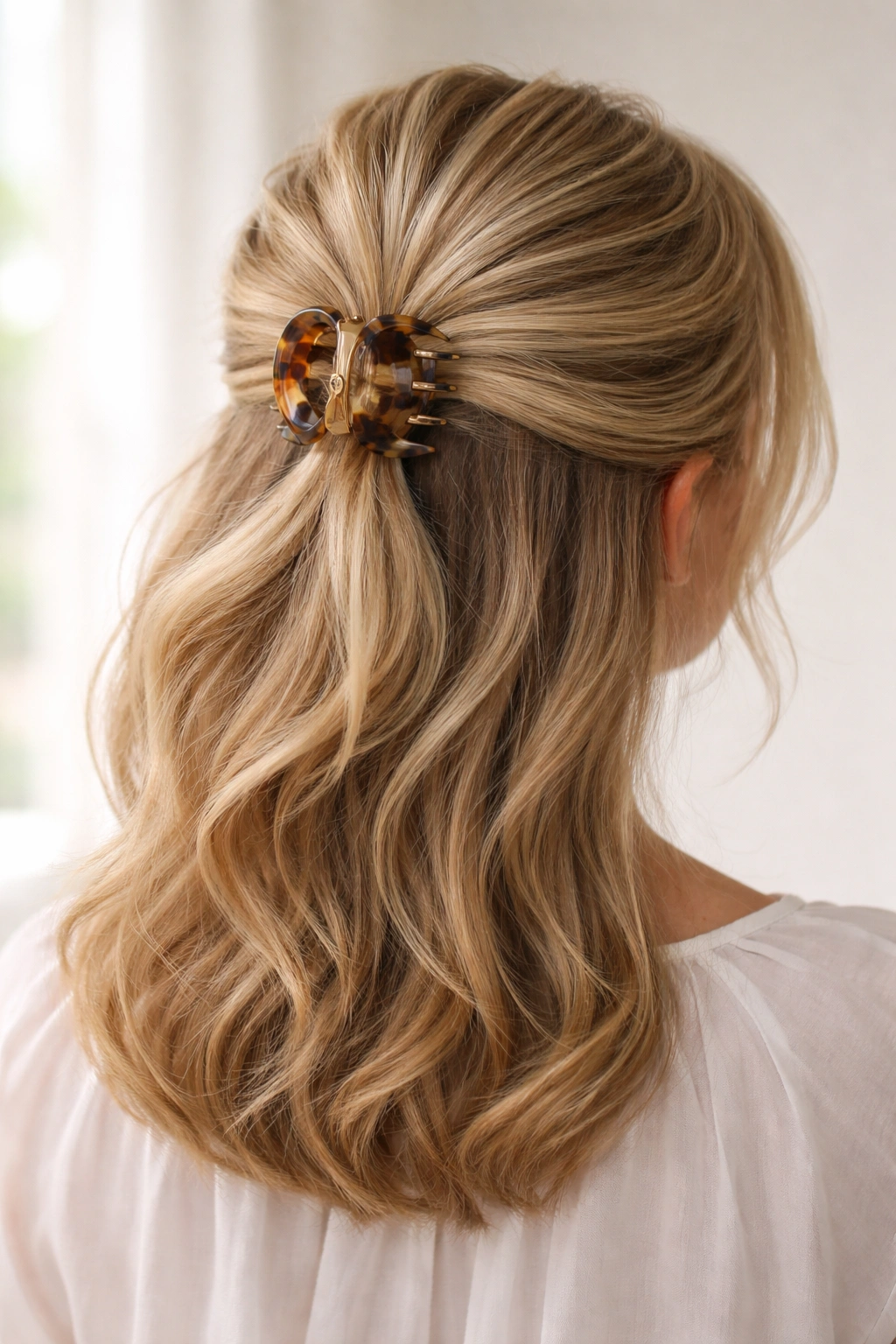
Claw clips have become the secret weapon for fine hair styling because they hold without tension and create an effortlessly caught-in-the-moment aesthetic. Using a claw clip as your anchor for a half-up, especially a larger clip on loose or teased hair, creates a style that looks full, modern, and unintentional (in the best way).
Why This Works for Fine Hair
Claw clips hold hair without gripping tightly, so there’s no tension on delicate strands. They also photograph beautifully and create a visual focal point at the back, making the gathered section appear fuller. The clip itself becomes part of the style’s design rather than hidden, which works especially well with tortoiseshell, metallic, or patterned clips.
How to Nail This Look
- Tease lightly at the crown for subtle volume
- Take a generous section from the crown and upper sides
- Gather it loosely at the back center, not pulling tightly
- Open your claw clip and position it horizontally at the base of your gathered section
- Close it gently, making sure the clip is secure but not pinching
- Gently pull at the gathered section and the hair above the clip to create softness and volume
- Leave face-framing pieces loose
- Choose a clip that coordinates with your outfit or hair color—it’s a visible accessory here
- You can angle the clip slightly (tilted rather than perfectly horizontal) for a more undone effect
Style note: The claw clip works best with clips that are 3-4 inches wide on short hair. Tiny clips look undersized, and huge clips overwhelm.
11. The Spiky Bun Half-Up
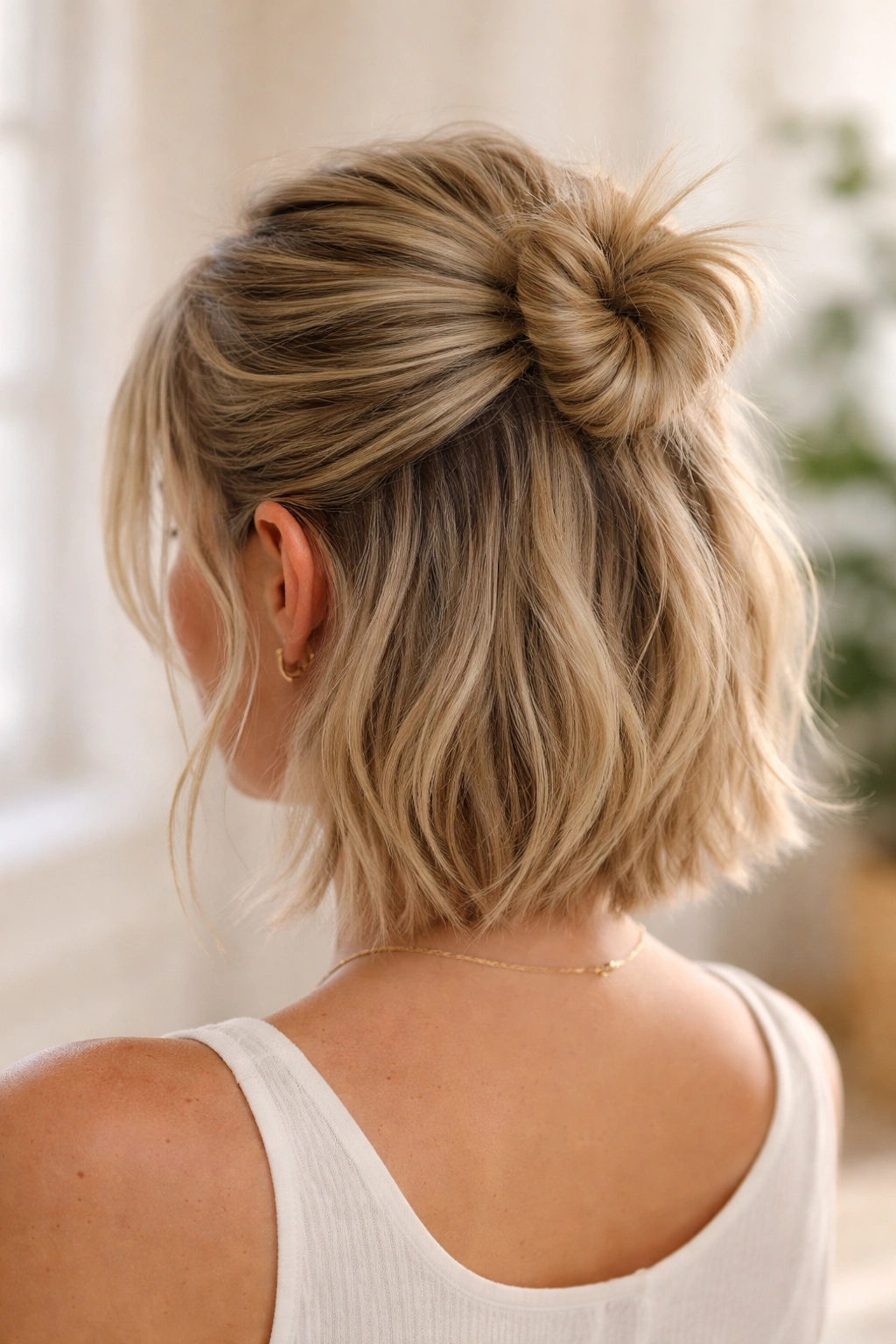
Taking your half-up and twisting it into a small bun creates height and visual dimension while keeping the style occupying the back of your head rather than pulling everything away from your face. This works beautifully on short fine hair because the bun doesn’t need to be huge to be effective—a small, slightly spiky bun reads as intentional and playful.
Why This Works for Fine Hair
A small bun doesn’t require thick hair to look good. In fact, fine hair in a spiky, undone bun looks modern and intentional. This is different from a smooth, tight bun, which can emphasize thinness. A loose, slightly messy bun on fine hair looks sophisticated and fashion-forward.
How to Nail This Look
- Create a half-up by gathering your crown section and securing it loosely with an elastic or pins
- Take that half-up section and twist it loosely around itself, creating a small spiral
- Wrap that spiral around the base of your half-up and secure with bobby pins
- Pull gently at the bun to loosen it and create a soft, spiky texture
- Leave some shorter pieces loose around your face
- The bun should look slightly undone and textured, not smooth and tight
- You can use a dry texturizing spray to enhance the texture and keep flyaways in place softly
Creative variation: If you have very short fine hair, create the half-up and just fold it under once rather than twisting it—this creates a softer half-up knot that’s less bulky than a full bun.
12. The Half-Up Puff
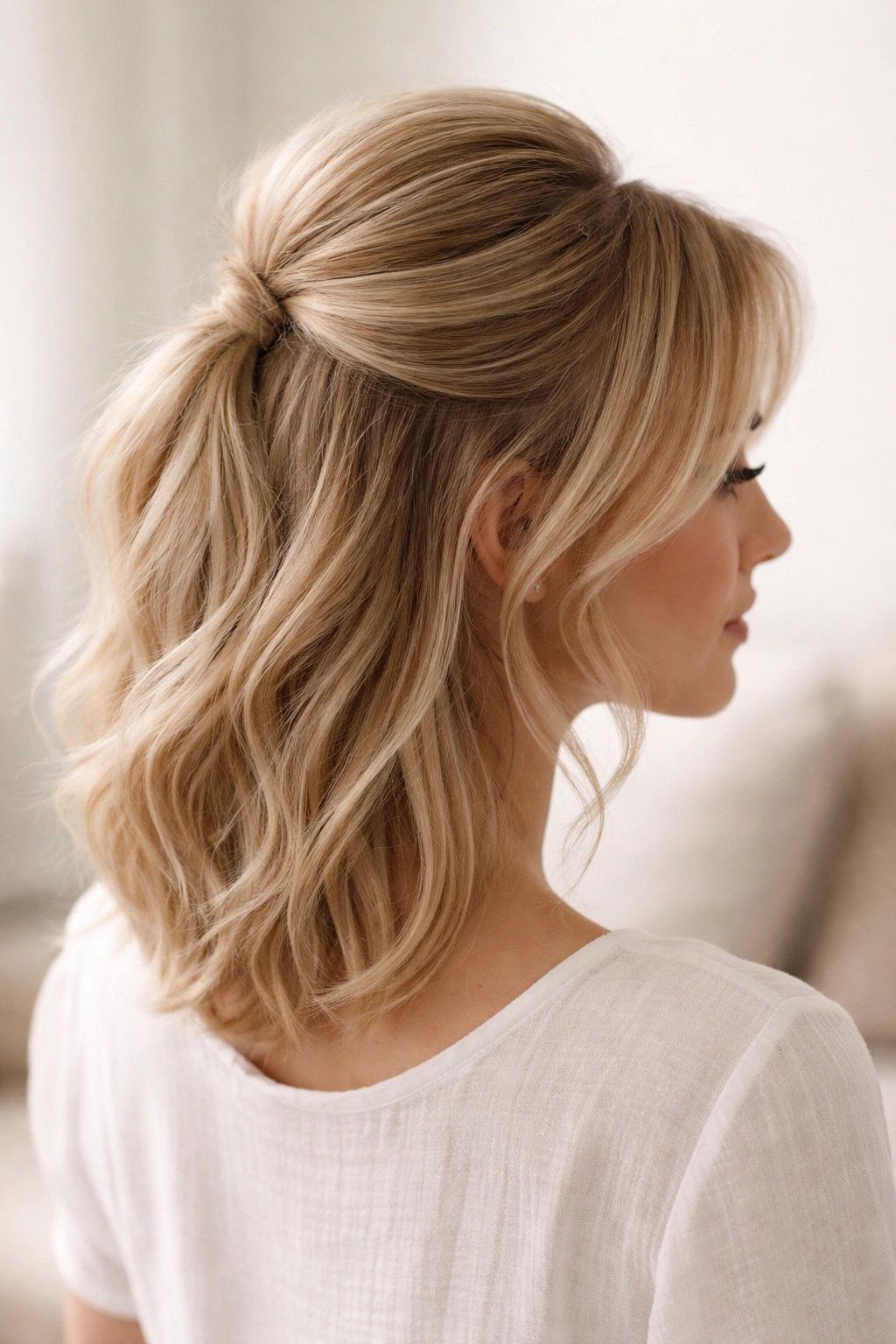
This style takes the textured half-up concept and enhances the crown volume specifically by puffing out the gathered section rather than leaving it smooth or twisted. It’s playful, shows off texture, and works on fine hair because you’re building height at the crown, which is the most flattering place for volume on a fine-haired face.
Why This Works for Fine Hair
Volume at the crown instantly makes the rest of your proportions appear more balanced. Fine hair pulled back smoothly without crown volume can make your face look fuller in comparison. A puffed crown with the rest pulled back creates beautiful proportion and visual interest.
How to Nail This Look
- Tease gently at the crown to create a cushion of texture
- Gather that teased section and the upper sides together into a half-up, securing loosely
- Gently tease the gathered section itself (which is now at the back) to add texture and volume
- Smooth just the top layer to seal in the texture while keeping the fluffiness underneath
- Gently pull at the sides of the gathered section to create width and a puffed effect
- Leave some pieces loose around your face and at your ears
- The back should show a visible rounded puff of texture, like a cloud of hair
- Finish with flexible-hold hairspray to set the volume
Pro tip: This style works especially well with hair that has natural wave or texture to begin with.
13. The Bobby Pin Crossed Half-Up
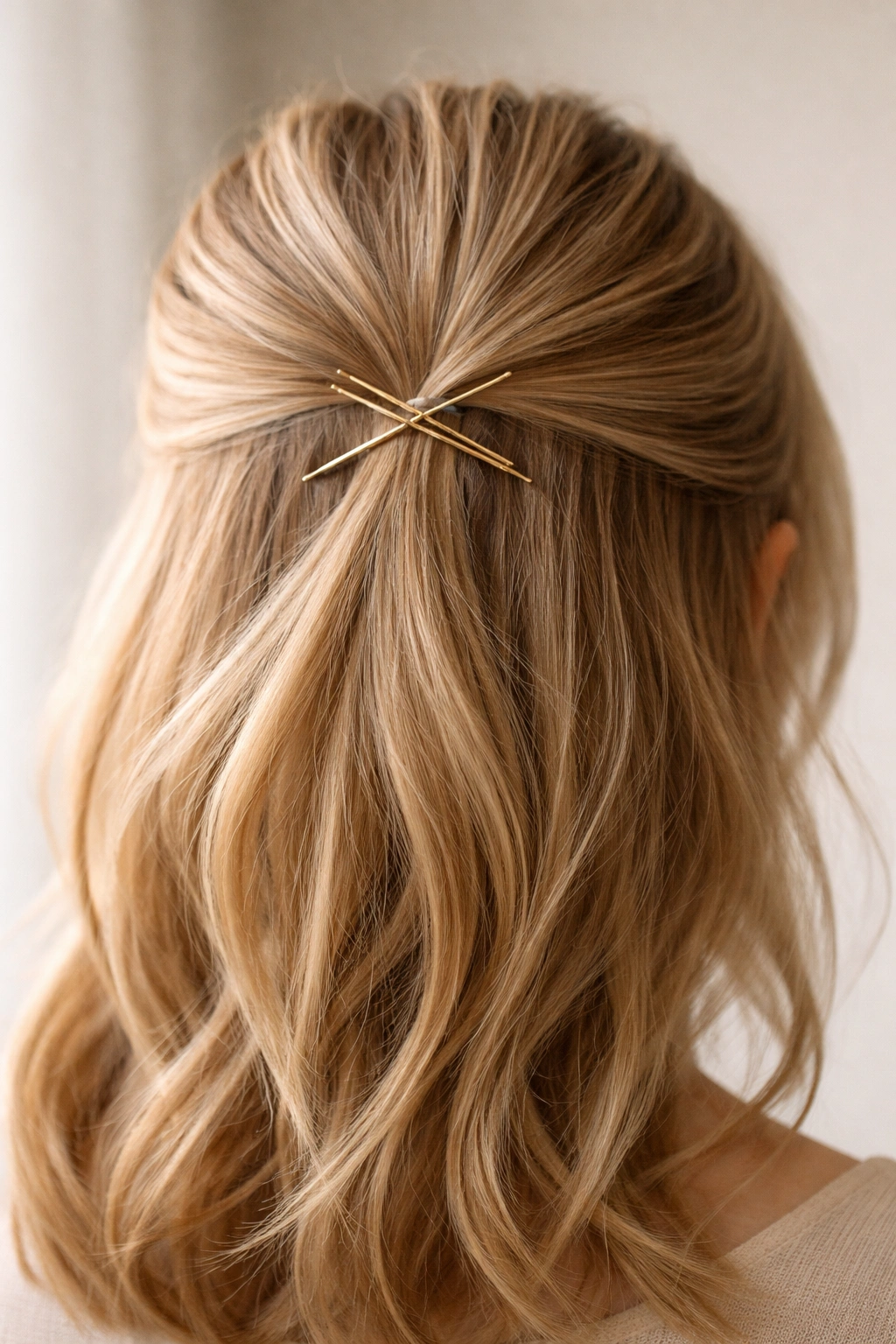
This is a styling trick that creates dimension and visual interest while keeping your half-up secure. Instead of using one elastic or clip, you’re crossing two bobby pins over each other where your half-up would normally be secured. The crossed pins create an X that’s actually quite striking, especially with metallic or patterned pins.
Why This Works for Fine Hair
This technique holds delicate hair securely without tension. The crossed pin placement creates a focal point that draws the eye and makes the style read as intentional and put-together. It’s also incredibly versatile—you can adapt the tension and pin angle to create everything from sleek to undone.
How to Nail This Look
- Gather your half-up section loosely
- Take two bobby pins and position them in an X shape where you’d normally secure your ponytail
- Push both pins in firmly, angling them slightly inward so they catch and hold the hair between them
- The X shape should be visible and intentional, not hidden
- You can use matching pins or contrasting pins depending on the vibe you want
- Gently adjust the gathered section to add softness
- Leave some pieces loose and face-framing
- This works especially well with sleek or gently textured hair that shows the pin placement clearly
Style note: This works best with your hair pulled back but not tightly—you want a soft gathering with defined pin placement.
14. The Tousled Layered Half-Up
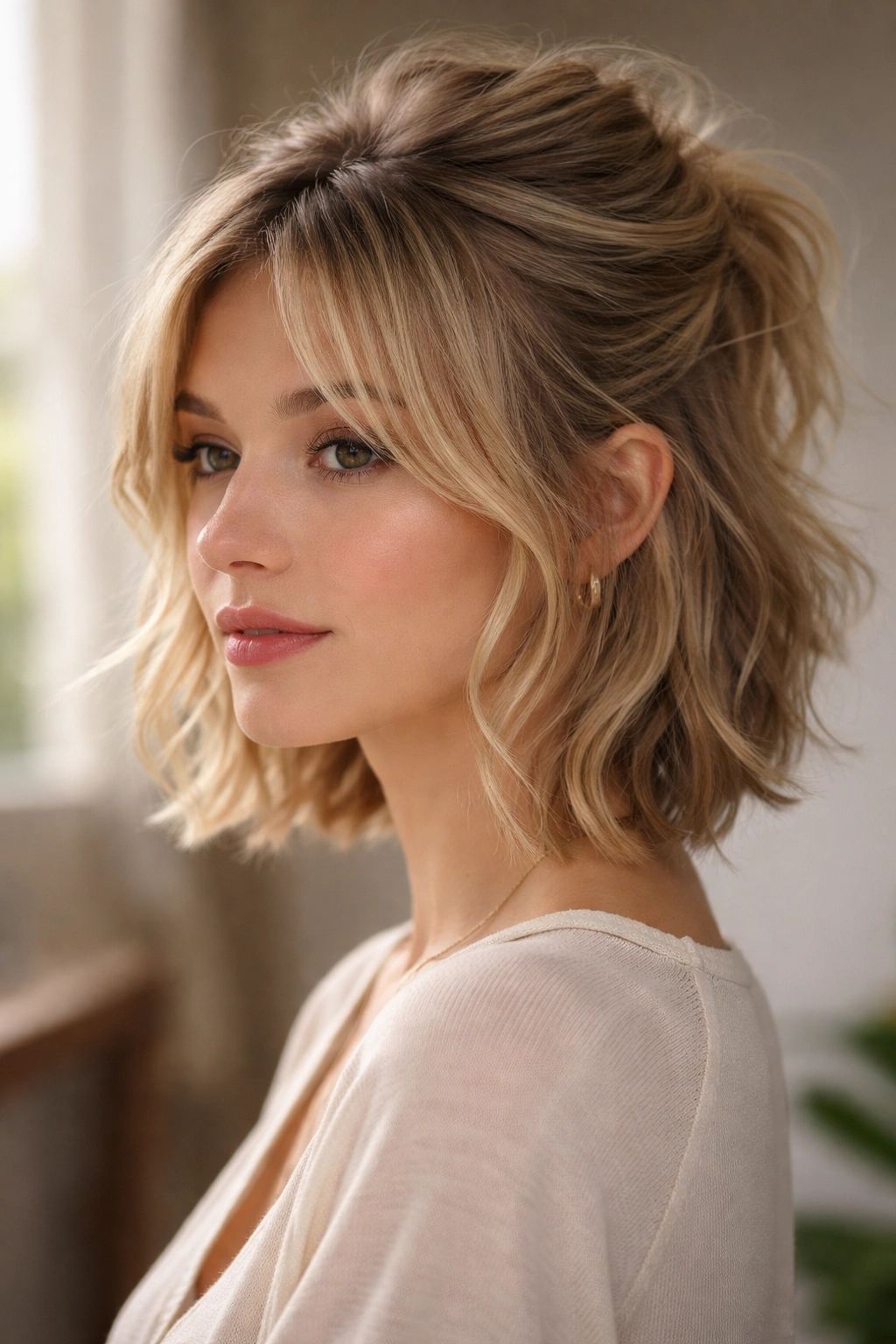
This style deliberately uses the layered cut of short hair to create dimension and movement in a half-up. You’re gathering the longer surface layers while letting shorter, choppy layers around your face stay loose and undone. The layering creates automatic texture and dimension without you having to add it through styling.
Why This Works for Fine Hair
If your short fine hair is already layered, this style is practically custom-made for it. Layers already create movement and dimension, and a half-up showcases that while keeping strands off your face. The undone quality of shorter loose layers around your face softens the style and prevents it from looking severe or thin.
How to Nail This Look
- Start with your hair tousled and slightly textured (curl it or use dry texture spray)
- Identify your longest layers—these are what you’ll gather back
- Take the longer surface layers from your crown and sides, gathering them gently
- Secure at the back with bobby pins or a small clip
- Leave your shorter front layers and any choppy pieces around your face completely loose
- Tousle and separate the loose pieces with your fingers to enhance the textured quality
- Gently pull at the gathered section to create softness
- The style should look naturally undone and like your layers are doing most of the work
Key insight: This style requires a good layered cut to work well. If your fine hair is all one length, ask your stylist about adding some choppy layers specifically for this effect.
15. The Minimalist Half-Up with Accessories
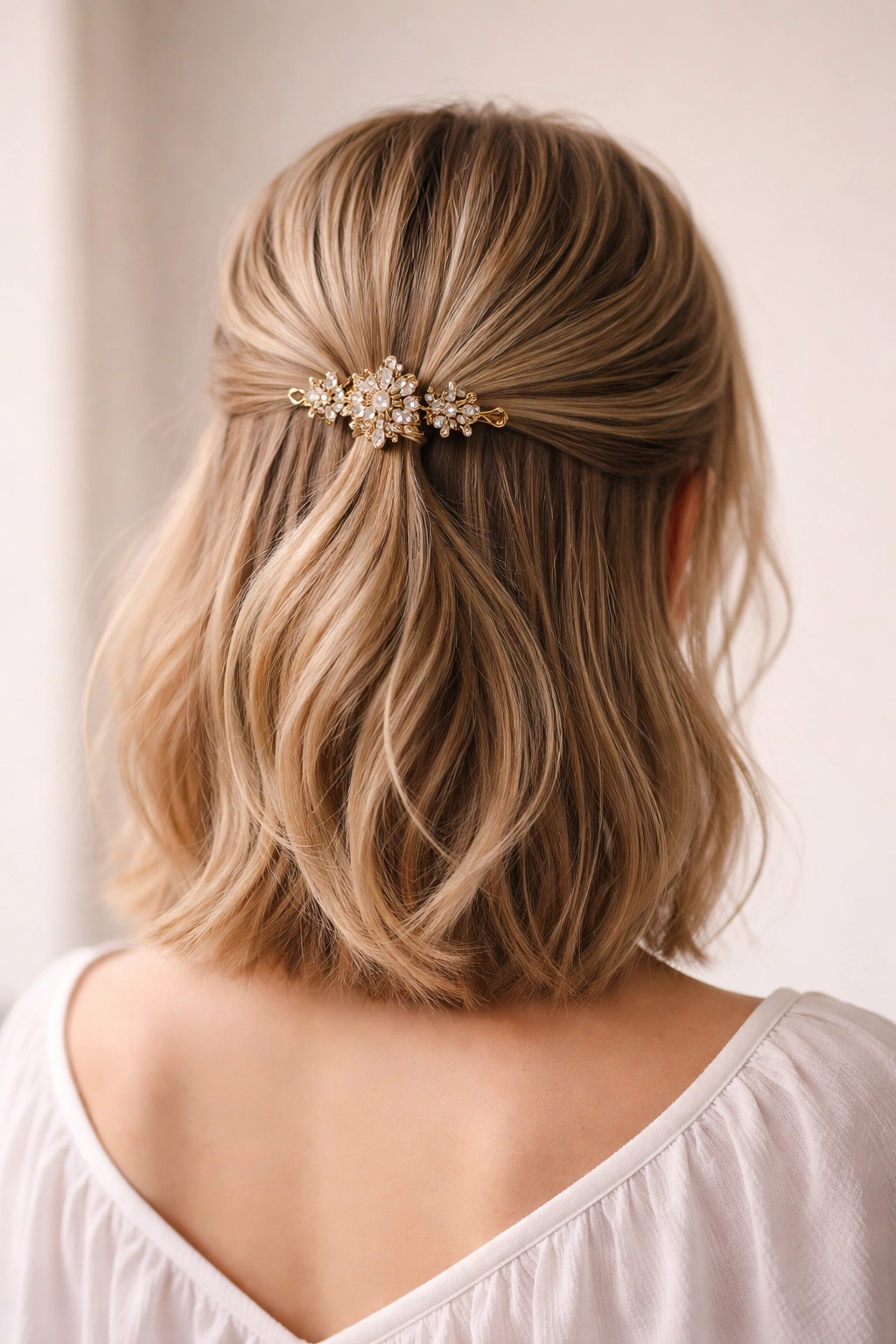
Sometimes the simplest styling combined with the right accessory is the most effective. A clean, simple half-up paired with a jeweled clip, vintage comb, or decorative bobby pins transforms a basic style into something polished and intentional. On fine hair, letting an accessory do the visual heavy lifting is smart.
Why This Works for Fine Hair
Accessories draw the eye and create visual interest where you might otherwise worry about density. A simple half-up becomes special with the right accessory, and it’s a way to make a minimal style feel complete without requiring your hair to do all the work. This approach also moves visual focus to your accessories—which are deliberately eye-catching—rather than scrutinizing your hair texture.
How to Nail This Look
- Keep your half-up as simple as possible: gather a crown section and secure it
- Choose one statement accessory: a jeweled claw clip, a vintage hair comb, decorative bobby pins, a silk scarf tied in, or a pearl clip
- Position your accessory where it will be clearly visible—not hidden in your hair
- The rest of your hair should be smooth or gently textured, creating a clean backdrop for the accessory
- Leave a few pieces loose around your face for balance
- Your accessory becomes the focal point, so it should be beautiful enough to carry the style
- This works with everything from casual to formal, depending on your accessory choice
Styling hack: If you use decorative bobby pins as your accessory, use at least 2-3 of them clustered together so they’re visible and intentional, not like you forgot to remove your styling pins.
Final Thoughts
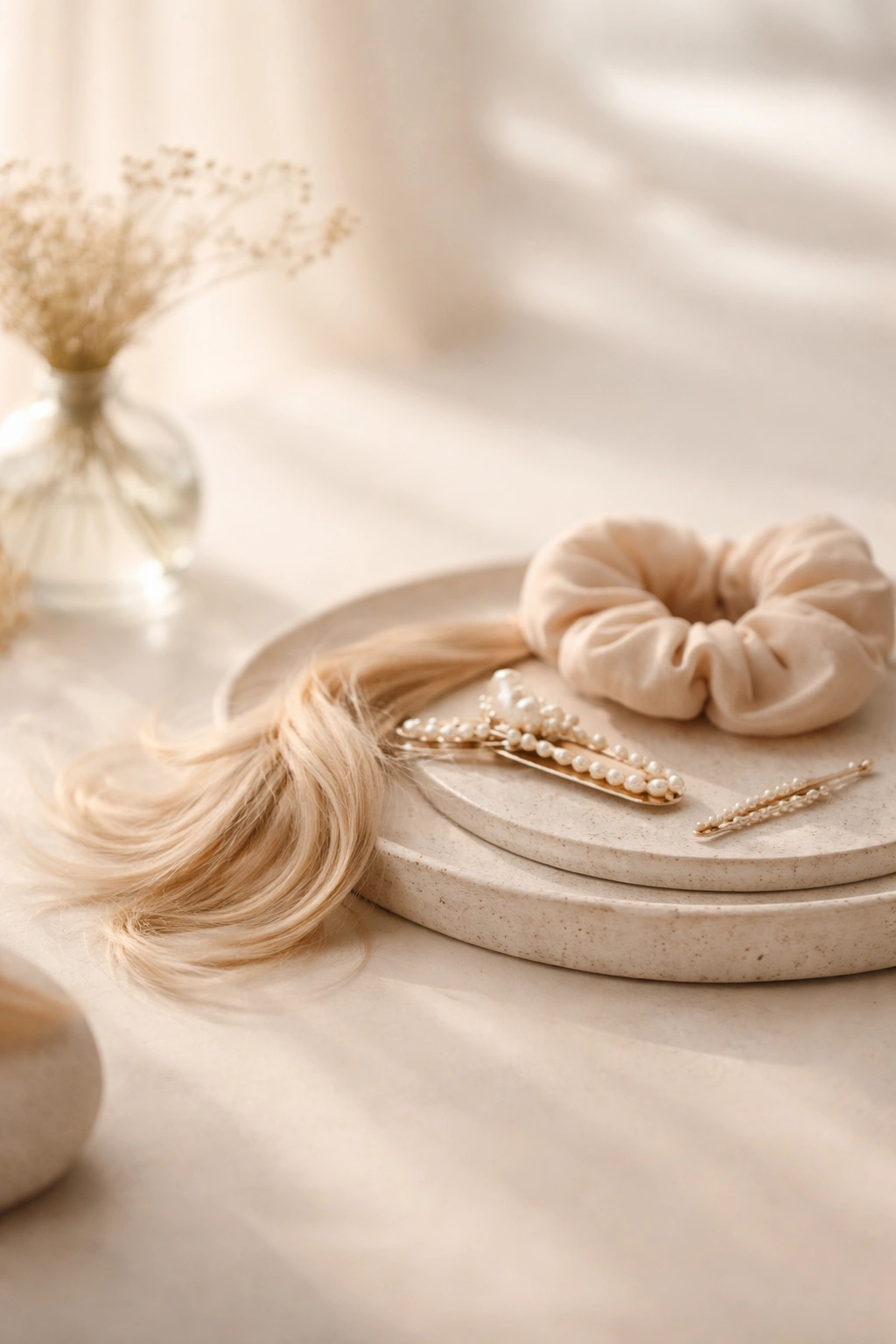
The beauty of half up half down styling on short, fine hair is that it’s fundamentally flattering to your hair type—it creates height where you need it, keeps hair off your face without the weight of a full ponytail, and gives you room to build texture and dimension through technique rather than relying on hair thickness. Fine hair isn’t a limitation; it’s an opportunity to explore styles that play to softness, movement, and intentional texture.
The techniques that work best—loose twists, gentle teasing, strategic layering, and textured waves—aren’t complicated or difficult to master. They just require understanding that your hair responds differently to styling than thicker hair does. Loose is better than tight. Textured is better than smooth (most of the time). Dimension beats density every single time.
Pick the styles that resonate with your daily routine and your personal aesthetic. Some days you’ll want the effortless romance of the messy half-up; other days you’ll reach for the polished sleekness of a low half-up. The point is that you have genuine options that work with your fine hair, not against it.
